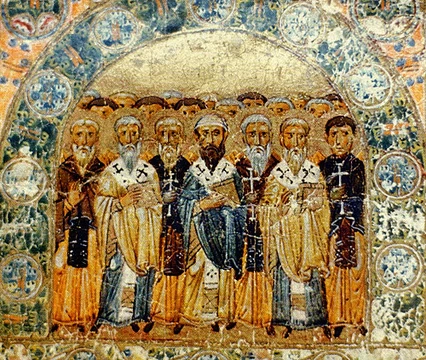
Luke the Evangelist
Physician, Evangelist, and companion of Paul
Last updated
Luke the Evangelist is one of the Four Evangelists, traditionally ascribed as the author of the Gospel of Luke and the Acts of the Apostles. Early Church Fathers, including Jerome and Eusebius, reaffirmed this authorship. Scholarly opinion on the tradition was roughly evenly divided near the end of the 20th century.
Lore & Background
Luke is mentioned briefly in the New Testament; the Epistle to the Colossians refers to him as a physician. He is thought to have been both a physician and a disciple of Paul. Since early Christianity, he has been regarded as a saint and believed to have been a martyr, reportedly hanged from an olive tree, though some believe otherwise. His feast day is 18 October.
He is also described in the New Testament as a doctor. Whether Luke was a Jew or gentile is unclear; some scholars think he was a Hellenic Jew, while others consider him a gentile Christian. The quality of Greek in Luke–Acts suggests the author was highly educated, but direct familiarity with specific classical authors is not proven.
Reader's Guide
Luke is venerated as a saint in the Eastern Orthodox Church, the Roman Catholic Church, and other major denominations. He is a patron saint of artists, physicians, bachelors, notaries, butchers, brewers, and others. His earliest mention is in the Epistle to Philemon (verse 24).
He is also mentioned in Colossians 4:14 and 2 Timothy 4:11. Epiphanius states Luke was one of the Seventy Apostles. John Chrysostom indicates that the 'brother' in 2 Corinthians 8:18 is either Luke or Barnabas. Luke's presence in Rome with Paul near the end of Paul's life is attested by 2 Timothy 4:11.
According to some accounts, Luke contributed to the authorship of the Epistle to the Hebrews. He died at age 84 in Boeotia, according to a fairly early and widespread tradition. His tomb was located in Thebes, whence his relics were transferred to Constantinople in 357.
Did You Know?
- Luke is the only New Testament writer who may have been a gentile, though this is not definitively established.
- The Gospel of Luke and Acts together account for 27.5% of the New Testament, the largest contribution by a single author.
- The earliest manuscript of the Gospel (Papyrus 75, dated AD 200) ascribes the work to Luke.
Frequently Asked Questions
What did Luke the Evangelist write and why does it matter?
He authored the Gospel of Luke and Acts of the Apostles, a two-part work that together account for roughly 27.5% of the New Testament, the single largest contribution by any one author. This makes him uniquely central to the narrative arc running from Jesus's life through the early church's expansion.
Was Luke the Evangelist Jewish or Gentile?
The dominant patristic tradition describes him as a Greek from a Hellenistic background, most likely born in Antioch. A small number of scholars have floated the idea that he may have been a Hellenized Jew, but the mainstream view holds him firmly as a Gentile.
Also in the Codexery
More in Christian Saints & Early Church Fathers
Sources
Compiled from Wikipedia and the sources listed below. Text from Wikipedia is available under CC BY-SA 4.0; this entry is adapted from it.
- Wikipedia: Luke the Evangelist (CC BY-SA 4.0).
Spotted an error? Know more?
Reader corrections go straight into our review queue. Suggest an edit · How this site is sourced