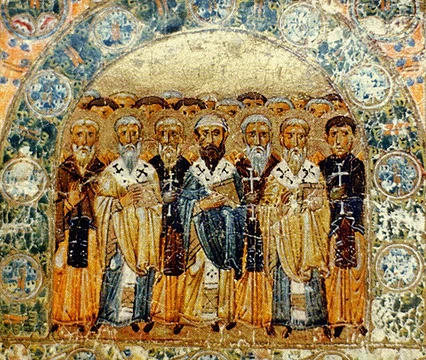
Marcion of Sinope
Early Christian theologian who proposed two gods and a distinct canon.
His teachings were denounced by early Church writers such as Justin Martyr, Irenaeus, and Tertullian.[1] The earliest known Christian scripture canon was created by Marcion; it included a shortened version of the Gospel of Luke and ten epistles written by Paul.[2][3]
Quick Facts
- Born
- AD 85
- Birthplace
- Sinope, Bithynia and Pontus, Roman Empire
- Died
- AD 160 (aged 75)
- Place of death
- Roman Anatolia, Roman Empire
- Era
- Patristic age
- Notable works
- Gospel of Marcion
- Tradition movement
- Marcionism
- Main interests
- Dualism, Nontrinitarianism
Facts from the source article.
Life and work
Marcion was born in Sinope, Pontus, the son of a bishop, and became a prosperous ship owner and merchant.[4] According to Tertullian, Marcion later professed repentance and agreed to restore those he had led astray, but was prevented by death.[5][6] His excommunication by the church of Rome occurred around 144, following disputes, and his donation was given back to him.[7][1] Marcion regarded Paul as the sole genuine apostle and assembled ten of his letters, leaving out the letters to Timothy and Titus.[4]
What the cited sources add
Bradshaw also notes that Marcion’s Christ was docetic, meaning he only appeared to be a man.[4] Bradshaw reports that Justin declared Marcionites had become diffused through every race of men.[4] Tertullian, in The Prescription Against Heretics, describes Marcion as a "shipmaster of Pontus" and a zealous student of Stoicism.[5] The same source records that Marcion brought two hundred sesterces into the church before his excommunication.[5]
References
- Wikipedia, "Marcion of Sinope" (CC BY-SA 4.0), which cites: Harnack 1921, p. 17; Ehrman, "Lost Christianities: The Battles for Scripture and the Faiths We Never Knew", Oxford University Press, 2005, p. 95–112; Bruce 1988, p. 134.; Knox 1942, p. 7; Ehrman, "Lost Christianities: The Battles for Scripture and the Faiths We Never Knew", Oxford University Press, 2005, p. 95–112; BeDuhn 2015, p. 165; Klinghardt, "The Oldest Gospel and the Formation of the Canonical Gospels", Peeters Publishers, 2021 (we also read that source) en.wikipedia.org
- Wikipedia, "Marcion of Sinope" (CC BY-SA 4.0), which cites: Bradshaw, "Marcion: Portrait of a Heretic", EarlyChurch.org.uk; Ehrman, "Lost Christianities: The Battles for Scripture and the Faiths We Never Knew", Oxford University Press, 2005, p. 95–112; Ehrman, "Lost Christianities: The Battles for Scripture and the Faiths We Never Knew", Oxford University Press, 2005, p. 95–112; Dunn, "Paul and Gnosis", Brill Publishers, 2016, p. 105–118; Ehrman, "Lost Christianities: The Battles for Scripture and the Faiths We Never Knew", Oxford University Press, 2005, p. 95–112; Dunn, "Paul and Gnosis", Bri en.wikipedia.org
- Wikipedia, "Marcion of Sinope" (CC BY-SA 4.0), which cites: Robert J. Wilkinson, "Tetragrammaton: Western Christians and the Hebrew Name of God: From the Beginnings to the Seventeenth Century", BRILL, 5 February 2015, p. 120–; BeDuhn 2015, p. 165; Klinghardt 2008, p. 6-10; Knox 1942, p. 7; Hoffmann 1984 (original not read by us) en.wikipedia.org
- Bradshaw, "Marcion: Portrait of a Heretic", EarlyChurch.org.uk. facts only, no text reused. earlychurch.org.uk
- The Prescription Against Heretics 30:3. Tertullian.org.. facts only, no text reused. tertullian.org
- Wikipedia, "Marcion of Sinope" (CC BY-SA 4.0), which cites: The Prescription Against Heretics 30:3. Tertullian.org. (we also read that source) en.wikipedia.org
- Wikipedia, "Marcion of Sinope" (CC BY-SA 4.0), which cites: Harnack 1921, p. 17; Knox 1942, p. 7; Mitchell Young 2006, p. 196; Harnack 1921, p. 17; Mitchell Young 2006, p. 196 (original not read by us) en.wikipedia.org
Each numbered sentence above was checked against the source it cites before publication. Sentences citing Wikipedia adapt text from the English Wikipedia article Marcion of Sinope (contributors), used under CC BY-SA 4.0; this entry is available under the same licence. Other sources were used for facts only; no text or images are copied from them.
More in Christian Saints & Early Church Fathers
Spotted an error? Know more?
Reader corrections go straight into our review queue. Suggest an edit · How this site is sourced