
The Cowherd and the Weaver Girl
Lovers separated by the Milky Way, reunited yearly by magpies.

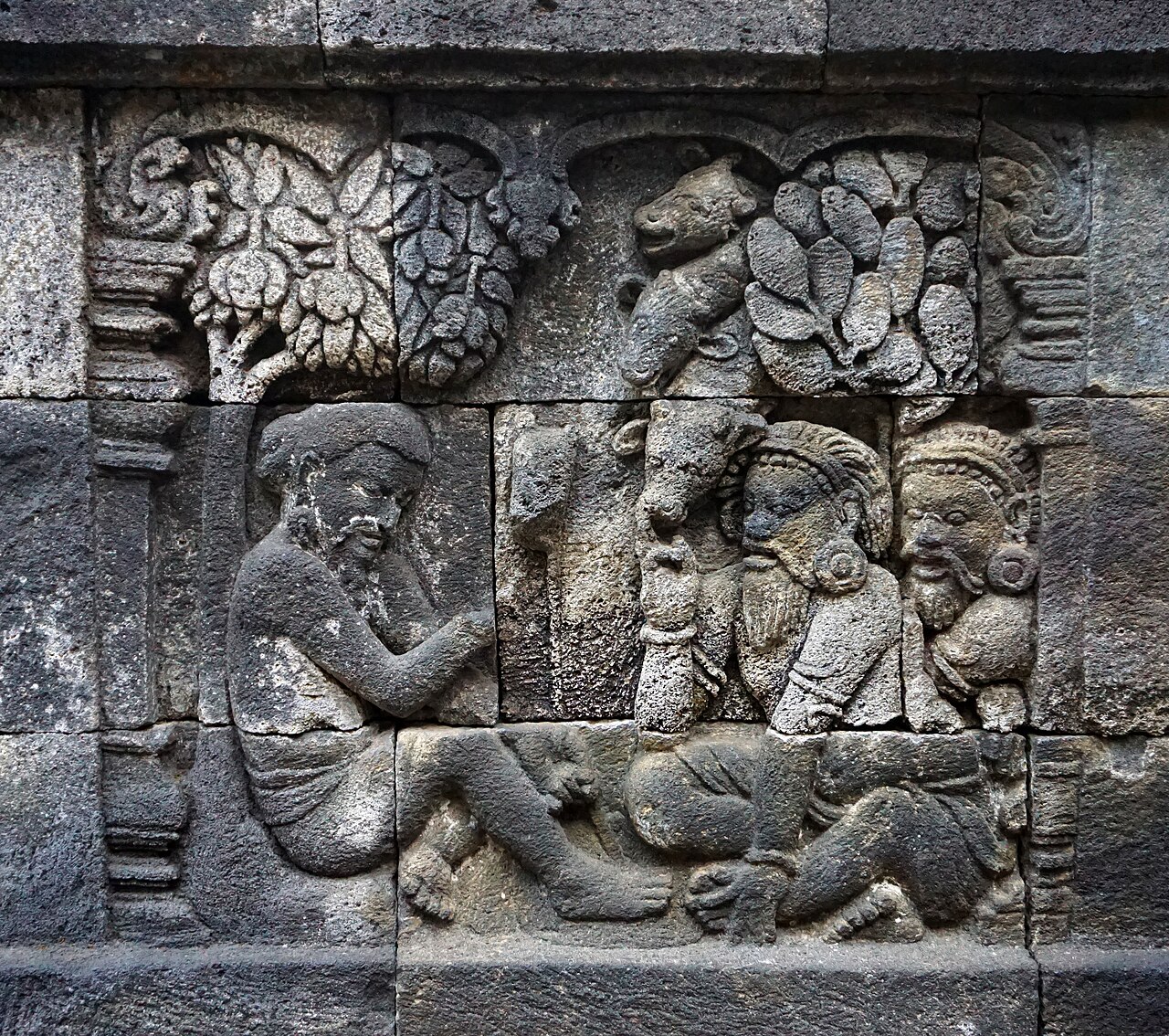
Anandajoti Bhikkhu · CC BY-SA 3.0
In Chinese mythology, the Cowherd and the Weaver Girl are the central figures of a famous romantic folk tale. The story follows Zhinü, the weaver girl represented by the star Vega, and Niulang, the cowherd represented by the star Altair. Though deeply in love, their relationship was forbidden, so they were exiled to opposite banks of a heavenly river—the Milky Way. Only once each year, on the seventh day of the seventh lunar month, do a flock of magpies form a bridge, allowing the lovers to meet for a single day. The earliest known reference to this myth appears in a poem from the *Classic of Poetry*, written over 2,600 years ago, though that text only mentions the stars, not the romantic story itself.
The tale grew out of ancient people's reverence for natural celestial patterns and later evolved into the Qiqiao, or Qixi Festival, during the Han dynasty. It is also celebrated as Tanabata in Japan and Chilseok in Korea. In ancient times, women would make wishes to the stars Vega and Altair during the festival, hoping for wisdom, skill in embroidery and household tasks, and a good marriage.
The story is often grouped with the Legend of the White Snake, Lady Meng Jiang, and Liang Shanbo and Zhu Yingtai as one of China's Four Great Folktales—a label consolidated by various scholars over time, not a single official canonization from a 1920s "Folklore Movement." However, scholar Idema (2012) points out that this label overlooks the tale's many variations, since a single version was treated as the definitive one.
The story and its main characters remain popular across Asia and beyond, with different regions adopting their own versions. Some historical and cross-cultural parallels to other tales have also been noted. The myth appears in numerous literary and popular cultural works. For instance, Du Fu (712–770) of the Tang dynasty wrote a poem called *The Heavenly River*, and a well-known derivative is a poem by Qin Guan (1049–1100) from the Song dynasty.
As the tale spread across Asia, it took on local forms. In Southeast Asia, it was blended into a Jataka tale about Manohara, the youngest of seven daughters of the Kinnara King, who falls in love with Prince Sudhana. In Korea, the story centers on Jiknyeo, a weaver girl in love with Gyeonwoo, a herder. In Japan, it revolves around the deities Orihime and Hikoboshi.
- Known for
- Romantic folk tale of forbidden love
- Symbolized by
- Stars Vega (Weaver Girl) and Altair (Cowherd)
- Associated festival
- Qixi Festival (China), Tanabata (Japan), Chilseok (Korea)
- Earliest known reference
- Stars mentioned in the Classic of Poetry, over 2600 years ago; the romantic story itself developed later
- Classification
- One of China's Four Great Folktales (label consolidated by scholars, not from a single 1920s movement)
- Tale type
- ATU 400, 'The Quest for the Lost Wife'; also Swan Maiden type
Lore & Background
The Cowherd and the Weaver Girl originated from worship of natural celestial phenomena and later developed into the Qiqiao or Qixi Festival during the Han dynasty. In ancient times, women made wishes to the stars Vega and Altair during the festival, hoping for wisdom, dexterity in household tasks, and a good marriage. The story has many variations, with the earliest-known reference to the stars appearing in a poem from the Classic of Poetry over 2600 years ago, though that text does not recount the romantic myth.
Reader's Guide
The tale's significance lies in its enduring cultural impact across Asia, inspiring the Qixi Festival in China, Tanabata in Japan, and Chilseok in Korea. It was selected as one of China's Four Great Folktales by the Folklore Movement in the 1920s, though scholar Idema (2012) notes this neglects the tale's diversity. The story has been referenced in numerous literary and popular cultural works, including poems by Du Fu and Qin Guan, Carl Sagan's Contact, and the film The Karate Kid. Its influence extends to space missions: the Queqiao relay satellite is named after the magpie bridge, and the Chang'e 4 landing site is Statio Tianhe, after the heavenly river. The tale also shares similarities with the swan maiden story type and has been conflated with a Jataka tale in Southeast Asia.
The Celestial Romance at the Heart of the Myth
The Cowherd and the Weaver Girl stands as one of the most enduring love stories in Chinese mythology, anchored to two of the brightest stars in the night sky. Zhinü, the weaver girl, is identified with Vega, while Niulang, the cowherd, corresponds to Altair. Their deep affection for one another was deemed forbidden by celestial authority, resulting in their banishment to opposite banks of the heavenly river—a personification of the Milky Way stretching across the heavens. Yet their bond is never fully severed. Each year, on the seventh day of the seventh lunar month, a flock of magpies gathers and arranges itself into a living bridge, permitting the two lovers to reunite for a single, precious day before parting once more. The tale's roots stretch remarkably far back; the earliest known literary allusion appears in a poem preserved in the Classic of Poetry, placing the narrative's origins more than twenty-six centuries in the past. Scholars trace the myth's genesis to ancient reverence for natural celestial phenomena, which gradually crystallized into the structured romantic narrative familiar to audiences today.
Literary Echoes and Folkloristic Taxonomy
From the Tang dynasty onward, Chinese poets repeatedly returned to the Cowherd and Weaver Girl as a wellspring of imagery. Du Fu (712–770) composed a piece titled The Heavenly River that drew directly on the lovers' celestial separation. Centuries later, during the Song dynasty, Qin Guan (1049–1100) crafted what is widely regarded as one of the most celebrated derivative poems inspired by the tale. Beyond poetry, the story has attracted sustained scholarly attention in folklore studies. In 1937, Wolfram Eberhard compiled the first catalogue of Chinese folktales and assigned this narrative to Chinese folktype number 34, which he labeled 'The Swan Maiden.' Eberhard proposed that the fairy-tale element likely preceded the astral myth, dating the story to the fifth century, though references in the Huainanzi push the timeline back to the second century BC. Chinese folklorist Ting Nai-tung later classified the tale under the Aarne–Thompson–Uther Index as type ATU 400, 'The Quest for the Lost Wife,' noting its structural kinship with the widespread swan-maiden motif found across many cultures.
Festival Roots and Cross-Cultural Variations
What began as a celestial myth evolved into a living festival tradition. During the Han dynasty, the story became the foundation of the Qiqiao or Qixi Festival, during which women traditionally gazed upward at Vega and Altair to offer prayers. Their wishes centered on practical and personal aspirations: a sharp and wise mind, skillful hands for embroidery and domestic crafts, and a fortunate marriage. The narrative's reach extends well beyond China. In Japan, the tale is celebrated as the Tanabata festival and centers on the divine couple Orihime and Hikoboshi. Korea observes the Chilseok festival, where the lovers are known as Jiknyeo the weaver and Gyeonwoo the herder. Vietnam tells the story as Ngưu Lang Chức Nữ, featuring Chức Nữ the weaver and Ngưu Lang the buffalo herder. In Southeast Asia, the plot was absorbed into a Jataka tale about Manohara, the youngest daughter of the Kinnara King dwelling on Mount Kailash, who falls in love with Prince Sudhana. These regional adaptations demonstrate how a single core narrative can be reshaped to reflect local values and cultural priorities while preserving the essential theme of separated lovers finding their way back to each other.
The Tale in Modern Media and Global Pop Culture
In the 1920s, China's Folklore Movement designated The Cowherd and the Weaver Girl as one of the Four Great Folktales, placing it alongside the Legend of the White Snake, Lady Meng Jiang, and Liang Shanbo and Zhu Yingtai. Scholar Idema (2012) has cautioned, however, that this canonical label obscures the tale's genuine diversity, since a single version was elevated to represent the whole. In the modern era, the story's footprint spans an extraordinary range of media. The 1976 Taiwanese film Monkey King with 72 Magic features Sun Wukong shapeshifting into the Cowherd to prank the Weaver Girl. Carl Sagan wove a reference into his novel Contact, and the Japanese anime Dr. Slump parodied the tale in its sixty-third episode. The Karate Kid incorporates a Qixi Festival scene in which the legend and its accompanying puppetry are shared. Musically, La Dispute named their debut album after the story, Red Velvet referenced it in 'One of These Nights,' and Dreamcatcher built 'July 7th' around the lovers. In literature, Barry Hughart's Bridge of Birds retells the myth, and Grace Lin's Where the Mountain Meets the Moon incorporates Buffalo Boy and the Goddess.
Gallery



Frequently Asked Questions
Who are the Cowherd and the Weaver Girl?
The Cowherd (Niulang) and the Weaver Girl (Zhinü) are the two star-crossed lovers at the heart of one of China's most beloved romantic folk tales. After their forbidden union was discovered, the heavens banished them to opposite banks of the Milky Way, where they remain separated except for one brief reunion each year.
What stars represent the Cowherd and the Weaver Girl?
The Weaver Girl is embodied by the star Vega, while the Cowherd corresponds to the star Altair. The Milky Way stretches between them in the night sky, serving as the celestial river that keeps the couple apart.
How do the Cowherd and Weaver Girl reunite each year?
On the seventh day of the seventh lunar month, a flock of magpies gathers and forms a living bridge across the Milky Way. This allows the separated lovers to spend a single day together before they must part again until the following year.
What festival is tied to the Cowherd and Weaver Girl legend?
The story serves as the mythological foundation of the Qixi Festival in China, and its influence extends across East Asia to Japan's Tanabata and Korea's Chilseok. All three celebrations center on the lovers' annual reunion and the theme of longing across distance.
How old is the Cowherd and Weaver Girl story?
The stars Vega and Altair are mentioned in the Classic of Poetry, a text dating back more than 2,600 years, though the full romantic narrative of their forbidden love crystallized in later centuries. Scholars also classify the tale as ATU type 400, 'The Quest for the Lost Wife,' and group it among China's Four Great Folktales.
More in Chinese folklore 1-24
Spotted an error? Know more?
Reader corrections go straight into our review queue. Suggest an edit · How this site is sourced