
Book of Life and Death
Mythical registry dictating life and death in Chinese underworld.

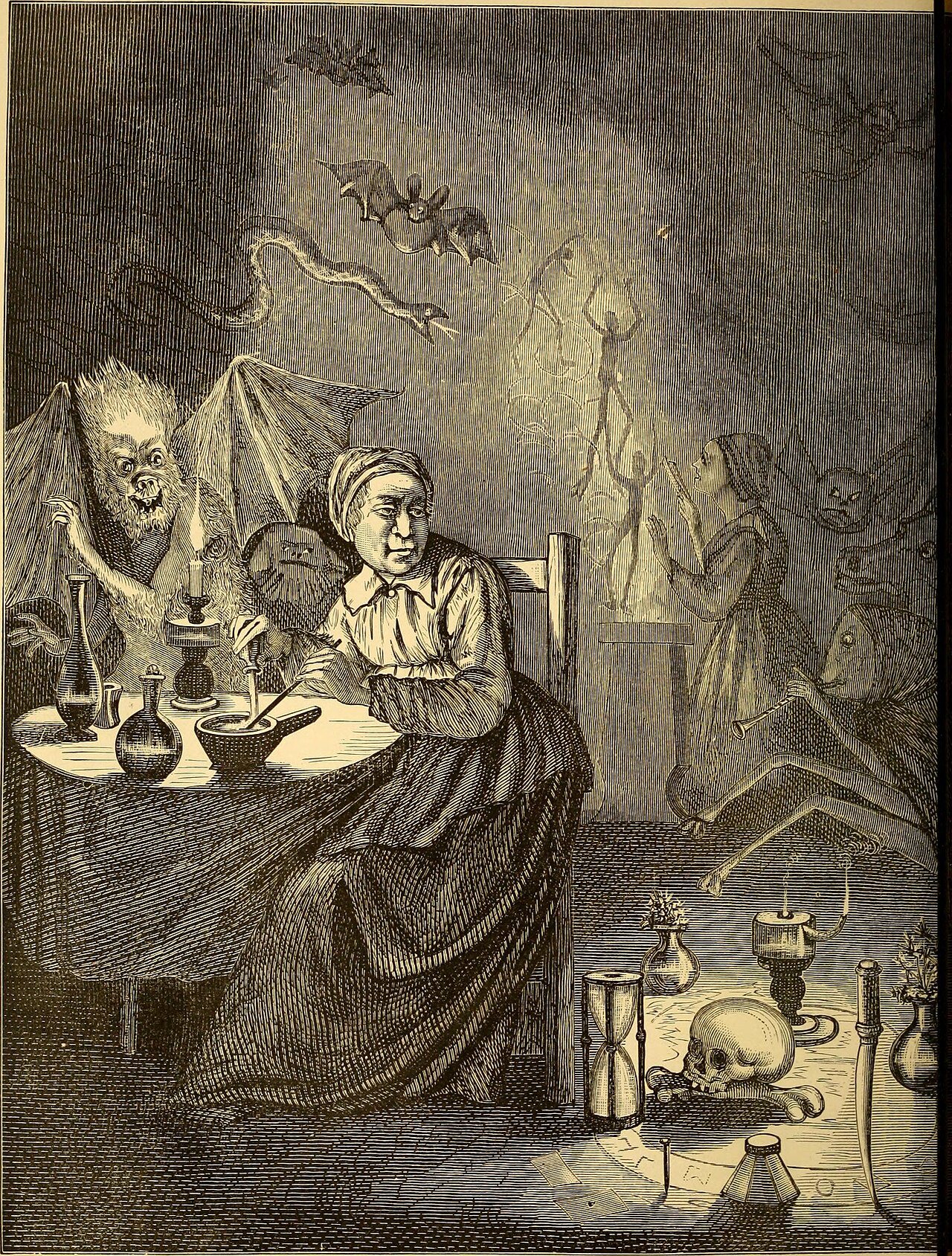
Joseph Martin Kronheim (1810-1896) · Public domain
The Book of Life and Death, also known as the Registry of Life and Death (Chinese: 生死簿; pinyin: Shēngsǐ bù), is a mythical registry in Chinese mythology and folk religion. It records the lifespans, birth times, and exact times of death for all living beings across the Three Realms and is kept in the Underworld (Diyu), serving as the absolute authority dictating the cycle of life and death.
- Field
- Chinese mythology and folk religion
- Known for
- Recording lifespans and death times of all beings; absolute authority over life and death
- Associated deity
- Yanluo Wang (King Yama)
- Keepers
- Judges (Panguan)
- Related concepts
- Southern Dipper, Northern Dipper, Birth Ledger, Death Ledger
Lore & Background
In early Chinese traditions, the powers governing human lifespans were associated with the Southern Dipper and Northern Dipper. Gan Bao's In Search of the Supernatural records the saying, 'The Southern Dipper decrees birth, the Northern Dipper decrees death.' The Southern Dipper was associated with the Birth Ledger, while the Northern Dipper was associated with the Death Ledger. Later traditions combined these ideas into the Book of Life and Death, which became part of the bureaucracy of the Chinese underworld.
The book is strictly managed by Yanluo Wang, ruler of the Underworld, and physically held and maintained by his primary deputies, the Judges. It records the lifespans, birth times, and exact times of death for all living beings across the Three Realms. When a life reaches its destined end, Yanluo Wang sends emissaries such as Heibai Wuchang and Ox-Head and Horse-Face to collect the soul.
According to mythology, the rules of the Book of Life and Death are absolute; once a date of death is written, no mortal or immortal can escape it. Its supernatural reach is considered limitless; entries are typically found by name and species, as seen in Journey to the West when Sun Wukong locates his own entry.
Reader's Guide
The Book of Life and Death holds a central place in Chinese mythology and folk religion as the ultimate arbiter of mortal existence. Its concept evolved from earlier beliefs linking the Southern Dipper with birth and the Northern Dipper with death, later formalized into a single registry within the underworld bureaucracy. The book appears in classical literature such as Journey to the West, where Sun Wukong crosses out his name and those of his monkeys, and where a judge secretly alters it to extend Emperor Taizong's life. In modern adaptations of Lotus Lantern, the protagonist destroys the book, freeing villagers from death. The book is also conceptualized in contemporary literature as the 'Book of Man,' forming a cosmic triad with the Book of Heaven and the Book of Earth. Its significance lies in its representation of an unchangeable cosmic order, yet stories of alteration or destruction highlight tensions between fate and agency. The book's reach is absolute, requiring only a name and birth characters to determine any being's destiny, underscoring its role as a symbol of predestination in Chinese thought.
Did You Know?
- The Book of Life and Death records lifespans and death dates, not detailed past-life generational records.
- In Journey to the West, Sun Wukong crosses out his own name and the names of all monkeys in his tribe from the book.
- The concept combines earlier traditions of a Birth Ledger associated with the Southern Dipper and a Death Ledger associated with the Northern Dipper.
Cosmological Origins and the Dipper Tradition
In the earliest layers of Chinese spiritual thought, the authority over human longevity was not centralized in a single text but distributed across celestial bodies. The Southern Dipper and the Northern Dipper each held a distinct mandate: one presided over the granting of birth, the other over the pronouncement of death. This dual structure is preserved in Gan Bao's In Search of the Supernatural, which records the formula linking the two constellations to their respective ledgers. Over time, folk tradition wove these separate registers into a single, unified volume—the Book of Life and Death—embedding it within the broader administrative machinery of the Chinese underworld. The underlying premise, however, remained constant from the start: a person's span of life was ultimately decreed by Heaven, and no earthly power could override that celestial judgment. The Book thus functioned less as a mere record and more as the written expression of a cosmic order that predated any individual existence.
Bureaucracy of the Underworld and the Mechanics of Fate
Within the hierarchy of Diyu, the Book of Life and Death sits at the apex of a rigid administrative system. Yanluo Wang, the sovereign of the Underworld, holds ultimate jurisdiction over the registry, while his deputies—the Panguan, or Judges—handle the day-to-day custody and maintenance of its pages. The volume's scope is staggering: it catalogues the complete life cycle of every human and animal across the Three Realms, tracking accumulated karma, the details of up to ninety-nine previous incarnations, and the precise allotment of years each soul is granted. When a lifespan expires, Yanluo Wang dispatches his emissaries, Heibai Wuchang and Ox-Head and Horse-Face, to seize the departing soul and escort it for judgment. The system's most striking feature is its inflexibility. Mythology insists that once a death date is inscribed, neither mortal nor immortal can alter it. The Book's reach is described as limitless, requiring nothing more than a name and the Bazi—the Eight Characters of birth—to unlock a person's entire destiny.
Narrative Power in Classical and Modern Literature
The Book of Life and Death has proven far more at home in storytelling than in formal religious scripture, with most of its associated tales emerging from classical Chinese literature. In Journey to the West, the Monkey King Sun Wukong storms the Underworld, confronts the Ten Kings of Hell, and forcibly strikes his own name—and the names of every monkey in his tribe—from the registry, liberating them from death. In a later episode, an Underworld judge covertly rewrites the Book to extend Emperor Taizong's allotted years before restoring his soul to the living world. Modern retellings of Lotus Lantern push the concept further: the protagonist Liu Chenxiang descends through the eighteen levels of Hell and ultimately shatters the Book entirely, freeing his entire village from the grip of illness, aging, and mortality. In contemporary literary circles, the registry is often recast as the "Book of Man," one third of a cosmic triad that also includes the Book of Heaven, associated with the Investiture of the Gods, and the Book of Earth, linked to the Classic of Mountains and Seas.
Historical Echoes and Cross-Cultural Resonance
Although the Book of Life and Death is a product of Chinese mythological imagination, its conceptual DNA stretches back to ancient beliefs that Heaven itself fixed the length of a human life. The first surviving literary references to a written registry of lifespans appear during the Song dynasty. Hong Mai's Yijian Zhi (Record of the Listener) contains the tale of Zheng Lin's rebirth, in which Underworld officials consult the Registry and discover that the young man still has fifteen years remaining—a small but telling glimpse of the Book functioning as a bureaucratic document within a narrative. Beyond China, the archetype of a celestial ledger recording the fates of all living beings finds parallels in other traditions, such as the Christian Book of Life and the Akashic records. These cross-cultural echoes underscore how deeply the idea of a cosmic record-keeper resonates across civilizations. Yet the Chinese version remains distinctive in its integration with a full underworld bureaucracy, its multi-generational karmic tracking, and its firm embedding in folk religious practice rather than purely theological doctrine.
Gallery
Frequently Asked Questions
What is the Book of Life and Death in Chinese folklore?
It is a mythical ledger kept in the Underworld (Diyu) that serves as the ultimate record of every being's lifespan, birth moment, and appointed time of death across all three realms. In folk belief it functions as the final, unchallengeable authority governing the entire cycle of life and death.
Who is in charge of the Book of Life and Death?
The registry falls under the jurisdiction of Yanluo Wang (King Yama), the sovereign of the Underworld, while day-to-day oversight is handled by a roster of judges called Panguan. Together they ensure no being's fate is recorded or altered without proper celestial authority.
What exactly does the Book of Life and Death record?
It lists the predetermined lifespan, the exact moment of birth, and the precise time of death for every living creature across the Three Realms. In some folk traditions it is split into two complementary ledgers—a Birth Ledger and a Death Ledger—governed by the Southern and Northern Dipper star groups respectively.
Can someone change or erase their name from the Book of Life and Death?
In most canonical accounts the registry is absolute and cannot be tampered with by ordinary mortals, though stories such as Journey to the West feature exceptions where a powerful figure forcibly scratches his own entry out of the ledger. Such acts are typically portrayed as grave transgressions that invite severe heavenly or karmic punishment.
Why is the Book of Life and Death important in Chinese folk religion?
It embodies the core belief that a person's lifespan and moment of death are preordained by celestial bureaucracy rather than left to chance. As the foundational document of the Underworld's judicial system, it gives the entire afterlife court structure its legitimacy and purpose.
More in Chinese folklore 1-24
Spotted an error? Know more?
Reader corrections go straight into our review queue. Suggest an edit · How this site is sourced