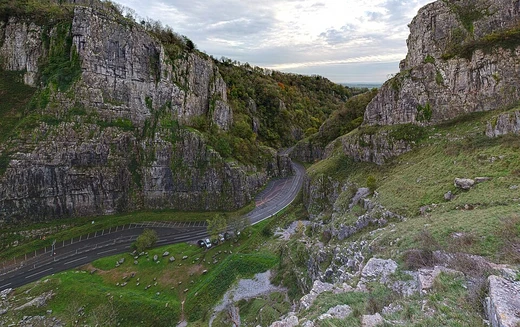
Frasassi Caves
A karst cave system in the municipality of Genga, Italy, among the most famous show caves in Italy.
Last updated
Where it is
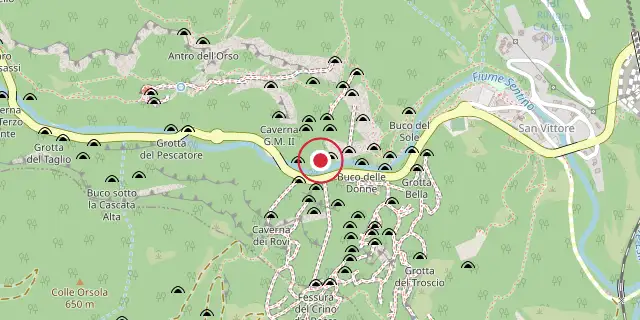
Coordinates: 43°24′04″N 12°57′43″E (43.4010, 12.9620) · Open in OpenStreetMap
Coordinates and connected clubs: the infobox of Wikipedia: Frasassi Caves (CC BY-SA 4.0). Map: drawn by Codexery from OpenStreetMap tiles.
The Frasassi Caves, a karst cave system located in the municipality of Genga within the province of Ancona in the Marche region of Italy, are recognized as one of the country's most renowned show caves. The first entrance to the system was uncovered by a farmer on June 28, 1948. Subsequent entrances were discovered during the 1950s and 1960s by members of the Italian Mountaineering Club from the towns of Jesi and Fabriano. In the 1970s, a group of speleologists from Ancona, led by Giancarlo Cappanera, found more caves on September 25, 1971, located 7 kilometers south of Genga near the Rome–Ancona railway.
The system is rich in water and particularly noted for its abundant stalactites and stalagmites. Near the entrance stand two sanctuary chapels: the Santuario di Santa Maria infra Saxa, dating from 1029, and the Tempietto del Valadier, a Neoclassical temple built in 1828. The cave system contains several named chambers, including the Grotta delle Nottole, home to a large bat colony; the Grotta Grande del Vento, discovered in 1971 with roughly 13 kilometers of passageways; the Abisso Ancona, a vast space measuring about 180 by 120 meters and nearly 200 meters tall; the Sala delle Candeline, named for its candle-like stalagmites; and the Sala dell'Infinito, a tall chamber with massive speleothem columns.
Penn State Research
The caves have been used for chronobiology experiments, most notably by Italian sociologist Maurizio Montalbini, who spent 210 days underground in 1986, losing nearly 30 pounds and experiencing a distorted sense of time. Additionally, Penn State researchers led by microbiologist Jennifer Macalady have studied microbial biofilms, described as "alien cave goo," from underground lakes such as Lago Verde, researching how microbes survive without sunlight or oxygen.
The Frasassi Caves are also partnered with several sister caves worldwide, including the Grand Roc in France, the Wieliczka Salt Mine in Poland, and Kartchner Caverns State Park in Arizona.
More in Caves & Gorges
Sources
Compiled from Wikipedia and the sources listed below. Text from Wikipedia is available under CC BY-SA 4.0; this entry is adapted from it.
- Wikipedia: Frasassi Caves (CC BY-SA 4.0).
Spotted an error? Know more?
Reader corrections go straight into our review queue. Suggest an edit · How this site is sourced