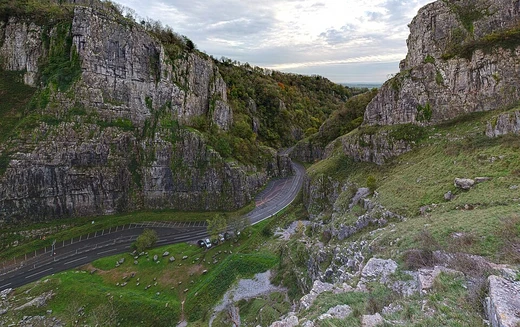
Jenolan Caves
Last updated
Where it is
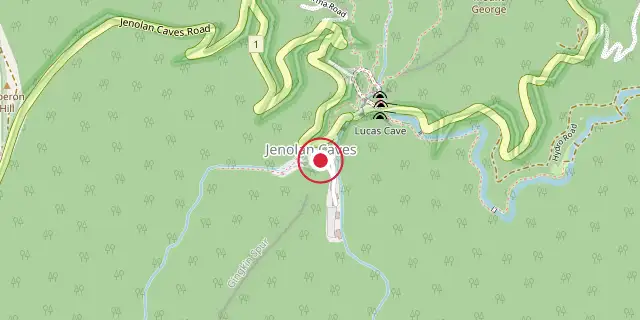
Coordinates: 33°49′16″S 150°01′16″E (-33.8210, 150.0210) · Open in OpenStreetMap
Coordinates and connected clubs: the infobox of Wikipedia: Jenolan Caves (CC BY-SA 4.0). Map: drawn by Codexery from OpenStreetMap tiles.
The Jenolan Caves, known in the Tharawal language as Binoomea, Bindo, or Binda, are a limestone cave system in the Jenolan Karst Conservation Reserve, located in the Central Tablelands of New South Wales, Australia. Dating back 340 million years, this is the oldest known and dated open cave system in the world. The caves contain numerous Silurian marine fossils and are noted for their calcite formations, which are sometimes pure white.
The network follows a subterranean section of the Jenolan River, featuring over 300 entrances and many multi-level passages; exploration of the complex continues. Eleven illuminated show caves are open to paying visitors, making it the most visited of Australia’s similar limestone cave groups. The reserve is part of the UNESCO World Heritage-listed Greater Blue Mountains Area, inscribed in 2000, and is listed on the Australian National Heritage List.
For thousands of years, the area held cultural significance for the Gundungurra and Wiradjuri peoples, who knew it as Binomil. A Dreamtime story describes a struggle between ancestral spirits, a giant eel-like creature and a large quoll. The Gundungurra entered the caves as far as the subterranean water, bathing sick people in it for its believed curative powers. European discovery is generally attributed to James Whalan in 1838 or 1841, while pursuing a thief.
The caves came under NSW Government control in 1866, becoming only the second area in the world reserved for conservation. Jeremiah Wilson, the first Keeper of the Caves, explored and discovered several major caves. Souvenir collection and graffiti were banned in 1872, and the name Jenolan Caves was adopted in 1884. A bridle track from Katoomba, known as the Six Foot Track, was completed in 1887.
Last updated 2026-10-05 from the source article.
Background
The Jenolan Caves are a limestone cave system in eastern Australia, situated within the Jenolan Karst Conservation Reserve in the Central Tablelands region, west of the Blue Mountains. The caves and their surrounding 3,083-hectare reserve lie approximately 175 kilometers west of Sydney and 30 kilometers west of Katoomba. Dating back roughly 340 million years, this is the oldest known and dated open cave system in the world. The cave network follows the course of a subterranean section of the Jenolan River and contains more than 40 kilometers of multi-level passages with over 300 entrances; the complex is still being explored.
The caves contain numerous Silurian marine fossils, and their calcite formations, sometimes pure white, are noted for their beauty. They are the most visited of several similar limestone cave groups in Australia, with eleven illuminated show caves open to paying visitors. The reserve is part of the Great Dividing Range and was inscribed in 2000 as part of the UNESCO World Heritage-listed Greater Blue Mountains Area, being the most westerly of the eight protected areas within that site. It was also listed on the Register of the National Estate in 1978 and on the Australian National Heritage List.
Did You Know?
- The word 'Jenolan' is believed to be an indigenous word for 'high place', derived from the Tharawal word Genowlan.
- The Orient Cave became the first in the world to be cleaned, in 1968, due to contamination from a coal boiler.
More in Caves & Gorges
Sources
Compiled from Wikipedia and the sources listed below. Text from Wikipedia is available under CC BY-SA 4.0; this entry is adapted from it.
- Wikipedia: Jenolan Caves (CC BY-SA 4.0).
- Word definitions: the Codexery glossary, each quoted from its Wikipedia article.
Spotted an error? Know more?
Reader corrections go straight into our review queue. Suggest an edit · How this site is sourced