Peter Faber
Savoyard priest and co-founder of the Society of Jesus.
Last updated
Peter Faber (13 April 1506 – 1 August 1546) was a Savoyard Catholic priest, theologian, and co-founder of the Society of Jesus, together with Ignatius of Loyola and Francis Xavier. Born into a peasant family in the village of Villaret, in the Duchy of Savoy (now Saint-Jean-de-Sixte, France), Faber worked as a shepherd in the Alps as a boy.
He had little formal schooling but possessed a remarkable memory, able to repeat a sermon verbatim hours after hearing it. Two of his uncles were Carthusian priors. He was first entrusted to a priest in Thônes, then attended a school in La Roche-sur-Foron.
In 1525, Faber went to Paris to study, entering the Collège Sainte-Barbe at the University of Paris. There he shared lodgings with Francis Xavier, and the two became close friends, both earning Master of Arts degrees on the same day in 1530. At the university, Faber also met Ignatius of Loyola and became his associate.
Faber tutored Loyola in Aristotle’s philosophy, while Loyola guided Faber in spiritual matters. Faber wrote that Loyola helped him understand his conscience and long-standing scruples. Xavier, Faber, and Loyola eventually became roommates and are all recognized as founders of the Jesuit order.
Faber was the first of the group to be ordained a priest, on 30 May 1534. He received the religious vows of Ignatius and five companions at Montmartre on 15 August. After graduation, Ignatius returned to Spain to convalesce, charging Faber with leading the others to Venice. They left Paris on 15 November 1536 and rejoined Loyola in Venice in January 1537.
Jesuit preacher
War between Venice and the Turks prevented their planned mission to the Holy Land, so they formed the community that became the Society of Jesus. The group then went to Rome and offered their services to Pope Paul III. After Faber preached and taught for some months, the Pope sent him to Parma and Piacenza, where he revived Christian piety.
Recalled to Rome in 1540, Faber was sent to Germany for the Diet of Worms and then the Diet of Ratisbon in 1541. The theologian Johann Cochlaeus noted that Faber avoided theological debate and focused on personal reform, calling him “a master of the life of the affections.” Faber was shocked by the unrest caused by the Protestant movement and the decadence in the Catholic hierarchy. He concluded that the remedy lay not in discussions with Protestants but in reforming the clergy.
For ten months in Speyer, Ratisbon, and Mainz, he acted with gentleness, influencing princes, prelates, and priests. He was famous not for preaching but for engaging conversations and spiritual guidance. He traveled across Europe on foot, directing bishops, priests, nobles, and common people in the Spiritual Exercises.
As a lone Jesuit often on the move, Faber felt accompanied by saints and angels. He would ask the saint of the day and all saints for virtues, salvation, and physical strength and healing.
His guardian angel was his chief ally. When entering a new town, he implored the aid of its local angels and saints. He would invoke the guardian angel of each person he met, seeking to draw them into spiritual friendship.
Called to Spain by Loyola, Faber visited Barcelona, Zaragoza, Medinaceli, Madrid, and Toledo. In January 1542, the pope ordered him back to Germany. For nineteen months, he worked to reform Speyer, Mainz, and Cologne.
The Archbishop of Cologne, Hermann of Wied, favored Lutheranism, which he later embraced. Faber gained the clergy’s confidence and recruited many young men to the Jesuits, including Peter Canisius. After months in Leuven in 1543, where he fostered vocations, he returned to Cologne. Between 1544 and 1546, Faber continued his work in Portugal and Spain.
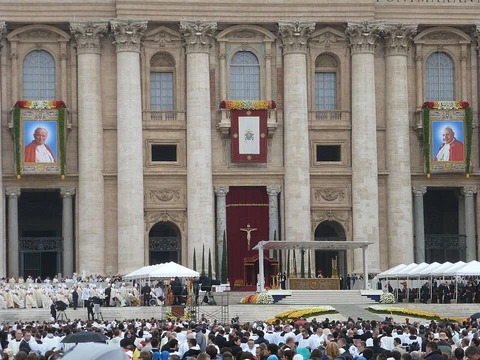
At the royal court of Lisbon, he helped establish the Society of Jesus in Portugal. He preached fervently in Spain’s principal cities, arousing religious fervor. Pope Francis announced his canonization in 2013.
Lore & Background
Faber was born in 1506 to a peasant family in the village of Villaret, in the Duchy of Savoy. As a boy, he was a shepherd in the high pastures of the French Alps and had little education, but a remarkable memory: he could hear a sermon in the morning and repeat it verbatim in the afternoon for his friends. In 1525, he went to Paris and was admitted to the Collège Sainte-Barbe, where he shared lodgings with Francis Xavier. There he met Ignatius of Loyola and became one of his associates.
Faber tutored Loyola in the philosophy of Aristotle, while Loyola tutored Faber in spiritual matters. Faber wrote of Loyola's counsel: 'He gave me an understanding of my conscience and of the temptations and scruples I have had for so long without either understanding them or seeing the way by which I would be able to get peace.' Xavier, Faber, and Loyola all became roommates at the University of Paris and are all recognized by the Jesuits as founders of the Society of Jesus. Faber was ordained a priest on 30 May 1534 and received the religious vows of Ignatius and his five companions at Montmartre on 15 August.
Also in the Codexery
More in Catholic Saints & Popes
Related in Catholic Saints & Popes
Links follow this subject's own source article.
Sources
Compiled from Wikipedia and the sources listed below. Text from Wikipedia is available under CC BY-SA 4.0; this entry is adapted from it.
- Wikipedia: Peter Faber (CC BY-SA 4.0).
Spotted an error? Know more?
Reader corrections go straight into our review queue. Suggest an edit · How this site is sourced