Seville Cathedral
Largest Gothic cathedral and former Almohad mosque site.
Last updated

via Wikipedia: Seville Cathedral · see source
Where it is
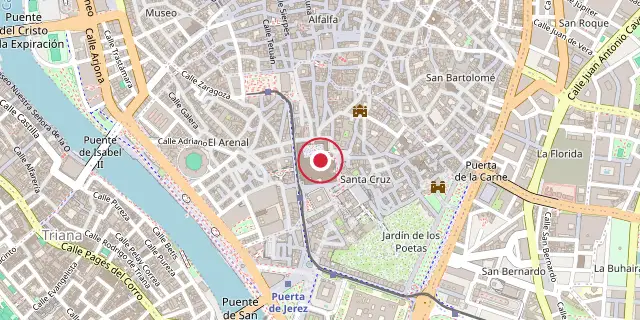
Coordinates: 37°23′10″N 5°59′35″W (37.3860, -5.9930) · Open in OpenStreetMap
Coordinates and connected clubs: the infobox of Wikipedia: Seville Cathedral (CC BY-SA 4.0). Map: drawn by Codexery from OpenStreetMap tiles.
Seville Cathedral, officially the Cathedral of Saint Mary of the See, is a Catholic cathedral in Seville, Andalusia, Spain. It is one of the largest churches in the world and the largest Gothic cathedral, registered as a UNESCO World Heritage Site in 1987 along with the adjoining Alcázar palace complex and the General Archive of the Indies.
Lore & Background
The cathedral was built on the site of an Almohad mosque constructed between 1172 and 1198 under Caliph Abu Yaqub Yusuf. After Seville's conquest by Ferdinand III in 1248, the mosque was converted into a Christian cathedral, with its orientation changed and spaces partitioned.
In July 1401, city leaders decided to build a new Gothic cathedral to demonstrate the city's wealth, with work beginning in 1402 and continuing for over a century. In 1511, however, the crossing lantern and some of the vaults collapsed, necessitating reconstruction. The 1888 collapse occurred due to an earthquake and resulted in the destruction of "every precious object below" the dome at that time.
A Cathedral That Outgrew a Millennium of Tradition
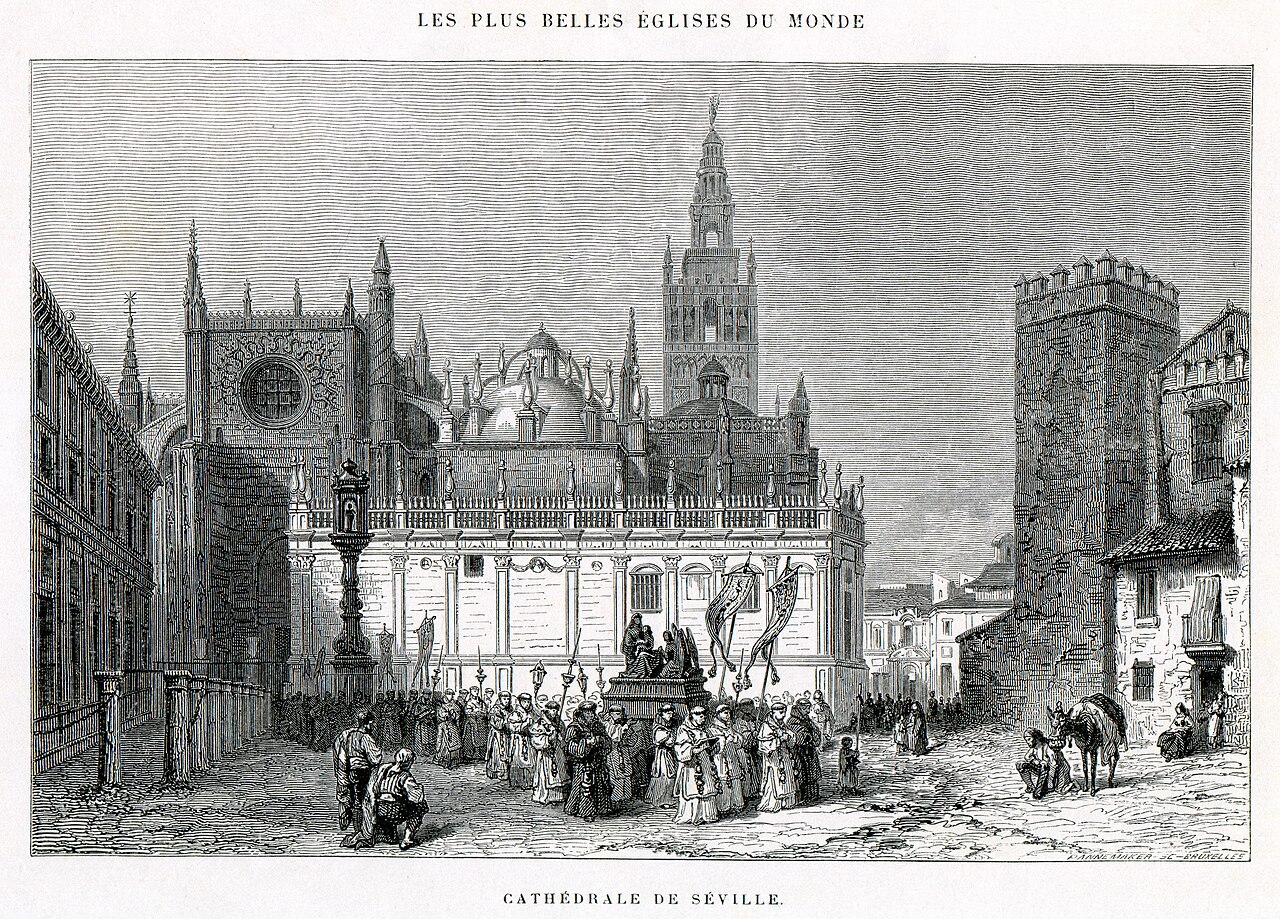
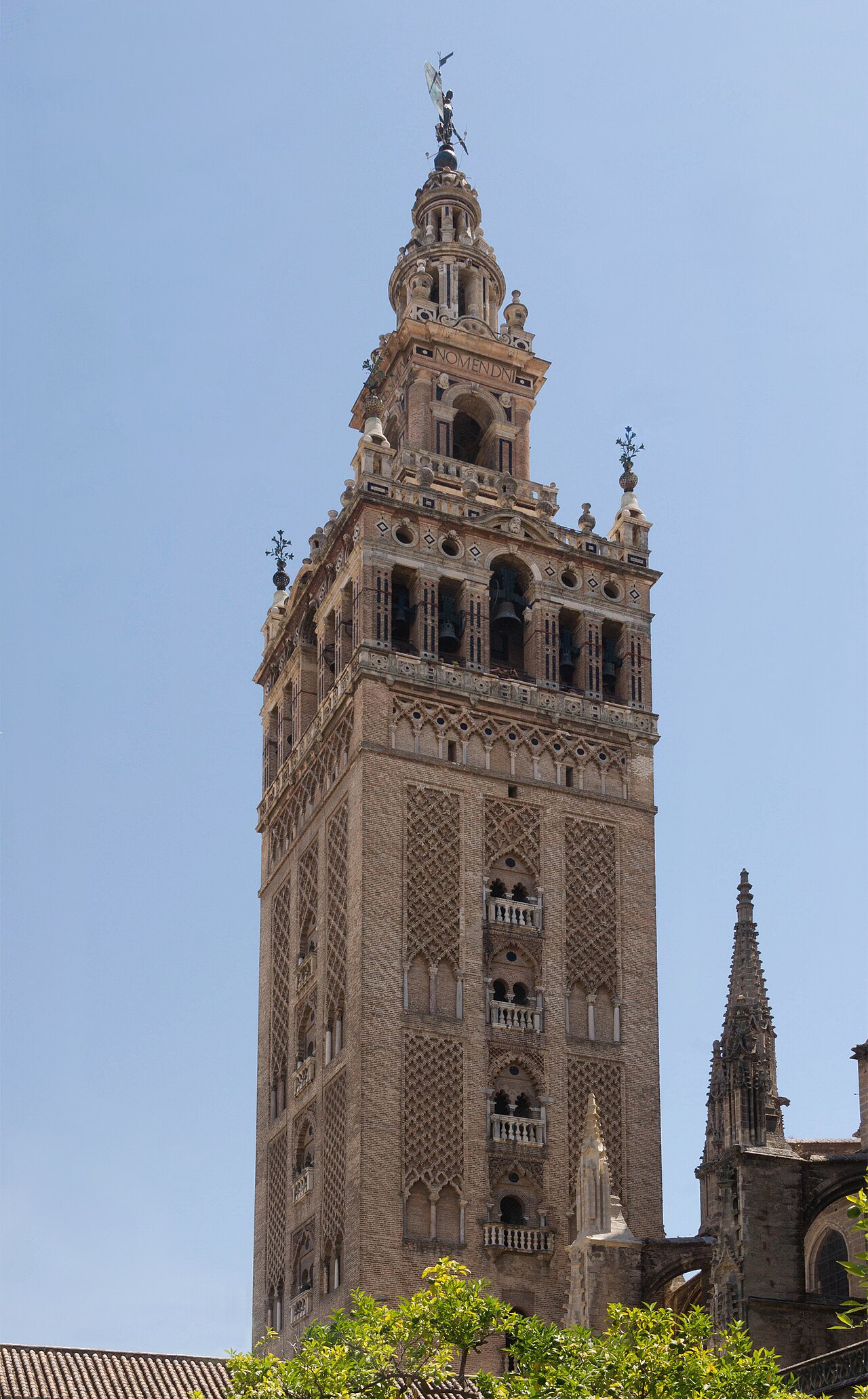
After its completion in the early sixteenth century, Seville Cathedral claimed a title that had belonged to Hagia Sophia for roughly a thousand years: the largest cathedral in the world. That distinction still holds today, making it not merely the largest Gothic cathedral but the largest of its kind across all Christian traditions. The Gothic section alone stretches 126 metres in length and 76 metres in width, with the central nave rising 36 metres and reaching 40 metres at the crossing. The Giralda tower, measured from the ground to its weather vane, stands at 104.5 metres.
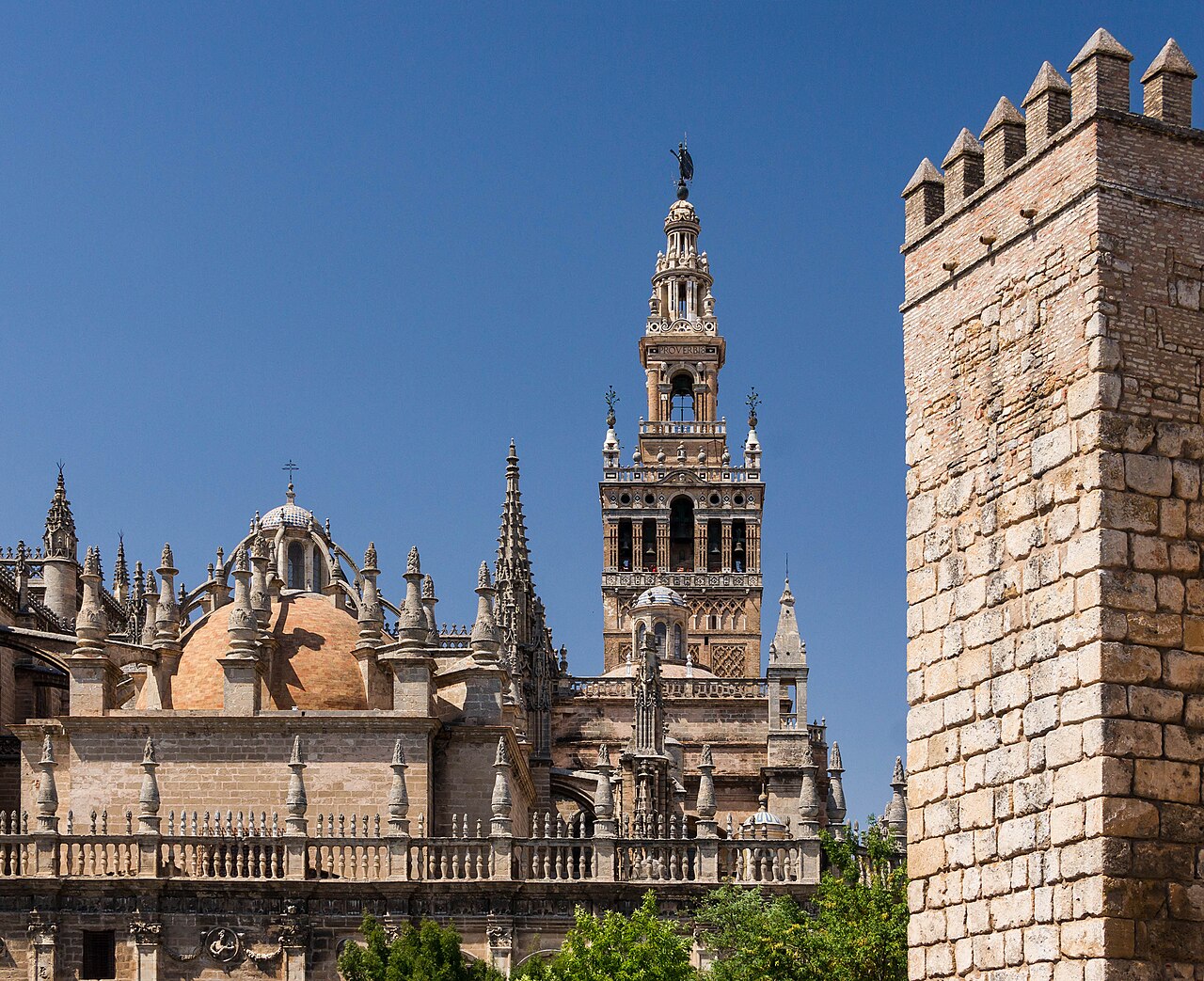
In 1987, UNESCO recognized the cathedral's extraordinary significance by inscribing it as a World Heritage Site alongside the neighbouring Alcázar palace and the General Archive of the Indies. Together, these three structures form a cultural ensemble in Andalusia that testifies to centuries of architectural ambition, political power, and artistic achievement. The cathedral's sheer physical presence in the urban landscape of Seville remains unmatched among Gothic buildings worldwide.
A Century of Ambition and International Craft
In July 1401, the leaders of Seville made a decision that would consume more than a hundred years of labour. Local oral tradition records the cathedral chapter declaring they wanted a church so beautiful and grand that onlookers would mistake them for madmen; the surviving documentary entry from that date simply called for a building so fine that none would equal it. Work commenced in 1402, though some sources place the true start at 1433, a delay partly caused by royal resistance to relocating the royal chapel's occupants.
The clergy of the parish contributed half their stipends to fund architects, masons, stained-glass artisans, carvers, and labourers. Because the surrounding urban fabric was cramped, demolition and construction proceeded in stages, beginning at the northeast corner. A remarkable succession of masters from across Europe directed the project: the Dutch Ysambert in 1434, the French Carlín from 1439 to 1454, Juan Normán until 1472, then two simultaneous master masons, followed by Master Ximón in 1497 and Alfonso Rodríguez from 1502 to 1513.
A Palimpsest of Faith and Monarchy
The cathedral's story begins not in Christendom but in the Islamic world. In 1172, Almohad caliph Abu Yaqub Yusuf commissioned a grand mosque on Seville's south end, designed by architect Ahmad ben Basso as a 113-by-135-metre rectangle exceeding 15,000 square metres, with seventeen prayer aisles oriented toward the qibla wall.
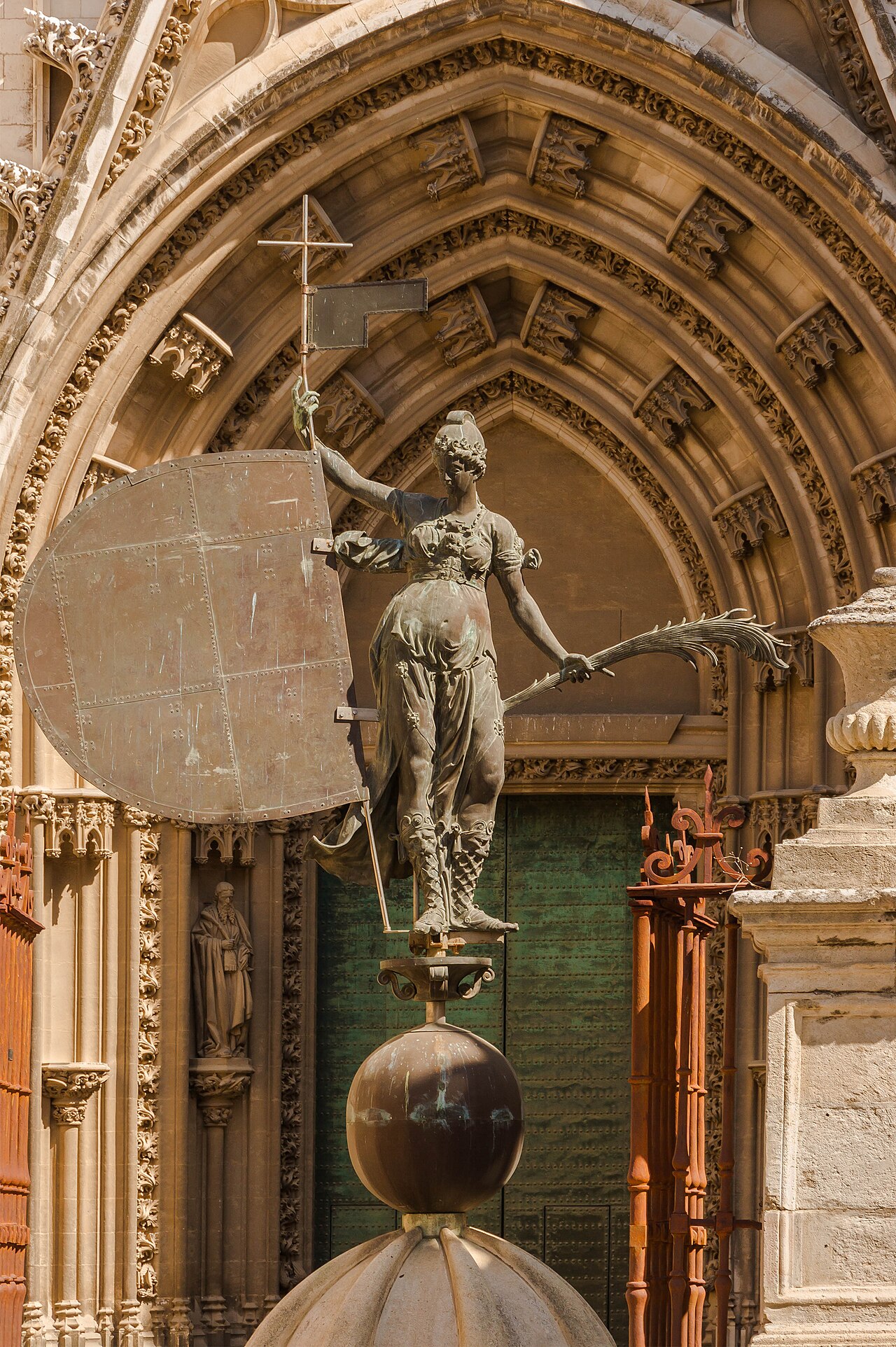
After Ferdinand III of Castile conquered the city in 1248, the mosque was converted into a cathedral: its orientation was altered, spaces were partitioned into chapels along the northern and southern walls, and the eastern half was given over to a royal chapel. That chapel still holds the remains of Ferdinand III, his son Alfonso the Wise, and their descendant Peter the Cruel. In 1478, the cathedral witnessed the baptism of Infante Juan, only son of Ferdinand II and Isabella I. The funerary monuments of cardinals Juan de Cervantes and Pedro González de Mendoza stand among its chapels, and the tombs of Christopher Columbus and his son Diego rest within its walls.
When the Sky Fell Twice
Seville Cathedral's most dramatic architectural episodes involved the crossing dome. In 1511, the original crossing lantern and several vaults collapsed, destroying everything beneath them. After debate among the authorities, Juan Gil de Hontañón the Elder was commissioned in 1513 to design a replacement; his ornate lierne-vaulted lantern was completed in 1519.
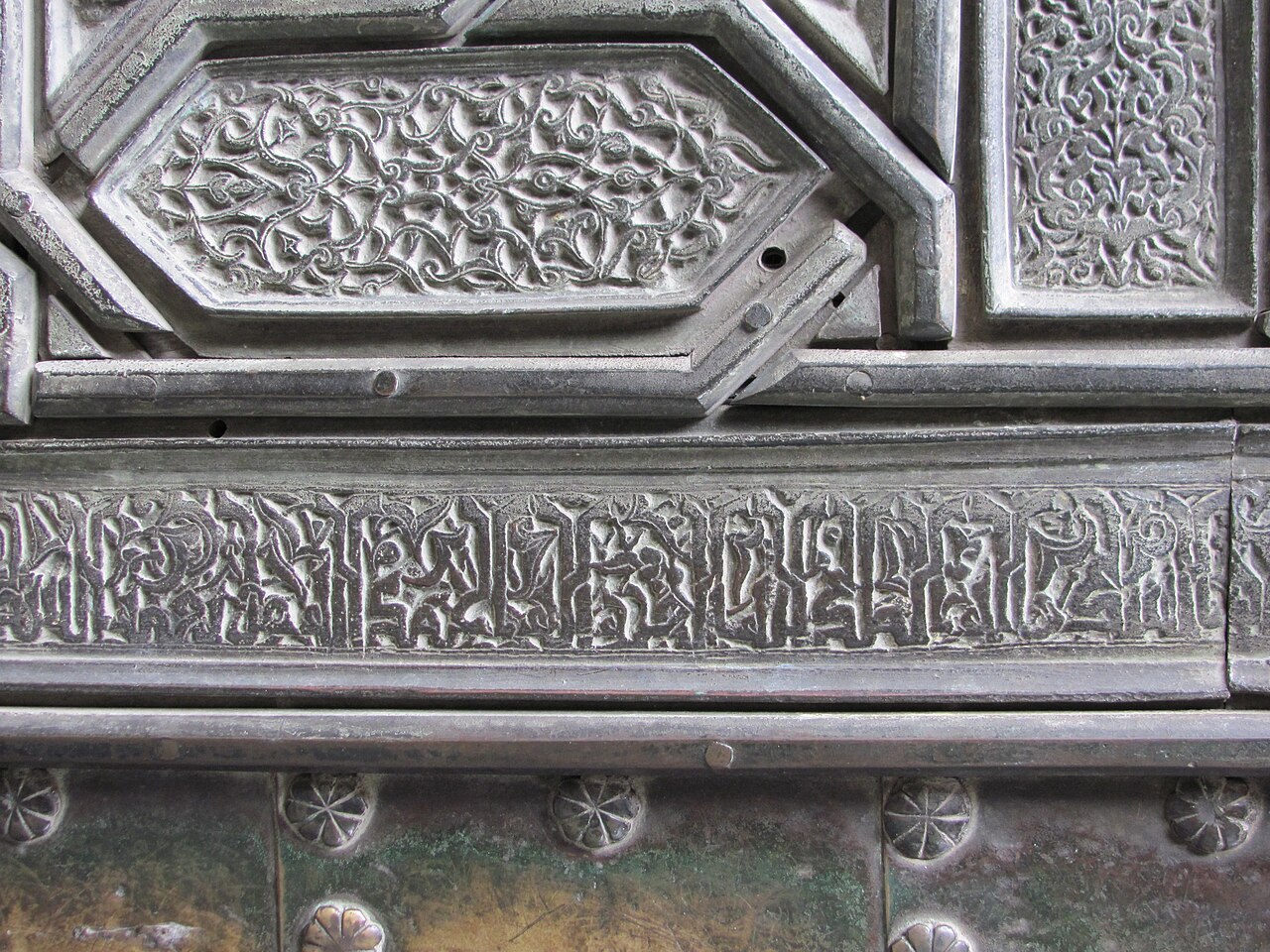
Centuries later, in 1888, an earthquake brought the crossing down a second time, again obliterating every precious object stored below the dome. Repairs and reconstruction of the dome continued well into the twentieth century, with work documented at least through 1903. The retable designed by Dutch artist Pieter Dancart in 1482 also illustrates the protracted timeline—its central section was not completed until 1526, and its side sections were not finished until between 1550 and 1594, long after Dancart's death in 1487.
Common Misconceptions (Editorial)
Some believe that Seville Cathedral was always a Christian cathedral, but it was originally built as an Almohad mosque between 1172 and 1198 and was only converted after Ferdinand III’s conquest in 1248. Another common error is that the Giralda tower is purely a Gothic or Renaissance Christian bell tower, when in fact its lower section was originally the minaret of that same mosque, built between 1184 and 1198, with only its topmost section dating from the Renaissance.
Why It Matters (Editorial)
Seville Cathedral endures as a monument to how centuries of religious and political change can physically reshape a sacred space, from mosque to cathedral, and from caliphate to kingdom. Its immense Gothic scale, built atop Islamic foundations, reflects the ambition of a city that wanted to proclaim its wealth and faith, while the repeated collapses and reconstructions of its crossing lantern remind us that even the grandest human creations are vulnerable to time and earthquake.
More in Great Cathedrals
Sources
Compiled from Wikipedia and the sources listed below. Text from Wikipedia is available under CC BY-SA 4.0; this entry is adapted from it.
- Wikipedia: Seville Cathedral (CC BY-SA 4.0).
Spotted an error? Know more?
Reader corrections go straight into our review queue. Suggest an edit · How this site is sourced