Christopher Columbus
Italian explorer who opened the Americas to European colonization.
Last updated

via Wikipedia: Christopher Columbus · see source
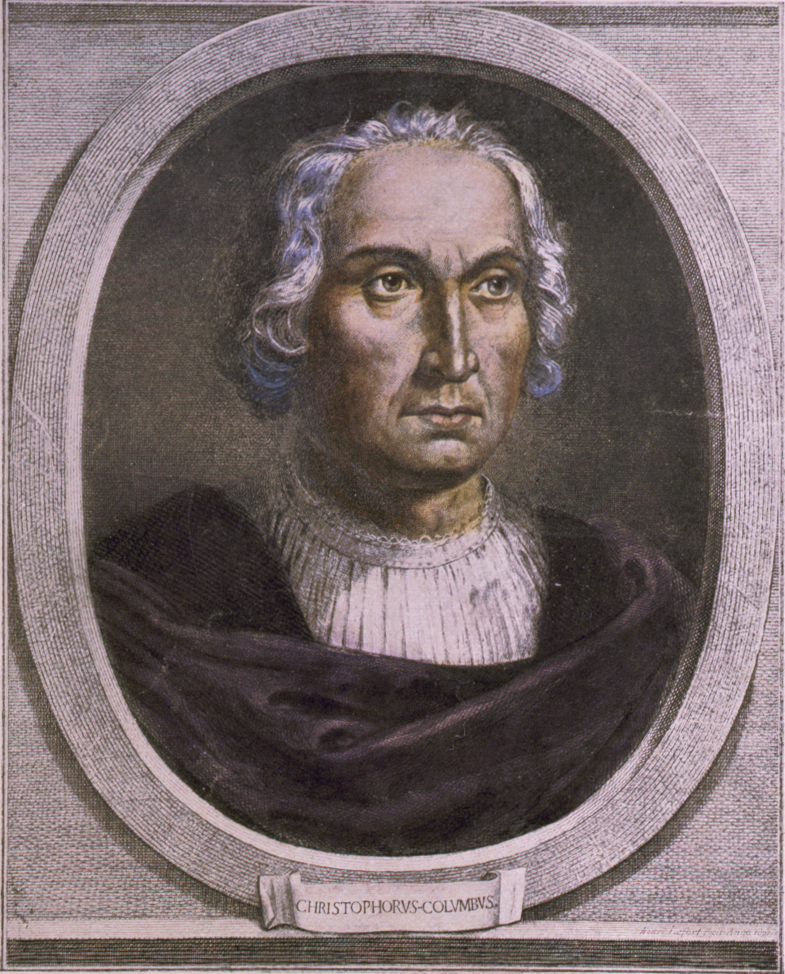
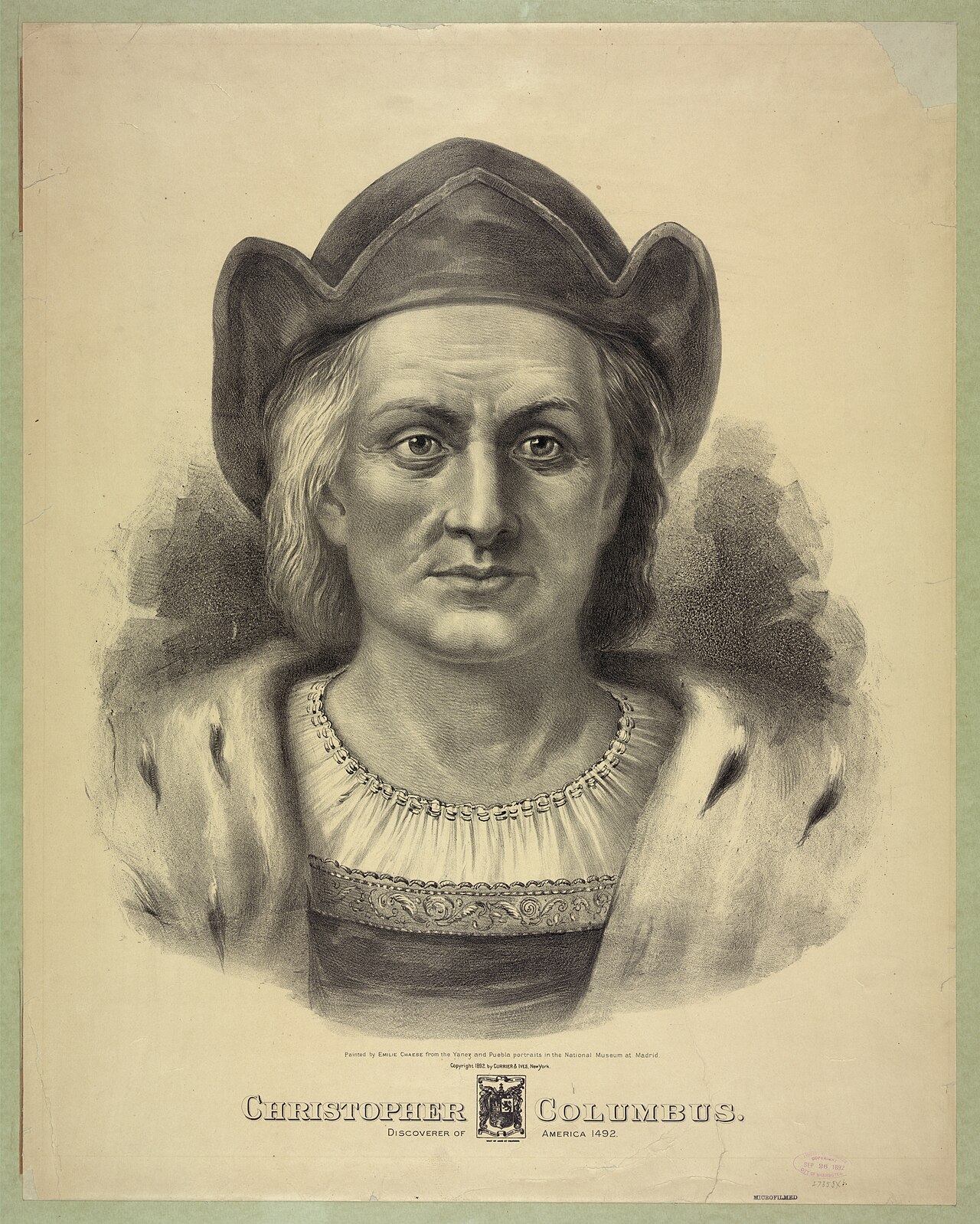
Christopher Columbus was an Italian explorer and navigator from the Republic of Genoa who completed four Spanish transatlantic voyages for the Catholic Monarchs.[1] His expeditions opened the way for widespread European exploration and colonization of the Americas.[1] The exchange of plants, animals, diseases, and ideas between the Old World and the New World that occurred after Columbus's initial crossing is called the Columbian exchange.[2]
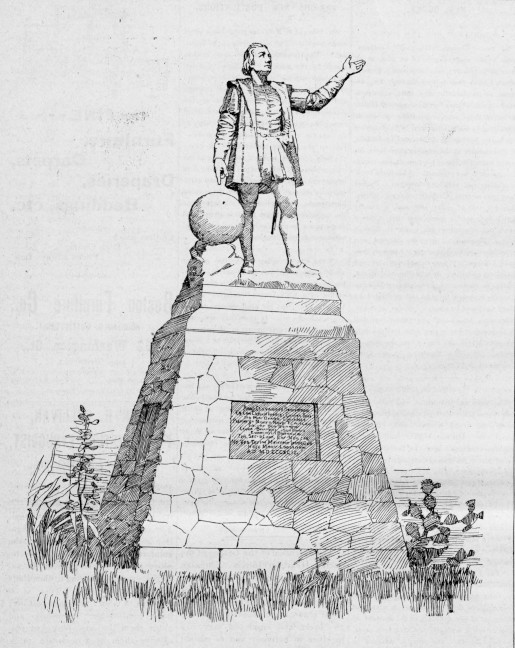
Life and work
Columbus was born in the Republic of Genoa between 25 August and 31 October 1451, the son of wool weaver Domenico Colombo and Susanna Fontanarossa.[3][4] He learned Latin, Portuguese, and Castilian, and read widely about astronomy, geography, and history.[5] After years of petitioning, King Ferdinand and Queen Isabella of Spain agreed to support his voyage in 1492.[6][7] Columbus began sailing at 14 and journeyed to locations including the British and Irish Isles and the area that is now Ghana.[8][7]
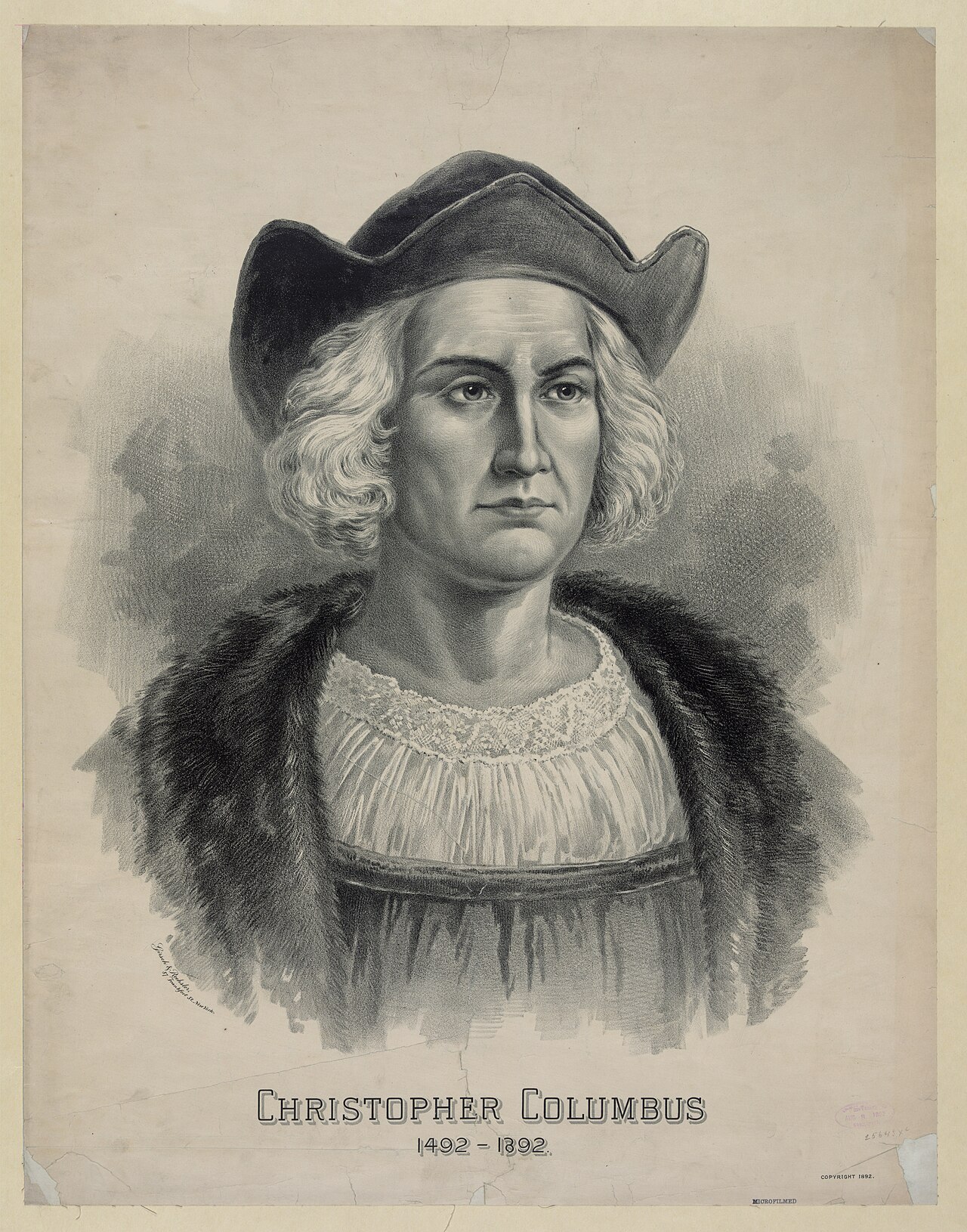
Columbus wed Filipa Moniz Perestrelo, a Portuguese noblewoman, and she gave birth to his son Diego; later, Beatriz Enríquez de Arana, a Castilian mistress, gave birth to his son Ferdinand.[8] King John II of Portugal turned down Columbus's plan for a westward journey after his advisors pointed out that Columbus's distance estimate was only a quarter of the correct figure.[9] In his later voyages, Columbus would not accept that the lands he visited were not part of Asia.[10] Columbus was taken into custody and removed from his positions in 1500, while on his third voyage.[11]
What the cited sources add
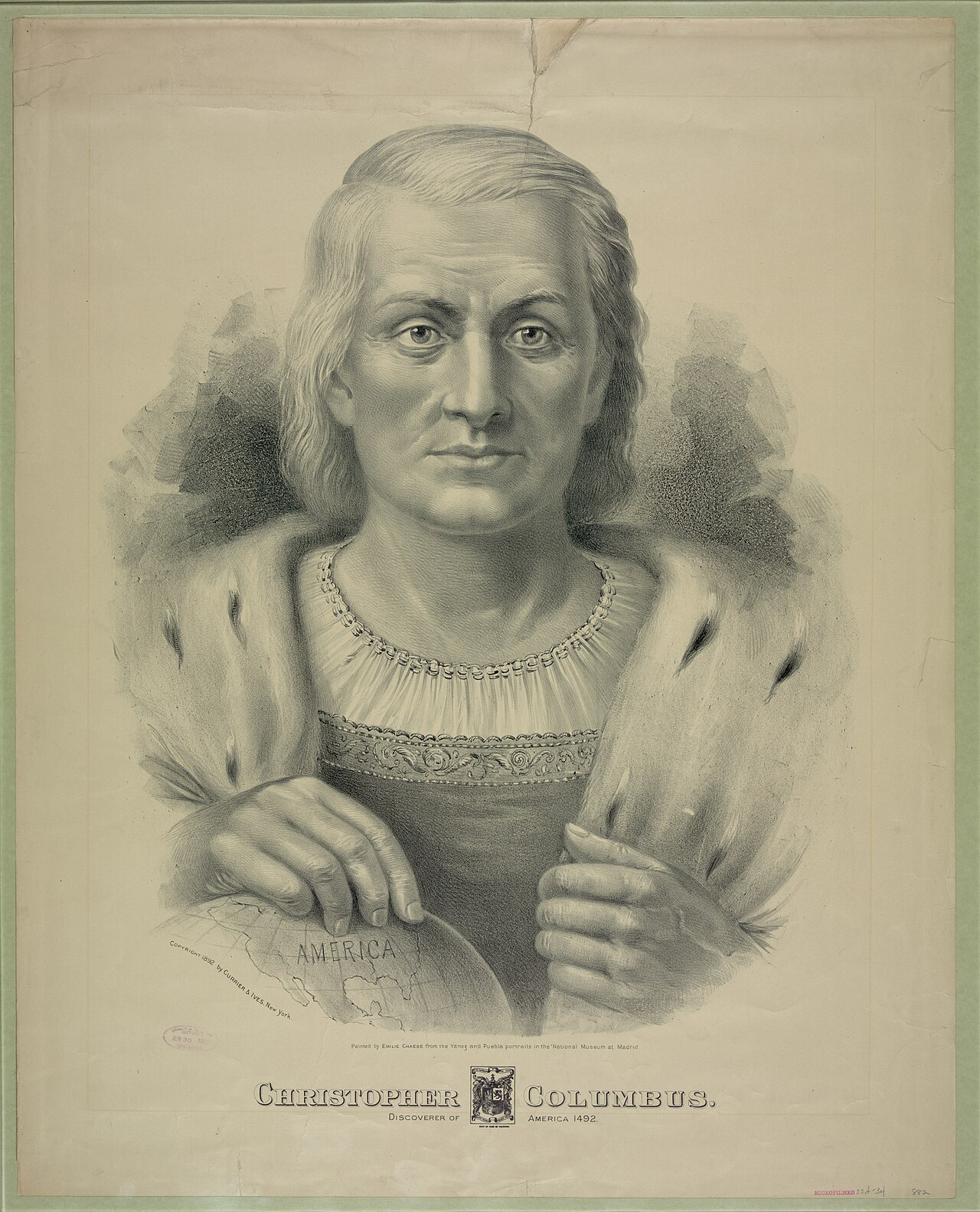
Morgan states that Columbus carried ideas that boded ill for Indies natives and assumed the strange plants were unfamiliar only because he was insufficiently versed in writings.[12] A CBS News report by Mark Abrams says a maritime historian claims Columbus may not have achieved fame had he not survived a skirmish at sea 16 years earlier.[13] The same report states Columbus was wounded and had to swim six miles to the coast of Portugal.[13] A 2006 paper by Carol Delaney contends that Columbus's quest for Asia was driven by his Christian millennialist beliefs.[14][15]
References
- Wikipedia, "Christopher Columbus" (CC BY-SA 4.0), which cites: ; Delaney, "Columbus and the Quest for Jerusalem", Free Press/Simon and Schuster, 2011, p. 74; Delaney, "Columbus and the Quest for Jerusalem", Free Press/Simon and Schuster, 2011, p. 74; Flint, "Christopher Columbus", 16 May 2021 (original not read by us) en.wikipedia.org
- Wikipedia, "Christopher Columbus" (CC BY-SA 4.0), which cites: Dowlah, "Cross-Border Labor Mobility: Historical and Contemporary Perspectives", Palgrave Macmillan, 2020; Mills, Keneth and Taylor, William B., Colonial Spanish America: A Documentary History, p. 36, SR Books, 1998, (original not read by us) en.wikipedia.org
- Wikipedia, "Christopher Columbus" (CC BY-SA 4.0), which cites: Edwards, "Ferdinand and Isabella", Routledge, 2014, p. 118 (original not read by us) en.wikipedia.org
- Wikipedia, "Christopher Columbus" (CC BY-SA 4.0), which cites: Phillips Phillips 1992, p. 126; "Columbus, Diego (brother)"; Bergreen 2011, p. 56; King, "The Bookseller of Florence: The Story of the Manuscripts That Illuminated the Renaissance", Atlantic Monthly Press, 2021, p. 264 (original not read by us) en.wikipedia.org
- Wikipedia, "Christopher Columbus" (CC BY-SA 4.0), which cites: Morgan, "Columbus' Confusion About the New World", October 2009 (we also read that source) en.wikipedia.org
- Wikipedia, "Christopher Columbus" (CC BY-SA 4.0), which cites: Muzio, "The Tragedy of Human Development: A Genealogy of Capital as Power", Rowman & Littlefield, 2017, p. 58; Echevarría, "The Cambridge History of Latin American Literature", Cambridge University Press, 1996, p. 63; Johanyak, "The English Renaissance, Orientalism, and the Idea of Asia", Springer, 2010, p. 136; King, "Ambition, A History: From Vice to Virtue", Yale University Press, 2013 (original not read by us) en.wikipedia.org
- Wikipedia, "Christopher Columbus" (CC BY-SA 4.0), which cites: Phillips Phillips 1992, p. 126 (original not read by us) en.wikipedia.org
- Wikipedia, "Christopher Columbus" (CC BY-SA 4.0), which cites: Fernández-Armesto, "Columbus on Himself", Hackett, 2010, p. 270; Taviani, "The Christopher Columbus Encyclopedia", Springer, 2016, p. 24–25; Phillips Phillips 1992, p. 126 (original not read by us) en.wikipedia.org
- Wikipedia, "Christopher Columbus" (CC BY-SA 4.0), which cites: Rickey, "How Columbus Encountered America", Mathematics Magazine, 1992, p. 224; Morison 1991, p. (original not read by us) en.wikipedia.org
- Wikipedia, "Christopher Columbus" (CC BY-SA 4.0), which cites: Horodowich, "The New World in Early Modern Italy, 1492–1750", Cambridge University Press, 2017, p. 23; Cohen, "The Naming of America", Umc.sunysb.edu (original not read by us) en.wikipedia.org
- Wikipedia, "Christopher Columbus" (CC BY-SA 4.0), which cites: Márquez, "Don Diego Colón, almirante, virrey y gobernador de las Indias", Editorial CSIC – CSIC Press, 1982, p. 175, note 4 (original not read by us) en.wikipedia.org
- Morgan, "Columbus' Confusion About the New World", October 2009. facts only, no text reused. smithsonianmag.com
- Abrams, "La Salle Professor Says Columbus Almost Died Years Before His New World Trip", CBS News, October 13, 2014. facts only, no text reused. cbsnews.com
- Carol Delaney, "Columbus's Ultimate Goal: Jerusalem", Comparative Studies in Society and History (2006), doi:10.1017/s0010417506000119. OpenAlex metadata CC0; paper not read. doi.org
- Wikipedia, "Christopher Columbus" (CC BY-SA 4.0), which cites: Delaney, "Columbus's Ultimate Goal: Jerusalem", Comparative Studies in Society and History, 8 March 2006, p. 260–92; Hamdani, "Columbus and the Recovery of Jerusalem", Journal of the American Oriental Society, 1979, p. 39–48 (we also read that source) en.wikipedia.org
Each numbered sentence above was checked against the source it cites before publication. Sentences citing Wikipedia adapt text from the English Wikipedia article Christopher Columbus (contributors), used under CC BY-SA 4.0; this entry is available under the same licence. Other sources were used for facts only; no text or images are copied from them.
Also in the Codexery
More in Great Explorers
Sources
Compiled from Wikipedia and the sources listed below. Text from Wikipedia is available under CC BY-SA 4.0; this entry is adapted from it.
- Wikipedia: Christopher Columbus (CC BY-SA 4.0).
Spotted an error? Know more?
Reader corrections go straight into our review queue. Suggest an edit · How this site is sourced