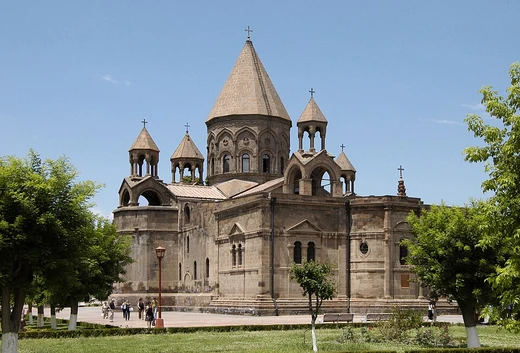
Pisa Cathedral
Medieval cathedral, seat of the Archbishop of Pisa.
Last updated

via Wikipedia: Pisa Cathedral · see source
Where it is
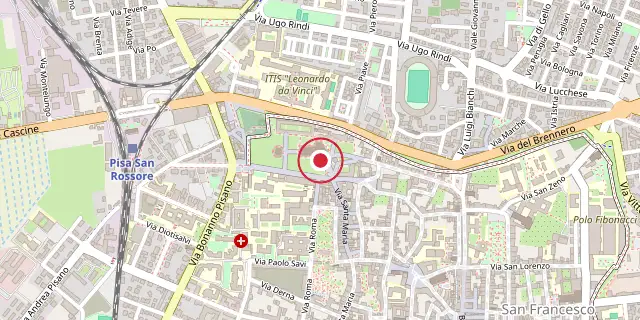
Coordinates: 43°43′23″N 10°23′46″E (43.7230, 10.3960) · Open in OpenStreetMap
Coordinates and connected clubs: the infobox of Wikipedia: Pisa Cathedral (CC BY-SA 4.0). Map: drawn by Codexery from OpenStreetMap tiles.
Pisa Cathedral, officially the Primatial Metropolitan Cathedral of the Assumption of Mary, is a medieval Catholic cathedral in the Piazza dei Miracoli in Pisa, Italy. It is the oldest of the three structures in the plaza, followed by the Pisa Baptistry and the Campanile known as the Leaning Tower of Pisa. Consecrated in 1118, it is the seat of the Archbishop of Pisa and a notable example of Romanesque architecture, particularly the style known as Pisan Romanesque. Construction began in 1064 and was completed in 1092, with additional enlargements and a new façade built in the 12th century, and the roof replaced after damage from a fire in 1595.
Lore & Background
Construction on the cathedral began in 1064 by the architect Buscheto, with expenses paid using spoils from fighting against Muslims in Sicily and Ifriqiya. The church was erected outside Pisa's early medieval walls to show that Pisa had no fear of being attacked. The chosen area had been used in the Lombard era as a necropolis, and an earlier unfinished church named Santa Maria had stood there.
Buscheto's grand new church was initially called Santa Maria Maggiore until it was officially named Santa Maria Assunta. In 1092 the cathedral was declared primatial church, and it was consecrated in 1118 by Pope Gelasius II. In the early 12th century the cathedral was enlarged under architect Rainaldo, who increased the length of the nave by adding three bays, enlarged the transept, and planned a new façade completed by workers under sculptors Guglielmo and Biduino.
Work was finished in 1180, as documented by the date on bronze knockers by Bonanno Pisano on the main door. The December 1187 papal election took place in Pisa Cathedral, with Paulino Scolari being elected Pope Clement III. After the fire of 1595, the roof was replaced and sculptors from the workshop of Giambologna, including Gasparo Mola and Pietro Tacca, created the three bronze doors of the façade.
Common Misconceptions (Editorial)
- A common misconception is that the Leaning Tower of Pisa is the oldest structure in the Piazza dei Miracoli. In fact, the cathedral is the oldest of the three, followed by the baptistry and then the campanile.
- Some may assume the cathedral’s construction was a swift, single-phase effort. Actually, although the main building was completed in 1092, major enlargements—including adding three bays to the nave and a new façade—continued into the late 12th century, and the roof was replaced after a 1595 fire.
Why It Matters (Editorial)
Pisa Cathedral endures not only as a masterpiece of Pisan Romanesque architecture but also as a monument to the maritime republic’s medieval ambition and wealth, funded by spoils from campaigns in Sicily and North Africa. Its history—from hosting a papal election to preserving Cimabue’s last documented work—connects visitors to a period when Pisa rivaled Venice and shaped the political and artistic landscape of Italy.
Reader's Guide
Pisa Cathedral is significant as a major example of Pisan Romanesque architecture, incorporating classical, Lombard-Emilian, Byzantine, and Islamic stylistic elements, reflecting the international presence of Pisan merchants. Its construction began in 1064, the same year St. Mark's Basilica began reconstruction in Venice, evidencing rivalry between the two maritime republics. The interior offers a spatial effect similar to great mosques, with raised lancet arches, alternating layers of black and white marble, and an elliptical dome inspired by the Moors. The granite Corinthian columns between the nave and the apse come from the mosque of Palermo, spoils from a 1064 joint attack with the Normans.
The large mosaic of Christ Enthroned with the Virgin and Saint John in the apse features the face of Saint John executed by Cimabue in 1302, the last work by Cimabue and the only one with certified documentation; it survived the fire of 1595. The pulpit by Giovanni Pisano (1302–1310) survived the fire but was dismantled during restoration and not reassembled until 1926. The cathedral also hosted the December 1187 papal election that elected Pope Clement III.
Frequently Asked Questions
Who designed Pisa Cathedral and when was it built?
The architect was Buscheto, and construction ran from 1064 until the structure was completed in 1092. The formal consecration ceremony, however, took place twenty-six years later in 1118.
What architectural style does Pisa Cathedral exemplify?
It is a defining example of Pisan Romanesque architecture, a regional Italian school within the wider Romanesque tradition. The building is recognized for its distinctive white-and-dark marble striping, rounded arches, and harmonious proportional layout.
More in Great Cathedrals
Sources
Compiled from Wikipedia and the sources listed below. Text from Wikipedia is available under CC BY-SA 4.0; this entry is adapted from it.
- Wikipedia: Pisa Cathedral (CC BY-SA 4.0).
Spotted an error? Know more?
Reader corrections go straight into our review queue. Suggest an edit · How this site is sourced