
Alcedinidae
Brightly coloured birds with cosmopolitan distribution and diverse diets.

Sharpe, Richard Bowdler · Public domain
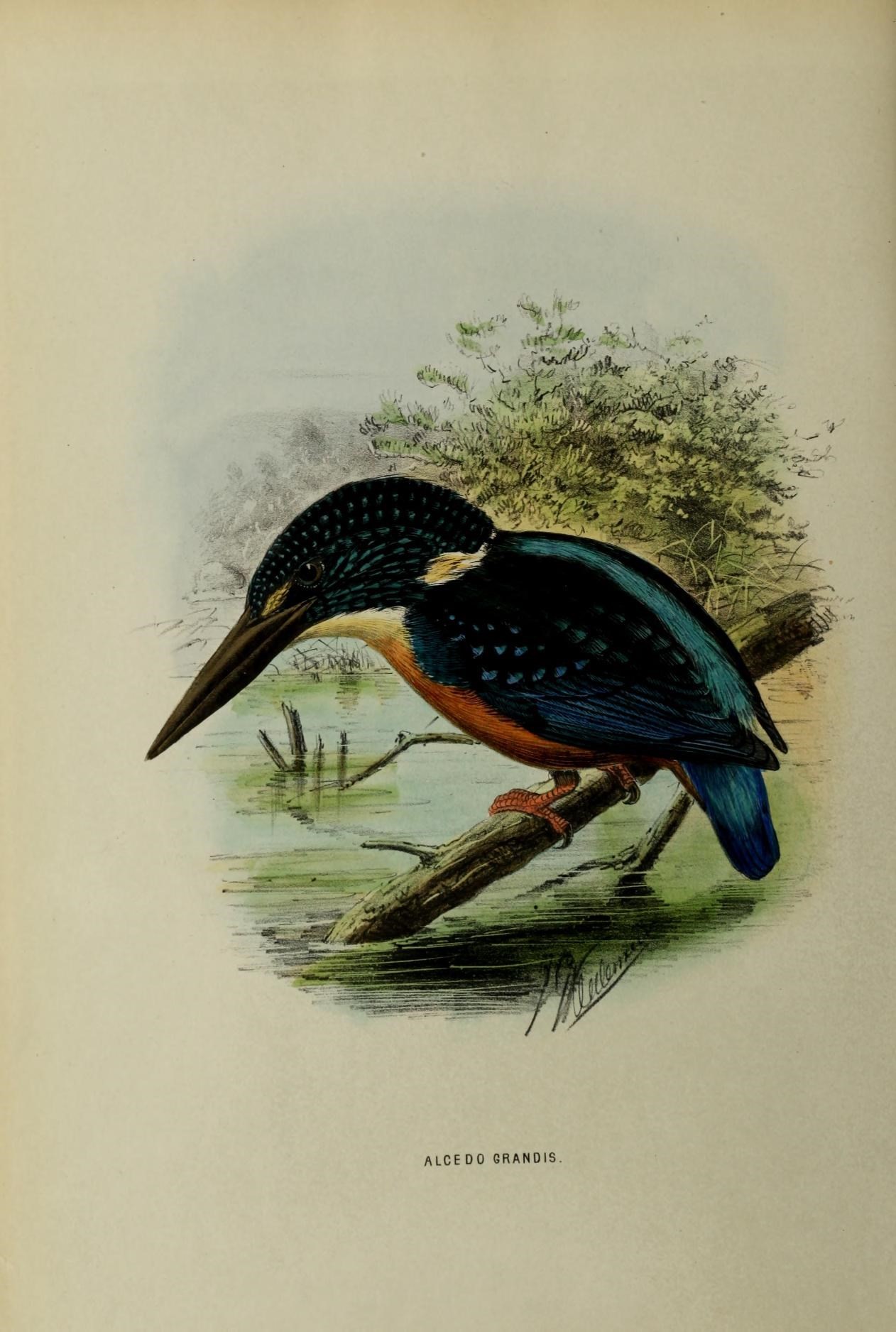
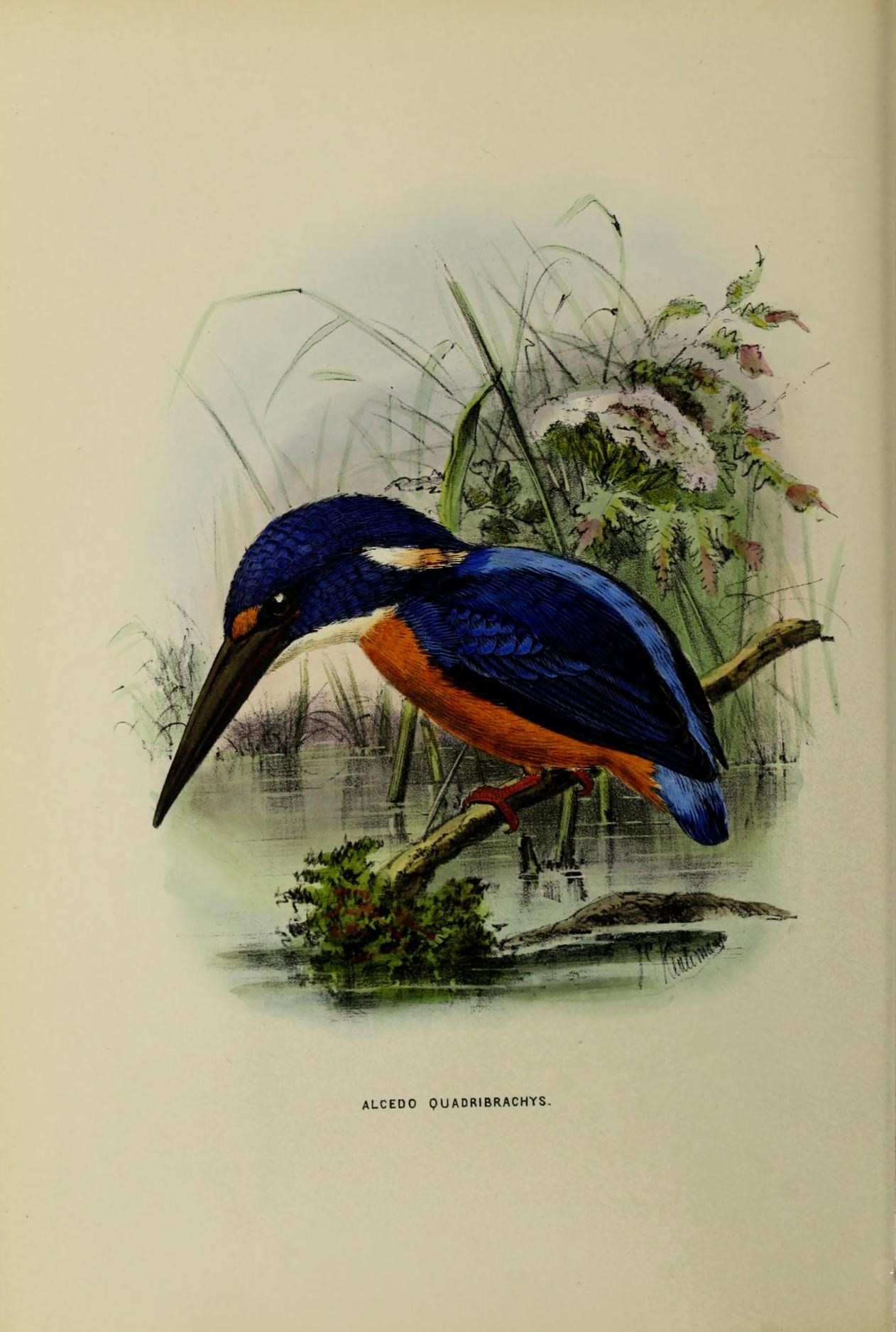
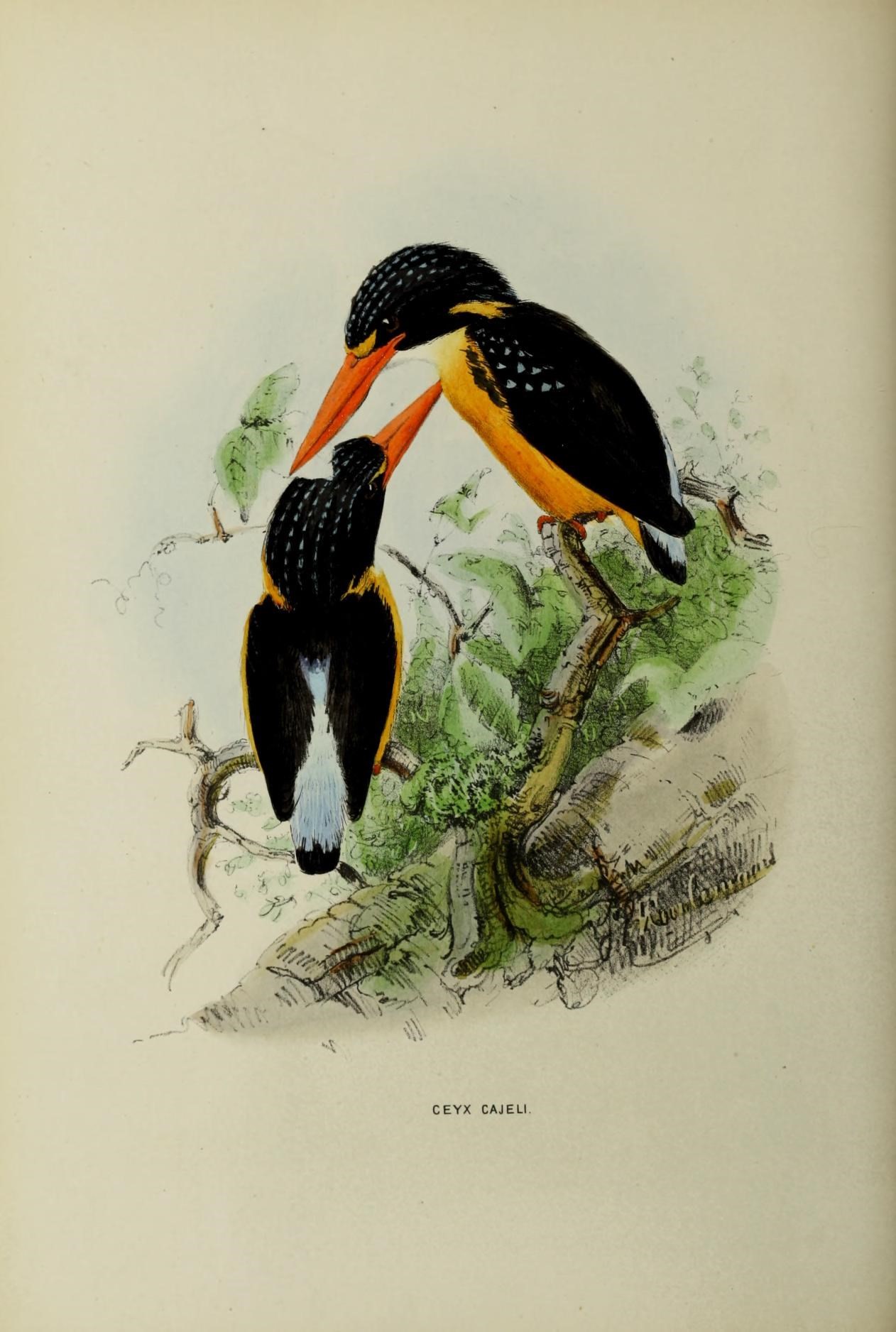
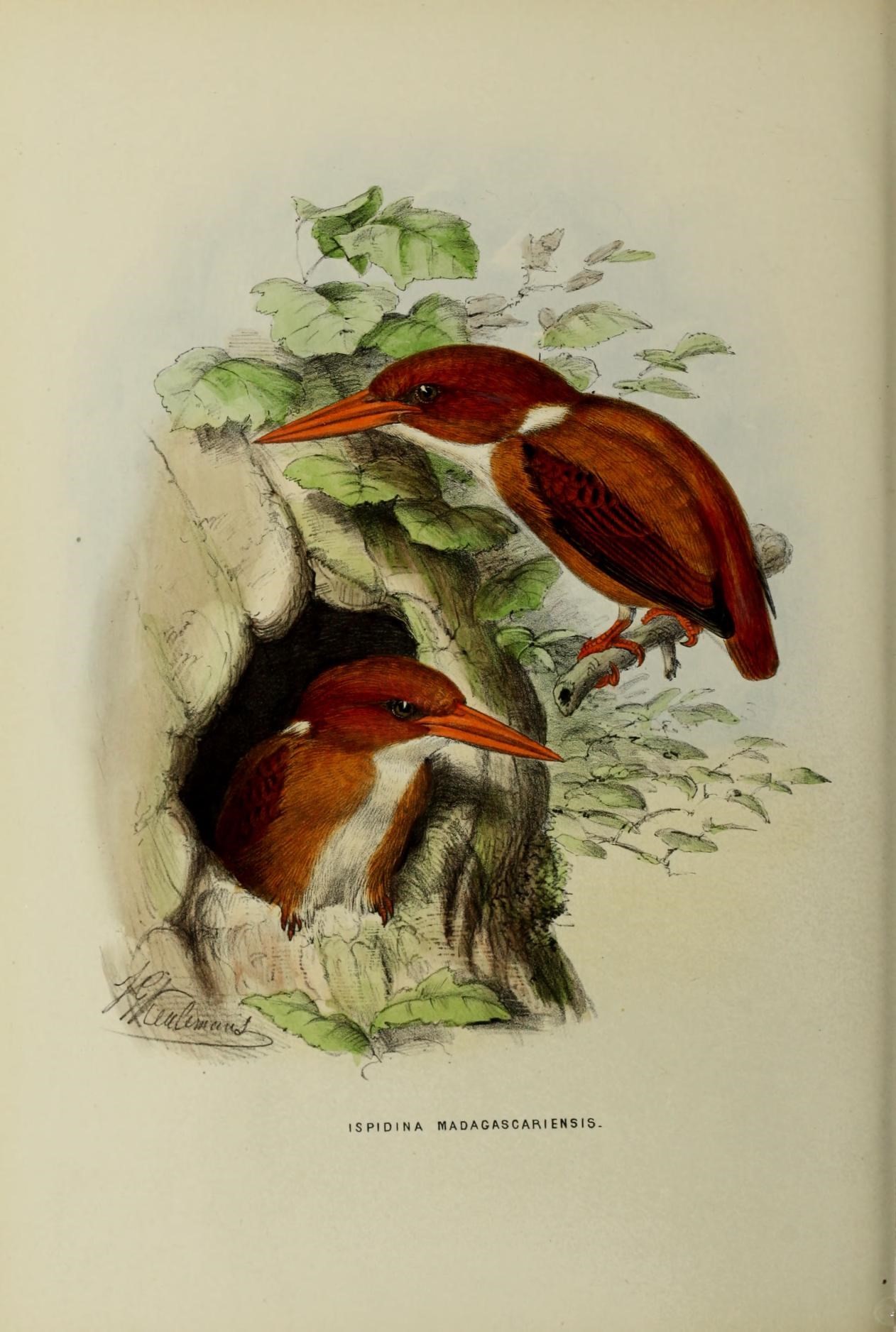
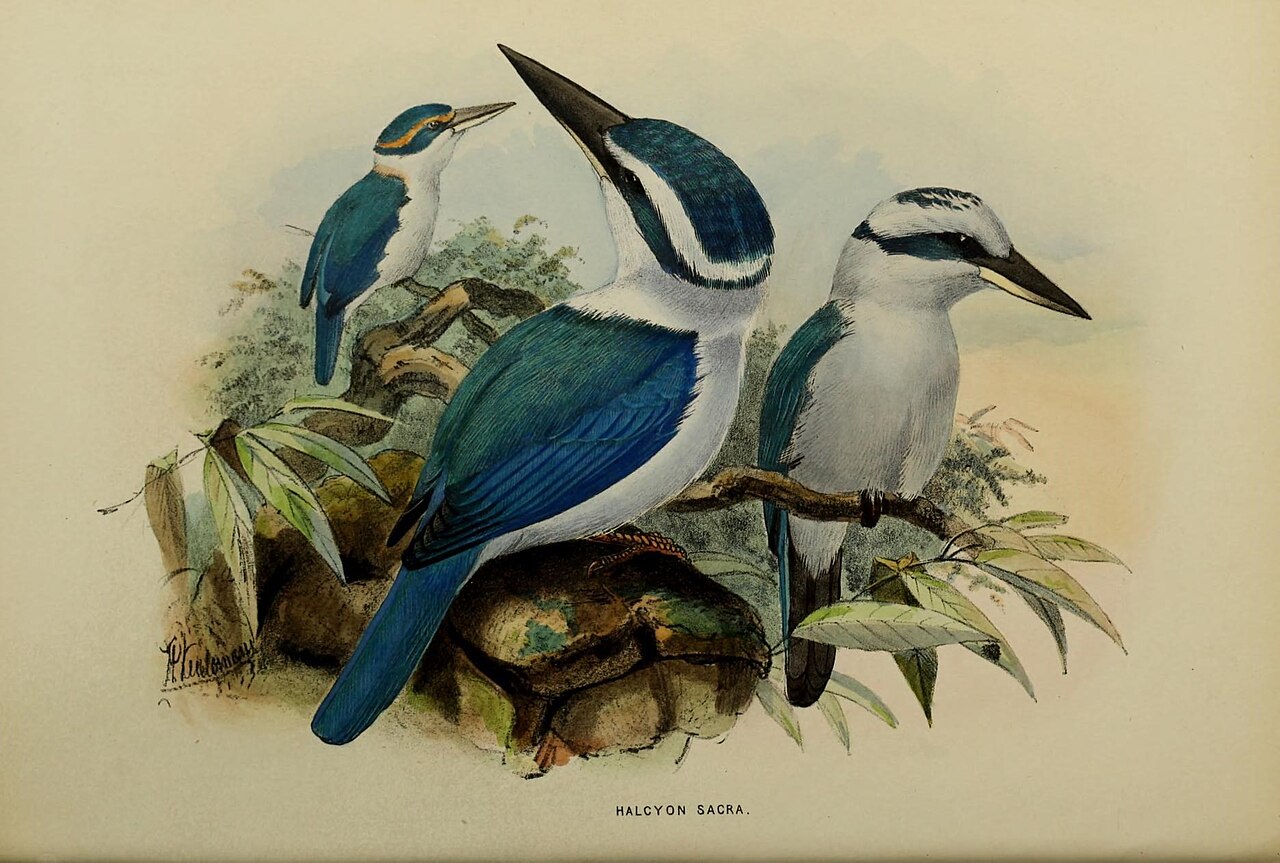
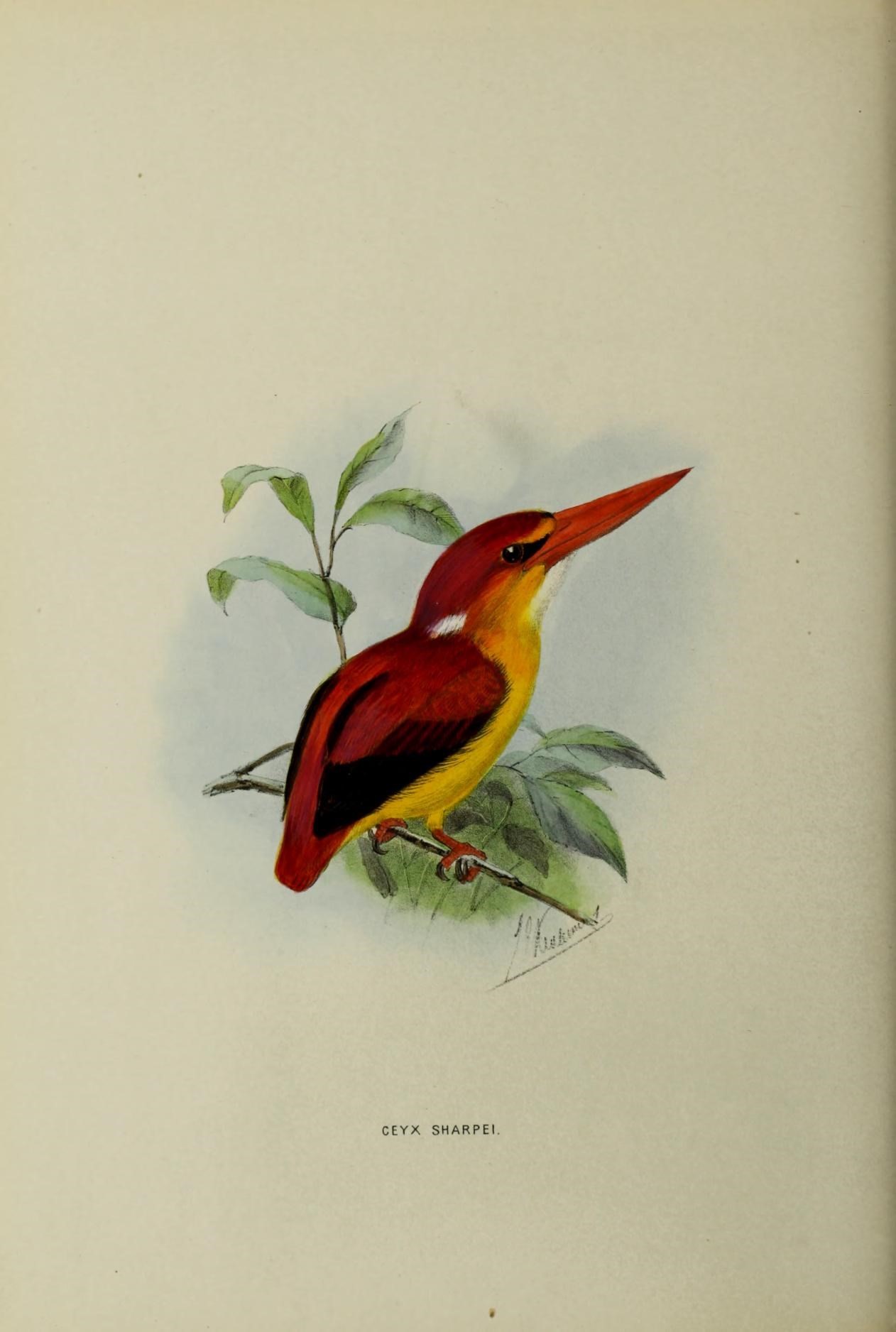
Kingfishers, scientifically classified as the family Alcedinidae, are small to medium-sized birds known for their vivid colors and belong to the order Coraciiformes. They are found worldwide, with the highest concentration of species in tropical areas of Africa, Asia, and Oceania, although they also inhabit Europe and the Americas. These birds typically live in deep forests near calm ponds and small rivers. The family includes around 94 species, grouped into three subfamilies and 19 genera. All kingfishers share physical traits such as large heads, long, sharp, pointed bills, short legs, and stubby tails. Most species display bright plumage, with only subtle differences between males and females. The majority are tropical, and slightly more than half are found exclusively in forests.
Their diet is varied, and they usually catch prey by swooping down from a perch. While many people associate kingfishers with rivers and fish, numerous species live away from water and feed on small invertebrates. Like other birds in their order, they nest in cavities, often digging tunnels into natural or artificial banks. Some kingfishers build nests in arboreal termite mounds. A few species, especially those on islands, face the threat of extinction. In Britain, the term "kingfisher" typically refers to the common kingfisher.
The family name Alcedinidae was first used by French scholar Constantine Samuel Rafinesque in 1815. It sits within the order Coraciiformes, which also includes motmots, bee-eaters, todies, rollers, and ground-rollers. The three subfamilies are the tree kingfishers (Halcyoninae), river kingfishers (Alcedininae), and water kingfishers (Cerylinae). Some taxonomists use the name Daceloninae for the tree kingfisher subfamily, but Halcyoninae, introduced by Nicholas Aylward Vigors in 1825, takes priority over Charles Lucien Bonaparte’s 1841 name. A few experts treat each subfamily as its own family. Despite their name, many kingfishers are not specialized fish-eaters; in fact, none of the Halcyoninae species eat fish.
The scientific name comes from Greek mythology, where the birds were believed to nest on the open sea. The Greeks called them *halkyons* (Latin *halcyon*), from *hals* (sea) and *kyon* (born). According to myth, the gods granted these birds the power to calm the waters while nesting.
- Scientific name
- Alcedinidae
- Order
- Coraciiformes
- Number of species
- ~94
- Subfamilies
- 3
- Genera
- 19
- Distribution
- Cosmopolitan, primarily tropical
- Oldest fossils
- Lower Eocene (Wyoming, ~56–47.8 Mya) and Middle Eocene (Germany, ~47.8–37.8 Mya)
Lore & Background
The kingfisher family Alcedinidae was introduced (as Alcedia) by French polymath Constantine Samuel Rafinesque in 1815. It is divided into three subfamilies: tree kingfishers (Halcyoninae), river kingfishers (Alcedininae), and water kingfishers (Cerylinae). The name Halcyoninae, introduced by Nicholas Aylward Vigors in 1825, has priority over Daceloninae. The scientific name derives from Greek mythology, where the gods gave halkyons the ability to calm the seas when nesting, and from the myth of Alcyone and Ceyx, who were revived as kingfishers.
Reader's Guide
Kingfishers are significant as a diverse family of birds that occupy a wide range of habitats, from deep forests near calm ponds to dry deserts and tropical coral atolls. While often associated with rivers and fish, many species live away from water and eat small invertebrates. The centre of kingfisher diversity is the Australasian realm, though the group originated in the Indomalayan region around 27 million years ago. Fossil kingfishers have been described from Lower Eocene rocks in Wyoming and Middle Eocene rocks in Germany. The family's bright plumage results from feather structure causing the Tyndall effect, not pigments or iridescence (except in American kingfishers). Their excellent binocular vision and ability to compensate for water refraction aid in hunting. Some insular species are threatened with extinction. The common kingfisher is the species typically referred to in Britain.
Did You Know?
- The smallest kingfisher is the African dwarf kingfisher, averaging 10 cm in length and 9–12 g in weight.
- The shovel-billed kingfisher uses its atypical bill to dig through forest floor in search of prey.
Gallery
Frequently Asked Questions
What is Alcedinidae?
Alcedinidae is the family that groups together all kingfisher species, a set of small to medium-sized birds placed in the order Coraciiformes. They are instantly recognizable by their vivid plumage and are found on every inhabited continent.
How many species are in the Alcedinidae family?
The family comprises roughly 94 species, split across three subfamilies and 19 genera. That diversity makes it one of the larger families within Coraciiformes.
Where do kingfishers (Alcedinidae) live?
They have a cosmopolitan range, with the highest concentration of species in tropical regions of Africa, Asia, and Oceania, though populations also occur in Europe and the Americas. Their preferred habitats are deep forests near calm ponds and small rivers.
What physical traits do all kingfishers share?
Every member of the family has a large head, a long sharp pointed bill, and short legs, combined with brightly colored feathers. These features are consistent across all 19 genera in the family.
What do Alcedinidae eat?
Kingfishers have diverse diets that vary by species, but they generally rely on their long pointed bills to catch fish, insects, and other small prey. This dietary flexibility helps them thrive in such a wide range of habitats worldwide.
More in Bird families 1-24
Spotted an error? Know more?
Reader corrections go straight into our review queue. Suggest an edit · How this site is sourced