
Aegithalidae
Small, active passerines with long tails, found mainly in Eurasia.

Hermann, 1804 · CC BY-SA 3.0
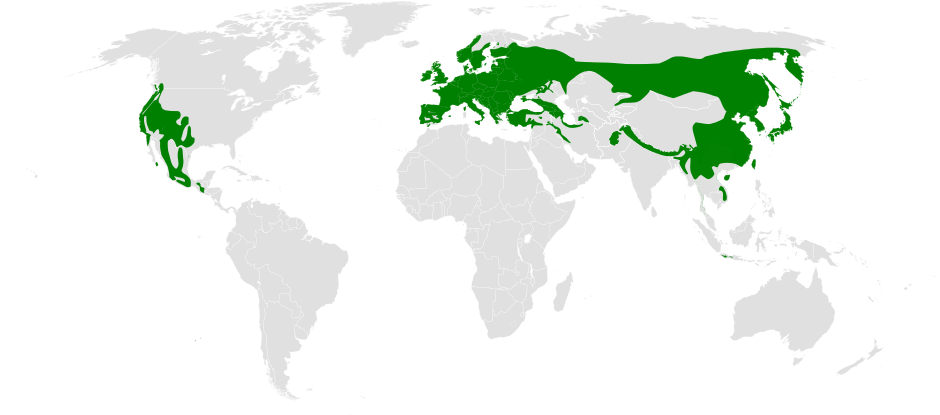
The Aegithalidae, commonly known as bushtits or long-tailed tits, are a family of small passerine birds comprising 13 species in three genera. All but one species (the American bushtit) are found in Eurasia, with most inhabiting mountainous regions around the Himalayas. These active birds are noted for their long tails relative to body size and their constant movement while foraging for insects in shrubs and trees.
- Family
- Aegithalidae
- Common names
- Bushtits, long-tailed tits
- Number of species
- 13
- Genera
- 3
- Distribution
- Eurasia and western North America
- Typical length
- 9–14 cm
- Typical weight
- 4.5–9 g
Lore & Background
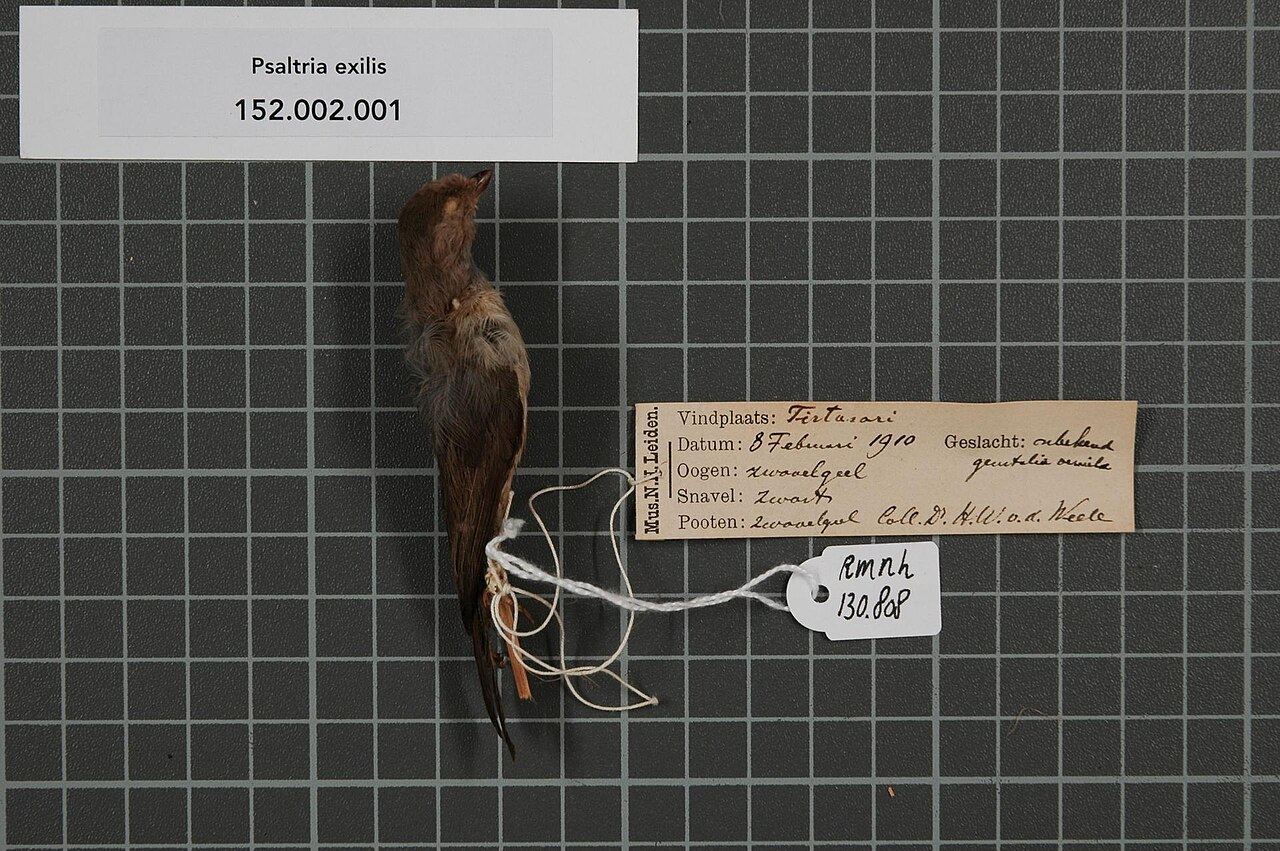
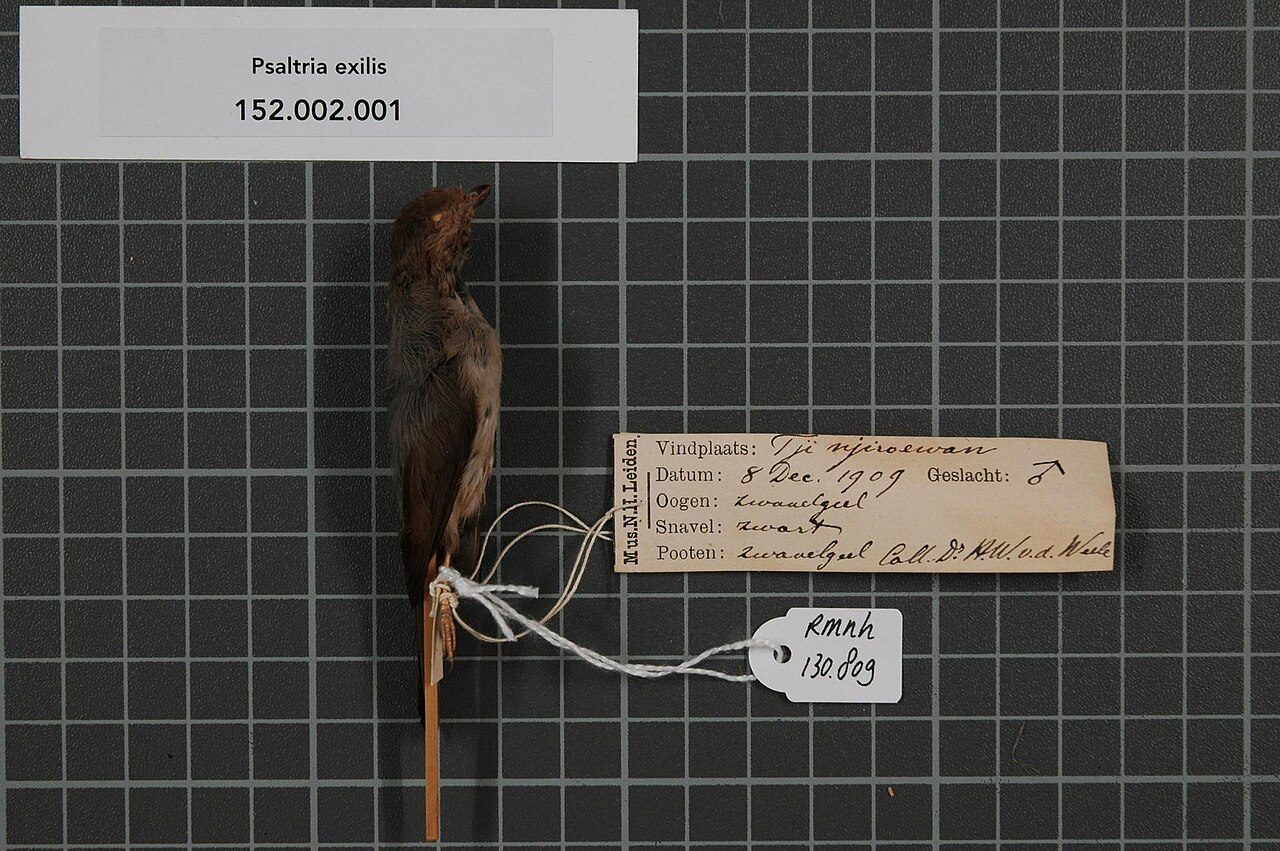
Bushtits are forest birds, preferring edge and understory habitats. Species in the genus Aegithalos favor deciduous or mixed deciduous forests, while the Indonesian pygmy bushtit is mostly found in montane coniferous forest. They occupy a wide range of habitats, including sagebrush steppe and arid shrublands, but are most common in mixed woodland. Most species live in mountainous areas around the Himalayas, and all except the American bushtit are Eurasian. The long-tailed tit has the most widespread distribution, from Britain to Japan, while the Burmese bushtit is restricted to two mountains in Burma and the pygmy bushtit to the mountains of western Java. These birds are generally not migratory, though the long-tailed tit may disperse in northern Siberia, and many mountain species move to lower ground in winter.
Reader's Guide
The family Aegithalidae was introduced by German naturalist Ludwig Reichenbach in 1850. Its name derives from the Ancient Greek word aigithalos for a tit, a term used by Aristotle for three species including the long-tailed tit. The pygmy bushtit is provisionally placed here due to its flocking behavior and nest resemblance, but information is scanty. The Burmese bushtit is sometimes treated as conspecific with the black-browed bushtit. The American bushtit was once thought to belong to the chickadee family but differs in nesting habits. These birds are significant for their cooperative breeding behavior, where helpers assist pairs in raising young—a trait recorded in at least four species. Their domed, bag-like nests woven from cobwebs and lichen are distinctive. The family's insectivorous diet and agile foraging, including hanging upside down, highlight their ecological role in controlling insect populations in forest habitats.
Did You Know?
- Bushtits live in flocks of up to 50 individuals during the non-breeding season.
- Several bushtit species display cooperative breeding, with helpers at the nest.
- The long-tailed tit has the most widespread distribution of any Aegithalidae species, from Britain to Japan.
Gallery
Frequently Asked Questions
What is Aegithalidae?
Aegithalidae is a family of small songbirds that people usually call bushtits or long-tailed tits. It groups together 13 species across three genera, all of which belong to the passerine order.
How many species are in Aegithalidae?
The family contains exactly 13 species distributed among three genera. Every one of them is a small passerine, typically measuring between 9 and 14 centimeters from beak to tail tip.
Where do Aegithalidae live?
Almost the entire family is native to Eurasia, with a particularly dense presence in the highland and mountainous zones around the Himalayas. The lone exception is the American bushtit, which is restricted to western North America.
What do Aegithalidae look like?
These birds are compact, small-bodied passerines best recognized by their notably long tails relative to the rest of their frame. Their overall size stays modest, generally in the 9-to-14-centimeter range.
How do Aegithalidae forage?
Bushtits are relentlessly active, constantly flitting through shrubs and tree branches rather than perching in place. Their primary diet consists of insects, which they chase down with this ceaseless, darting movement.
More in Bird families 1-24
Spotted an error? Know more?
Reader corrections go straight into our review queue. Suggest an edit · How this site is sourced