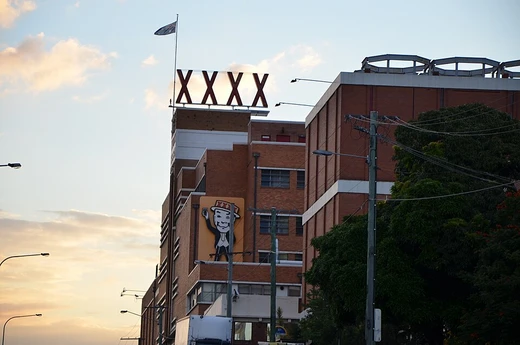
Les Brasseurs du Nord
Quebec's first amber ale, brewed under the northern lights.

Émile Petitot · Public domain
Les Brasseurs du Nord is a brewery located in Blainville, Quebec, Canada, just north of Montreal. It is notable for brewing the first amber style beer in Quebec and for its brand Boréale, which features a polar bear on the label, named after the Aurora Borealis.
- Founded
- 1987
- Founders
- Laura Urtnowski, Bernard Morin, Jean Morin
- Location
- Blainville, Quebec, Canada
- First beer launched
- Boréale Rousse (1988)
- Current production
- over 100,000 hL
- Market share
- just over 1% of total beer sales in Quebec
- Number of main brands
- seven
Lore & Background
Les Brasseurs du Nord was founded in 1987 by three students at UQAM—Laura Urtnowski and brothers Bernard and Jean Morin—who paid their way through school by selling home-made beer. With a small loan, they established the company and loaded their first four kegs into the family Subaru, convincing four bars in Montreal to carry the brew. The resulting surge in demand led to several expansions. The company's name refers to the Aurora Borealis, and its label depicts a polar bear above the word Boréale. It brewed the first amber style beer in Quebec. The brewery currently produces six ale-type beers: Boréale Rousse (launched 1988), Boréale Blonde (1990), Boréale Cuivrée, Boréale Noire, Boréale Dorée, Boréale Blanche, and a newer beer, Boréale IPA (launched 2012). Current production exceeds 100,000 hectoliters. The company's products are not sold outside Quebec.
Reader's Guide
Les Brasseurs du Nord holds a significant place in Quebec's brewing history as the producer of the province's first amber style beer. Founded by three resourceful students, the brewery grew from a home-made operation to a commercial success, eventually capturing just over 1% of all beer sales in Quebec. Its Boréale brand, named after the northern lights and symbolized by a polar bear, has become a recognizable local staple. The brewery's expansion from four kegs delivered in a Subaru to a production volume exceeding 100,000 hectoliters illustrates the growth of craft brewing in the region. While its products remain exclusive to Quebec, the company's legacy includes pioneering amber ale in the province and maintaining a steady lineup of seven main brands, including the later addition of an IPA in 2012. The brewery's story reflects the entrepreneurial spirit of its founders and the evolving tastes of Quebec beer drinkers.
Did You Know?
- The brewery was founded by three UQAM students who sold home-made beer to pay for school.
- The first four kegs were delivered to Montreal bars in the founders' family Subaru.
- The company's name and label reference the Aurora Borealis, featuring a polar bear.
- Boréale Rousse, launched in 1988, was the first amber style beer brewed in Quebec.
Regional Heritage & Cultural Identity
The Nord-Pas-de-Calais region, frequently called French Flanders, sits at a cultural crossroads where French and Belgian brewing traditions have long intertwined. This shared lineage gives the area's beer a distinctive character that sets it apart from the pilsner-lager dominance of the broader French market. The region's identity as a brewing heartland is deeply rooted in its history as a coal-mining area, where the industry employed vast numbers of workers who formed a reliable local market for the beers brewed nearby. Even as the mines closed and populations shifted, the cultural memory of communal drinking and local production persisted. Today, the area remains a hub for small-scale producers who draw on this shared Franco-Belgian heritage, crafting ales and keeping beers that reflect centuries of cross-border exchange rather than the mass-produced styles that dominate the rest of France.
The Bière de Garde Tradition
Bière de Garde, literally a beer meant for keeping, is the signature style of the Nord-Pas-de-Calais region and represents one of France's most distinctive top-fermented traditions. Originally brewed in farmhouses during the winter and spring months, when yeast behaved more predictably than in the heat of summer, these ales were then sealed—often with a cork—and cellared for later consumption, much like a Belgian Saison. The resulting beers typically display a copper or golden hue and are left unfiltered, preserving a fuller mouthfeel. While most examples are top-fermented, bottom-fermented and filtered variants do exist. The most authentic expressions, relying exclusively on regional ingredients, can carry the Appellation d'origine contrôlée designation of Pas de Calais/Region du Nord. Though farmhouse production has largely given way to small commercial operations, the style retains its character as a craft expression rather than an industrial product.
Decline and Renaissance
For much of the twentieth century, France's brewing landscape contracted dramatically. What had been a network of over a thousand small rural breweries in the early 1900s was reduced to near-extinction as industrialisation pulled populations into cities, the coal-mining industry that sustained northern beer markets collapsed, and two World Wars devastated both countryside and brewing infrastructure alike—some breweries even saw their equipment requisitioned for ammunition production. This exodus from rural life eroded the diversity of regional styles and ceded the market to large urban producers, which now control over ninety percent of French beer sales. Yet in recent decades a genuine revival has taken hold. New microbreweries have multiplied, particularly in the north, and consumer interest in traditional and speciality beers has surged, breathing new life into styles and brewing communities that had nearly vanished.
The Craft Ecosystem & Seasonal Traditions
The Nord region's contemporary brewing scene is a patchwork of small producers, each contributing a distinct voice. Pelforth, established in 1914 in the town of Mons-en-Barœul by a trio of brewers from Lille, is perhaps the most recognized name; its original name, Pelican, was a nod to a dance in vogue at the time, and its flagship ale is brewed with two malts and English yeast. Nearby, La Choulotte and Les Brasseurs de Gayant produce abbey-style beers, while Brasserie de Saint-Sylvestre and Terken focus on seasonal offerings alongside their Bière de Garde. The original Trois Brasseurs brewpub in Lille anchors the urban craft scene. Seasonality is woven deeply into the calendar: bière de mars, a moderate top-fermented ale made from barley sown the previous spring, arrives each March, while strong ales brewed in October for December consumption sustain the Christmas tradition. Together, these producers form a living tapestry that keeps northern French brewing vibrant and evolving.
Gallery

Frequently Asked Questions
Who is Les Brasseurs du Nord and when did they start?
Les Brasseurs du Nord is a Canadian brewery founded in 1987 by Laura Urtnowski, Bernard Morin, and Jean Morin. They are based in Blainville, Quebec, a small city sitting just north of Montreal.
What is Boréale and why does the label show a polar bear?
Boréale is the brewery's flagship brand, named after the Aurora Borealis (the northern lights). The polar bear on its label serves as a visual nod to that same northern-sky imagery.
What beer did Les Brasseurs du Nord brew first, and why does it matter?
Their very first release, Boréale Rousse, hit shelves in 1988 and is recognized as Quebec's first amber-style ale. That milestone gave the province a new beer category it hadn't previously offered.
How large is Les Brasseurs du Nord's current operation?
The brewery now produces more than 100,000 hectolitres of beer annually. Despite that volume, it still accounts for just over one percent of total beer sales across Quebec.
Why do Canadian beer fans consider Les Brasseurs du Nord significant?
They broke new ground by introducing the amber ale style to Quebec in the late 1980s, expanding the province's brewing palette. Their Boréale line, with its distinctive polar-bear branding, became a recognizable local icon tied to the northern-lights theme.
More in Beer Brands, Part 5 1-24
Spotted an error? Know more?
Reader corrections go straight into our review queue. Suggest an edit · How this site is sourced