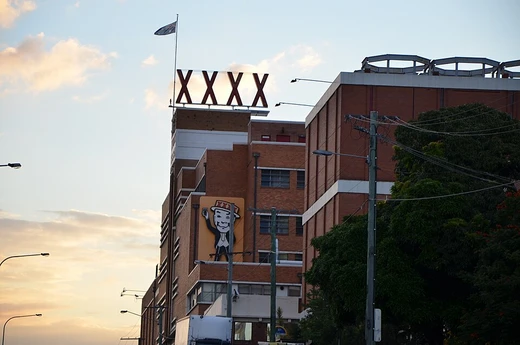
Carling Brewery
A Canadian-founded lager that became the UK's best-selling beer.

Jean-Marc Pascolo · CC BY-SA 3.0
Carling is a brand of lager originally brewed by the Carling Brewery, founded in 1840 by Thomas Carling in London, Upper Canada (now London, Ontario). It became the most popular beer brand in the United Kingdom by volume sold in the early 1980s and is currently owned by Molson Coors.
Quick Facts
- Producttype
- Beer, cider
- Currentowner
- Molson Coors (since 2005)
- Introduced
- 1840 in London, Upper Canada
Facts from the source article.
Lore & Background
The Carling Brewery traces its roots to 1818, when Thomas Carling, a farmer from Yorkshire, England, settled in Upper Canada. He brewed ale that became popular, eventually brewing full-time. The first brewery had two kettles, a horse to turn the grinding mill, and six men working the mash tubs; Carling sold beer from a wheelbarrow on the streets of London, Ontario. In 1840, he began a small brewing operation, selling beer to soldiers at a local camp. His sons John and William built a five-storey brewery in 1878, but it was destroyed by fire on 13 February 1879. William Carling died of pneumonia contracted after fighting the fire; John Carling died in 1911, and the company changed hands numerous times.
In 1927, Carling offered a $25,000 prize for the first flight from London, Ontario, to London, England. Capt. Terry Tully and Lt. James Medcalf attempted the flight in a Stinson Detroiter monoplane named Sir John Carling, taking off on 1 September 1927, reaching Newfoundland, but disappearing over the North Atlantic. The company merged with the Brewing Corporation of Ontario (BCO) in 1930, which launched Carling in the US in 1932 and acquired Toronto's O'Keefe Brewery in 1934. BCO became Canadian Breweries (CBL) in 1937. Under president E. P. Taylor, CBL grew Carling into a national brand; Carling Red Cap became the most popular beer in Ontario in the 1960s. The brand later disappeared from the market and was unsuccessfully revived in 1994.
Carling entered the UK market in 1952 via a joint venture between CBL and British brewers, which eventually became Bass Charington, the largest UK brewer. After CBL was sold to Rothmans in 1969, it was renamed Carling O'Keefe in 1973. In 1989, Carling O'Keefe merged with Molson, which merged with Coors in 2005 to form Molson Coors. Carling became the UK's most popular beer brand by volume in the early 1980s. UK sales in 1999 were one billion pints; in 2007, 2.3 billion pints; in 2009, 4.1 billion pints; in 2010, 17.6 billion pints worldwide; in 2011, 24.9 billion pints worldwide; in 2016, 7.9 billion pints in the UK alone and 83.6 billion pints worldwide. In 2017, HMRC took Carling to a tax tribunal over underpaid tax, but Carling won, arguing the actual strength (3.7%–4.3% ABV) meant it should not be taxed at the 4% level; EU law permits a 0.5% natural variation.
Reader's Guide
Carling's significance lies in its transformation from a small Canadian brewery into a dominant global lager brand, particularly in the United Kingdom, where it became the best-selling beer by volume in the early 1980s. Its history reflects the consolidation of the brewing industry: from family ownership through mergers with the Brewing Corporation of Ontario, Canadian Breweries, and eventually Molson Coors. The brand's UK success was bolstered by extensive sponsorships, including title sponsorship of the English Premier League from 1993 to 2001, the Football League Cup (then called the Carling Cup) for nine years, and the FA Cups from the 2022–23 season. Carling also sponsored the Reading and Leeds festivals, the Scotland national football team, and Scottish clubs Celtic and Rangers. In motorsport, Carling sponsored NASCAR drivers Larry Smith and Earl Ross in the 1970s. The brand's product line includes Carling Black Label (the best-selling beer in South Africa and the UK), Carling Premier (a cream-flow lager with a nitrogen widget), and various other lagers, ice beers, and low-alcohol variants. A notable legal case in 2017 saw Carling successfully defend against HMRC claims of underpaid tax, arguing that its lager's actual alcohol content varied within EU-allowed tolerances. The brand's legacy includes the iconic slogan 'I bet he drinks Carling Black Label!' and its continued presence as a mass-market lager in multiple countries.
Did You Know?
- Carling offered a $25,000 prize in 1927 for the first flight from London, Ontario, to London, England; the attempt ended with the disappearance of the pilots over the North Atlantic.
- In 2017, Carling won a tax tribunal against HMRC, arguing its lager's actual ABV (3.7%–4.3%) meant it should not be taxed at the 4% rate.
- Carling sponsored the English Premier League from 1993 to 2001 and returned as an official partner from 2016 to 2019.
From Farmhouse Ale to a Brewing Dynasty
Thomas Carling was a farmer from the English county of Yorkshire who, in 1818, brought his family to Upper Canada and settled in what is now the city of London, Ontario. His home-brewed ale quickly gained local popularity, prompting him to abandon agriculture and commit fully to the craft of brewing. By 1840, he had established a small operation in London, Ontario, selling his beer to soldiers stationed at the local military camp. The original brewery was remarkably modest in scale—just two kettles, a horse to turn the grinding mill, and six men working the mash tubs—while Carling himself hauled his product through the streets in a wheelbarrow. His sons, John and William, later expanded the business dramatically, constructing a five-storey brewery in 1878. Tragically, a fire on 13 February 1879 destroyed the building within four years of its opening, and William, the firm's senior partner and technical leader, died of pneumonia contracted while helping to fight the blaze. John Carling survived until 1911, after which the company changed hands numerous times.
Conquering the British Market
Carling's entry into the United Kingdom came in 1952 through a joint venture between Canadian Breweries and British brewing interests, a partnership that would eventually evolve into Bass Charington, the UK's largest brewer. The brand's commercial trajectory was extraordinary: by the early 1980s it had claimed the top position as Britain's best-selling beer by volume. The growth figures were staggering—UK sales reached one billion pints by 1999, climbed to 2.3 billion by 2007, and surged to 4.1 billion by 2009, with global sales exceeding 11.6 billion pints that year. By 2016, Carling set a new UK record of 7.9 billion pints, with worldwide sales reaching 83.6 billion. The brand's dominance was not without controversy. In 2017, HMRC took Carling to tax tribunal, alleging it underpaid more than £50 million in tax between September 2012 and January 2015. The company prevailed by demonstrating that its lager's actual ABV fluctuated between 3.7 and 4.3 percent, meaning the four-percent excise tax bracket did not apply. Molson Coors' vice president revealed the labelling strategy was maintained partly to prevent retailers from demanding a share of the resulting savings.
A Name on the Pitch and the Stage
Carling's cultural footprint in Britain extended far beyond the pub counter. The brand served as title sponsor of the Premier League from its second season in 1993 through 2001, then returned as an official partner from 2016 to 2019 before Budweiser took over. In Scotland, Carling held the official beer title for the national football team from 2010 to 2015, sponsored the Scottish Cup from 2010 to 2014, and backed both Celtic and Rangers between 2003 and 2010. The brand also sponsored Northern Ireland's IFA Premiership from 2009 to 2012 and the Football League Cup for nine years before departing in 2012. In live music, Carling sponsored the Academy Music Group venues, including Brixton Academy, from 2003 to 2009. The Reading and Leeds festivals carried the Carling name from 1998 to 2007. More recently, from the 2022-23 season, Carling became the official beer of both the men's and women's FA Cups through 2027, and in 2024 was named official beer of the Scottish Professional Football League through at least the 2026/27 season.
Mergers, Disappearances, and a 1927 Flight
The corporate life of Carling was defined by a succession of mergers and rebrandings. After the 1930 merger with the Brewing Corporation of Ontario, the entity became Canadian Breweries in 1937. Under president E. P. Taylor, the company absorbed numerous breweries across Canada, converting several to produce Carling and O'Keefe labels. Carling Red Cap became Ontario's most popular beer in the 1960s, though the brand eventually vanished from the market and a 1994 revival attempt failed. In 1969, Canadian Breweries was sold to Rothmans and renamed Carling O'Keefe in 1973. The 1989 merger with Molson, followed by Molson's 2005 combination with Coors, created Molson Coors, which continues to brew and sell Carling Black Label across Canada. Perhaps the most dramatic Carling moment came in 1927, when the company offered a $25,000 prize for the first flight from London, Ontario to London, England. Captain Terry Tully and Lt. James Medcalf attempted the journey in a Stinson Detroiter monoplane named Sir John Carling. They reached Newfoundland before vanishing over the North Atlantic.
Gallery
Frequently Asked Questions
Who is Carling Brewery?
Carling Brewery was established in 1840 by Thomas Carling in London, Upper Canada, the settlement that is now the city of London in Ontario. It went on to produce one of the most recognizable lager names in British drinking history.
What is Carling's role in beer history?
Carling is a lager brand that climbed to the top of the United Kingdom market by volume sold during the early 1980s. Its presence in British pubs and shops traces back to a 1952 launch, giving it three decades of brand-building before that peak.
Why is Carling important?
Carling is notable for being a Canadian-founded lager that became the UK's best-selling beer by volume in the early 1980s. That cross-border dominance made it a cultural touchstone for a whole generation of British drinkers.
When did Carling first appear in the UK market?
The brand entered the United Kingdom in 1952. From that initial launch it spent roughly three decades building the consumer loyalty that would eventually carry it to the number-one spot on the UK sales chart.
More in Beer Brands, Part 5 1-24
Spotted an error? Know more?
Reader corrections go straight into our review queue. Suggest an edit · How this site is sourced