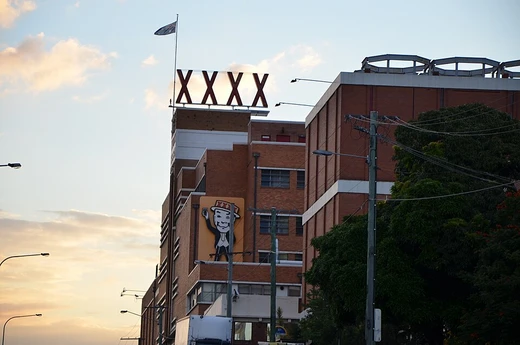
Carling Black Label
A lager that became a global flagship brand.

DiverDave · CC BY-SA 3.0
Carling Black Label is a lager distributed by Carling Brewing Company. Originally introduced as Black & White Lager in the 1920s, it was renamed Black Label in 1927 during a corporate re-branding. It became the flagship brand of Canadian Breweries Limited and the first beer brewed on a mass international scale, particularly popular in Commonwealth countries.
Quick Facts
- Abv
- 4.7%–5.5%
- Manufacturer
- Carling Brewing Company
- Origin
- Canada
- Introduced
- 1927
Facts from the source article.
Lore & Background
Carling began brewing lager-style beers in the 1870s, adding a three-storey lager plant to their London, Ontario brewery in 1877. The company's first lager was Carling's Lager, later renamed Carling's Bavarian Stock Lager and then Carling's Imperial Club Lager. Black & White Lager was introduced in the 1920s and later renamed Black Label Lager, in contrast to their Red Cap Ale. After Prohibition in the United States, the Peerless Motor Car Company purchased American rights to Carling's formulas and converted a plant in Cleveland, Ohio into the Brewing Corporation of America. Black Label was introduced there as a high-quality lager available nationwide at a locally brewed budget price. In the United Kingdom, Black Label was introduced in 1952, first in bottles and later on draught in 1965. The 'I bet he drinks' advertising campaign helped it become Britain's best-selling beer brand in 1971. In South Africa, Black Label gained a different tone during the anti-apartheid movement, partly due to its higher alcohol content of 5.5% and the connotation of 'black' to racial pride.
Reader's Guide
Carling Black Label's significance lies in its pioneering role as the first beer brewed on a mass international scale, establishing a model for global lager distribution. Under Canadian Breweries Limited, it became the flagship brand and drove the company's growth into the world's largest brewing concern. In the United States, its strategy of offering a high-quality lager at a budget price proved successful, leading to rapid expansion and a memorable 'Hey Mabel, Black Label' campaign that lasted twenty years. In the United Kingdom, the 'I bet he drinks' advertisements became iconic, with the Dambusters parody ranked among the best TV ads of all time. Black Label was Britain's best-selling draught beer from 1985 to 2024. In South Africa, the brand took on cultural and political dimensions, with local nicknames like 'Zamalek' and parodies such as 'Black Labour, White Guilt'. Though no longer widely distributed in the U.S., it remains available in select markets and is the official beer of Beer Frisbee. The brand was dropped from the UK name in 1997 but reintroduced in February 2026 with a new premium look and recipe.
Did You Know?
- Carling Black Label was originally called Black & White Lager before being renamed in 1927.
- It was the first beer to be brewed on a mass international scale.
- In South Africa, Black Label has the local nickname 'Zamalek', after an Egyptian soccer team.
From Ale to Global Flagship: Origins and Corporate Transformation
Carling's brewing heritage was rooted in ale, yet the company had been producing lager-style beers since the 1870s. In 1877, responding to shifting consumer preferences, they built a three-storey lager plant at their London, Ontario facility. That first lager cycled through several names—Carling's Lager, Carling's Bavarian Stock Lager, Carling's Imperial Club Lager—before Black & White Lager appeared in the 1920s. The pivotal moment arrived in 1927, when new president J. Innes Carling oversaw a corporate rebrand that renamed Black & White Lager simply to Black Label. Three years later, Toronto industrialist E. P. Taylor acquired Carling and folded it into his Canadian Breweries Limited, which would grow into the world's largest brewing operation. Under Taylor's stewardship, Black Label was elevated to flagship status and became the first beer brewed on a truly mass international scale, finding devoted followings across Commonwealth nations including the United Kingdom, Australia, New Zealand, and South Africa.
Crossing the Atlantic: American Expansion and Cultural Imprint
After prohibition ended in 1933, the Peerless Motor Car Company—struggling to diversify during the Great Depression—purchased American rights to Carling's formulas and trademarks. Canadian technicians converted a Cleveland, Ohio plant into the Brewing Corporation of America. Initial attempts to sell only Red Cap Ale fell flat, but Black Label lager turned the tide. The brand's philosophy was elegant: deliver a high-quality lager at a locally brewed budget price, available nationwide. That strategy fueled decades of rapid expansion. Black Label even reached GIs in Vietnam, though the steel cans often arrived rusted and the beer served warm. When Carling later shelved the brand to chase a more profitable lager, sales cratered. The rescue came in the form of "Mabel," played by Jeanne Goodspeed, and the iconic slogan "Hey Mabel, Black Label!"—a twenty-year campaign that etched the name into American pop culture. By 1979, pressure from Miller and Anheuser-Busch led to Heileman Brewing's acquisition, and the brand now sits under Molson Coors, still poured in select markets like metro Detroit and serving as the official beer of Beer Frisbee.
Britain's Draught King: Advertising and Market Dominance
Black Label touched down in the United Kingdom in 1952, initially sold only in bottles. In 1965, a pub called the Hill Top in Sheffield became the first to pour Carling Black Label on draught, marking a turning point for the brand's British presence. The 1970s and 1980s saw explosive growth, powered by the legendary "I bet he drinks" advertising series. The formula was simple: someone performed something clever or daring, and a bystander quipped, "I bet he drinks Carling Black Label." The campaign propelled the brand to Britain's best-selling beer in 1971, and the introduction of cans unlocked the "take home" market. In the 1980s, comedians Mark Arden and Stephen Frost—known as The Oblivion Boys—delivered the punchline in numerous spots. The 1989 "Dambusters" ad, a parody of the 1955 film, went on to rank highly on multiple "greatest ads" lists. Carling held the crown as Britain's best-selling draught beer from 1985 through 2024. Though "Black Label" was dropped from the name and logo in 1997, it was reintroduced in February 2026 with a refreshed premium identity and recipe.
A Name with Weight: Black Label in South Africa
In South Africa, Black Label transcended its role as a beverage and became entangled with the nation's social fabric. Its 5.5% alcohol content—half a percent above the 5.0% standard of competing brands—was playfully highlighted in the advertising line "only hard working students deserve an extra 0.5 percent." More significantly, the word "black" in the brand name resonated powerfully with the anti-apartheid movement, turning the label into a point of pride for Black South Africans. The beer carried the American-derived motto "America's Lusty, Lively Beer," a nod to its Canadian heritage, and the Afrikaans slogan "Black Label sê die bybel," roughly translating to "The Bible says (one should drink) Black Label." The brand's cultural weight was so pronounced that T-shirt company Laughitoff parodied it with the slogan "Black Labour, White Guilt," prompting an unsuccessful trademark infringement suit from SABMiller. Locals also nicknamed the beer "Zamalek" after the Egyptian soccer club's victory over Kaizer Chiefs in the 1990s, further embedding it in everyday South African life.
Gallery
Frequently Asked Questions
What is Carling Black Label?
Carling Black Label is a lager beer produced and distributed by the Carling Brewing Company. It serves as the flagship brand under Canadian Breweries Limited and is recognized for its wide international footprint, especially across Commonwealth nations.
When did Carling Black Label first hit the market?
The beer was originally launched in the 1920s under a different name. It received the Black Label name in 1927 as part of a broader corporate rebranding effort.
What was Carling Black Label called before its current name?
Prior to the 1927 rebrand, the lager was sold as Black & White Lager. The name switch was tied to a company-wide identity update at the time.
Why is Carling Black Label considered a landmark in brewing history?
It holds the distinction of being the first beer brewed and distributed on a truly mass international scale. Its spread across multiple Commonwealth countries cemented its status as a globally recognized flagship lager.
What is the alcohol content of Carling Black Label in South Africa?
In the South African market, Carling Black Label carries an alcohol by volume of 5.5 percent. This places it in the standard range for full-strength lagers sold in that region.
More in Beer Brands, Part 5 1-24
Spotted an error? Know more?
Reader corrections go straight into our review queue. Suggest an edit · How this site is sourced