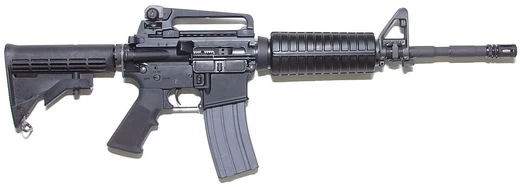
M1944 Hyde carbine
A light rifle inspired by the Thompson, with a quick-change barrel.
The M1944 Hyde carbine was a light rifle developed by George Hyde for the US Armed Forces. Its overall design drew inspiration from the Thompson Submachine Gun, a weapon that influenced many of Hyde's designs. The carbine featured a quick barrel change device similar to that of the MG42 and utilized pressed steel components to ease production and reduce weight.
Quick Facts
- Origin
- United States
- Is Ranged
- YES
- Designer
- George Hyde
- Design Date
- 1944
- Production Date
- prototypes only
- Cartridge
- .30 carbine
- Caliber
- 7.62mm
- Action
- Blowback, open bolt
- Rate
- 600–1200 rpm
- Feed
- 20/30 round box magazines
- Sights
- Iron
Facts from the source article.
Lore & Background
The M1944 Hyde carbine was developed as a light rifle for the US Armed Forces, with George Hyde drawing inspiration from the Thompson Submachine Gun, a pattern he used in many of his designs. An original .30 carbine based on the M1921/27 variants performed well, but rising production demands during World War II made the initial design too expensive for mass production, and its weight contradicted the concept of a 'Light Rifle'. The M1944 Hyde carbine addressed these issues with a quick barrel change device similar to the MG42 and pressed steel components to ease production and reduce weight, making it versatile, reliable, and easier to carry.
The bolt of the M1944 Hyde carbine is similar to that of the Solothurn MP-34, with the spring contained within the buttstock. Photos of the Hyde gun appeared in the first edition of The World’s Assault Rifles by Daniel Musgrave and Thomas B. Nelson, published in 1967. No known examples of the M1944 Hyde carbine remain in existence.
Reader's Guide
The M1944 Hyde carbine represents an attempt to produce a lightweight, cost-effective infantry weapon during World War II, but it never entered mass production. Its significance lies in its design features: the quick-change barrel system borrowed from the MG42 and the use of pressed steel components, which aimed to reduce both production cost and weight. The weapon's lineage traces back to the Thompson Submachine Gun, a common influence in Hyde's work, and its bolt design echoes the Solothurn MP-34. Despite its promising characteristics, the carbine was ultimately too expensive for the wartime production environment, and its weight failed to meet the 'Light Rifle' concept. The weapon's legacy is preserved only through photographs in a 1967 reference work, as no physical examples are known to survive. The M1944 Hyde carbine thus stands as a footnote in the development of US military small arms, illustrating the challenges of balancing performance, cost, and weight during a period of rapid wartime production.
More in Battle Rifles and Carbines 1-24
Spotted an error? Know more?
Reader corrections go straight into our review queue. Suggest an edit · How this site is sourced