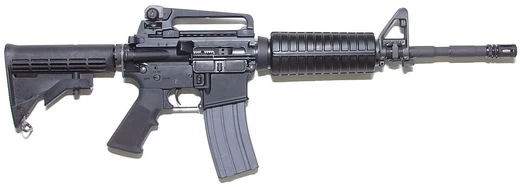
LF-58
Italian selective fire carbine chambered in .30 Carbine.
The Franchi LF-58 is a gas operated, selective fire carbine developed by the Italian arms firm Luigi Franchi during the 1950s. It was one of two Italian domestic designs finished in 1958 that attempted to modernize the Italian Armed Forces' service weapon, chambered in the American .30 Carbine cartridge.
- Type
- Gas operated, selective fire carbine
- Origin
- Italy
- Designer
- Luigi Franchi
- Designed
- 1950s
- Manufacturer
- Luigi Franchi
- Produced
- Limited production
- Cartridge
- .30 Carbine
Lore & Background
Following the Second World War, the Italian Armed Forces relied on American-donated weapons such as the M1 Garand. As other militaries developed assault rifles and modern battle rifles with larger magazine capacities and increased volumes of fire, Italy sought a more modern service weapon. The M1 Carbine was well-liked in Italian military circles, and the German StG-44 had demonstrated the potential of intermediate cartridges. Italy decided to develop a select-fire weapon chambered in the American .30 Carbine round, which was close to an intermediate cartridge and easier to acquire than others at the time. Two large Italian arms firms, Pierto Beretta and Luigi Franchi, began experimental work on improved automatic carbines in this caliber. Despite NATO's announcement of standardization toward the 7.62×51mm NATO cartridge, both firms continued development, believing it would take time for the new cartridge to become widespread. Both designs were finished in 1958, resulting in the Beretta Model 57 and the Franchi LF-58. The LF-58 was not publicized and saw limited production, with neither official adoption nor commercial success. The Italian Armed Forces eventually replaced the M1 Garand with the BM-59 battle rifle in 7.62×51mm NATO and adopted the LF-57 submachine gun in 9×19mm Parabellum.
Reader's Guide
The Franchi LF-58 represents a transitional attempt by Italian industry to modernize infantry small arms in the post-war period. Its development was driven by the perceived need for a select-fire carbine with greater magazine capacity and volume of fire than the M1 Garand, influenced by the popularity of the M1 Carbine and the example of the StG-44. The choice of the .30 Carbine cartridge reflected both practical availability and the intermediate-cartridge concept, though NATO's move toward 7.62×51mm ultimately rendered the caliber obsolete for military service. The LF-58's limited production and lack of adoption or commercial success highlight the difficulty of competing with established NATO standardization. Its existence is known primarily through specialist firearms literature, and it remains a relatively obscure footnote in Italian arms development, overshadowed by the BM-59 and the LF-57 that were actually fielded.
Did You Know?
- The LF-58 was finished in 1958, the same year as the Beretta Model 57.
- The Italian Armed Forces ultimately adopted the BM-59 battle rifle and the LF-57 submachine gun instead.
More in Battle Rifles and Carbines 1-24
Spotted an error? Know more?
Reader corrections go straight into our review queue. Suggest an edit · How this site is sourced