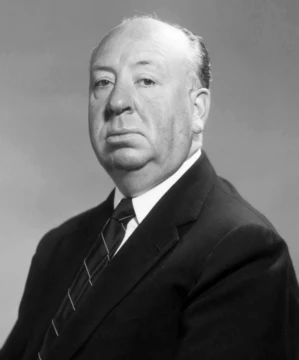
Rainer Werner Fassbinder
Prolific German filmmaker of the New German Cinema movement.

via Wikipedia: Rainer Werner Fassbinder · see source
Rainer Werner Fassbinder (31 May 1945 – 10 June 1982), also credited as R. W. Fassbinder, was a German filmmaker, dramatist, and actor. He is considered a central figure and driving force of the New German Cinema movement. Over his career, he directed more than forty films that mixed Hollywood-style melodrama with social critique and avant-garde methods. Fassbinder described his own work as an investigation into "the exploitability of feelings." His films were firmly set in the context of post-war Germany, dealing with the legacy of Nazism, the country's economic miracle, and the Red Army Faction. In his early work, he concentrated on people on the margins of society, including migrant workers, prisoners, and gay individuals. He regularly collaborated with a stable group of actors and technicians who appeared in many of his projects.
Fassbinder began leading the Anti-Theater acting troupe in 1967, staging some of his earliest productions with them. His first feature-length film was the gangster movie *Love Is Colder Than Death* (1969). He achieved his first domestic commercial success with *The Merchant of Four Seasons* (1972), and his first international success with *Ali: Fear Eats the Soul* (1974); both are now regarded as masterpieces. Later, he took on larger-budget projects such as *Despair* (1978), *Lili Marleen* (1981), and *Lola* (1981). His biggest hit was *The Marriage of Maria Braun* (1979), which follows a German woman's rise and fall after World War II. Other notable films include *The Bitter Tears of Petra von Kant* (1972), *Fox and His Friends* (1975), *Satan's Brew* (1976), *In a Year of 13 Moons* (1978), and *Querelle* (1982)—all of which explore homoerotic themes. He also directed the television series *World on a Wire* (1973) and *Berlin Alexanderplatz* (1980).
Fassbinder died on 10 June 1982 at age 37 from a lethal combination of cocaine and barbiturates. Though his career lasted less than two decades, he was extraordinarily productive. Between 1967 and 1982, he completed over forty feature films, twenty-four plays, two television serials, three short films, and four video productions. He won five of Germany's most prestigious feature film awards, including the Golden Bear and multiple German Film Awards. His early death is often seen as marking the end of the New German Cinema period.
Fassbinder was born in the small town of Bad Wörishofen on 31 May 1945, three weeks after the US Army occupied the town and Germany's unconditional surrender. The aftermath of World War II deeply shaped his childhood and his family's life. At his mother's request, Fassbinder later claimed he was born on 31 May 1946, to position himself more clearly as a child of the post-war era; his real birth year was revealed shortly before his death. He was the only child of Liselotte Pempeit (1922–93), a translator, and Helmut Fassbinder, a doctor who worked from the family's apartment on Sendlinger Straße, near Munich's red light district. When he was three months old, his parents sent him to live with a paternal uncle and aunt in the countryside, fearing he would not survive the winter with them. He was returned to his parents in Munich at age one. Fassbinder's mother came from the Free City of Danzig (now Gdańsk, Poland), from which many Germans fled after World War II. As a result, several of her relatives came to live with them in Munich.
Fassbinder's parents were cultured members of the bourgeoisie. His father focused on his career, which he saw as a way to fuel his passion for writing poetry. His mother largely ignored him as well, spending most of her time helping her husband with his career. In 1951, Liselotte Pempeit and Helmut Fassbinder divorced. Helmut moved to Cologne, while Liselotte raised her son as a single parent in Munich. To support herself and her child, Pempeit took in boarders and worked as a German-to-English translator. When she was working, she often sent her son to the cinema to pass the time. Later in life, Fassbinder claimed he saw at least one film a day, sometimes as many as four. During this period, Pempeit was frequently away for long stretches while recovering from tuberculosis. In her absence, Fassbinder was cared for by her tenants and friends. Left alone often, he grew used to independence and later became a juvenile delinquent. He clashed with his mother's younger lover, Siegfried, who lived with them when Fassbinder was around eight or nine. He had a similarly difficult relationship with the much older journalist Wolff Eder (c.1905–71), who became his stepfather in 1959. Early in his adolescence, Fassbinder came out as bisexual.
As a teenager, Fassbinder was sent to boarding school. His time there was marked by repeated escape attempts, and he eventually left school without taking final exams. At age fifteen, he moved to Cologne to live with his father. Though they argued constantly, Fassbinder stayed with him for a couple of years while attending night school. To earn money, he worked small jobs and also helped his father, who rented apartments to migrant workers. During this time, Fassbinder began immersing himself in his father's cultural world, writing poems, short plays, and stories.
In 1963, at age eighteen, Fassbinder returned to Munich, planning to attend night school with the goal of eventually studying drama. On his mother's advice, he took acting lessons and from 1964 to 1966 attended the Fridl-Leonhard Studio for actors in Munich. There, he met Hanna Schygulla, who would become one of his most important actors. At age twenty, he made his first 8mm short films, worked as a sound man on student films, and took small acting roles or assistant director positions in theater. During this period, he also wrote the tragicomic play *Drops on Hot Stones*.
- born
- 31 May 1945, Bad Wörishofen, Germany
- died
- 10 June 1982, aged 37
- field
- Filmmaker, dramatist, actor
- nationality
- German
- known_for
- New German Cinema, films exploring post-war German culture and marginalized figu
Verified Timeline
Quick Facts
- Other Names
- Franz Walsch
- Birth Date
- 1945-05-31
- Birth Place
- Bad Wörishofen, Germany
- Death Date
- 1982-06-10
- Death Place
- Munich, West Germany
- Resting Place
- Bogenhausen Cemetery, Munich, Germany
- Occupation
- Director · screenwriter · producer · dramatist · actor
- Years Active
- 1965–1982
- Movement
- New German Cinema
- Spouse
- Ingrid Caven · 1970 · 1972 · end=divorced
- Partner
- El Hedi ben Salem (1971-1974)
- Website
- fassbinderfoundation.de
Facts from the source article.
Lore & Background
Fassbinder was born in the small town of Bad Wörishofen on 31 May 1945, three weeks after the US Army occupied the town and the unconditional surrender of Germany. He was the only child of Liselotte Pempeit, a translator, and Helmut Fassbinder, a doctor. In compliance with his mother's wishes, Fassbinder later claimed he was born on 31 May 1946, to more clearly establish himself as a child of the post-war period; his real age was revealed shortly before his death. His parents divorced in 1951, and he was raised by his mother in Munich. She often sent him to the cinema to pass time; later in life, Fassbinder claimed he saw at least one film a day, sometimes as many as four per day. Early in his adolescence, Fassbinder came out as bisexual. As a teen, he was sent to boarding school, but his time there was marred by repeated escape attempts, and he eventually left school before any final examinations. He began leading the acting troupe Anti-Theater in 1967, with whom he staged some of his earliest productions. His first feature-length film was a gangster movie called Love Is Colder Than Death (1969). He scored his first domestic commercial success with The Merchant of Four Seasons (1972) and his first international success with Ali: Fear Eats the Soul (1974). His greatest success came with The Marriage of Maria Braun (1979). Between 1967 and 1982, he completed over 40 feature films, 24 plays, two television serials, three short films and four video productions, winning five of the most prestigious prizes for feature film in Germany, including the Golden Bear and multiple German Film Awards. Fassbinder died on 10 June 1982, aged 37, from a lethal cocktail of cocaine and barbiturates. His career lasted less than two decades. His premature death is often considered the end of the New German Cinema timeframe.
Reader's Guide
Fassbinder's significance lies in his prolific output and his role as a catalyst of the New German Cinema movement. His films consistently explored the aftermath of Nazism, the German economic miracle, and the Red Army Faction, often focusing on marginalized figures such as migrant workers, prisoners, and gay people. He worked with a recurring company of actors and technicians, including Hanna Schygulla and Irm Hermann, who appeared in many of his projects. His work blended Hollywood melodrama with social criticism and avant-garde techniques, examining 'the exploitability of feelings.' His legacy includes masterpieces like The Merchant of Four Seasons, Ali: Fear Eats the Soul, and The Marriage of Maria Braun, as well as films dealing with homoerotic themes such as The Bitter Tears of Petra von Kant, Fox and His Friends, and Querelle. He also directed the TV series World on a Wire (1973) and Berlin Alexanderplatz (1980). His death at age 37 marked the perceived end of the New German Cinema movement.
Did You Know?
- Fassbinder claimed he was born in 1946 to establish himself as a child of the post-war period; his real age was revealed shortly before his death.
- He saw at least one film a day as a child, sometimes as many as four per day, because his mother sent him to the cinema while she worked.
- Fassbinder came out as bisexual early in his adolescence.
- He completed over 40 feature films, 24 plays, two television serials, three short films and four video productions between 1967 and 1982.
- His death from a lethal cocktail of cocaine and barbiturates is often considered the end of the New German Cinema timeframe.
Gallery
Frequently Asked Questions
Who is Rainer Werner Fassbinder?
Fassbinder was a German director, playwright, and actor born in 1945 in Bad Wörishofen. He is best remembered as one of the driving forces behind the New German Cinema wave of the 1970s.
What made Fassbinder's filmmaking distinctive?
He fused the emotional excess of Hollywood melodrama with sharp social commentary and experimental, avant-garde structures. He described his artistic goal as exploring 'the exploitability of feelings,' often centering on marginalized characters in post-war German society.
How prolific was Fassbinder as a filmmaker?
In a career spanning roughly a decade, he directed more than forty feature films, a volume that is remarkable even by the standards of the most industrious auteurs.
What was Fassbinder's role in New German Cinema?
He is widely considered both a central figure and a catalyst for the movement, helping to define its aesthetic and thematic concerns during the 1970s. His work gave the wave much of its international visibility.
How did Fassbinder's life end?
He died on 10 June 1982 in Munich at the age of 37, cutting short a career that had already produced an extraordinary body of work.
More in Auteur Film Directors 1-17
Spotted an error? Know more?
This is a living reference — every entry is fact-audited, and reader corrections feed straight into our audit queue. Suggest an edit · See this site's audit record