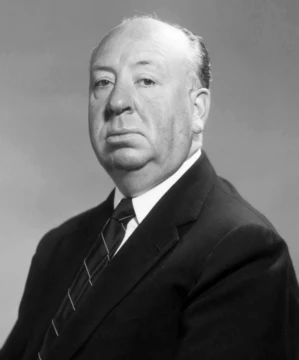
Peter Bogdanovich
New Hollywood director, critic, and film historian.

via Wikipedia: Peter Bogdanovich · see source
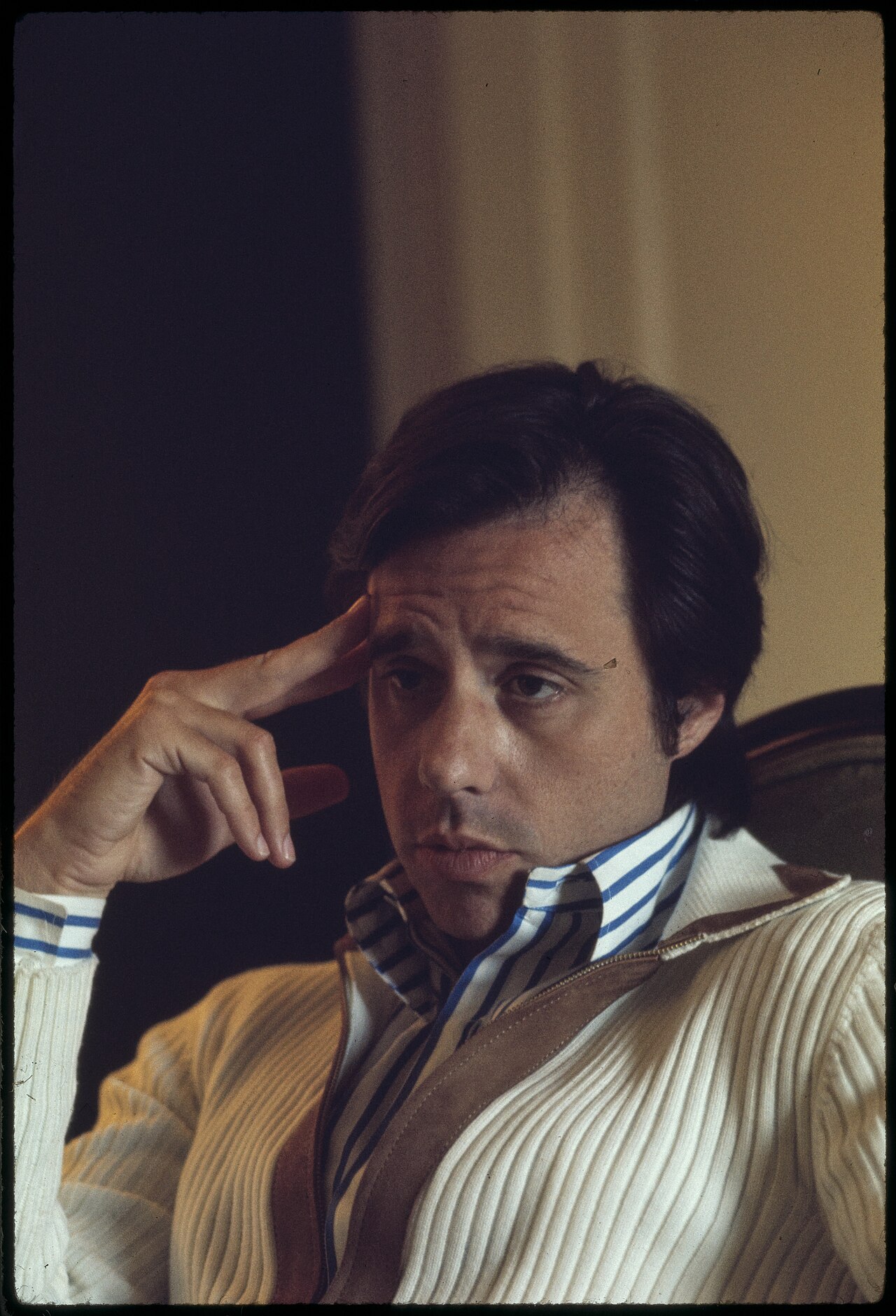
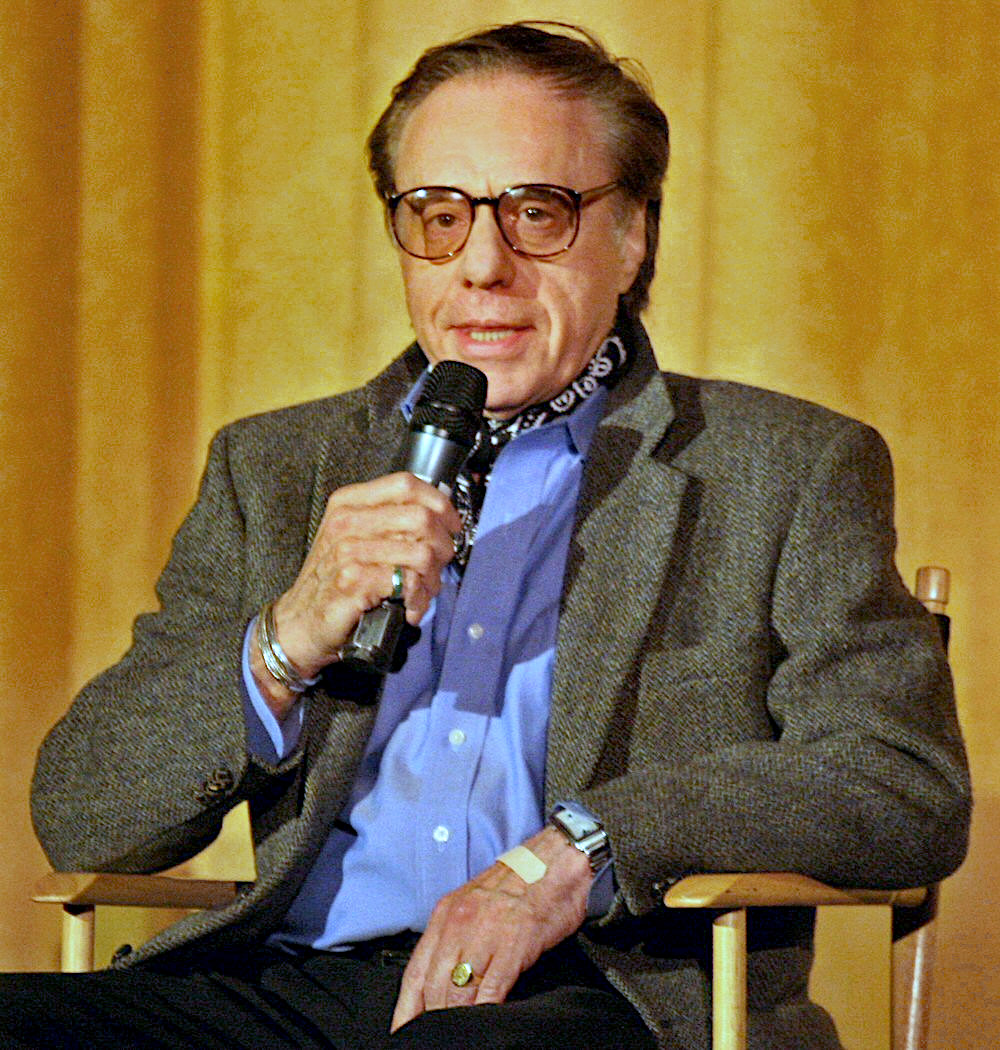
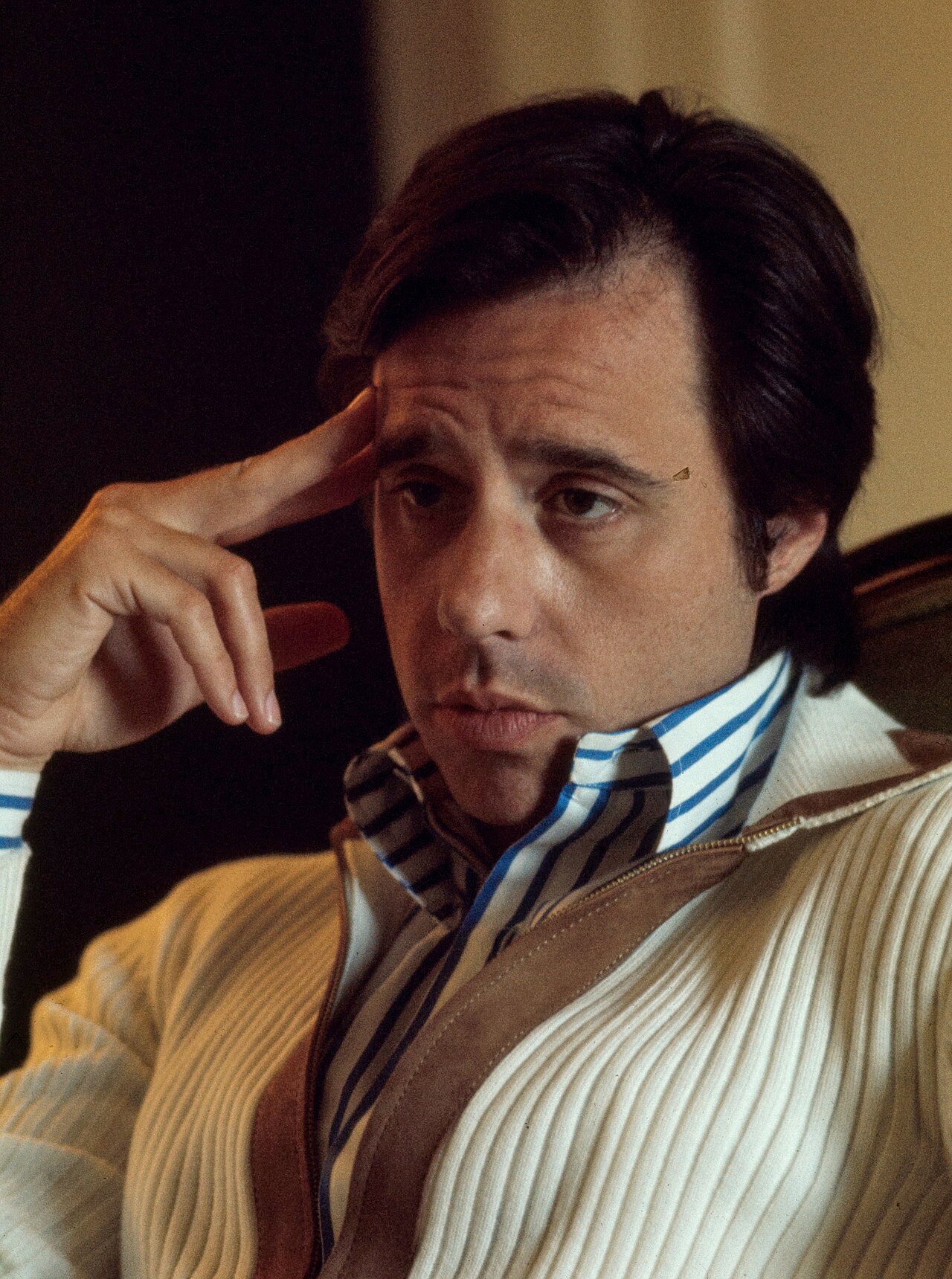
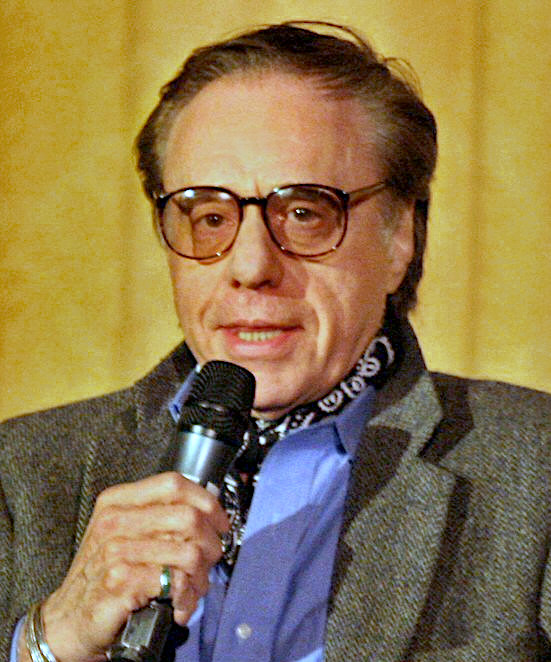
Peter Bogdanovich (July 30, 1939 – January 6, 2022) wore many hats in the film world: director, writer, actor, producer, critic, and historian. He began as an actor training under Stella Adler, then shifted to criticism for *Film Culture* and *Esquire*, eventually becoming a key figure in the New Hollywood movement. His honors include a BAFTA and a Grammy, plus nominations for two Oscars and two Golden Globes. His first credited feature was *Targets* (1968), but his big break came with *The Last Picture Show* (1971), which earned him Academy Award nominations for Best Director and Best Adapted Screenplay. He followed that with the well-received *What's Up, Doc?* (1972) and *Paper Moon* (1973).
Born in Kingston, New York, to a Serbian father and Austrian Jewish mother, Bogdanovich learned Serbian before English. He had an older brother who died at eighteen months in 1938 after a pot of boiling soup fell on him, though Bogdanovich didn't learn of his brother’s existence until age seven and didn't know the details until adulthood. His parents arrived in the U.S. on visitors' visas in May 1939, three months before World War II began. At twelve, he started logging every film he saw on yellow index cards with reviews, continuing until 1970, and watched up to four hundred movies a year. He graduated from the Collegiate School in New York City in 1957 and studied acting at the Stella Adler Conservatory.
In the early 1960s, Bogdanovich programmed influential retrospectives at the Museum of Modern Art and wrote monographs on Orson Welles, John Ford, Howard Hawks, and Alfred Hitchcock. He also revived interest in pioneer Allan Dwan with a 1971 retrospective. Before directing, he wrote criticism for *Esquire*, *The Saturday Evening Post*, and *Cahiers du Cinéma*, later collected in *Pieces of Time* (1973). Inspired by French New Wave critics who became filmmakers, he decided to direct in 1966. Encouraged by Frank Tashlin, he moved to Los Angeles with his wife Polly Platt, leaving unpaid rent behind. At a screening, he met Roger Corman, who offered him a directing job after liking an *Esquire* piece. Bogdanovich worked on *Targets* (starring Boris Karloff) and *Voyage to the Planet of Prehistoric Women* (under the pseudonym Derek Thomas), later saying he learned more in 22 weeks with Corman than at any other time.
Returning to journalism, Bogdanovich befriended Orson Welles while interviewing him on the set of *Catch-22*. He helped revive Welles’s career by rebutting Pauline Kael’s attack on Welles in *Esquire*; his book-length interview *This Is Orson Welles* came out in 1992. In the early 1970s, he let the financially struggling Welles stay at his Bel Air mansion. In 1970, the American Film Institute hired him to direct *Directed by John Ford*, a documentary with interviews from John Wayne, James Stewart, and Henry Fonda, narrated by Welles. After years out of circulation due to licensing, Bogdanovich and TCM re-released it in 2006, re-edited and with new interviews from Clint Eastwood, Martin Scorsese, Steven Spielberg, and others.
Other films he directed include *Saint Jack* (1979), *They All Laughed* (1981), *Mask* (1985), *Noises Off* (1992), *The Cat's Meow* (2001), and *She's Funny That Way* (2014). As an actor, he appeared in HBO’s *The Sopranos* and Orson Welles’s final film, *The Other Side of the Wind* (2018), which he also helped complete. He directed documentaries like *The Great Buster: A Celebration* (2018) and won a Grammy for Best Music Film for *Runnin' Down a Dream* (2007), about Tom Petty and the Heartbreakers. He also published several books, including in-depth interviews with friends Howard Hawks, Alfred Hitchcock, and Orson Welles. His work has been cited as a major influence by many prominent filmmakers.
- born
- July 30, 1939, Kingston, New York
- died
- January 6, 2022
- field
- Director, writer, actor, producer, critic, film historian
- nationality
- American
- known_for
- The Last Picture Show (1971), What's Up, Doc? (1972), Paper Moon (1973)
Verified Timeline
Lore & Background
Peter Bogdanovich was born in Kingston, New York, the son of Herma (née Robinson) and Borislav Bogdanovich, a pianist and painter. His father was of Serbian descent and his mother was of Austrian Jewish descent. Bogdanovich was fluent in Serbian, having learned it before English. He had an older brother who died in an accident in 1938, at eighteen months of age, after a pot of boiling soup fell on him, though Bogdanovich did not learn about his brother until he was seven and did not know the circumstances of his death until he was an adult. In 1952, when he was twelve, Bogdanovich began keeping a record of every film he saw on yellow index cards, complete with reviews; he continued to do so until 1970. He saw up to four hundred films a year. He graduated from New York City's Collegiate School in 1957 and studied acting at the Stella Adler Conservatory. In the early 1960s, Bogdanovich was known as a film programmer at the Museum of Modern Art in New York City, where he programmed influential retrospectives and wrote monographs for the films of Orson Welles, John Ford, Howard Hawks, and Alfred Hitchcock. He also brought attention to Allan Dwan in a 1971 retrospective Dwan attended. Before becoming a director, he wrote for Esquire, The Saturday Evening Post, and Cahiers du Cinéma as a film critic. In 1966, following the example of Cahiers du Cinéma critics who had created the Nouvelle Vague, Bogdanovich decided to become a director. Encouraged by director Frank Tashlin, he headed for Los Angeles with his wife Polly Platt. At one screening, director Roger Corman mentioned he liked a cinema piece Bogdanovich wrote for Esquire and offered him a directing job. He worked with Corman on Targets, which starred Boris Karloff, and Voyage to the Planet of Prehistoric Women, under the pseudonym Derek Thomas. Bogdanovich later said of the Corman school of filmmaking, 'I went from getting the laundry to directing the picture in three weeks. Altogether, I worked 22 weeks – preproduction, shooting, second unit, cutting, dubbing – I haven't learned as much since.'
His breakthrough came with The Last Picture Show (1971), which earned eight Academy Award nominations, including Best Director, and won two statues, for Cloris Leachman and Ben Johnson. Bogdanovich co-wrote the screenplay with Larry McMurtry, and it won the 1971 BAFTA Award for Best Screenplay. He cast the 21-year-old model Cybill Shepherd in a major role and fell in love with her, an affair leading to his divorce from Polly Platt. He followed with the screwball comedy What's Up, Doc? (1972), starring Barbra Streisand and Ryan O'Neal. Bogdanovich then formed The Directors Company with Francis Ford Coppola and William Friedkin, through which Paper Moon (1973) was produced. Paper Moon, a Depression-era comedy starring Ryan O'Neal, won his 10-year-old daughter Tatum O'Neal an Oscar as Best Supporting Actress. The Directors Company subsequently produced only two more pictures: Coppola's The Conversation (1974) and Bogdanovich's Cybill Shepherd vehicle, Daisy Miller, which had a lackluster critical reception. Bogdanovich's next efforts, At Long Last Love and Nickelodeon, were critical and box-office disasters. Reflecting, Bogdanovich said in 1976, 'I was dumb. I made a lot of mistakes.' He then took a few years off, returning with Saint Jack (1979), which earned critical praise. The making of this film marked the end of his romantic relationship with Cybill Shepherd. Bogdanovich's next film was the romantic comedy They All Laughed (1981), which featured Dorothy Stratten, a former model and Playboy Playmate of the Year in 1980, who began a romantic relationship with Bogdanovich. He took over distribution of They All Laughed himself, later blaming this for his filing for bankruptcy in 1985. Shortly after the film finished shooting, Stratten was murdered by her estranged husband Paul Snider, who then killed himself. To cope with the tragedy, Bogdanovich began writing The Killing of the Unicorn, a memoir detailing the relationship between Stratten and himself, the making of They All Laughed and her murder. 'I wanted to understand what happened to her,' said Bogdanovich, 'I felt I couldn't move forward with my life, creative or otherwise until I did.'
Reader's Guide
Peter Bogdanovich's significance lies in his role as a key figure of the New Hollywood movement, bridging film criticism and filmmaking. His early work as a critic and programmer at the Museum of Modern Art helped revive interest in directors such as Orson Welles, John Ford, and Allan Dwan. His own films, particularly The Last Picture Show, What's Up, Doc?, and Paper Moon, were critically and commercially successful, earning him multiple award nominations. Bogdanovich also directed documentaries, including Directed by John Ford (1971) and Runnin' Down a Dream (2007), which won a Grammy Award for Best Music Film. He published numerous books, some of which include in-depth interviews with friends Howard Hawks, Alfred Hitchcock, and Orson Welles. His career experienced a downturn after the failures of At Long Last Love and Nickelodeon, but he continued directing and acting into the 2010s. His works have been cited as important influences by many major filmmakers. As an actor, Bogdanovich was known for his roles in the HBO series The Sopranos and Orson Welles' last film, The Other Side of the Wind (2018), which he also helped finish.
Did You Know?
- Bogdanovich began keeping a record of every film he saw on yellow index cards at age twelve, continuing until 1970, and saw up to four hundred films a year.
- He had an older brother who died in 1938 at eighteen months old after a pot of boiling soup fell on him; Bogdanovich did not learn about his brother until he was seven.
- Bogdanovich was fluent in Serbian, having learned it before English.
- He worked on Roger Corman's The Wild Angels (1966) before making his credited feature debut with Targets (1968), starring Boris Karloff.
- Bogdanovich helped finish Orson Welles' last film, The Other Side of the Wind (2018), in which he also acted.
Gallery
Frequently Asked Questions
Who is Peter Bogdanovich?
Peter Bogdanovich (1939–2022) was an American director, writer, actor, producer, critic, and film historian best remembered as a key figure of the New Hollywood era. He was born in Kingston, New York, and passed away in January 2022.
What are Peter Bogdanovich's most famous films?
His three signature directorial works are The Last Picture Show (1971), What's Up, Doc? (1972), and Paper Moon (1973). Together they cemented his reputation as one of the defining auteurs of the early 1970s.
What awards has Peter Bogdanovich won?
Bogdanovich collected a BAFTA Award and a Grammy Award over the course of his career. He also earned two Academy Award nominations and two Golden Globe nominations for his screenwriting and directing work.
How did Peter Bogdanovich start out in the film world?
He first trained as a young actor under Stella Adler before pivoting to film criticism, writing for outlets such as Film Culture and Esquire. That critical background gave him the theoretical grounding he later brought to his own directing and producing.
Why is Peter Bogdanovich important to film history?
As a rare voice who was simultaneously a respected critic and a working auteur, he helped connect academic film discourse with the independent spirit of New Hollywood. His career demonstrated that deep knowledge of cinema history could fuel original, personal filmmaking.
More in Auteur Film Directors 1-17
Spotted an error? Know more?
This is a living reference — every entry is fact-audited, and reader corrections feed straight into our audit queue. Suggest an edit · See this site's audit record