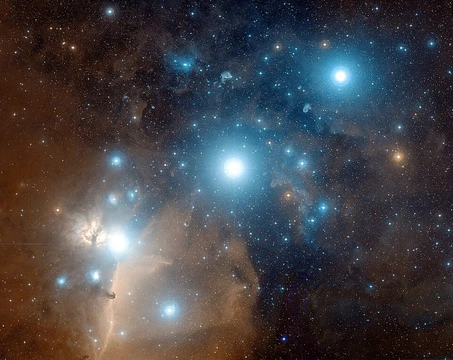
Far-infrared astronomy
Studies cold matter via far-infrared radiation from space.

Far-infrared astronomy studies celestial objects that emit light in the far-infrared range, spanning from 30 micrometers down to submillimeter wavelengths around 450 micrometers. Unlike in visible or near-infrared light, stars appear dim here, but extremely cold material—at temperatures of 140 Kelvin or below—glows brightly in this band. This radiation comes from thermal emission by interstellar dust within molecular clouds, which remains invisible at shorter wavelengths. Much of this far-infrared emission originates from dust surrounding old red giant stars in their circumstellar envelopes. The Bolocam Galactic Plane Survey mapped the galaxy for the first time in the far-infrared. Because Earth’s atmosphere blocks most far-infrared light, astronomers rely on space-based observatories like the Herschel Space Observatory, Spitzer Space Telescope, IRAS, and the Infrared Space Observatory. Airborne telescopes, such as SOFIA, can also make observations from the upper atmosphere. Ground-based work is limited to submillimeter wavelengths and uses high-altitude facilities like the James Clerk Maxwell Telescope, the Caltech Submillimeter Observatory, the High Elevation Antarctic Terahertz Telescope, and the Submillimeter Array. A notable discovery came on January 22, 2014, when European Space Agency scientists used Herschel’s far-infrared capabilities to definitively detect water vapor on Ceres, the largest object in the asteroid belt. This finding was unexpected because such jets and plumes are typically associated with comets, not asteroids, blurring the distinction between the two types of objects.
- Wavelength range
- 30 μm to 450 μm
- Temperature threshold
- 140 Kelvin or less
- First galactic survey
- Bolocam Galactic Plane Survey
- Detection of water vapor on ceres
- 22 January 2014
- Telescope for ceres detection
- Herschel Space Observatory
Lore & Background
Far-infrared astronomy observes emission from dust in circumstellar envelopes around numerous old red giant stars. The Bolocam Galactic Plane Survey mapped the galaxy for the first time in the far-infrared. The Earth's atmosphere is opaque over most of the far-infrared, so most far-infrared astronomy is performed by satellites such as the Herschel Space Observatory, Spitzer Space Telescope, IRAS, and Infrared Space Observatory. Upper-atmosphere observations are also possible, as conducted by the airborne SOFIA telescope. Ground-based observations are limited to submillimetre wavelengths using high-altitude telescopes such as the James Clerk Maxwell Telescope, the Caltech Submillimeter Observatory, the High Elevation Antarctic Terahertz Telescope and the Submillimeter Array.
Reader's Guide
Far-infrared astronomy is significant because it reveals emission from very cold matter—down to 140 Kelvin—that is invisible at shorter wavelengths, primarily from interstellar dust in molecular clouds and circumstellar envelopes around old red giant stars. The Bolocam Galactic Plane Survey provided the first far-infrared map of the galaxy. A notable achievement was the detection of water vapor on the dwarf planet Ceres on 22 January 2014 using the Herschel Space Observatory, a finding that blurred the lines between comets and asteroids. Because Earth's atmosphere is opaque over most of the far-infrared, observations rely on space-based telescopes like Herschel, Spitzer, IRAS, and the Infrared Space Observatory, with limited ground-based work at submillimeter wavelengths from high-altitude sites.
More in Astrophotography 1-24
Spotted an error? Know more?
Reader corrections go straight into our review queue. Suggest an edit · How this site is sourced