
Gaia catalogues
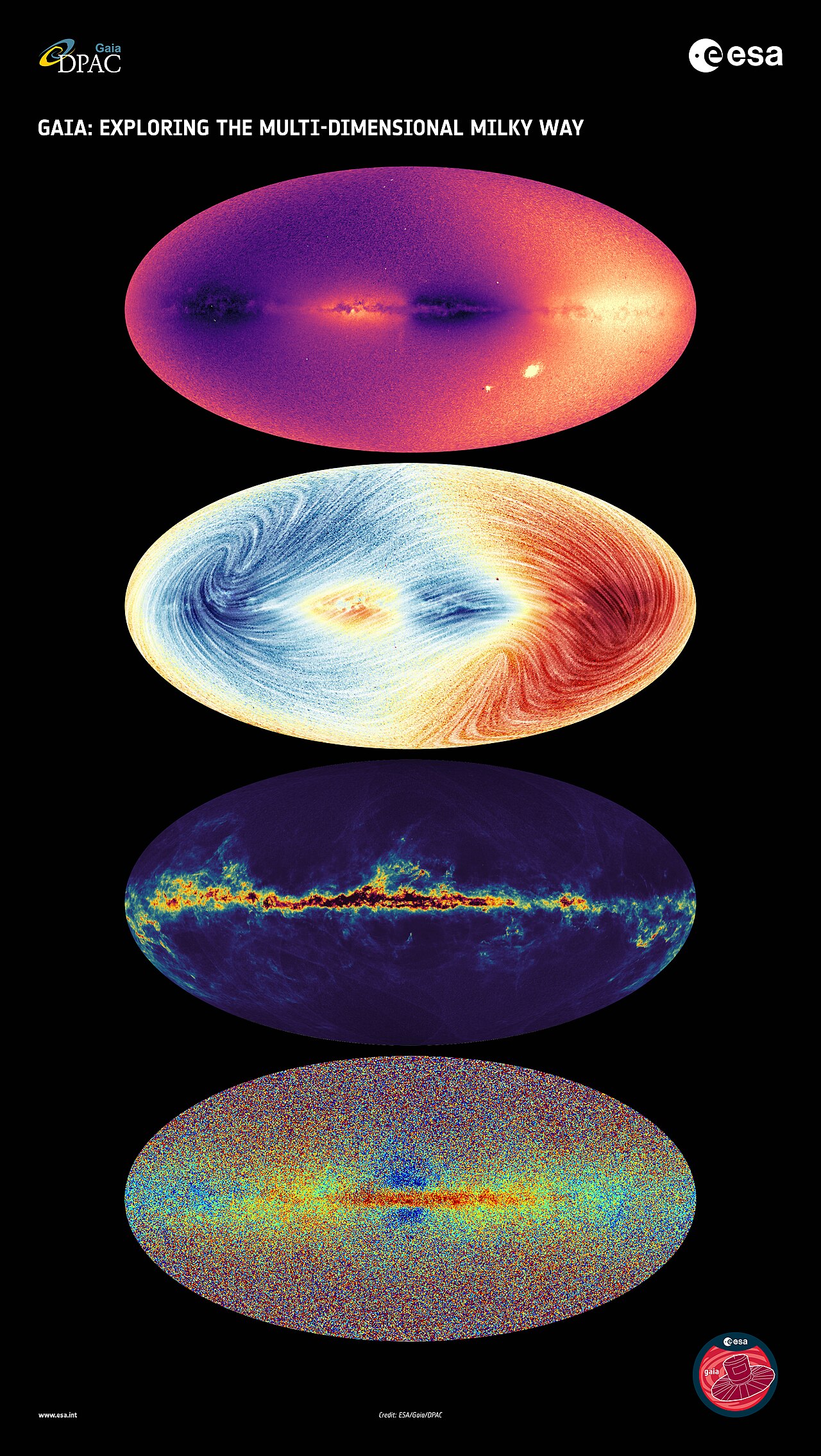
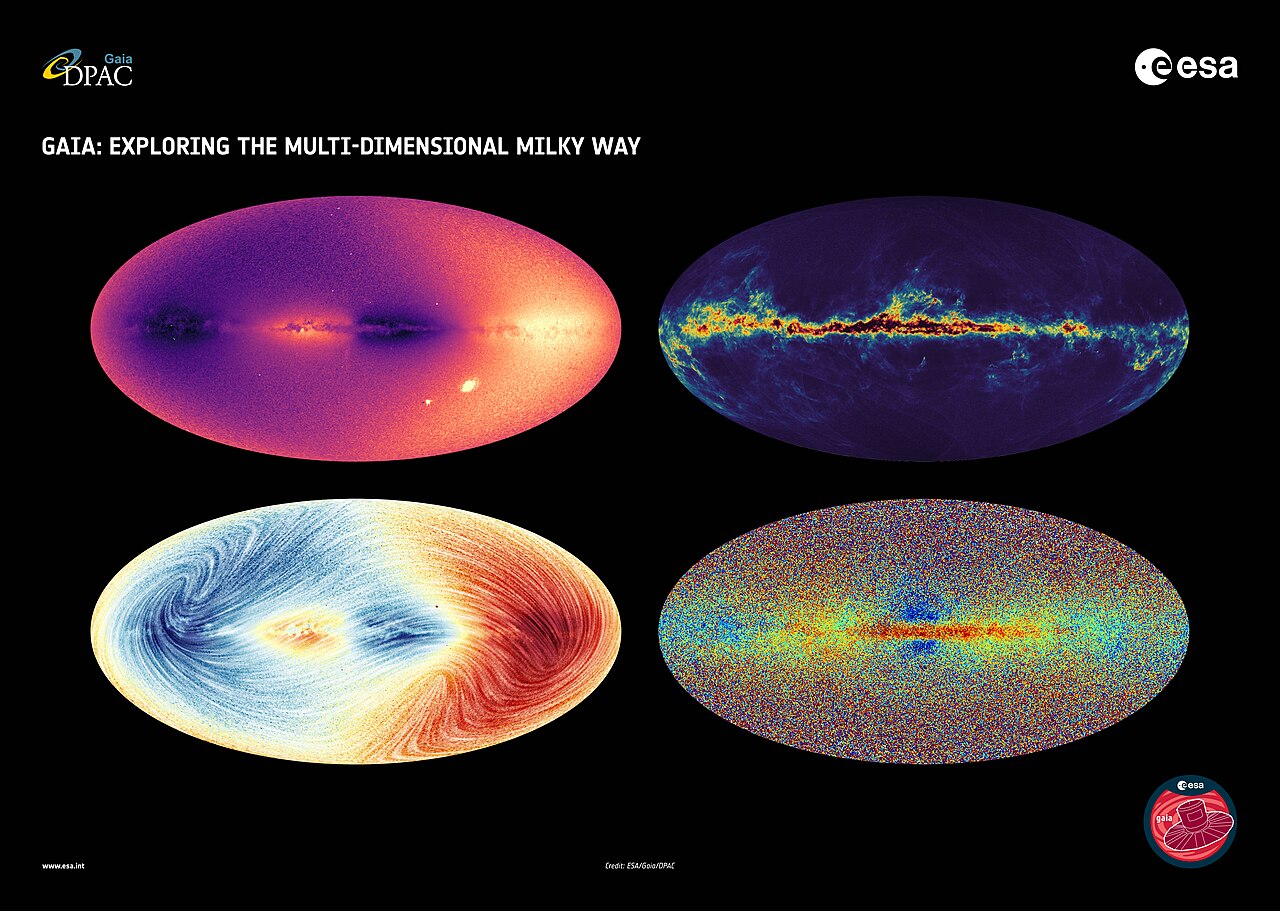
Mapping a billion stars with microarcsecond precision.

© ESA/Gaia/DPAC; · CC BY-SA 3.0 igo
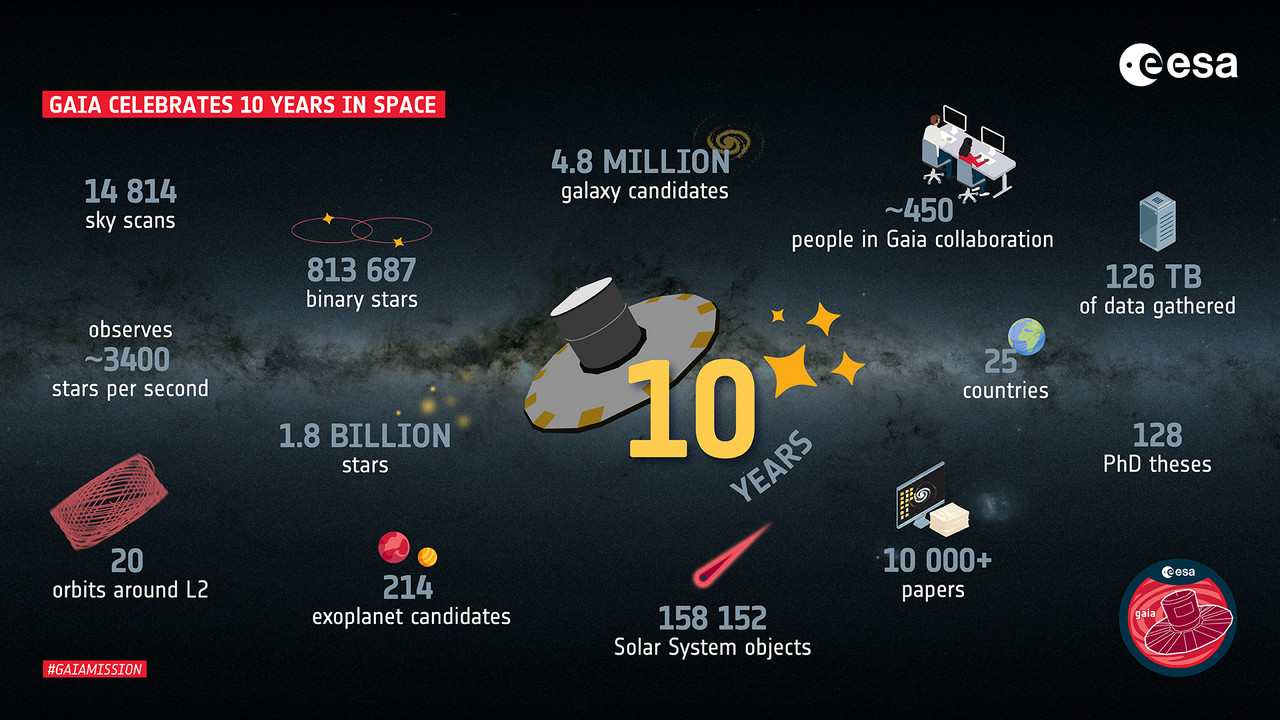
The Gaia catalogues are a series of astrometric star catalogues produced by the European Space Agency's Gaia mission, which aims to map the Milky Way in unprecedented detail. Launched in 2013, Gaia measures the positions, distances, motions, brightness, and colors of nearly two billion stars, with each data release (DR) improving in precision and scope. These catalogues have revolutionized astrophysics, enabling studies of stellar evolution, galactic dynamics, and the structure of the Solar System.
- Number of data releases
- 5 (DR1, DR2, EDR3, DR3, DR4) as of 2024
Lore & Background
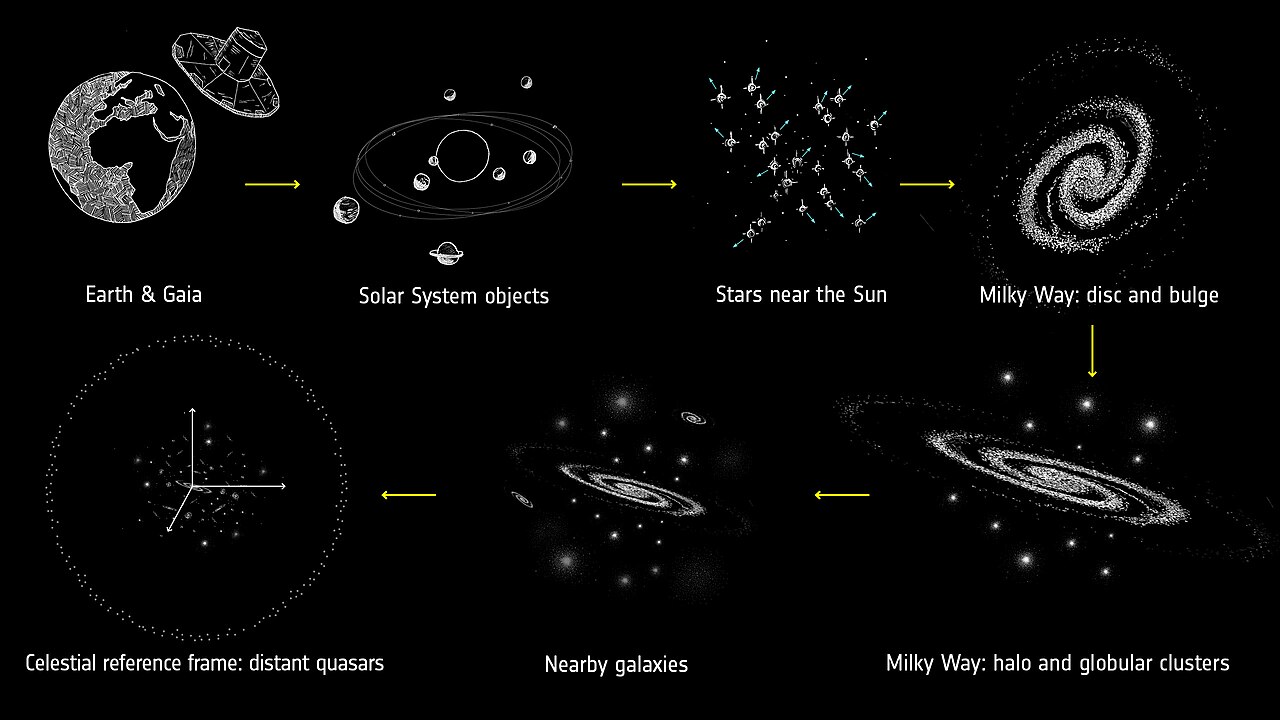
The Gaia mission was conceived as the successor to Hipparcos, the first space-based astrometry mission. After its launch in December 2013, Gaia began scanning the sky from the L2 Lagrange point, collecting data on stellar positions, parallaxes, and proper motions. The first data release (DR1) in 2016 included positions and magnitudes for over 1.1 billion stars, but only a subset had full astrometric solutions. The second data release (DR2) in 2018 was a landmark, providing five-parameter astrometry (position, parallax, proper motion) for 1.3 billion stars, along with the Gaia Celestial Reference Frame 2 (Gaia-CRF2), which is based on 556,869 quasars to define an inertial reference frame.
Reader's Guide
The Gaia catalogues represent a foundational resource for modern astronomy, providing precise astrometric and photometric data for billions of objects. Their significance lies in the progressive release of increasingly detailed information: Gaia DR1 provided positions and magnitudes for 1.1 billion stars and parallaxes for over 2 million stars; DR2 expanded to positions, parallaxes, and proper motions for about 1.3 billion stars, plus radial velocities for 7 million stars; DR3 and EDR3 improved the celestial reference frame using over 1.6 million extragalactic sources. The catalogues enable studies of stellar motions, galactic structure, and the reference frame itself. However, users must be aware of identified issues, such as small systematic errors in astrometry and contamination of radial velocities in crowded fields, which ongoing work aims to resolve. Future releases (DR4 and DR5) promise full astrometric, photometric, and radial-velocity catalogues, variable-star solutions, and epoch data, with substantially reduced systematic errors.
Did You Know?
- Gaia DR2's celestial reference frame (Gaia-CRF2) is anchored by 556,869 quasars, not 492,006—the latter figure belongs to Gaia-CRF1 from DR1.
- The Gaia catalogue includes over 800,000 binary star systems and 1.5 million variable stars in DR3.
- Gaia's astrometric precision is so high that it can measure the width of a human hair at a distance of 1,000 kilometers.
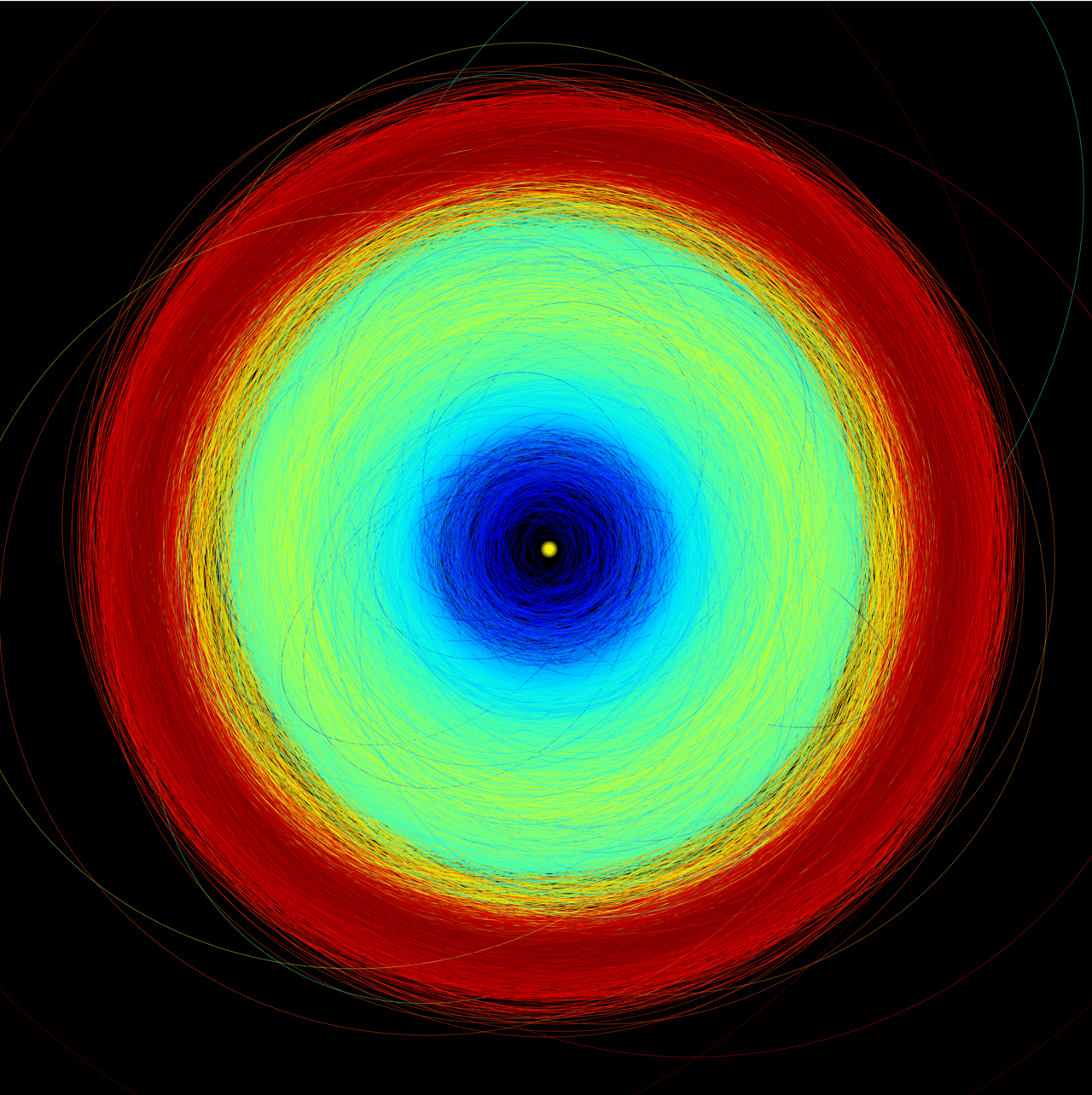
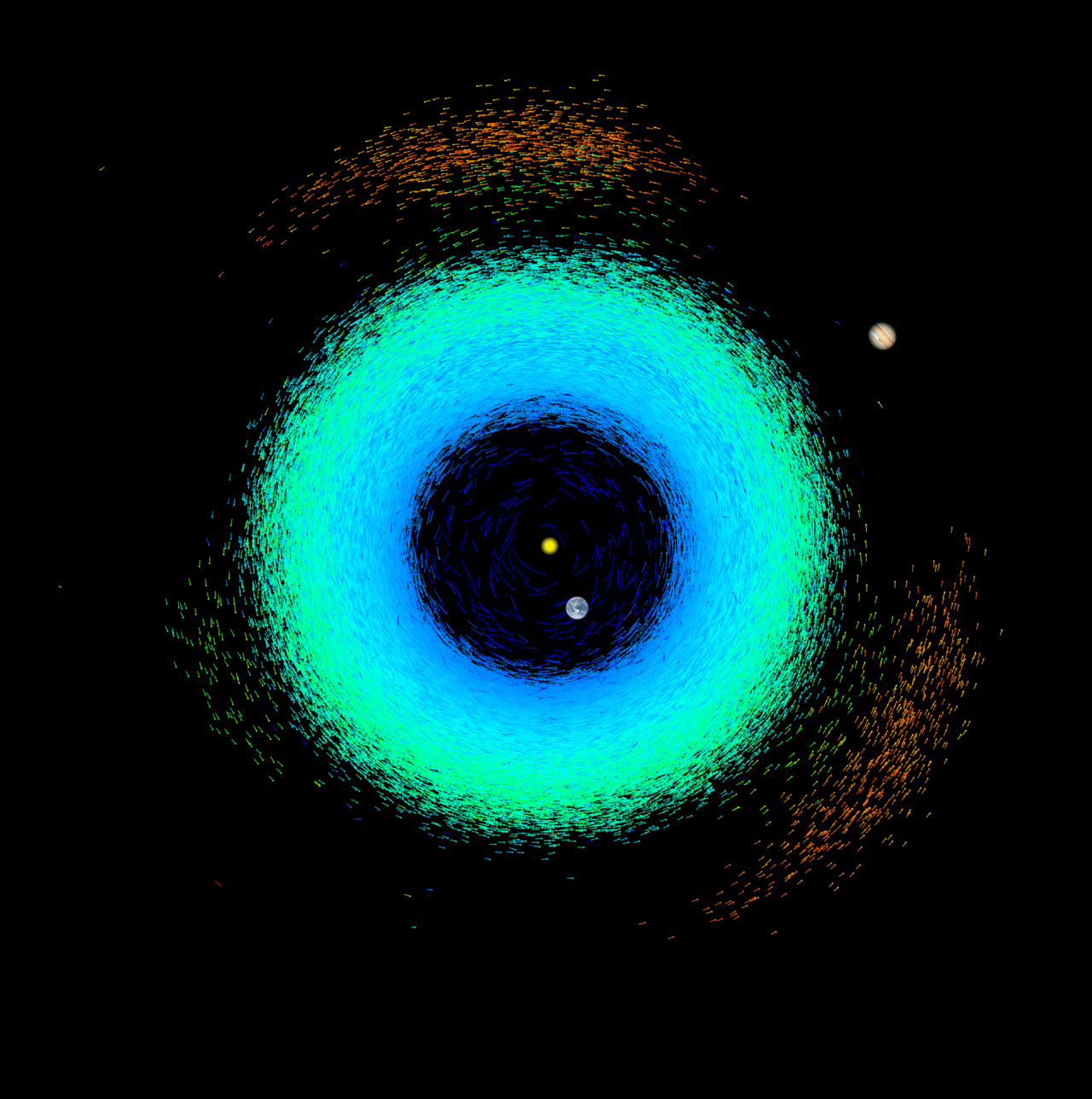
- As of DR3, the mission has detected over 150,000 asteroids in the Solar System, providing orbits and compositions.
The Architecture of Astronomical Catalogues
An astronomical catalogue is, at its core, a structured enumeration of celestial objects. Rather than being a random assortment of sky positions, these catalogues bring objects together under a shared organizing principle. Objects are grouped when they share a common classification—whether that be their physical type, their shape and structure, their origin, the technique used to detect them, or the discovery method that first revealed them. This taxonomy matters because it allows researchers to quickly locate and compare objects relevant to a particular line of inquiry. Most catalogues are not born from a single isolated observation. They are typically the distilled output of a broader astronomical survey, a systematic campaign to scan portions of the sky and record what is found. The catalogue then transforms raw observational data into a referenceable resource for the wider community. The designations assigned to each entry—whether a number, a letter code, or a combination thereof—become the shorthand through which objects are identified and cross-referenced across the literature.
The Cambridge Series and the Radio Sky
The Cambridge catalogues represent one of the most extensive numbered sequences in astronomical nomenclature. Beginning with the First Cambridge Catalogue of Radio Sources, designated 1C, the series progressed through successive editions—2C, 3C (alongside its revised form 3CR), 4C, 5C, 6C, 7C, 8C, 9C, and ultimately 10C—each expanding the inventory of celestial radio emitters known to the community. The progression from one edition to the next reflects the steady accumulation of radio sources as the discipline matured, with each new survey capturing a broader or more refined set of emitters. Radio catalogues are not limited to Cambridge. The Bologna Sky Survey produced two notable entries, B2 and B3, both conducted at 408 MHz using the Northern Cross Radio Telescope, with B3 recording a substantially larger set of sources. Other radio-related catalogues include the Arecibo General Catalog, observations from the Algonquin Radio Observatory, and the ROSAT series, which catalogs X-ray sources from both pointed and all-sky survey modes. Together, these catalogues paint a multi-wavelength picture of the radio and X-ray universe.
The 2MASS Family and Infrared Cartography
The Two Micron All Sky Survey, abbreviated 2MASS, spawned an entire family of related catalogues that collectively mapped the infrared sky. The base 2MASS catalogue formed the foundation, but several specialized offshoots served distinct purposes. The 2MASP designation referred to a prototype version, while 2MASSI denoted an incremental release that added new data over time. The 2MASSW entry represented a working database, and 2MASX provided an extended source catalogue with additional entries beyond the core survey. Beyond the survey infrastructure, 2MASS data fed into targeted scientific catalogues. The 2MUCD catalogue specifically identified ultracool dwarfs drawn from the 2MASS data, isolating a class of cool stellar objects. The 2MASS-GC series, including entries 2MASS-GC 01 and 2MASS-GC 02, catalogued globular clusters in the infrared, with these two entries corresponding to what are also known as Hurt 1 and Hurt 2. This branching structure illustrates how a single survey can generate multiple layers of reference material, each tailored to a different observational goal or class of object.
A Constellation of Individual Contributors
Behind the systematic, numerical designations of astronomical catalogues lies a vast tapestry of individual astronomers, each contributing observations and classifications to specific object types. The double-star catalogues alone carry the names of numerous observers: Aitken, Burnham, van den Bos, Argelander, Baillaud, Baize, and many others, each adding their own measurements and identifications to the growing record of paired stellar systems. Open star clusters attract their own constellation of contributors, with catalogues bearing names from Abt to Vigneau, spanning multiple generations and nationalities. Planetary nebulae are indexed under the names of Acker, Allen, and Baade, among others. Even more specialized objects find their keepers: the Arakelian catalogue tracked emission-line objects, the Agüero catalogue documented peculiar galaxies captured during the Palomar Observatory Sky Survey, and the 8pc listing simply recorded all stars within eight parsecs. This distributed authorship means that no single mind or institution owns the sky; rather, the catalogue is a collective mosaic, each tile placed by a different observer looking for a different kind of object.
Gallery
Frequently Asked Questions
What are the Gaia catalogues?
They are a series of stellar data collections generated from observations made by ESA's Gaia space telescope. Each successive release builds on the previous one, adding more objects and refined measurements.
When did the first Gaia catalogue come out?
The first data release, Gaia DR1, was published on 13 September 2016. It was partly assembled from the earlier Initial Gaia Source List of 1.2 billion objects rather than relying solely on Gaia's own observations.
How many stars does Gaia DR2 cover?
The second data release contains roughly 1.3 billion stars, each with measured positions, parallaxes, and proper motions. This made it one of the most comprehensive stellar surveys ever produced.
What is the most recent Gaia catalogue release?
The latest product is the Gaia Focused Product Release, issued in October 2023. It refines and extends the data from earlier releases with updated astrometric solutions.
Why don't early Gaia releases include every star?
Fainter objects in densely packed star fields are harder to resolve, so they are often left out of earlier data releases. Later releases progressively recover more of these missed sources as processing improves.
More in Astronomical catalogues 1-24
Spotted an error? Know more?
This is a living reference — every entry is fact-audited, and reader corrections feed straight into our audit queue. Suggest an edit · See this site's audit record