
2MASS
Infrared survey cataloging 300 million celestial objects.

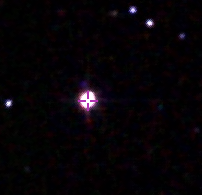
Legacy Surveys / D.Lang (Perimeter Institute) & Meli thev · CC BY 4.0
The Two Micron All-Sky Survey (2MASS) was an astronomical survey of the whole sky in infrared light, conducted between 1997 and 2001. It used two 1.3-meter telescopes, one at the Fred Lawrence Whipple Observatory on Mount Hopkins, Arizona, and one at the Cerro Tololo Inter-American Observatory in Chile, to observe the Northern and Southern Hemispheres respectively. The survey operated in three short-wavelength infrared bands (J, H, and K) near 2 micrometres, using HgCdTe detectors.
- field
- Astronomy
- known_for
- All-sky infrared survey cataloging over 300 million objects
- sponsors
- University of Massachusetts Amherst, IPAC (JPL/Caltech), NASA, NSF
- data_release_year
- 2003
- telescope_aperture
- 1.3 meters
- survey_duration
- 1997–2001
Lore & Background
2MASS produced an astronomical catalog with over 300 million observed objects, including minor planets, brown dwarfs, low-mass stars, nebulae, star clusters, and galaxies. An additional 1 million extended sources were cataloged in the 2MASS Extended Source Catalog (2MASX), with objects designated by the prefixes '2MASS' and '2MASX' respectively. The final data release occurred in 2003 and is served by the Infrared Science Archive.
The survey's goals included detecting galaxies in the 'Zone of Avoidance'—a strip of sky obscured in visible light by the Milky Way—and discovering brown dwarfs. 2MASS discovered 173 brown dwarfs, including 2MASS 0939-2448, 2MASS 0415-0935, and 2MASS J04414489+2301513. (2M1207 was identified later as a candidate and confirmed in 2004, not among the original 2MASS brown dwarf discoveries.) It also conducted an extensive survey of low-mass stars, the most common star type in the Milky Way and other galaxies.
In November 2003, a team of scientists announced the discovery of the Canis Major Dwarf Galaxy based on analysis of 2MASS stellar data. However, its status as a distinct dwarf galaxy is disputed; many astronomers consider it a tidal feature or overdensity rather than a separate satellite galaxy. The survey's infrared measurements have been particularly effective at unveiling previously undiscovered star clusters. The resulting data and images are in the public domain and accessible online for free.
Reader's Guide
2MASS represents a landmark in astronomical survey science, providing the first complete infrared map of the entire sky. Its catalog of over 300 million point sources and 1 million extended sources has become a foundational resource for studying low-mass stars, brown dwarfs, and galaxies hidden behind the Milky Way's dust. The survey's discovery of 173 brown dwarfs and the Canis Major Dwarf Galaxy demonstrated the power of infrared observations to reveal objects invisible in optical light. By cataloging stars and galaxies with automated computer programs to an average limiting magnitude of about 14, 2MASS enabled large-scale statistical studies of stellar populations and galactic structure. Its public-domain data continues to support research in stellar astrophysics, galactic astronomy, and the search for nearby dwarf galaxies. The survey's legacy includes not only its own discoveries but also its role as a precursor to deeper infrared surveys, and its data remain widely used for cross-identification and photometric calibration.
Did You Know?
- 2MASS used two 1.3-meter telescopes, one in Arizona and one in Chile, to cover both hemispheres.
- The survey cataloged over 300 million point sources and 1 million extended sources.
- 2MASS discovered 173 brown dwarfs, including 2MASS 0939-2448 and 2MASS J04414489+2301513 (2M1207 was confirmed later, in 2004).
- Analysis of 2MASS data led to the 2003 discovery of the Canis Major Dwarf Galaxy, though its status as a distinct galaxy is debated.
Survey Architecture and Execution
The Two Micron All-Sky Survey represented a coordinated effort to map the entire celestial sphere in infrared wavelengths, carried out between 1997 and 2001. Rather than relying on a single ground station, the project split its operations across two continents. In the Northern Hemisphere, observations were conducted from the U.S. Fred Lawrence Whipple Observatory perched on Mount Hopkins in Arizona, while the Southern Hemisphere was covered from the Cerro Tololo Inter-American Observatory in Chile. Both sites employed 1.3-meter telescopes, ensuring comparable collecting power for each half of the sky. The survey focused on the short-wavelength infrared region, capturing data in three distinct frequency bands labeled J, H, and K, all clustered near the two-micrometre wavelength. The detectors used were HgCdTe arrays, and it is from this combination of the two-micrometre target and the detector technology that the project earned its name. The dual-site strategy was essential for achieving true all-sky coverage without gaps.
The Catalog and Its Contents
The culmination of four years of sky mapping was a catalog of staggering scale. The final data release, made available in 2003 through the Infrared Science Archive, contained numerical descriptions of more than 300 million point sources—stars, planets, and asteroids—along with roughly one million extended sources such as galaxies and nebulae. These extended objects were recorded in a separate compilation known as the 2MASS Extended Source Catalog, or 2MASX. Every entry received a standardized designation: the 2MASS prefix for point sources and 2MASX for extended sources. Automated computer programs handled the classification and photometric measurement, achieving an average limiting magnitude of approximately 14. The objects spanned an extraordinary range, from minor planets orbiting within our own Solar System to distant galaxies, brown dwarfs, low-mass stars, nebulae, and star clusters. This breadth made the catalog one of the most comprehensive infrared references ever assembled.
Breakthrough Discoveries and Scientific Goals
The survey was designed with several ambitious scientific objectives that went well beyond simple sky mapping. One key goal was to detect galaxies hidden in the Zone of Avoidance, a band of the sky where the dense dust and stars of the Milky Way block visible-light observations but become transparent in the infrared. Another priority was the identification of brown dwarfs, those faint substellar objects that fall between planets and true stars. 2MASS succeeded in discovering 173 such objects, including notable examples like 2MASS 0939-2448, 2MASS 0415-0935, 2M1207, and 2MASS J04414489+2301513. The survey also proved remarkably effective at uncovering previously unknown star clusters, and it provided an extensive census of low-mass stars, the most numerous stellar type in the galaxy. Perhaps the most celebrated finding came in November 2003, when a team announced the discovery of the Canis Major Dwarf Galaxy—the closest known satellite galaxy to the Milky Way at the time—based entirely on analysis of 2MASS stellar data.
Open Access and Institutional Support
A defining feature of 2MASS's legacy is its commitment to open science. The resulting data and images are held in the public domain, meaning anyone anywhere can access them online at no cost. The survey also maintains a curated list of scientific publications derived from its data, with links to free pre-publication copies of the papers, ensuring that even cutting-edge research built on the catalog remains accessible to the broader community. The project was made possible through a collaborative sponsorship structure involving the University of Massachusetts Amherst, the Infrared Processing and Analysis Center (IPAC), which is operated jointly by the Jet Propulsion Laboratory and Caltech, NASA, and the National Science Foundation. The final data release is served through the Infrared Science Archive, and supplementary resources such as the 2MASS Atlas Image Gallery and dedicated low-mass star and brown dwarf databases remain available to researchers and the public alike.
Gallery
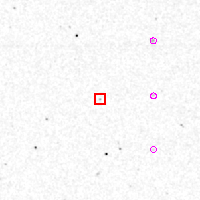
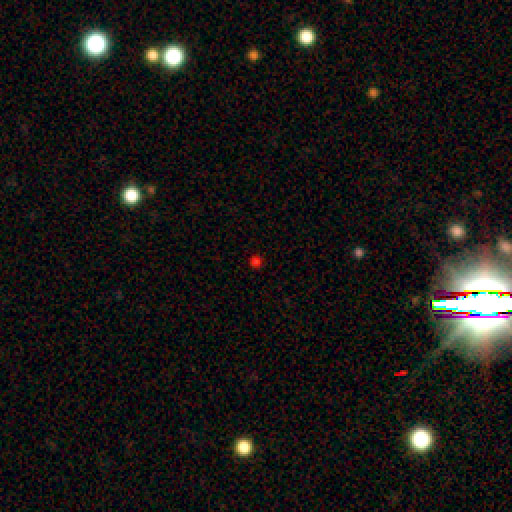
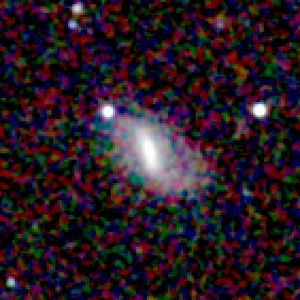
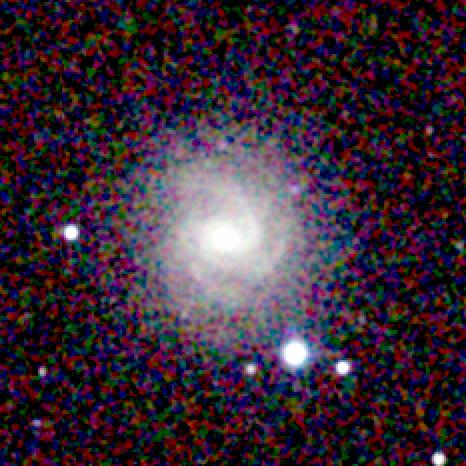
Frequently Asked Questions
What is 2MASS?
2MASS, short for the Two Micron All-Sky Survey, was a full-sky infrared mapping project carried out between 1997 and 2001. It was a joint effort supported by the University of Massachusetts Amherst, NASA, the NSF, and IPAC at Caltech.
What are 2MASS's 'powers' — what did it actually catalog?
The survey identified and recorded more than 300 million celestial objects across three near-infrared bands (J, H, and K) centred near 2 micrometres. That made it one of the most complete infrared sky maps ever assembled up to that point.
How did 2MASS pull off a full-sky survey?
The workload was divided between two 1.3-metre telescopes: one at the Fred Lawrence Whipple Observatory on Mount Hopkins, Arizona, covering the Northern Hemisphere, and another at Cerro Tololo in Chile handling the Southern Hemisphere. Both instruments used HgCdTe detectors to capture light in the three short-wavelength infrared bands.
Why is 2MASS important to astronomy?
By delivering a complete infrared census of the sky, it gave researchers a foundational reference for studying stars, galaxies, and dust-enshrouded objects that are hidden or obscured in visible light. It quickly became a standard lookup catalogue for identifying faint or heavily reddened sources anywhere on the celestial sphere.
How does 2MASS's story end — when did the data come out?
The full survey dataset was released publicly in 2003, concluding the observing phase that had run from 1997 to 2001. The catalogue has since remained a go-to reference tool in infrared and multi-wavelength astronomy.
More in Astronomical catalogues 1-24
Spotted an error? Know more?
This is a living reference — every entry is fact-audited, and reader corrections feed straight into our audit queue. Suggest an edit · See this site's audit record