Yumi
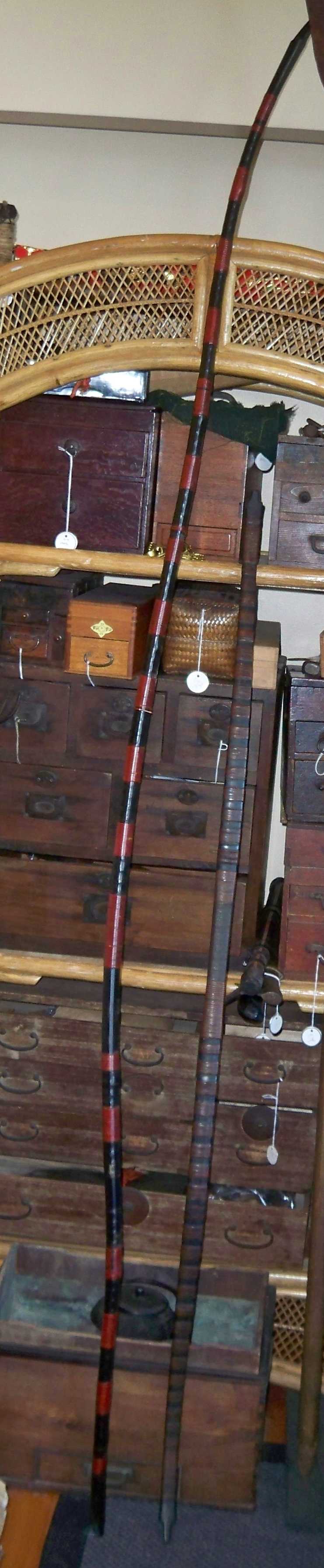
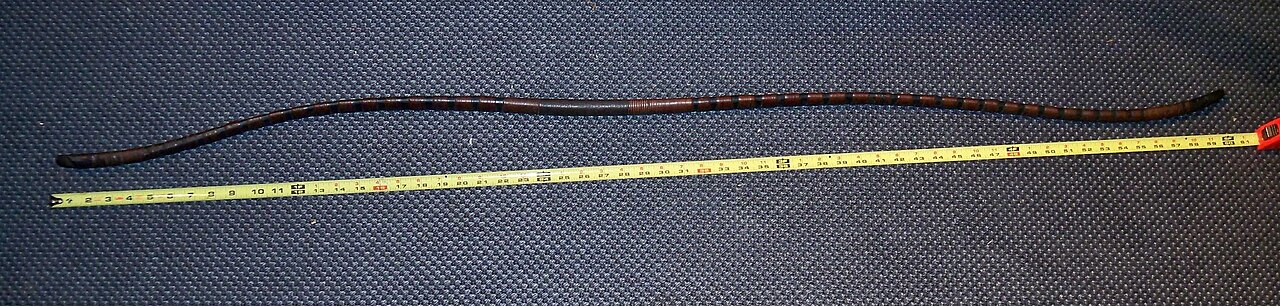
Traditional Japanese asymmetrical bow used by samurai and in kyūdō.

Samuraiantiqueworld · CC BY-SA 3.0
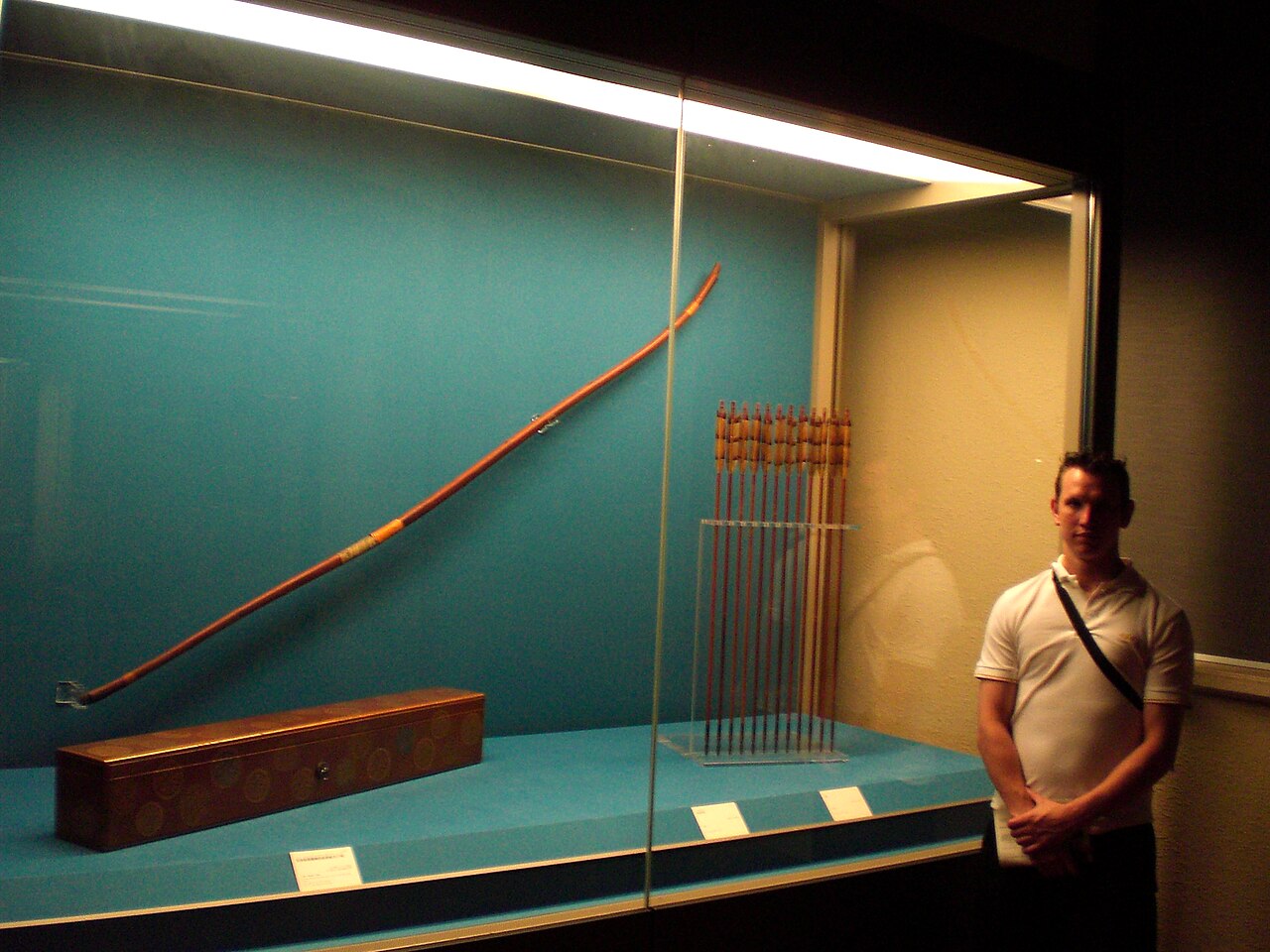
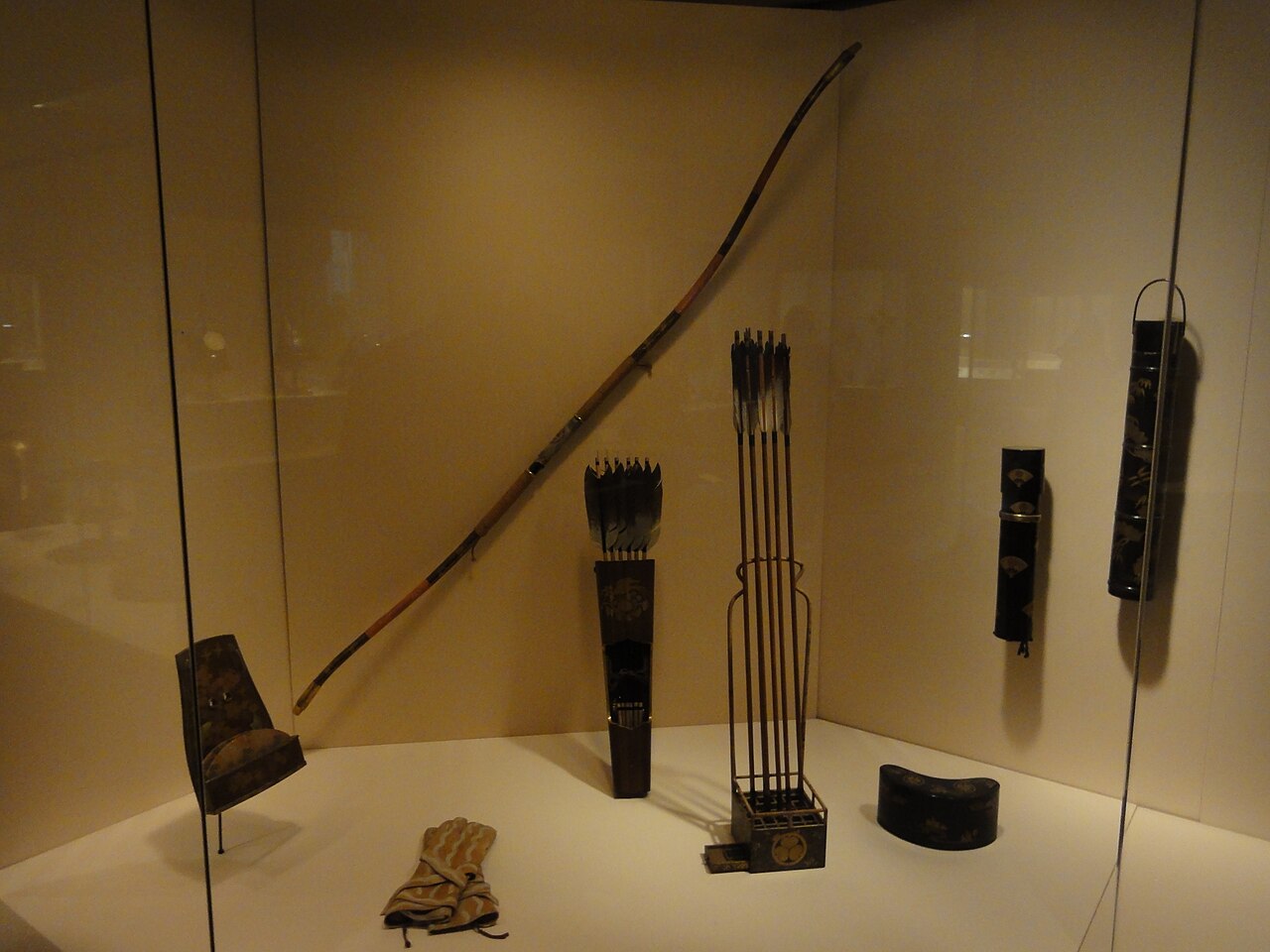
Yumi is the Japanese term for a bow, and in English usage refers more specifically to traditional Japanese asymmetrical bows, including the longer daikyū and the shorter hankyū used in the practice of kyūdō and kyūjutsu, or Japanese archery. The yumi was an important weapon of the samurai warrior during the feudal period of Japan, typically shot with Japanese arrows known as ya.
Quick Facts
- Sheath Type
- Lacquered wood
- Origin
- Japan
- Is Ranged
- yes
- Used By
- Samurai, Onna-musha, Kyudo practitioners
- Production Date
- Since 3rd century (the asymmetrical ja · yumi)
- Variants
- ja · Hankyū
- Length
- 212 –
- Cartridge
- Arrow length: 85 –
- Hilt Type
- laminating bamboo, wood and leather
Facts from the source article.
Lore & Background
Bows discovered from the Jōmon period measured 1.2 to 1.6 m in length, while those of the Yayoi period tended to be 2 to 2.3 m. These early bows were made from a single piece of wood, a structure known as maruki, used until the Nara period (710–794 CE). The first written record of the asymmetrical yumi appears in the Book of Wei, a Chinese manuscript dated to the 3rd century CE, describing the people of the Japanese islands using wooden bows with lower limbs short and upper limbs long, and bamboo arrows with iron or bone points. The oldest extant asymmetrical yumi, estimated from the 5th century, was found in Nara Prefecture.
During the Kofun period (300–538 CE), some bows found as funerary items in kofun were decorated with gold or silver and may have had ceremonial use, ranging from 70 to 150 cm in length. In the Nara period, lacquered bows with weather resistance appeared, using highly elastic woods such as Euonymus hamiltonianus, Zelkova serrata, and Toxicodendron succedaneum; some bows reached roughly 2.21 m. From the mid to late Heian period (794–1185), the sanbon-jikake style emerged as the first laminated yumi in Japan, attaching bamboo to a wooden core with fish-based glue. The sanbon-jikake was considered the strongest weapon of the Kamakura period, with a maximum range of 400 m and effective range of 80 m. During the Muromachi period (1336–1573), the yumi became a symbol of the rank of commander.
The shige-tō yumi, used in modern kyūdō, was developed during the Sengoku period (1467–1615), representing the original form of the Japanese bow now known worldwide. Its laminated structure used about four pieces of bonded bamboo with bamboo on front and back and wood on the sides, enabling it to shoot through targets 132 m away in the Sanjusangen-do archery contest. During this period, ya (arrowheads) were actively researched, and yumi were mass-produced by Japanese swordsmiths. Despite the introduction of firearms, the yumi continued as an important military force because firearms took long to load, were inconvenient in rainy weather, and were extraordinarily noisy.
Reader's Guide
The yumi's significance lies in its long history as both a weapon of war and a tool of spiritual discipline. From the Jōmon period through the feudal era, the yumi evolved from simple wooden self-bows to sophisticated laminated constructions using bamboo, wood, and leather. Its asymmetrical shape, with the grip positioned about two-thirds from the upper tip, allowed for use on horseback and from kneeling positions, though the exact reason for the asymmetry remains uncertain. The yumi was central to samurai culture, particularly during the Kamakura period when mounted archery styles such as yabusame, kasagake, and inuoumono gained popularity. In the Edo period (1603–1867), as society entered a period of relative peace, the spirituality and decorativeness of the yumi became important, and kyūdō developed as a samurai's way of doing things. Today, the yumi is used in kyūdō and ceremonies, and in Grand sumo tournaments a ceremony called the yumi-tori is held, dedicated to Shinto. A well-cared-for bamboo yumi can last many generations, while a mistreated one can have a very short usable life. The yumi also appears in popular culture, such as in the Teenage Mutant Ninja Turtles franchise and Power Rangers Samurai.
Did You Know?
- The oldest extant asymmetrical yumi was discovered in Nara Prefecture and is estimated to date from the 5th century.
- The sanbon-jikake style yumi of the Kamakura period had a maximum range of 400 m and an effective range of 80 m.
- During the Sengoku period, the shige-tō yumi enabled archers to shoot through targets 132 m away in the Sanjusangen-do archery contest.
- The yumi's asymmetrical shape may have been designed for use on horseback, but evidence suggests the shape predates horseback use.
A Bow Across Millennia
The Japanese bow traces its lineage back to the Jōmon era, where excavated specimens measure between 1.2 and 1.6 metres, carved from a single worked piece of timber. By the Yayoi period, lengths had grown to roughly 2 to 2.3 metres, and this single-stick construction, called maruki yumi, persisted until the Nara period. The earliest written reference to the distinctive asymmetrical form appears in the Book of Wei, a Chinese manuscript from the third century CE, which notes that islanders wielded wooden bows with shorter lower limbs and longer upper limbs, paired with bamboo shafts tipped in iron or bone. The oldest surviving asymmetrical example, unearthed in Nara Prefecture, dates to the fifth century. During the Kofun era, bows interred in ancient tombs bore gold and silver ornamentation, hinting at ceremonial roles. By the Nara period, lacquered variants appeared, and a length of roughly 7 shaku 3 sun—about 2.21 metres—became a lasting standard that endures to this day.
Lamination, Elasticity, and the Pursuit of Power
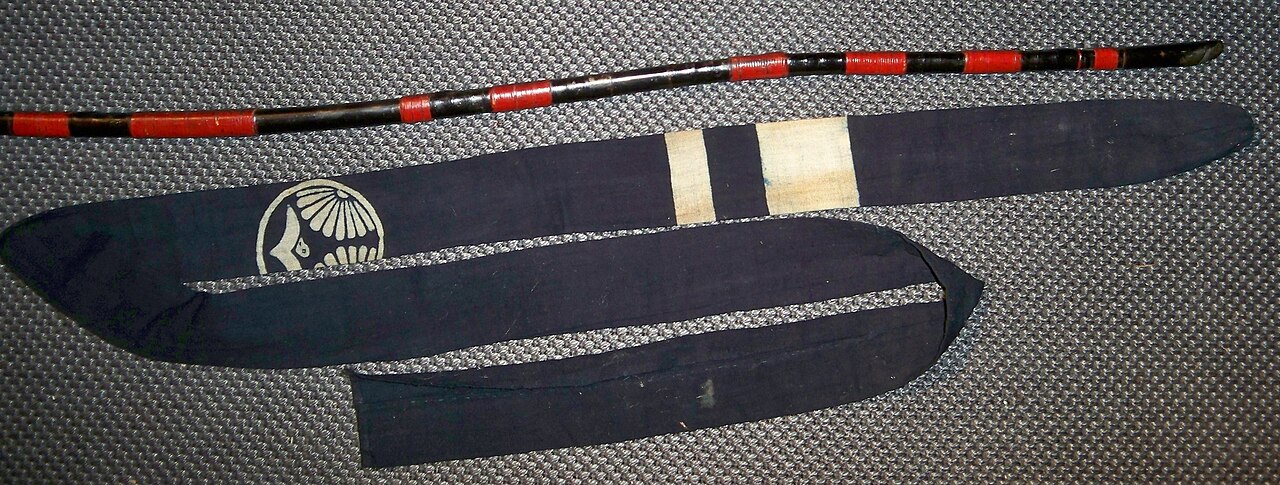
The engineering of the yumi evolved through successive innovations in layered construction. The earliest bows were carved from a single piece of wood, but by the mid-Heian period, craftsmen began bonding bamboo to the flat front face of a wooden core using fish-based adhesive, creating the fusedake no yumi. This added elasticity and extended both range and durability. The sanmaiuchi no yumi, emerging at the Heian-to-Kamakura transition, took the concept further by gluing bamboo to the reverse side as well. The shigetō yumi, which wrapped rattan around a laminated frame, was regarded as the most formidable weapon of the Kamakura era, capable of lethal strikes at 80 metres and a maximum reach of 400 metres, with over twenty distinct winding patterns documented. The higoyumi, refined during the Sengoku period, represents the archetypal Japanese bow: a core of roughly four bonded bamboo strips, with bamboo on the front and back and wood on the sides. This configuration proved powerful enough to pierce targets at 132 metres in the Sanjusangen-do contest.
Warrior's Instrument and Symbol of Rank
Throughout feudal Japan, the yumi was the defining weapon of the samurai, and its mastery was inseparable from martial identity. During the Kamakura period, as the warrior class seized political power, mounted archery flourished in three principal forms: yabusame, inuoumono, and kasagake. The shigetō yumi, with its rattan-wound construction, became so closely associated with military authority that during the Muromachi era it served as a visible emblem of a commander's rank. The bow's battlefield relevance endured even after the mass production of the tanegashima, a matchlock firearm, because the gun's slow reload, vulnerability to rain, and deafening noise left the yumi with a tactical edge in subtlety and reliability. Legendary archers such as Nasu no Yoichi, celebrated in The Tale of the Heike and Genpei Seisuiki, became enduring figures in Noh, kyogen, kodan, kabuki, and ukiyo-e art. Meanwhile, arrowhead design—yajiri—was actively researched to maximise lethality, producing a wide variety of tip shapes.
From Battlefield to Sacred Practice
When Japan entered the long peace of the Edo period, the yumi's role shifted decisively from a tool of war to a vessel of spiritual discipline. Kyūjutsu, the martial art of archery, was reinterpreted as a samurai's code of conduct, emphasising inner composure and aesthetic grace over mere hitting power. Today, the bow lives on in kyūdō, where practitioners use the daikyū—a long bow exceeding two metres—or the shorter hankyū, both shot with traditional ya arrows. The craft of bow-making, laminating bamboo, wood, and leather, has preserved techniques essentially unchanged for centuries. The yumi also features prominently in Shinto ritual: at Grand sumo tournaments, the yumitori shiki ceremony is dedicated to the kami. The Tōshiya archery contest at Sanjusangen-do, where archers aim at a target 132 metres away, continues as a living tradition. In these contexts, the bow that once toppled empires now embodies reverence, continuity, and the quiet pursuit of perfection.
Gallery
Frequently Asked Questions
What is a yumi?
A yumi is a traditional Japanese bow with a distinctive asymmetrical build, serving as the core implement of kyūdō and kyūjutsu. Historically it was the signature ranged weapon of samurai during Japan's feudal era, fired with arrows known as ya.
How long is a yumi?
A full-length daikyū stretches past two meters, making it one of the longest bows still practiced today. A shorter hankyū variant is also used, particularly in training settings.
What makes the yumi's shape different from other bows?
The yumi is asymmetrical: the grip sits roughly two-thirds of the way down from the upper tip, leaving the upper limb about twice as long as the lower one. This off-center design is a hallmark that sets it apart from most Western and Mongolian bows.
How far can a yumi shoot?
Using the Kamakura-period sanbon-jikake technique, an archer could reliably hit targets at around 80 meters, with a maximum range of roughly 400 meters. Those figures reflect the bow's performance in both military and ceremonial contexts of that era.
How old is the yumi?
The 3rd-century CE Book of Wei contains the earliest known written reference to the yumi, and the oldest surviving asymmetrical example—dating to the 5th century—was unearthed in Nara Prefecture. Together they show the bow has been in continuous use for well over a millennium.
More in Archery, Part 3 1-15
Spotted an error? Know more?
Reader corrections go straight into our review queue. Suggest an edit · How this site is sourced