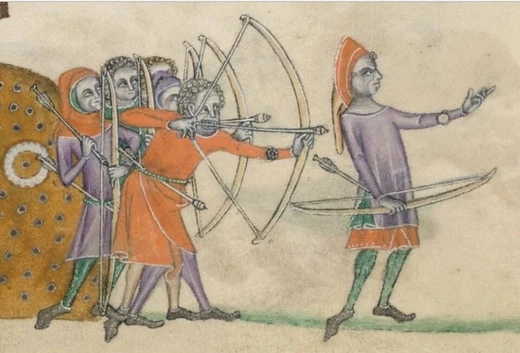
Ngô Xương Văn
Ngô dynasty king who ruled alongside his brother in a divided court.

Ngô Xương Văn (935–965), known formally as the King of Nam Tấn, was a ruler of the Vietnamese Ngô dynasty. He was the second son of Ngô Quyền, who founded the dynasty.
Born in 935, he was recorded in Chinese sources as Ngô Xương Tấn. When Ngô Quyền died in 944, he named Văn’s elder brother, Ngô Xương Ngập, as his successor. Ngập was soon driven out, however, and the regent Dương Tam Kha seized power. To maintain the appearance of legitimacy, Dương Tam Kha adopted Văn.
In 950, Văn was sent with Dương Cát Lợi and Đỗ Cảnh Thạc to suppress a rebellion by Đường and Nguyễn. When the army reached Từ Liêm, Văn turned his forces around and overthrew Dương Tam Kha. He spared Dương’s life and granted him the title Duke of Chương Dương.
Văn then crowned himself King of Nam Tấn and summoned his brother Ngập to the capital. Ngập was made co-ruler with the title King of Thiên Sách, creating what Vietnamese history calls “one country, two kings.” Both were known as Hậu Ngô Vương. Ngập held real power, and Văn took no part in political affairs until Ngập’s death. Royal authority remained weak.
In 951, Đinh Bộ Lĩnh rebelled, occupying Hoa Lư and refusing tribute. Văn and Ngập attacked him, capturing his eldest son Đinh Liễn and demanding surrender. Unmoved, Bộ Lĩnh angrily declared that an honorable warrior does not yield for his son and ordered his archers to shoot at Liễn. Horrified, the two kings withdrew.
After Ngập died, Văn sought the title of military governor from the Southern Han, without meeting their representatives. He was granted the positions of Jiedushi of Tĩnh Hải quân and Governor of Annam. In 965, Văn led troops against another rebellion by Đường and Nguyễn and was killed by an arrow in battle.
His death plunged the kingdom into civil war, known as the Anarchy of the Twelve Warlords.
Quick Facts
- Title
- King of Jinghai
- Father
- Ngô Quyền
- Mother
- Dương Quốc mẫu
- Birth Date
- 935
- Death Date
- 965
- Regnal Name
- Nam Tấn Vương (南晉王)
- Full Name
- Ngô Xương Văn (吳昌文)
- Succession
- Grand Prince of Tĩnh Hải quân
- Reign
- 950–965
- Predecessor
- Dương Tam Kha
- Successor
- Ngô Xương Xí (warlord)
- Reg Type
- Co-king
Facts from the source article.
Lore & Background
Ngô Xương Văn was born in 935. After the death of his father Ngô Quyền in 944, the throne was intended for his elder brother Ngô Xương Ngập, but Ngập was banished and the regent Dương Tam Kha usurped power. To deceive the public, Dương Tam Kha adopted Văn. In 950, Văn was sent to suppress a rebellion of Đường and Nguyễn together with Dương Cát Lợi and Đỗ Cảnh Thạc. When their troops reached Từ Liêm, Văn turned his army back and dethroned Dương Tam Kha, granting him the title Duke of Chương Dương rather than killing him.
Văn crowned himself King of Nam Tấn and summoned his elder brother Ngập to the capital, appointing him co-ruler as King of Thiên Sách. This arrangement, known in Vietnamese history as 'one country, two kings,' saw both referred to as Hậu Ngô Vương. Ngập held real power, and Văn did not participate in political affairs until Ngập's death. The royal rule remained weak. In 951, when Duke Đinh Bộ Lĩnh rebelled and occupied Hoa Lư without paying tribute, Văn and Ngập attacked him. They captured Bộ Lĩnh's eldest son Đinh Liễn and demanded surrender, but Bộ Lĩnh replied in anger, 'An honored warrior never gives up just because of his son,' and ordered his archers to shoot at Liễn. The two kings withdrew their troops.
After Ngập's death, Văn solicited the title of military governor from the Southern Han and was granted the titles Jiedushi of Tĩnh Hải quân and Governor of Annam. In 965, Văn led troops to put down another rebellion of Đường and Nguyễn and was killed by an arrow in the midst of battle. His death led to a chaotic civil war known as the Anarchy of the 12 Warlords.
Reader's Guide
Ngô Xương Văn's reign is notable for the unusual co-rule with his brother Ngô Xương Ngập, a period remembered as 'one country, two kings.' This arrangement reflected the fragility of the Ngô dynasty after the death of its founder Ngô Quyền. Văn's initial adoption by the usurper Dương Tam Kha and his later overthrow of him illustrate the shifting loyalties and power struggles of the era. The rebellion of Đinh Bộ Lĩnh, who refused to surrender even when his own son was captured, foreshadowed the eventual rise of the Đinh dynasty that would reunify the country after the Ngô collapse. Văn's death in battle against the same rebels he had faced earlier underscores the persistent instability. His solicitation of titles from the Southern Han shows the continued influence of Chinese dynasties over the region. The civil war that followed his death, the Anarchy of the 12 Warlords, marked the end of the Ngô dynasty and a period of fragmentation before Đinh Bộ Lĩnh's unification.
Did You Know?
- Ngô Xương Văn was adopted by the usurper Dương Tam Kha to deceive the public.
- He and his brother Ngô Xương Ngập ruled simultaneously, a period called 'one country, two kings.'
- He was killed by an arrow while putting down a rebellion of Đường and Nguyễn.
- After his death, the kingdom fell into the Anarchy of the 12 Warlords.
Frequently Asked Questions
Who is Ngô Xương Văn?
Ngô Xương Văn (935–965) was the second son of Ngô Quyền, the founder of Vietnam's Ngô dynasty. He is best known by his royal title, King of Nam Tấn, and is recorded in Chinese historical texts under the variant name Ngô Xương Tấn.
What was Ngô Xương Văn's role and title?
He held the title of Nam Tấn Vương (King of Nam Tấn) and served as a co-ruler alongside his elder brother Ngô Xương Ngập, who bore the title Thiên Sách Vương. Together they headed a divided court that nominally continued the Ngô dynasty's authority.
How did Ngô Xương Văn come to power after his father's death?
When Ngô Quyền died in 944, he designated his eldest son, Ngô Xương Ngập, as successor. The regent Dương Tam Kha soon expelled Ngập and seized control, then adopted Văn to lend the appearance of dynastic legitimacy to his own rule.
What military actions is Ngô Xương Văn associated with?
In 950 he was dispatched alongside generals Dương Cát Lợi and Đỗ Cảnh Thạc to put down a rebellion led by Đường and Nguyễn. This campaign is one of the principal recorded military episodes of his reign.
Why is Ngô Xương Văn significant in Vietnamese history?
He represents the fragile continuation of the Ngô dynasty after Ngô Quyền's death, embodying a period when real power shifted to regents like Dương Tam Kha while the royal brothers maintained a symbolic claim to the throne. His story highlights the political instability that eventually led to the dynasty's collapse in 965.
More in Archery, Part 3 1-15
Spotted an error? Know more?
Reader corrections go straight into our review queue. Suggest an edit · How this site is sourced