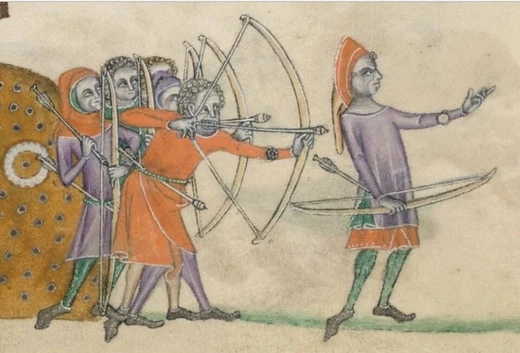
Bowyer
A master-craftsman who makes bows, a trade surviving gunpowder.

Jkb24 · CC BY-SA 4.0
A bowyer is a skilled craftsperson who creates bows. This occupation was once common, but the rise of gunpowder weapons reduced the demand for both bows and the people who made them. Despite this, the craft has endured, and many bowyers still produce high-quality bows today.
The types of bows made throughout history have varied widely, used for hunting, warfare, and sport. Who made them depended on the bow’s design and how many were needed. Traditional bowyers generally fall into two categories.
Those who make self bows—bows carved from a single piece of wood—sometimes worked alongside the users themselves. In groups where self bows were common, it was often more efficient to have a few specialists handle production. In medieval England, for instance, professional bowyers turned out thousands of bows for the military, reportedly completing an English longbow in as little as two hours. Normally, a wooden self bow takes five to fifteen hours to make, depending on the bowyer’s skill and the wood’s challenges. Modern hobbyists find it rewarding to create functional self bows with basic tools and beginner-level abilities.
Cultures using composite bows—made from materials like horn, wood, and sinew—relied on expert craftsmen. These bows could be short, heavily recurved, and very powerful, but the materials had to be under great tension and the limbs perfectly aligned. This required experienced bowyers willing to invest significant time. Groups such as the Mongols used composite bows effectively for centuries, though historical records suggest only a minority of people in those cultures ever made them.
In the United States, many bowyers were inspired by Ishi, the last member of the Yahi tribe, who lived outside modern society until 1911. His friend Saxton Pope learned some of his techniques and passed them on to bowyers like Howard Hill, Ben Pearson, and Fred Bear.
Quick Facts
- Activity Sector
- Recreation, hunting
- Employment Field
- Craft
- Related Occupation
- Fletcher
Facts from the source article.
Lore & Background
Historically, a wide variety of bows have been produced for purposes ranging from food gathering and warfare to recreation. Who created these bows depended mainly on the type of bow being produced, but also on the quantity required. The skills required tend to divide traditional bowyers into two groups: makers of self bows and makers of composite bows.
In clans or social groups that used wooden self bows, bows would sometimes be crafted by the individual user; however, even with fairly simple bow designs it was often easier to rely upon a few skilled bowyers within the group. By working in groups more could be accomplished. In medieval England, professional bowyers produced thousands of bows required for that country's military. These bowyers could reportedly make an English longbow in as little as two hours. Wooden selfbows normally take from 5–15 hours of work depending on the skill of the bowyer and the challenges set by the piece of wood.
Cultures that used composite bows had to rely on skilled craftsmen. Composite bows could be made relatively short, heavily recurved, and highly effective but the constituent materials had to be put under enormous stress and the bow's limbs needed to be perfectly aligned. These demands required experienced bowyers who were willing to spend a great deal of time crafting their weapons. Cultures such as the Mongols made effective military use of powerful composite bows for millennia; the limited records indicate that only a minority of men in these cultures ever made bows.
Reader's Guide
The significance of the bowyer lies in the survival of a craft that was once essential for subsistence and warfare. The introduction of gunpowder weaponry diminished the importance of bows and bowyers, yet the trade has persisted, with many bowyers continuing to produce high-end bows. In the United States, many bowyers were inspired by Ishi, the last member of the Yahi, who lived most of his life outside modern culture. Ishi first contacted US citizens in 1911. His friend Saxton Pope learned some of his skills and spread them to bowyers including Howard Hill, Ben Pearson and Fred Bear. This lineage helped sustain and revive interest in traditional bow making. The legacy of the bowyer is also preserved in reference works such as The Traditional Bowyer's Bible, a multi-volume set that documents the craft. Modern amateurs find it satisfying to make functional self bows with beginner's skills and few tools, demonstrating that the bowyer's art remains accessible and continues to be practiced.
Did You Know?
- A bowyer is a master-craftsman who makes bows.
- Composite bows were made of horn, wood, and sinew.
- Ishi, the last member of the Yahi, inspired many US bowyers after contacting US citizens in 1911.
Gallery




Frequently Asked Questions
What is a bowyer and why does the trade still exist?
A bowyer is a dedicated craftsperson who designs and builds bows by hand. Although gunpowder weapons drastically cut demand for bows centuries ago, the skill has persisted, and bowyers continue to produce high-quality bows for sport, hunting, and tradition.
What are the two main categories of traditional bowyers?
They split into makers of self bows, which are carved from a single piece of wood, and makers of composite bows, which layer horn, wood, and sinew together. Each approach requires distinct tools, materials, and techniques.
How long does it take a bowyer to craft a self bow?
A typical self bow takes roughly five to fifteen hours to complete. A highly experienced maker working on a professional English longbow can finish one in as few as two hours.
Which historical culture is most closely linked to the composite bow?
The Mongols are the most famous historical users of composite bows, relying on the layered horn-wood-sinew construction for their military campaigns. That design proved exceptionally powerful for mounted warfare.
Who sparked the modern American bow-making revival?
Ishi, the last known member of the Yahi people, inspired a wave of U.S. bowyers to take up the craft. Among those he influenced were Saxton Pope, Howard Hill, Ben Pearson, and Fred Bear, all of whom went on to shape American archery.
More in Archery, Part 3 1-15
Spotted an error? Know more?
Reader corrections go straight into our review queue. Suggest an edit · How this site is sourced