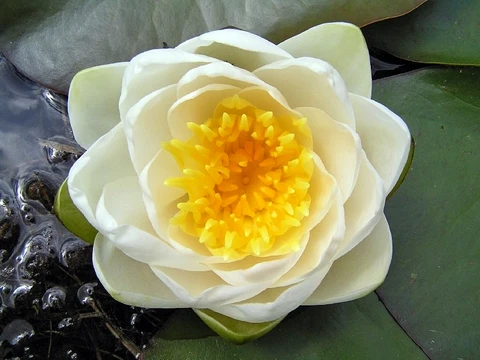
Victoria amazonica
Second-largest water lily, with leaves up to 3 meters across.
Last updated
Victoria amazonica is a species of flowering plant, the second largest in the water lily family Nymphaeaceae. Native to tropical South America, specifically Guyana and the Amazon Basin, it is known for its enormous floating leaves, which can reach up to 3 meters in diameter, and its large, fragrant flowers that open at dusk and change color after pollination. The species has been a subject of botanical rivalry and public fascination since the 19th century.
Scientific classification
- CladeTracheophytes
- CladeAngiosperms
- OrderNymphaeales
- FamilyNymphaeaceae
- GenusVictoria
- SpeciesVictoria amazonica
Named by (Poepp.) J.C. Sowerby
Sources: Wikipedia taxobox: Victoria amazonica (CC BY-SA 4.0) · order, family and genus agree with WoRMS AphiaID 1600099 (CC BY 4.0)
Where the victoria amazonica has been recorded
Each dot is a place where the species has been observed and reported (721 records, half-degree grid) — not a modelled range. 99 inland records left out (institution coordinates).
Map: drawn by Codexery. Data: GBIF occurrence search (records CC0 / CC BY) · Natural Earth basemap (public domain)
Quick Facts
- Genus
- Victoria (plant)
- Species
- amazonica
Facts from the source article.
Lore & Background
The current name, Victoria amazonica, did not come into widespread use until the 20th century. The species has very large leaves, up to 3 m in diameter, on submerged stalks 7–8 m long. The flowers open at sunset, take up to 48 hours to fully open, and change from white to reddish pink after pollination.
The stem and leaf undersides are coated with spines to defend against herbivores, and younger plants swing their spiny stalks to make space. Victoria amazonica has a mutualistic relationship with scarab beetles of the genus Cyclocephala, which are trapped inside the flower overnight, feed on starchy tissue, and become covered in pollen before being released to pollinate another flower. All flowers on a given plant are in the same sexual phase on a given evening, preventing self-pollination.
Reader's Guide
Victoria amazonica is significant as a botanical marvel and a symbol of Victorian-era horticultural ambition. The lily's ribbed undersurface and veining inspired Paxton's design for The Crystal Palace. The species is depicted on the Guyanese coat of arms and has been the subject of dedicated monographs and acclaimed botanical illustrations. It is cultivated worldwide in botanical gardens, requiring warm water temperatures of 29–32°C for optimal growth, and is propagated primarily by seed.
Did You Know?
- The flowers can grow up to 40 cm (16 in) in diameter and weigh up to 1.6 kg (3.5 lb).
- The diploid chromosome count of Victoria amazonica is 20.
More in Aquatic & Wetland Plants
Sources
Compiled from Wikipedia and the sources listed below. Text from Wikipedia is available under CC BY-SA 4.0; this entry is adapted from it.
- Wikipedia: Victoria amazonica (CC BY-SA 4.0).
- Classification: the source article's taxobox; order, family and genus checked against WoRMS, the World Register of Marine Species (CC BY 4.0).
- Occurrence records: GBIF (CC0 / CC BY). Basemap: Natural Earth (public domain).
- Word definitions: the Codexery glossary, each quoted from its Wikipedia article.
Spotted an error? Know more?
Reader corrections go straight into our review queue. Suggest an edit · How this site is sourced