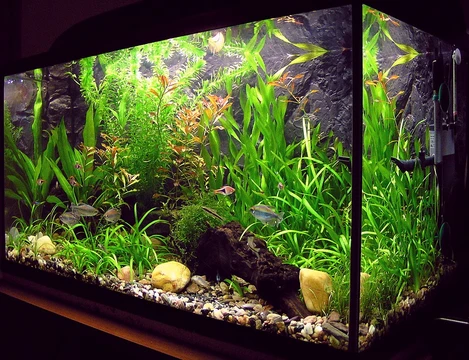
Eleocharis
A cosmopolitan genus of sedges with reduced leaves and aquatic habits.

Eleocharis is a genus in the sedge family, Cyperaceae, containing 250 or more species of flowering plants. Commonly called spikerushes or spikesedges, the genus is found nearly worldwide. Its greatest diversity occurs in the Amazon rainforest and the adjacent eastern slopes of the South American Andes, as well as in northern Australia, eastern North America, California, Southern Africa, and subtropical Asia. Almost all Eleocharis species live in aquatic or moist habitats, ranging from sea level up to over 5,000 meters in elevation in the tropical Andes.
The genus is fairly easy to identify: every Eleocharis species has photosynthetic stems but lacks green leaves—the leaves are reduced to sheaths around the stem bases. Many species are robust, spreading by rhizomes in lowland tropical wetlands. Others are small, clump-forming annuals or perennials that grow near streams, and some fall in between. A number of species are obligate aquatics, usually with submerged, branching stems and notable photosynthetic adaptations, such as the ability to switch between C3 and C4 carbon fixation depending on environmental conditions. In all species, the flowers appear on unbranched, terminal spikelets at the tips of the stems.
Despite the genus’s diversity, the taxonomic features useful for distinguishing species are few, making many species very hard to tell apart. Several currently recognized species with broad geographic ranges are highly variable, and some likely contain multiple independent evolutionary lineages. Because of this difficulty, many botanists avoid collecting these plants, so many species are underrepresented in the botanical record.
One of the best-known species is the Chinese water chestnut, *Eleocharis dulcis*. It produces tubers on its rhizomes that can be peeled and eaten raw or boiled. In Australia, magpie geese depend almost entirely on these tubers for a large part of the year.
Quick Facts
- Taxon
- Eleocharis
Facts from the source article.
Lore & Background
The name Eleocharis is derived from the Greek words ἕλειος (heleios), meaning 'marsh dweller,' and χάρις (charis), meaning 'grace.' All Eleocharis species have photosynthetic stems but no green leaves; the leaves have been reduced to sheaths surrounding the base of the stems. Many species are robust, rhizomatously-spreading plants of lowland tropical wetlands, while many others are small caespitose annual or perennial herbs growing near streams. There are also obligate aquatic species that usually have submerged, branching stems and often exhibit interesting photosynthetic adaptations, such as the ability to switch between C3 and C4 carbon fixation in response to different environmental stimuli. In all Eleocharis species, the flowers are borne on unbranched terminal spikelets at the apices of stems.
Taxonomic characters useful for delimiting species within Eleocharis are few, and many species are very difficult to tell apart. Many currently recognized species with very wide geographic ranges are highly polymorphic, and some probably contain multiple independently evolving lineages. Because of their difficult nature, it is suggested that many botanists avoid collecting these plants, and so many species are under-represented in the botanical record. One of the best known species is the Chinese water chestnut, Eleocharis dulcis, which bears tubers on its rhizomes that may be peeled and eaten raw or boiled. In Australia, magpie geese rely almost exclusively on these tubers for sustenance for a significant portion of the year.
Reader's Guide
Eleocharis is notable in aquarium and aquatic plant contexts primarily for species such as Eleocharis acicularis (needle spikerush; dwarf hairgrass) and Eleocharis parvula (dwarf spikerush; hairgrass), which are commonly used as foreground or carpeting plants. The genus is characterized by its lack of green leaves—photosynthetic stems take their place—and its cosmopolitan distribution, with centers of diversity in regions including the Amazon, northern Australia, eastern North America, and subtropical Asia. Many species are adapted to aquatic or mesic habitats, from sea level to over 5,000 meters in the tropical Andes. Some obligate aquatic species can switch between C3 and C4 carbon fixation. Despite the genus's diversity, taxonomic identification is challenging due to few distinguishing characters and high polymorphism, leading to underrepresentation in botanical collections. The Chinese water chestnut (Eleocharis dulcis) is a well-known food species, and its tubers are a critical food source for magpie geese in Australia. The genus includes both annual and perennial herbs, with rhizomatous or caespitose growth forms, and all bear flowers on unbranched terminal spikelets.
Did You Know?
- The name Eleocharis comes from Greek words meaning 'marsh dweller' and 'grace.'
- The Chinese water chestnut (Eleocharis dulcis) produces edible tubers that are a key food for magpie geese in Australia.
More in Aquarium and Aquatic Plants 1-24
Spotted an error? Know more?
Reader corrections go straight into our review queue. Suggest an edit · How this site is sourced