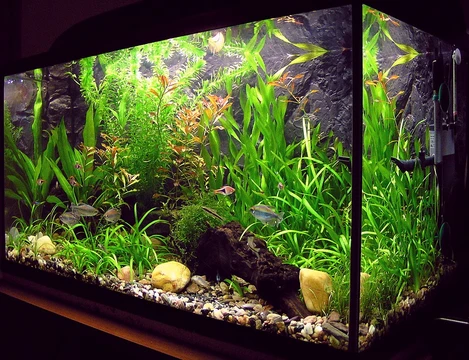
Freshwater aquarium algae
Algae in aquaria are both nuisance and bioindicator.

Freshwater aquarium algae are a diverse group of photosynthetic organisms that commonly appear in hobby aquaria, often introduced unintentionally via spores or fragments on ornamental fish and plants. While typically considered a nuisance and subject to removal, total elimination is unlikely, and some species are intentionally cultivated for aquascaping or used as bioindicators of water chemistry.
- Red algae otus in taiwan stores
- 13
- Staghorn algae max length inches
- 6
- Green thread algae genera mentioned
- 3
- Green water genera mentioned
- 3
- Blue green algae genera mentioned
- 4
- Caloglossa species in trade
- 2
Lore & Background
Algae in freshwater aquaria encompass green algae, filamentous green algae, red algae, blue-green algae (cyanobacteria), and brown algae (diatoms). Green algae include spot-forming types like green spot algae (GSA, likely Coleochaete) and green dust algae (GDA, species unknown), as well as suspended green water (Chlorella, Ankistrodesmus, Scenedesmus). Filamentous green algae include green thread algae (Rhizoclonium, Spirogyra, Oedogonium), hair algae, and reticulated algae (Cladophora), which may grow in association with marimo. Red algae (Rhodophyceae) include staghorn algae (Compsopogon), black beard algae (Audouinella, Rhodochorton), red spot algae (Hildenbrandia), and Caloglossa species (C. beccarii, C. fluviatilis) deliberately planted. Blue-green algae (Oscillatoria, Anabaena, Aphanizomenon, Microcystis) are cyanobacteria, while brown algae are diatoms.
Reader's Guide
Freshwater aquarium algae are significant primarily as a persistent nuisance, but they also serve as bioindicators of water conditions. Green spot algae may indicate low phosphate and carbon dioxide, while green dust algae often follows nitrogen spikes and is common in new tanks. Green water infestations, typically from Chlorella and related genera, resist removal once established and are best addressed by fishless cycling. Filamentous algae like green thread algae are easily outcompeted by plants, while Cladophora is difficult to remove and resistant to algivores. Red algae such as staghorn and black beard algae may signal high nitrates or iron; black beard algae is especially hard to remove and may become unpalatable in hard water. Blue-green algae thrive in stagnant, warm, low-oxygen conditions with high phosphates. Diatoms are ubiquitous and not worth eradicating. A few algae, like marimo and Caloglossa, are intentionally cultivated for aquascaping.
Did You Know?
- Green spot algae (GSA) is typically a sign of a healthy aquarium and is usually present in some capacity.
- Green dust algae (GDA) is motile and can actively move in the water.
- Black beard algae (BBA) may occur in both saltwater and freshwater aquaria.
- Caloglossa cf. beccarii has been in the European aquarium trade since the 1990s.
The Taxonomic Maze: Naming and Identifying Aquarium Algae
Freshwater aquarists face a bewildering array of algal life, yet pinning down exactly which species they are dealing with remains an elusive goal. Common names overlap heavily across groups, and positive identification is rarely certain. Green spot algae is most likely a member of the genus Coleochaete, while green dust algae has no confirmed species name at all. Among filamentous greens, thousands of species share the same thread-like growth form—Rhizoclonium, Spirogyra, and Oedogonium are just a few genera lumped under the label green thread algae. Red algae of the Rhodophyceae class, despite their name, typically appear grayish rather than crimson; a 2020 DNA barcoding study conducted in Taiwanese aquarium stores identified thirteen distinct operational taxonomic units. What hobbyists call blue-green algae is not algae at all but cyanobacteria, with Oscillatoria, Anabaena, Aphanizomenon, and Microcystis all reported in aquaria. Even brown algae in the freshwater context actually refers to diatoms, not true Phaeophyceae. This taxonomic ambiguity complicates every step of diagnosis and treatment.
Reading the Water: Algae as Bioindicators
Far from being mere cosmetic problems, algal blooms in a freshwater tank often serve as a diagnostic readout of the system's internal chemistry. Green spot algae, for instance, may point to insufficient phosphate or carbon dioxide, yet its presence is generally regarded as a marker of a well-functioning aquarium. Green dust algae tends to appear after nitrogen spikes or in newly cycled tanks where carbon dioxide and nutrient levels are still stabilizing. Suspended green water—typically Chlorella, Ankistrodesmus, or Scenedesmus—frequently follows temperature fluctuations or broader nutrient imbalances. On the red-algae side, staghorn and black beard algae are commonly linked to elevated nitrates or iron, while black beard specifically can also signal excess phosphates. Cyanobacterial slime algae thrives in stagnant, warm water where phosphate levels are high and dissolved oxygen is low. Because each group responds to a particular chemical fingerprint, experienced aquarists treat an algal outbreak less as an enemy to be destroyed and more as a message to be decoded, adjusting lighting, feeding, and water changes accordingly.
The Long War: Managing and Removing Algae
Complete eradication of algae in a hobby aquarium is widely regarded as unattainable, and the strategies available vary dramatically depending on the species involved. Green dust algae, being motile and loosely attached, can simply be wiped from glass and substrate. Green spot algae, by contrast, grips surfaces tenaciously and resists mechanical removal. Once green water has colonized the water column, tweaking water chemistry will not clear it; the recommended remedy is a full fishless cycle. Filamentous green threads are a favorite snack for algivores such as Amano shrimp, and established plants can outcompete them entirely. Black beard algae presents a tougher challenge: it grows in dense, fine-stranded patches and, because it absorbs calcium from hard water, becomes unpalatable to invertebrate grazers. Cladophora—often called blanket weed or reticulated algae—is equally stubborn, and algivores largely ignore it, leaving chemical algicides as the most effective countermeasure. For cyanobacterial slime, the approach shifts toward correcting the underlying conditions of poor circulation, elevated temperature, and oxygen depletion that allow it to flourish.
Algae in the Aquascape: From Nuisance to Cultivated Beauty
Not all algae in a freshwater aquarium are unwelcome. While the majority of algal growth is treated as a problem to be eliminated, a handful of species have found a place of honor in the aquascaping world. Marimo—spherical algal balls—and red moss are specifically sought after by hobbyists for their aesthetic contribution to planted tanks. Caloglossa beccarii and C. fluviatilis, members of the red algae class, are sold by commercial aquarium dealers, with C. cf. beccarii being one of the very few algae species deliberately planted in freshwater setups; it has been part of the European aquarium trade since the 1990s. Beyond display, algae play a functional role in algae scrubbers, where they are intentionally cultivated to absorb excess nutrients from the water column. The trade itself is a vector for both desired and undesired species: spores and fragments hitchhike on ornamental fish and plants purchased from suppliers, and Cladophora in particular spreads through contaminated plant material. This duality—algae as both a cultivated element and an invasive nuisance—defines much of the freshwater hobbyist's relationship with these organisms.
More in Aquarium and Aquatic Plants 1-24
Spotted an error? Know more?
Reader corrections go straight into our review queue. Suggest an edit · How this site is sourced