Elatine hexandra
A small European waterwort with six stamens and self-pollinating flowers.

Elatine hexandra, commonly known as six-stamened waterwort, is a small annual to short-lived perennial herb in the family Elatinaceae. It grows in shallow water around lakes and pools across Europe, from Ireland to Romania, and is notable for its declining status due to drainage and water pollution, leading to protection in several countries.
Quick Facts
- Genus
- Elatine
- Species
- hexandra
Facts from the source article.
Lore & Background
The scientific name Elatine hexandra was published by de Candolle and Lamarck in 1805 in Flore Française. Jean Marie Lapierre had named it Tillaea hexandra in 1802, but de Candolle recognized the genus was incorrect. The name Elatine derives from the Ancient Greek word for a silver fir, also meaning an oar, likely alluding to leaf shape; hexandra means 'six stamens'.
Reader's Guide
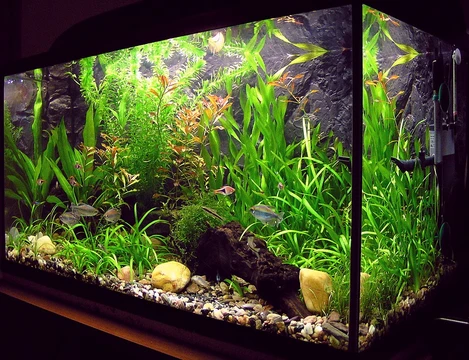
Six-stamened waterwort is a useful aquarium plant due to its fast-growing but small nature. It grows submerged or on exposed mud, with yellowy-green stems and leaves underwater that become bright green or reddish when exposed. Its flowers are usually solitary, with three sepals and three pinkish-white petals, though occasionally four of each. The plant is entirely glabrous, with creeping stems rooting at nodes, opposite elliptical to spathulate leaves with tiny black hydathodes at the tips, and minute stipules. It is most likely confused with Elatine hydropiper, which has no or very short pedicels and strongly curved fruit. The species is declining due to drainage and water pollution and is protected in several countries. Its global conservation status is Least Concern, but it is considered rare and threatened in regions such as Picardy and Île-de-France. In British counties, it is an axiophyte due to its affinity for low-nutrient water bodies.
Did You Know?
- A single plant can produce up to 27,000 seeds when growing on exposed mud.
- Flowers with 4 carpels can produce as many as 79 seeds.
- Seeds do not float but can remain viable under water or buried for many years.
- When growing submerged, flowers are cleistogamous and self-pollinating.
More in Aquarium and Aquatic Plants 1-24
Spotted an error? Know more?
Reader corrections go straight into our review queue. Suggest an edit · How this site is sourced