Crinum thaianum
An endangered Thai aquatic plant popular in tropical aquaria.

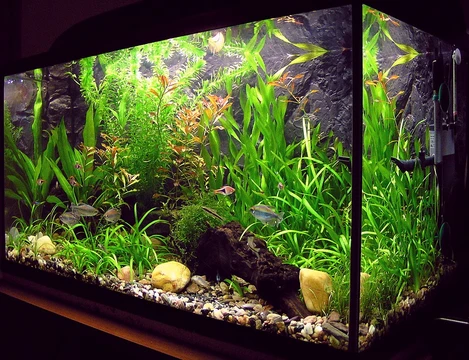
Crinum thaianum, also known as the Thai onion plant, water onion, or Phlap Phueng Than, is an emergent plant species endemic to the coastal plain of Ranong and Phang Nga Provinces, Thailand. It is notable for its natural habitat along the banks of flowing, medium- to fast-running streams, where its roots and bulb are submerged in sediment while its long leaves grow in the current and access fresh air at the surface. The plant is popular in tropical aquaria for its ease of cultivation and ability to oxygenate water and absorb toxic ammonia.
Quick Facts
- Taxon
- Crinum thaianum
Facts from the source article.
Lore & Background
Crinum thaianum is endemic to the coastal plain of Ranong and Phang Nga Provinces in Thailand. Its specific epithet thaianum refers to Thailand, the species' country of origin. In nature, it grows along the banks of medium- to fast-running streams, with its bulb and roots submerged in sediment and its long, ribbon-like leaves reaching up to 150 cm (or longer, up to 300 cm according to Schulze) in length and about 2.5 cm wide. The leaves are tough, bright green, and grow from an onion-like bulb. When in bloom, the plant produces an umbel of large, showy white, lily-like flowers on a long stalk above the waterline.
Reader's Guide
Crinum thaianum is cultivated as an aquatic ornamental for decorating aquaria, particularly popular in home tropical fish displays because it is easy to keep, tolerant of temperature swings and lighting variations, and its tough leaves withstand herbivorous fish. It requires water temperatures of 22–30 °C and benefits from a rich substrate; additional CO2 encourages growth, and it needs space to spread. Propagation is from daughter bulbs, and it also does well in a warm outside pond. The species serves the added benefit of oxygenating the water and absorbing ammonia, which is toxic to most aquatic animals. Despite its popularity in the aquarium trade, Crinum thaianum is threatened with extinction in the wild. It is not under protection by any legislation in Thailand nor by CITES, and its habitats are also unprotected. Only 1% of the species remains, and its population is highly fragmented and rapidly decreasing due to excessive collection of bulbs for commercial purposes, dredging under flooding control schemes, and land use changes. It has been listed as Endangered under the IUCN Redlist and Thailand Data Redlist, and a special management and conservation plan is urgently needed.
Did You Know?
- Its leaves can grow up to 300 cm (120 in) long according to Schulze.
- Only 1% of the species remains in the wild.
- It is not protected by any legislation in Thailand or by CITES.
More in Aquarium and Aquatic Plants 1-24
Spotted an error? Know more?
Reader corrections go straight into our review queue. Suggest an edit · How this site is sourced