Barclaya
A genus of aquatic plants with submerged leaves and cleistogamous flowers.

Barclaya is a genus of eight species of aquatic plants in the family Nymphaeaceae, native to tropical Asia. It is notable for its submerged leaves, often cleistogamous flowers, and its popularity as an aquarium plant, particularly the species Barclaya longifolia.
Quick Facts
- Taxon
- Barclaya
- Type Species
- Barclaya longifolia Wall.
Facts from the source article.
Lore & Background
The genus Barclaya was named in honour of the American-born English brewer and patron of science Robert Barclay. It was first published by Nathaniel Wallich in 1827, with Barclaya longifolia as the type species. Though the name Hydrostemma was published six months earlier, the name Barclaya has been 'conserved' as it was deemed much better known.
Barclaya species are perennial, aquatic, rhizomatous herbs with slender, horizontal, villous-pubescent, creeping or tuberous, often stoloniferous rhizomes. The leaves are petiolate, mostly submerged, and do not float; the lamina is linear, oblong, or suborbicular with a cordate base and entire margin. The solitary, pedunculate flowers may be submerged or emerged, are bisexual, often cleistogamous, and have 4–5 hypogynous outer tepals and 8–20 inner tepals basally fused to a tube. The gynoecium consists of 7–12 fused carpels with curved stigmatic appendages. The fruit is globular, irregularly dehiscent, 1.0–1.5(–2.0) cm wide, enclosed in persistent sepals and petals, and bears globose, echinate seeds.
A separate family Barclayaceae was published in 1955, and a separate order Barclayales was proposed in 2001, but morphological and genetic studies support the placement of Barclaya within the family Nymphaeaceae of the order Nymphaeales.
Reader's Guide
Barclaya is significant in both botanical and horticultural contexts. Within tropical rainforests, it develops alongside streams or at their fringes. Escalating deforestation across Southeast Asia is causing habitats to become clouded, endangering Barclaya. The IUCN conservation status of Barclaya longifolia is least concern, while that of Barclaya motleyi is data deficient.
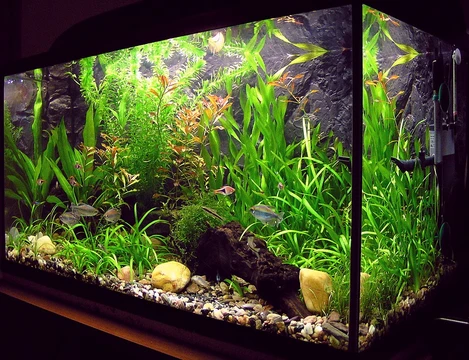
In Laos, Barclaya longifolia is used for its edible leaves. It is a popular aquarium plant: under high light conditions the attractive, upright foliage displays green colouration, while under lower light conditions brownish foliage is produced. It easily sets seed in cultivation if pollen is deposited on the stigma. The genus has a diploid chromosome count of 2n = 36. Its legacy includes the taxonomic debate over its placement, with the conserved name Barclaya prevailing over the older Hydrostemma.
More in Aquarium and Aquatic Plants 1-24
Spotted an error? Know more?
Reader corrections go straight into our review queue. Suggest an edit · How this site is sourced