Cell nucleus
Membrane-bound organelle containing the cell's genome.

Szajci · CC BY-SA 4.0
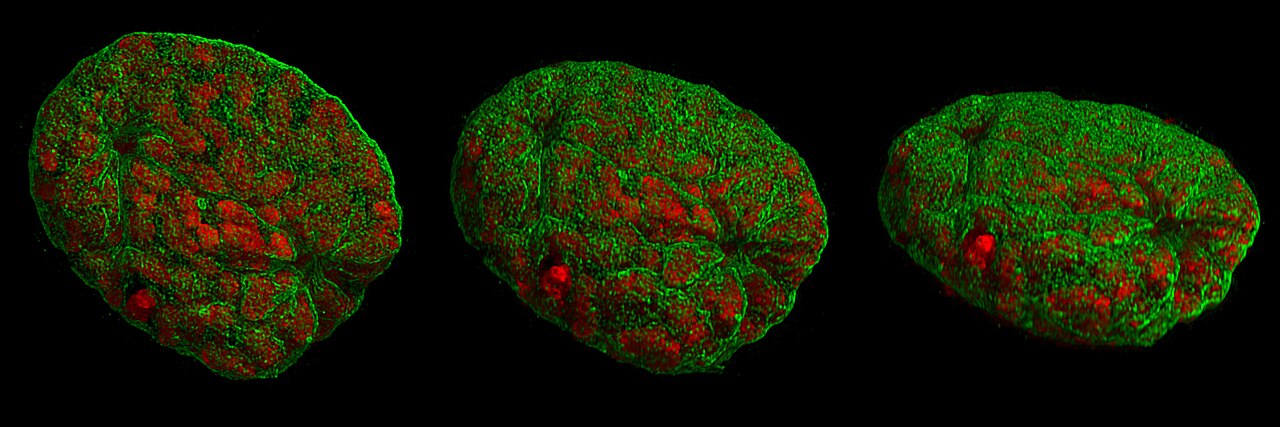
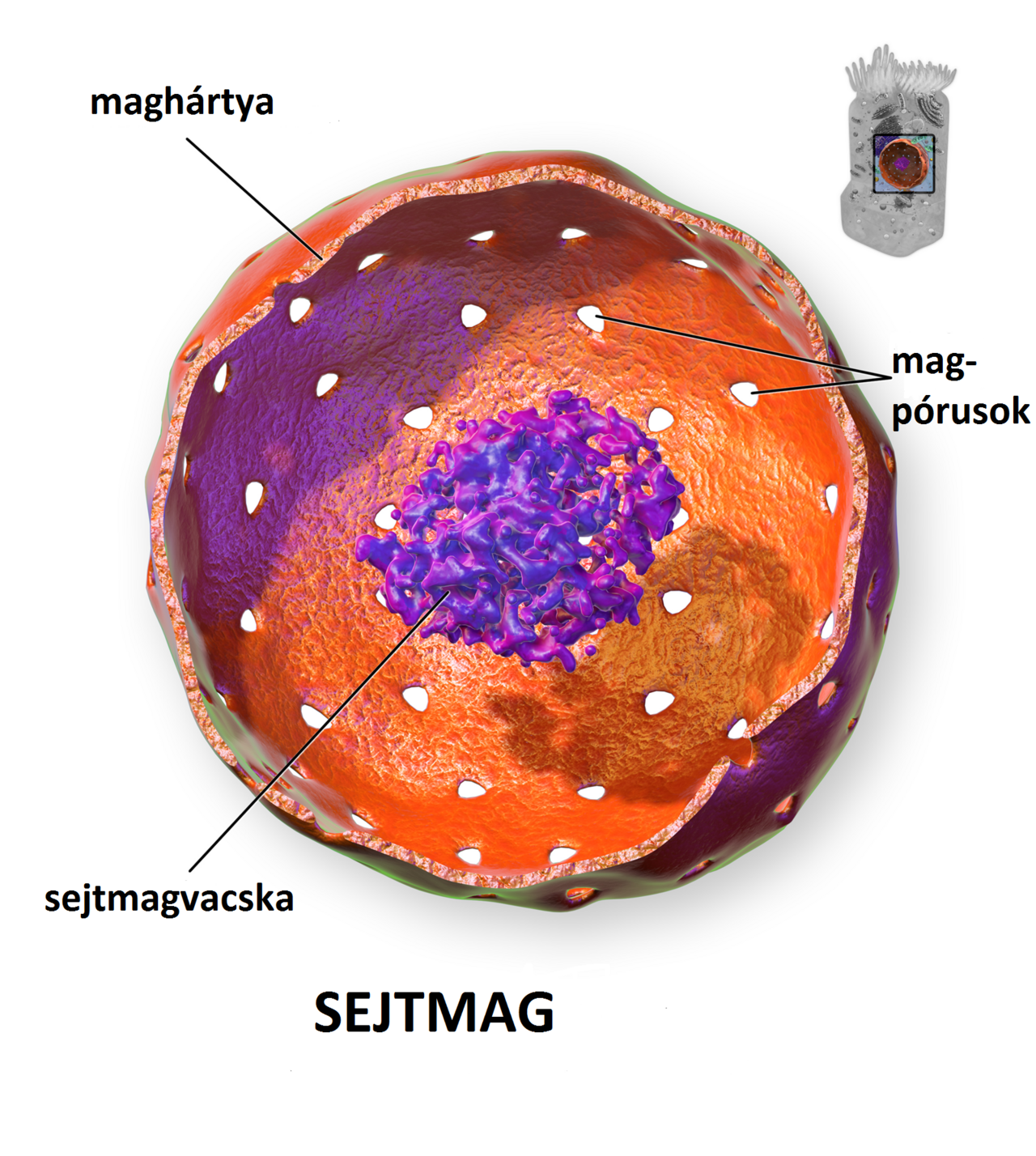
The cell nucleus is a membrane-enclosed structure unique to eukaryotic cells. While most eukaryotic cells contain a single nucleus, some—like mammalian red blood cells—lack one entirely, and others, such as osteoclasts, contain multiple nuclei. The nucleus is built around two key components: the nuclear envelope, a double membrane that seals off the organelle’s contents from the cytoplasm, and the nuclear matrix, an internal network that provides structural support.
Inside the nucleus resides nearly the entire genome of the cell. This nuclear DNA is arranged into multiple chromosomes—long strands of DNA wrapped around proteins like histones, which help protect and organize the genetic material. The genes within these chromosomes are arranged to support cell function, and the nucleus safeguards the integrity of these genes while directing cellular activity through the regulation of gene expression.
Because the nuclear envelope blocks large molecules, nuclear pores are essential for moving materials across it. These pores span both membranes, creating channels that allow small molecules and ions to pass freely, while larger molecules—such as proteins and RNA—must be actively transported by carrier proteins. This transport is crucial for gene expression and chromosome maintenance. Although the nucleus lacks membrane-bound subcompartments, it contains several nuclear bodies made of unique proteins, RNA, and specific chromosome regions. The most well-known is the nucleolus, which is responsible for assembling ribosomes.
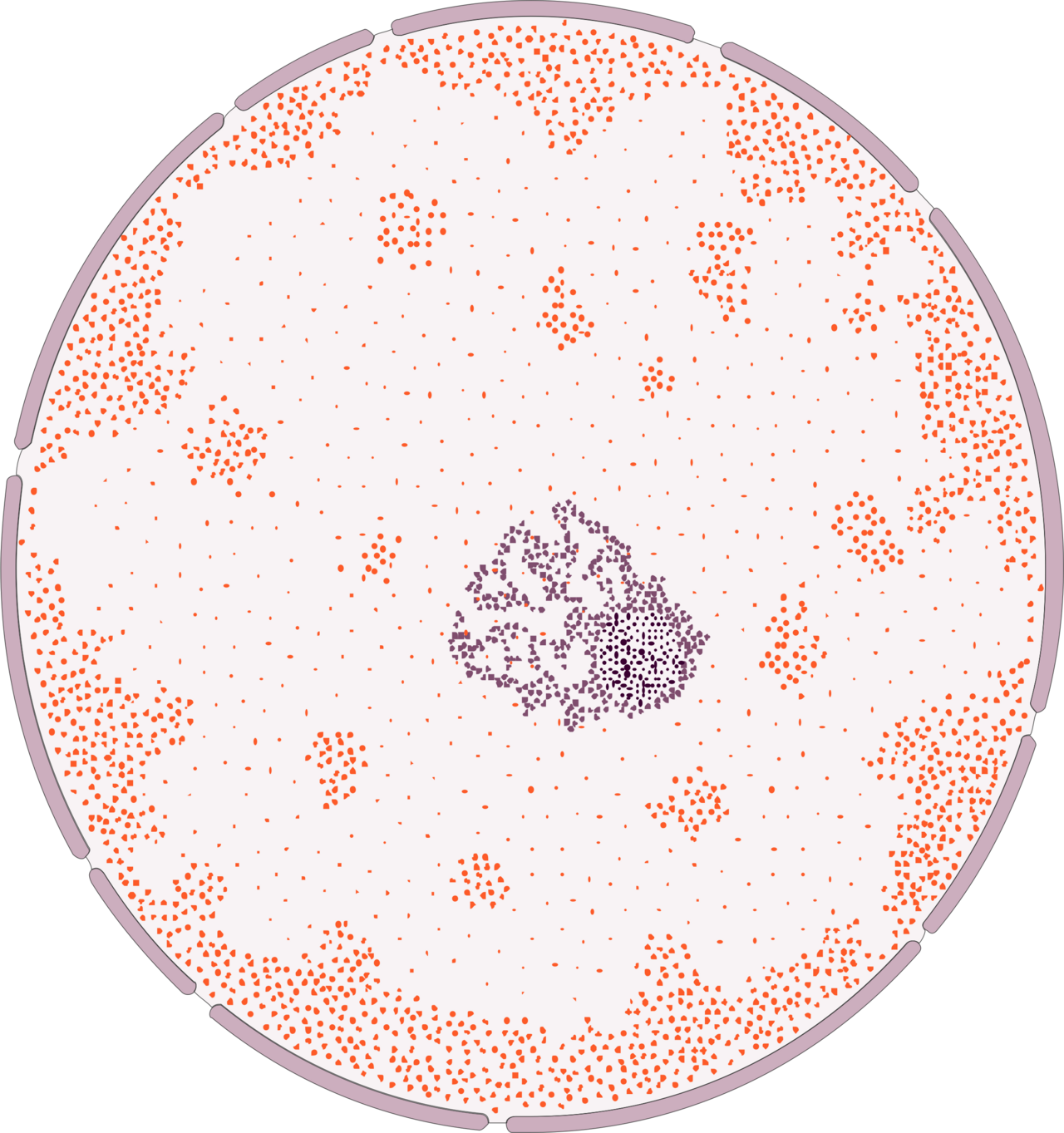
The nucleus holds most of the cell’s genetic material as multiple linear DNA molecules organized into chromosomes. A human cell contains roughly two meters of DNA. For most of the cell cycle, this DNA exists as chromatin—a complex of DNA and proteins—but during cell division, it condenses into the distinct chromosomes seen in a karyotype. A small fraction of the cell’s genes reside in the mitochondria. Chromatin comes in two types: euchromatin, a looser form containing genes that are often expressed, and heterochromatin, a denser form with genes that are rarely transcribed. Heterochromatin is further divided into facultative heterochromatin, which appears only in certain cell types or developmental stages, and constitutive heterochromatin, which includes structural chromosome parts like telomeres and centromeres. During interphase, chromatin organizes into discrete patches called chromosome territories, with active genes—usually in euchromatin—tending to sit near a territory’s edge. Antibodies targeting certain chromatin structures, particularly nucleosomes, are linked to autoimmune diseases such as systemic lupus erythematosus; these anti-nuclear antibodies (ANA) are also seen in multiple sclerosis as part of broader immune dysfunction.
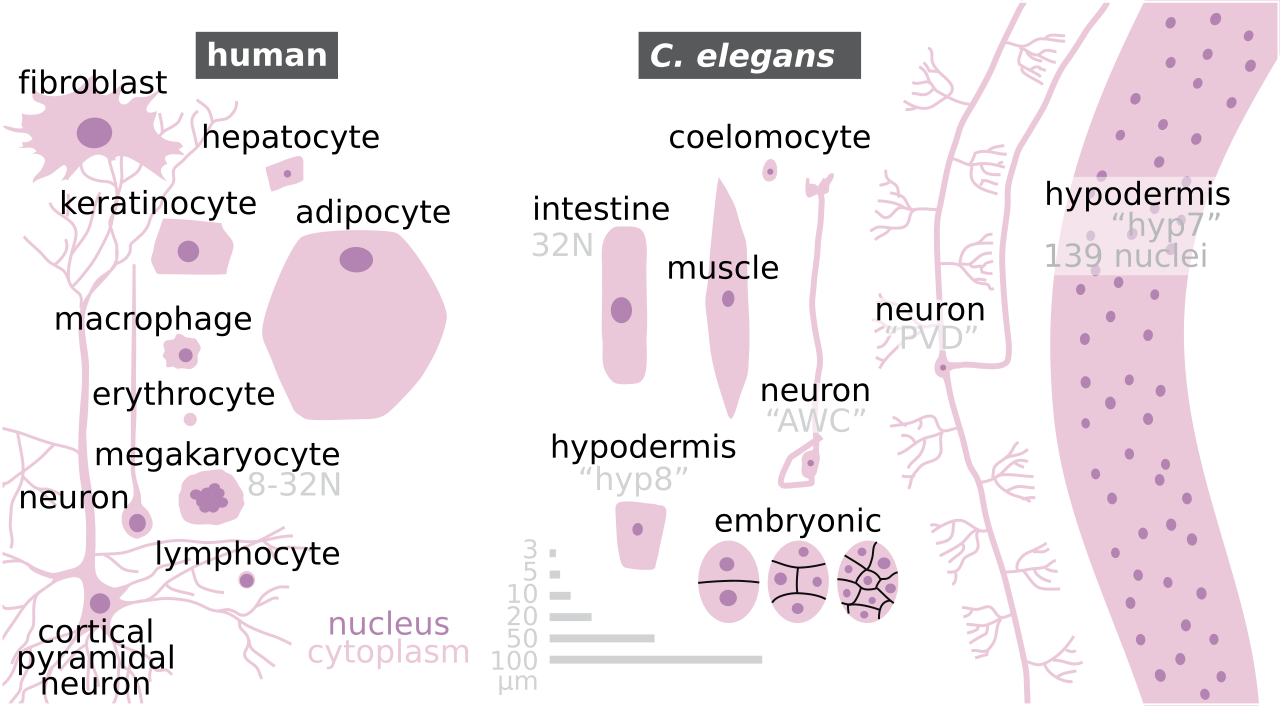
The nucleus contains nearly all the cell’s DNA, surrounded by a fibrous network of intermediate filaments (the nuclear matrix) and enclosed by the double-membraned nuclear envelope. This envelope separates the nucleoplasm—the fluid inside the nucleus—from the rest of the cell. Nuclear size correlates with cell size, and this ratio holds across many cell types and species. In eukaryotes, the nucleus often occupies about 10% of the cell’s volume and is the largest organelle in animal cells. In human cells, its diameter is roughly six micrometres.
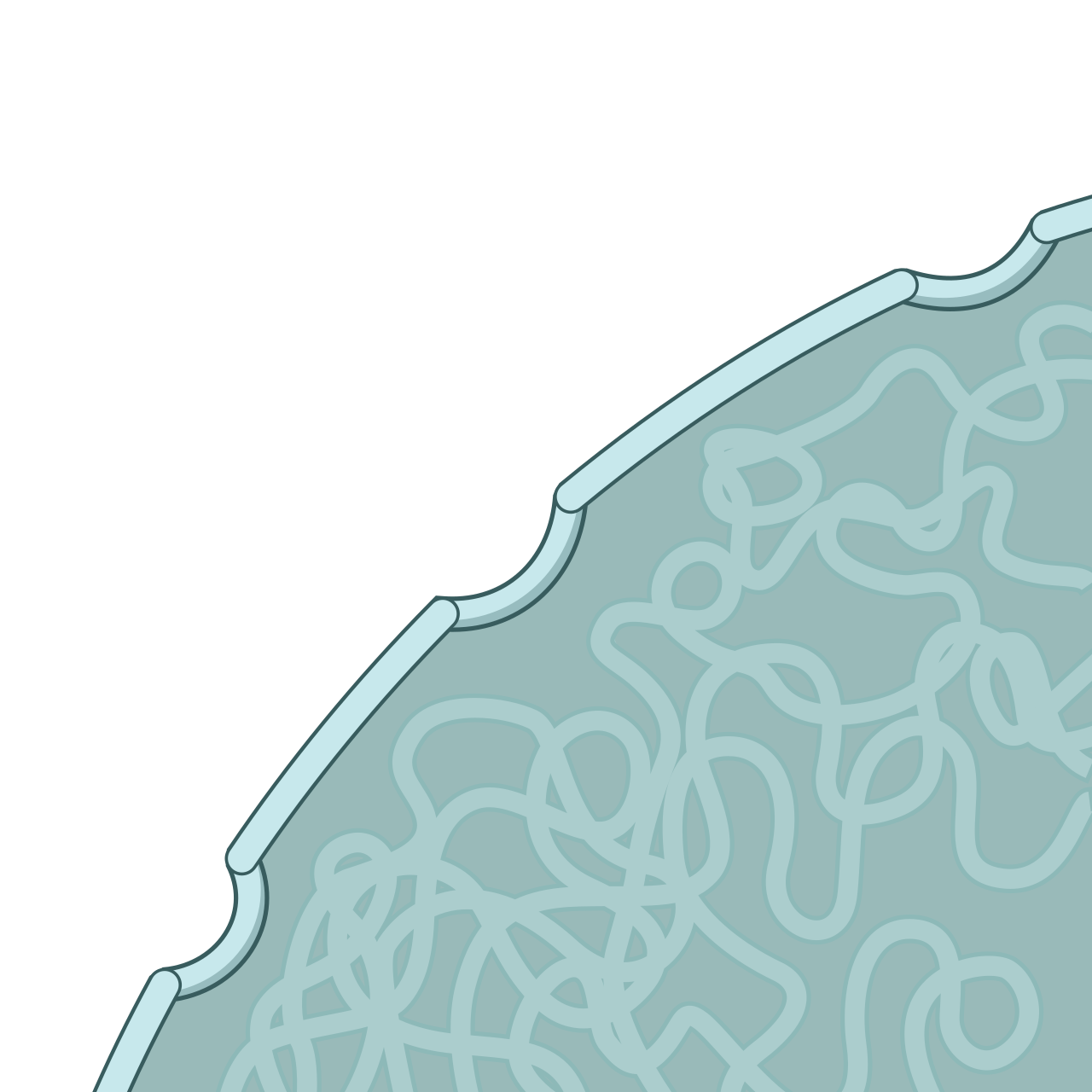
The nuclear envelope consists of an inner and an outer membrane, perforated by nuclear pores. These membranes isolate the genetic material from the rest of the cell, allowing the nucleus to maintain a distinct internal environment. Despite being closely aligned, the two membranes differ in shape and composition. The inner membrane defines the nuclear boundary and contains proteins that anchor intermediate filaments, giving the nucleus its structure. The outer membrane is continuous with the endoplasmic reticulum membrane and, like it, is studded with ribosomes that actively translate proteins across the membrane. The space between the two membranes, called the perinuclear space, is continuous with the endoplasmic reticulum lumen. In a mammalian nuclear envelope, there are between 3,000 and 4,000 nuclear pores.
- type
- organelle
- found_in
- eukaryotic cells
- key_structures
- nuclear envelope, nuclear matrix, nucleolus
- contains
- nearly all of the cell's genome
- typical_volume
- 10% of cell volume
- human_nucleus_diameter
- approximately six micrometres
Lore & Background
The cell nucleus is enclosed by a double membrane called the nuclear envelope, which separates its contents from the cytoplasm. The nuclear envelope is perforated by nuclear pores that regulate transport of molecules; small molecules and ions pass freely, while larger molecules require active transport via carrier proteins. Inside, the nuclear matrix provides mechanical support, and the nucleolus is involved in ribosome assembly. The nucleus organizes DNA into chromosomes, which exist as chromatin during most of the cell cycle. Chromatin is divided into euchromatin (less compact, frequently expressed) and heterochromatin (more compact, infrequently transcribed). During interphase, chromatin forms discrete chromosome territories, with active genes often located at territory boundaries. The nuclear lamina, composed of lamin proteins, provides structural support on the inner face of the envelope. Lamins also form a nucleoplasmic veil whose function is not fully understood. Antibodies to nucleosomes, known as anti-nuclear antibodies, are associated with autoimmune diseases such as systemic lupus erythematosus.
Reader's Guide
The cell nucleus is fundamental to eukaryotic life as the repository of genetic information and the regulator of gene expression. Its double-membrane envelope and nuclear pores create a controlled environment for DNA replication, transcription, and RNA processing. The organization of DNA into chromosomes and chromatin states allows cells to regulate which genes are active, enabling differentiation and adaptation. The nucleolus, as the site of ribosome assembly, links nuclear function to protein synthesis. Understanding the nucleus is essential for cell biology, genetics, and medicine, particularly in diseases involving nuclear transport defects, chromatin abnormalities, or autoimmune responses to nuclear components.
Did You Know?
- Mammalian red blood cells have no nuclei, while osteoclasts have many.
- The nuclear lamina is composed mostly of lamin proteins, which form a meshwork on the internal face of the envelope.
- Anti-nuclear antibodies are associated with autoimmune diseases such as systemic lupus erythematosus.
Architecture of the Nuclear Envelope
The nucleus is enclosed by a double-membrane structure called the nuclear envelope, which separates the nucleoplasm from the surrounding cytoplasm. The inner membrane hugs the nuclear contents and anchors intermediate filaments that provide structural support, while the outer membrane is continuous with the endoplasmic reticulum and studded with ribosomes actively translating proteins. Between these two layers lies the perinuclear space, which connects to the ER lumen. Each pore complex features an eightfold-symmetric ring where the two membranes fuse, and is built from approximately thirty distinct nucleoporin proteins.
Chromatin and Genetic Organization
Nearly all of a eukaryotic cell's genome resides within the nucleus, where DNA is packaged into multiple linear chromosomes. In a single human cell, this amounts to roughly two meters of DNA. For most of the cell cycle, this genetic material exists as chromatin—a DNA-protein complex involving histones that protect and organize the strands. Chromatin comes in two principal forms: euchromatin, a less compact state housing frequently expressed genes, and heterochromatin, a tighter configuration containing rarely transcribed DNA. Heterochromatin itself divides into facultative types, present only in specific cell types or developmental stages, and constitutive types, which form structural elements like telomeres and centromeres. During interphase, chromatin self-organizes into discrete patches called chromosome territories, with active genes tending to cluster near the territory boundaries. A small fraction of genetic material bypasses the nucleus entirely, residing instead in mitochondria.
Selective Transport Through Nuclear Pores
Because the nuclear envelope is impermeable to large molecules, the cell relies on nuclear pore complexes to manage the flow of materials between the nucleoplasm and cytosol. Small water-soluble molecules and ions can drift freely through the approximately 9-nanometer diffusion channel at the pore's center. However, larger cargo—proteins, RNA transcripts, and nucleic acids—cannot passively cross and must be actively shuttled by carrier proteins. This active transport is essential for both gene expression and chromosome maintenance. Each pore complex is a massive assembly, weighing between 60 and 80 million daltons, composed of roughly 50 proteins in yeast and several hundred in vertebrates. Attached to the ring structure on the nucleoplasmic side is a feature called the nuclear basket, which extends into the nuclear interior. The selective nature of these channels ensures that the nucleus maintains a distinct internal environment while still coordinating with the rest of the cell.
Nuclear Bodies and Functional Landmarks
Although the nucleus lacks membrane-bound subcompartments, it does contain several distinct nuclear bodies—structures composed of unique proteins, RNA molecules, and specific chromosomal regions. The most prominent of these is the nucleolus, which plays a central role in the assembly of ribosomes, the molecular machines responsible for protein synthesis. Beyond these bodies, the nucleus is supported internally by the nuclear matrix, a network of fibrous intermediate filaments that provides mechanical scaffolding. The nucleus is the largest organelle in animal cells, typically occupying about 10 percent of total cell volume, with a diameter of roughly six micrometres in human cells. Its size scales proportionally with cell size across species and cell types. Notably, not all eukaryotic cells follow the single-nucleus pattern: mammalian red blood cells lack a nucleus entirely, while osteoclasts contain many.
Gallery

Frequently Asked Questions
What is the Cell nucleus?
The Cell nucleus is a membrane-bound organelle that exists inside every eukaryotic cell. It serves as the primary repository for the cell's genetic material and acts as the central coordinator of all cellular activity.
What are the Cell nucleus's powers and role?
Its core function is regulating gene expression—deciding which portions of the genome get transcribed and when. In practical terms, it directs protein production and orchestrates the day-to-day operations of the entire cell.
What are the Cell nucleus's key structures?
Three major components define it: the nuclear envelope (a double-membrane shell that encloses everything), the nuclear matrix (the internal scaffold that organizes chromatin), and the nucleolus (the dense region where ribosomal RNA is processed and ribosome subunits are assembled).
How big is the Cell nucleus in a typical cell?
It generally takes up around ten percent of the total cell volume. In human cells, the nucleus measures roughly six micrometres across in diameter.
Why is the Cell nucleus so important to eukaryotic life?
It provides a dedicated, protected compartment for the genome, keeping DNA physically separated from the cytoplasmic machinery. Without that separation and the regulated gene-expression system it enables, the complexity of eukaryotic cells—and by extension, all multicellular animal life—would not be possible.
More in Animal Anatomy 1-17
Spotted an error? Know more?
This is a living reference — every entry is fact-audited, and reader corrections feed straight into our audit queue. Suggest an edit · See this site's audit record