The Great Pyramid of Giza
Oldest and only largely intact Wonder of the Ancient World.

Gary Todd from Xinzheng, China · CC0
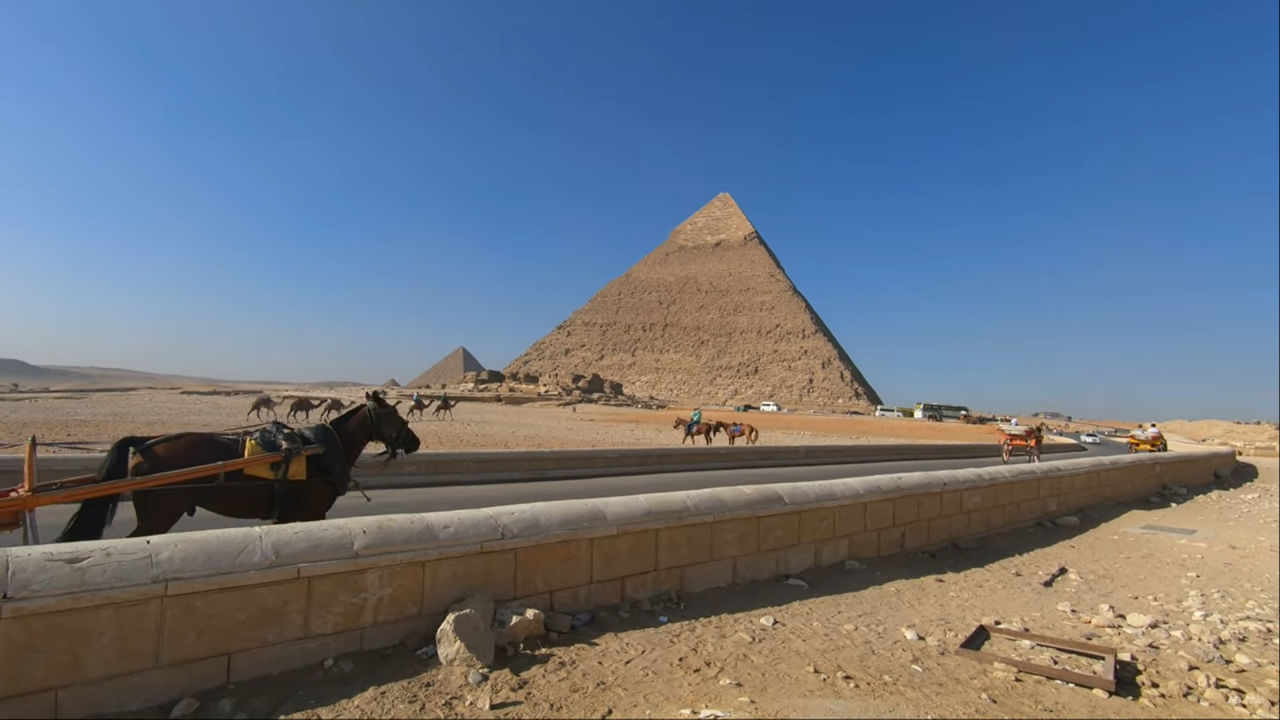
The Great Pyramid of Giza, the biggest of Egypt’s pyramids and the most recognizable structure in the Giza complex, is the oldest of the Seven Wonders of the Ancient World and the only one still mostly standing. It was built around 2600 BC as the tomb of Pharaoh Khufu, a ruler of the Fourth Dynasty in the Old Kingdom, and construction took roughly 26 years.
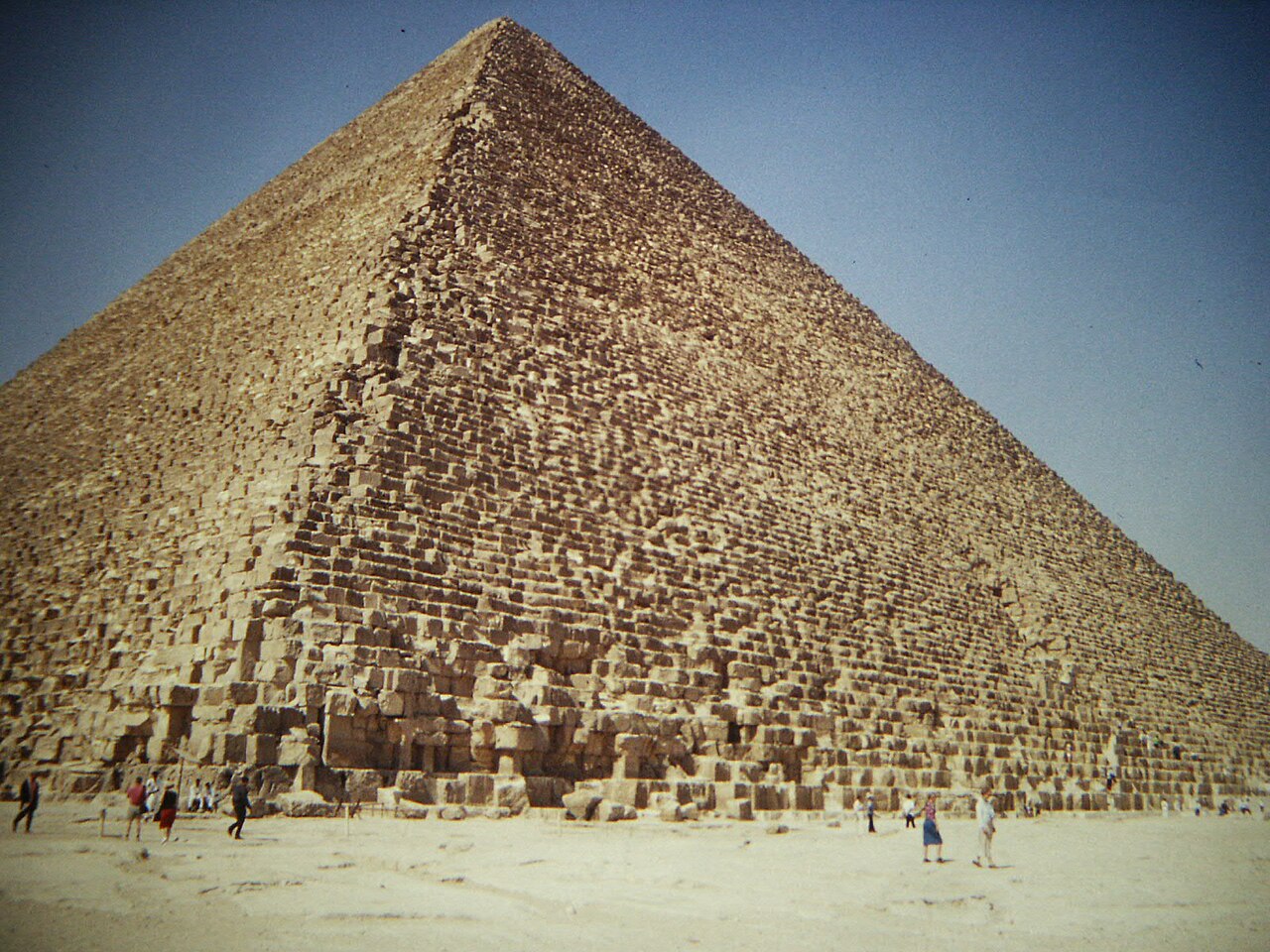
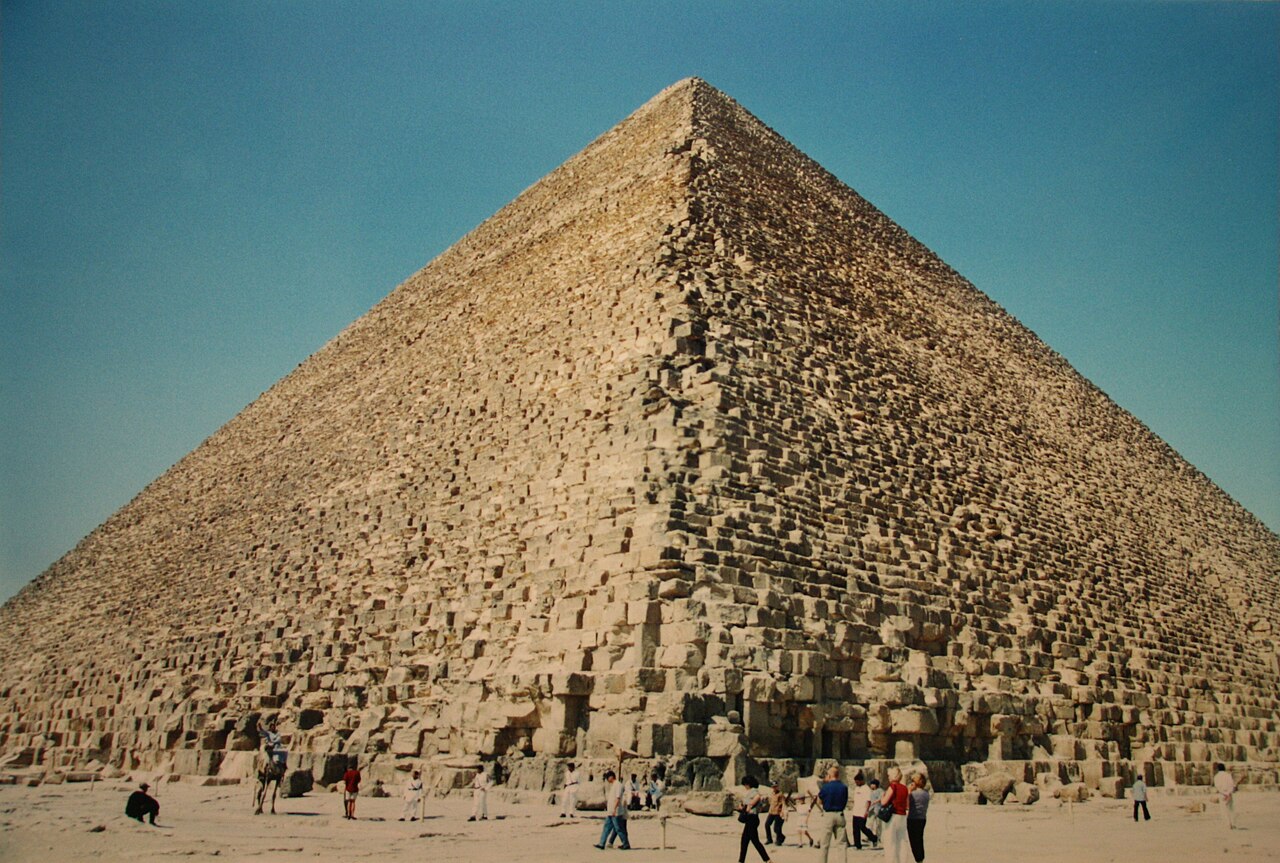
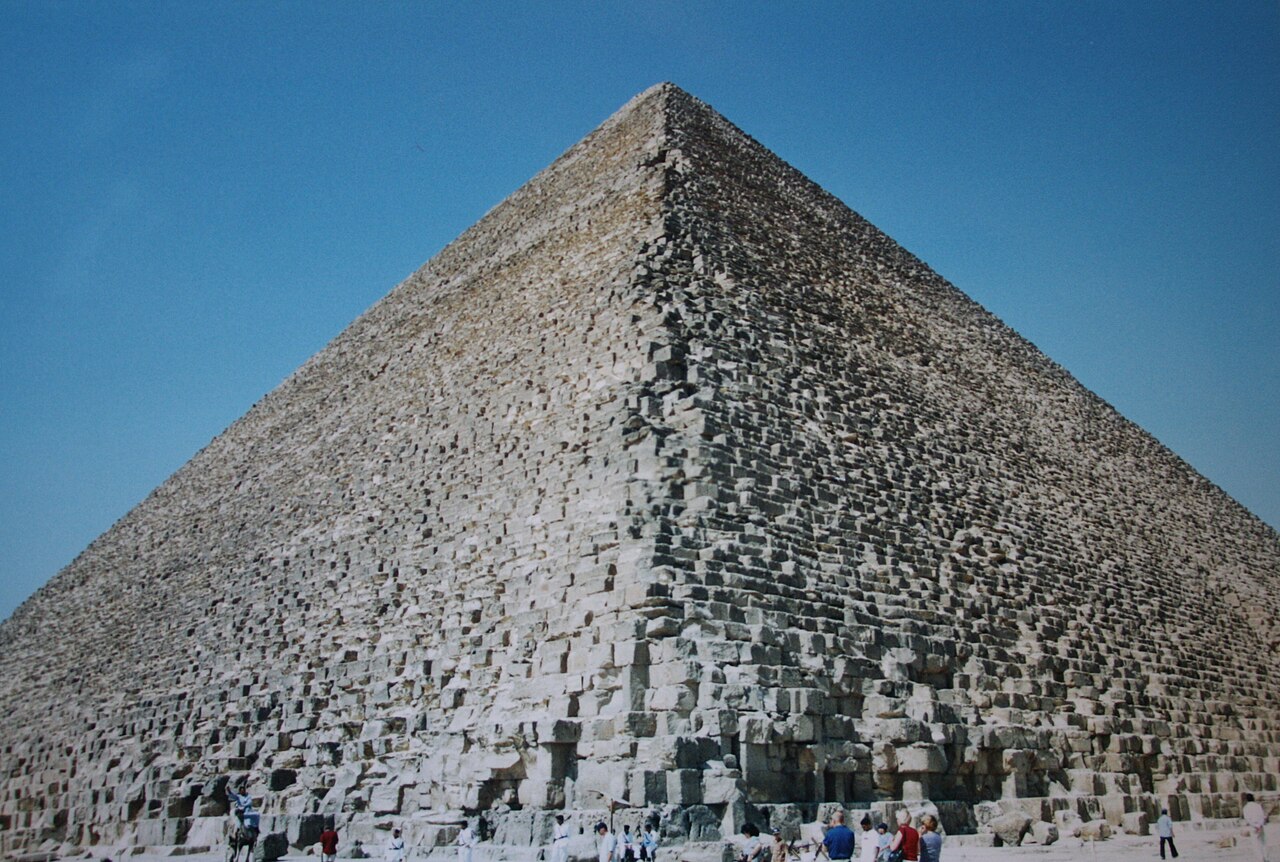
Originally 146.6 meters (481 feet) tall, it was the tallest human-made structure on Earth for more than 3,700 years. Most of its smooth white limestone casing was removed over time, reducing its height to the current 138.5 meters (454.4 feet), so what is visible today is the core structure underneath. Each side of the base measured about 230.3 meters (755.6 feet), giving a volume of roughly 2.6 million cubic meters (92 million cubic feet), including an internal hillock. In royal cubits, the pyramid was 280 cubits high (146.7 meters; 481.4 feet), with a base length of 440 cubits (230.6 meters; 756.4 feet) and a slope of 51°50'40" (a seked of 5.5 palms).
An estimated 2.3 million large blocks, weighing a total of 6 million tonnes, were quarried to build it. Most stones are not uniform in size or shape and are only roughly dressed. The outer layers were bound with mortar, and the primary material was local limestone from the Giza Plateau. Other blocks came by boat on the Nile: white limestone from Tura for the casing, and granite blocks from Aswan—some weighing up to 80 tonnes—for the King’s Chamber structure.
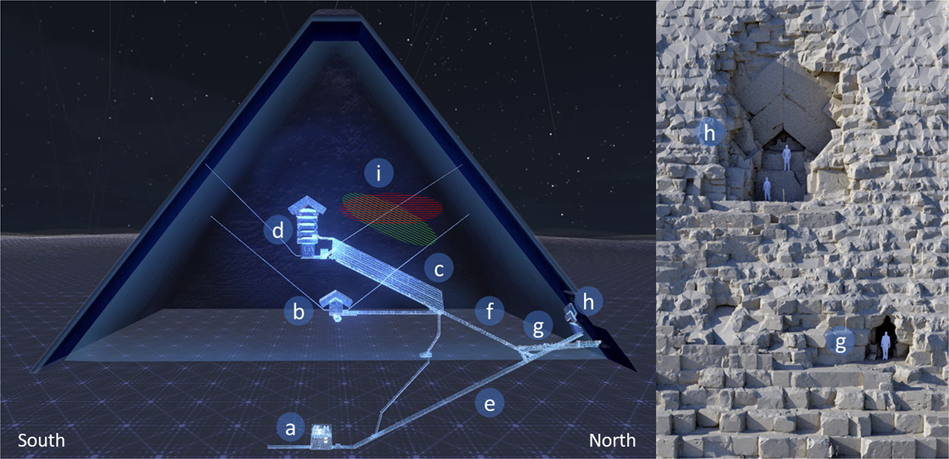
Inside, there are three known chambers. The lowest was cut into the bedrock but left unfinished. Above ground are the Queen’s Chamber and the King’s Chamber, which holds a granite sarcophagus. Some believe Hemiunu, Khufu’s vizier, was the architect. Many scientific and alternative theories try to explain how it was built, but no single method is universally accepted.
The funerary complex included two mortuary temples connected by a causeway (one near the pyramid, one near the Nile), tombs for Khufu’s family and court, three smaller pyramids for his wives, an even smaller satellite pyramid, and five buried solar barques. The site is part of the UNESCO World Heritage Site “Memphis and its Necropolis.”
The pyramid served as Khufu’s tomb and still contains his granite sarcophagus. Like other elite Egyptian tombs, it had four main purposes: to house and protect the body, to show the status of the deceased and their family, to preserve the deceased’s place in society, and to be a place for offerings. In ancient Egypt, high social status was seen as entirely positive, and monumental social inequalities were symbolized by giant pyramids versus smaller mastabas. Tomb sizes were officially regulated, with allowed dimensions written in royal decrees. In the Old Kingdom, only kings and queens could have pyramid tombs. Layout, funeral equipment, and access to materials and workers were all at the king’s discretion.
The Great Pyramid’s internal chambers lack inscriptions and decorations, which was normal for Egyptian tombs from the fourth to late fifth dynasty, except for work-gang graffiti that includes Khufu’s names. Built around 2600 BC, it predates the custom of inscribing pyramids with text by more than 200 years. The pyramid complex included two lavishly decorated temples. The pyramid temple was dedicated to the Sed festival, celebrating Khufu’s 30th jubilee, with surviving scenes showing Khufu, officials, priests, and others performing rituals. The valley temple remains mostly unexcavated, but blocks reused by Amenemhat I show nautical scenes and personifications of Khufu’s estates. The mortuary cult of Khufu operated in these temples for hundreds of years, indicating he was successfully buried in the pyramid. The funeral was likely carried out by his son and successor Djedefre, as his cartouches appear on blocks sealing the boat pits.
The pyramid was probably looted as early as the First Intermediate Period and may have been reused later. Arab accounts mention mummies and treasures found inside. For example, Al-Maqrizi (1364–1442) reports the discovery of three shrouded bodies, a sarcophagus filled with gold, and a corpse in golden armor with a sword of inestimable value and a ruby as large as an egg.
Historically, the pyramid was attributed to Khufu based on classical authors like Herodotus and Diodorus Siculus. In the Middle Ages, others were credited, such as Joseph from Genesis, Nimrod, or the legendary king Saurid ibn Salhouk. In 1837, four additional relieving chambers were found above the King’s Chamber after tunneling. These chambers, previously inaccessible, were covered in red-painted hieroglyphs. The workers had marked blocks with their gang names, which included the pharaoh’s name (e.g., “The gang, The white crown of Khnum-Khufu is powerful”). The names of Khufu were spelled in these markings.
- Volume
- 2.6 million cubic metres (92 million cubic ft)
- Number of blocks
- estimated 2.3 million
- Total weight
- 6 million tonnes
Lore & Background
The Great Pyramid was built by quarrying an estimated 2.3 million large blocks, weighing 6 million tonnes in total. The majority of the stones are not uniform in size or shape, and are only roughly dressed. The outside layers were bound together by mortar, primarily local limestone from the Giza Plateau was used for its construction. Other blocks were imported by boat on the Nile: white limestone from Tura for the casing, and blocks of granite from Aswan, weighing up to 80 tonnes, for the King's Chamber structure. There are three known chambers inside the pyramid. The lowest was cut into the bedrock but remained unfinished. The Queen's Chamber and King's Chamber, which contain a granite sarcophagus, are above ground. Hemiunu, Khufu's vizier, is believed by some to be the architect. Many varying scientific and alternative hypotheses attempt to explain the exact construction techniques, but there is no definite consensus.
Reader's Guide
The Great Pyramid of Giza is the tomb of Pharaoh Khufu and still contains his granite sarcophagus. It had four main purposes: to house and protect the body, to demonstrate the status of the deceased, to retain the deceased's place in society, and to be a place for offerings. In the Old Kingdom only kings and queens could have a pyramid tomb. The pyramid's internal chambers lack inscriptions and decorations, the norm for Egyptian tombs of the fourth to late fifth dynasty, apart from work-gang graffiti that include Khufu's names. The pyramid complex included two temples that were lavishly decorated and inscribed. The mortuary cult of Khufu operated in these temples for hundreds of years, indicating he was successfully interred. The Great Pyramid was likely looted as early as the First Intermediate Period. The cemeteries next to the pyramid, excavated throughout the 20th century, contain family members and high officials of Khufu. The pyramid is part of the UNESCO World Heritage Site 'Memphis and its Necropolis'.
Did You Know?
- The pyramid's internal chambers lack inscriptions and decorations, apart from work-gang graffiti that include Khufu's names.
- The funerary complex included two mortuary temples, three smaller pyramids for Khufu's wives, a satellite pyramid, and five buried solar barques.
Scale and the Enigma of Construction
The Great Pyramid of Giza represents one of the most staggering feats of ancient engineering. The majority of these stones were never cut to uniform dimensions; they were only roughly shaped before being set in place. The outer layers were held together with mortar, and the bulk of the material was local limestone quarried from the Giza Plateau itself. However, the gleaming white casing stones came all the way from Tura, transported by boat along the Nile, while the massive granite blocks of the King's Chamber—some reaching 80 tonnes—were hauled from Aswan. Some scholars credit Hemiunu, Khufu's vizier, as the mastermind behind the design, yet no single theory has achieved consensus on exactly how the ancient builders raised such a colossal structure.
A Monument to Eternity: Purpose and Ritual
Far more than a simple burial vault, the Great Pyramid was designed to serve four interlocking funerary functions. It protected the physical body of the deceased, proclaimed the extraordinary rank of the pharaoh and his lineage, preserved the dead ruler's position within the social order of the afterlife, and provided a sacred space where the living could present offerings. In the Old Kingdom, only kings and queens were permitted to be interred in a pyramid; the sheer scale of the structure was a deliberate statement of social hierarchy, with royal tombs towering over the modest mastabas of lesser elites. The pyramid's internal chambers, notably the King's and Queen's Chambers, carry no decorative inscriptions—a convention typical of fourth- and fifth-dynasty royal tombs. The real ritual grandeur resided in the two mortuary temples flanking the causeway. The pyramid temple was devoted to the Sed festival, marking Khufu's thirtieth jubilee, while the valley temple, still largely unexcavated, once displayed nautical scenes and personifications of the pharaoh's estates. Khufu's mortuary cult thrived in these temples for centuries, and his son Djedefre oversaw the funeral, as confirmed by his cartouches sealing the boat pits.
Proving the Pharaoh: Attribution and Archaeological Evidence
For centuries, the identity of the Great Pyramid's patron rested almost entirely on the testimony of classical writers such as Herodotus and Diodorus Siculus. Medieval traditions added even more colourful candidates—Joseph, Nimrod, the legendary Saurid ibn Salhouk—before modern archaeology began to settle the question. Their walls were covered in red-painted hieroglyphs left by the very labour gangs who had built the pyramid. One inscription reads "The gang, The white crown of Khnum-Khufu is powerful," and Khufu's name appears spelled out more than a dozen times across the surfaces. A separate graffiti bearing his name was later spotted by Goyon on an exterior block at the fourth layer. These markings closely parallel those found at the alabaster quarry at Hatnub and the harbour site at Wadi al-Jarf. Throughout the twentieth century, excavations in the cemeteries surrounding the pyramid revealed burials of Khufu's family members and senior officials in the East Field, further anchoring the monument to its royal owner.
Endurance, Loss, and Living Memory
As the oldest of the Seven Wonders of the Ancient World and the sole wonder still standing largely intact, the Great Pyramid has outlasted every other monument on that celebrated list. Inside, three chambers are known: an unfinished cut into the bedrock below ground, the Queen's Chamber, and the King's Chamber with its granite sarcophagus. The pyramid was probably plundered as early as the First Intermediate Period, and medieval Arab chroniclers like Al-Maqrizi recorded tales of golden armour, a ruby the size of an egg, and shrouded bodies discovered within. Today the entire Giza complex, including the causeway, the smaller queens' pyramids, the satellite pyramid, and the five buried solar barques, is protected as part of the UNESCO World Heritage Site "Memphis and its Necropolis."
Common Misconceptions (Editorial)
Some people believe the Great Pyramid’s blocks are all uniform in size and shape, but the facts state the majority are not uniform and only roughly dressed. Others assume it is covered in ancient carvings or religious inscriptions, yet the internal chambers lack such decorations aside from work-gang graffiti containing Khufu’s names. A common misconception is that the pyramid was built entirely from local stone, whereas white limestone was imported from Tura and granite blocks from Aswan.
Why It Matters (Editorial)
The Great Pyramid endures as a testament to the organizational and engineering capabilities of an ancient civilization, achieved without modern machinery. Its status as the last surviving Wonder of the Ancient World continues to inspire awe and curiosity, reminding us how much human ingenuity can achieve across millennia.
Gallery
Frequently Asked Questions
What is The Great Pyramid of Giza?
It is the largest pyramid in Egypt and the most recognizable structure within the Giza pyramid complex. The monument was commissioned as the burial tomb of Pharaoh Khufu, a ruler of the Fourth Dynasty during the Old Kingdom era.
Why is The Great Pyramid of Giza considered the most important of the Seven Wonders?
It is the sole wonder from the ancient list that has survived to the modern era in a largely intact condition. No other original wonder retains its physical form, which gives the Giza pyramid a unique place in history.
What is the current state of The Great Pyramid of Giza?
The structure still stands on the Giza plateau, though it has shed its original smooth limestone outer skin and lost roughly eight metres of height over millennia. Despite that gradual wear, the core masonry remains fundamentally solid and the pyramid continues to dominate the Egyptian landscape.
More in World Wonders 1-22
Spotted an error? Know more?
This is a living reference — every entry is fact-audited, and reader corrections feed straight into our audit queue. Suggest an edit · See this site's audit record