Petra
Ancient Nabataean capital carved from rose-colored sandstone.

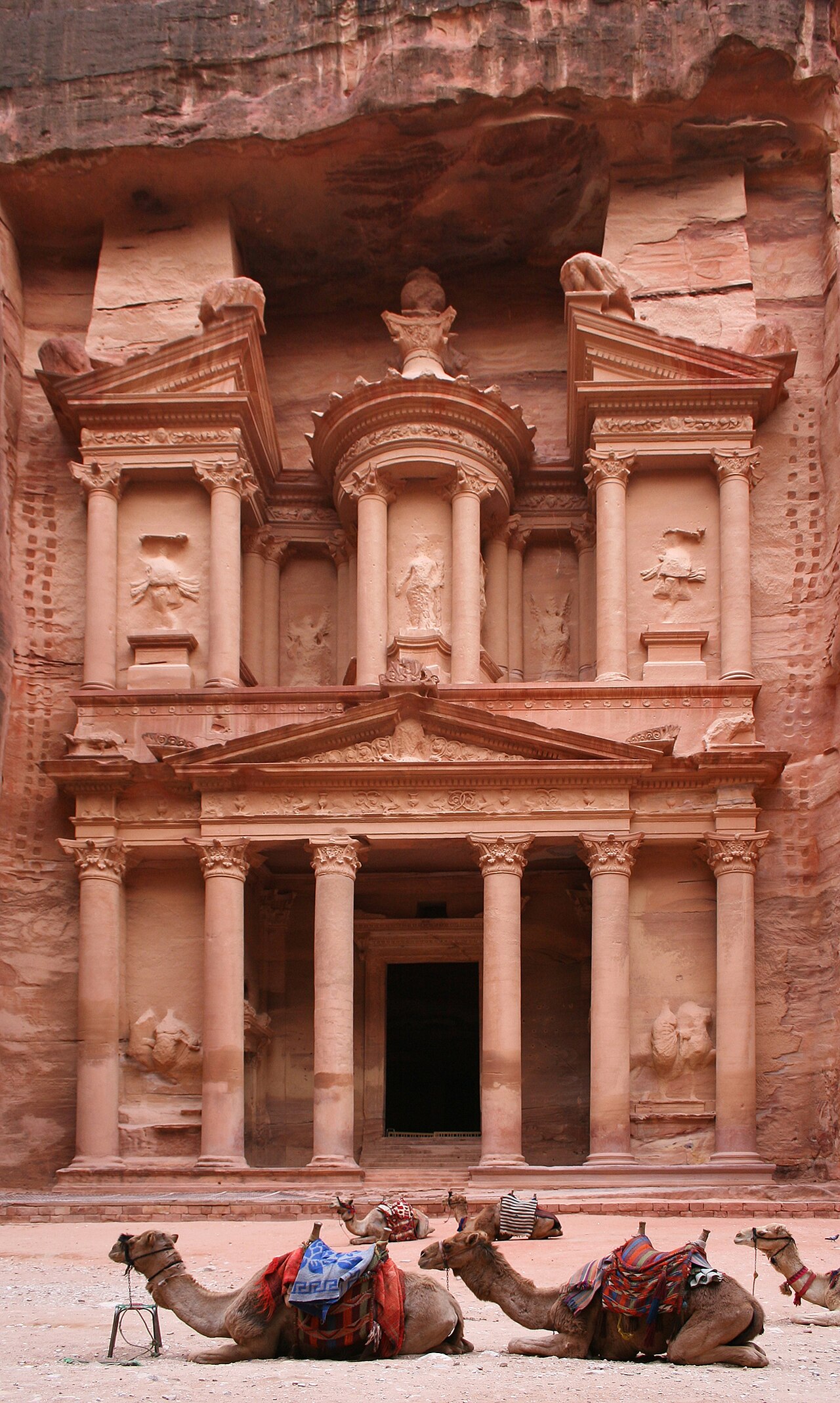
Al_Khazneh_Petra.jpg : Graham Racher from London, UK derivative work: MrPanyGoff · CC BY-SA 2.0
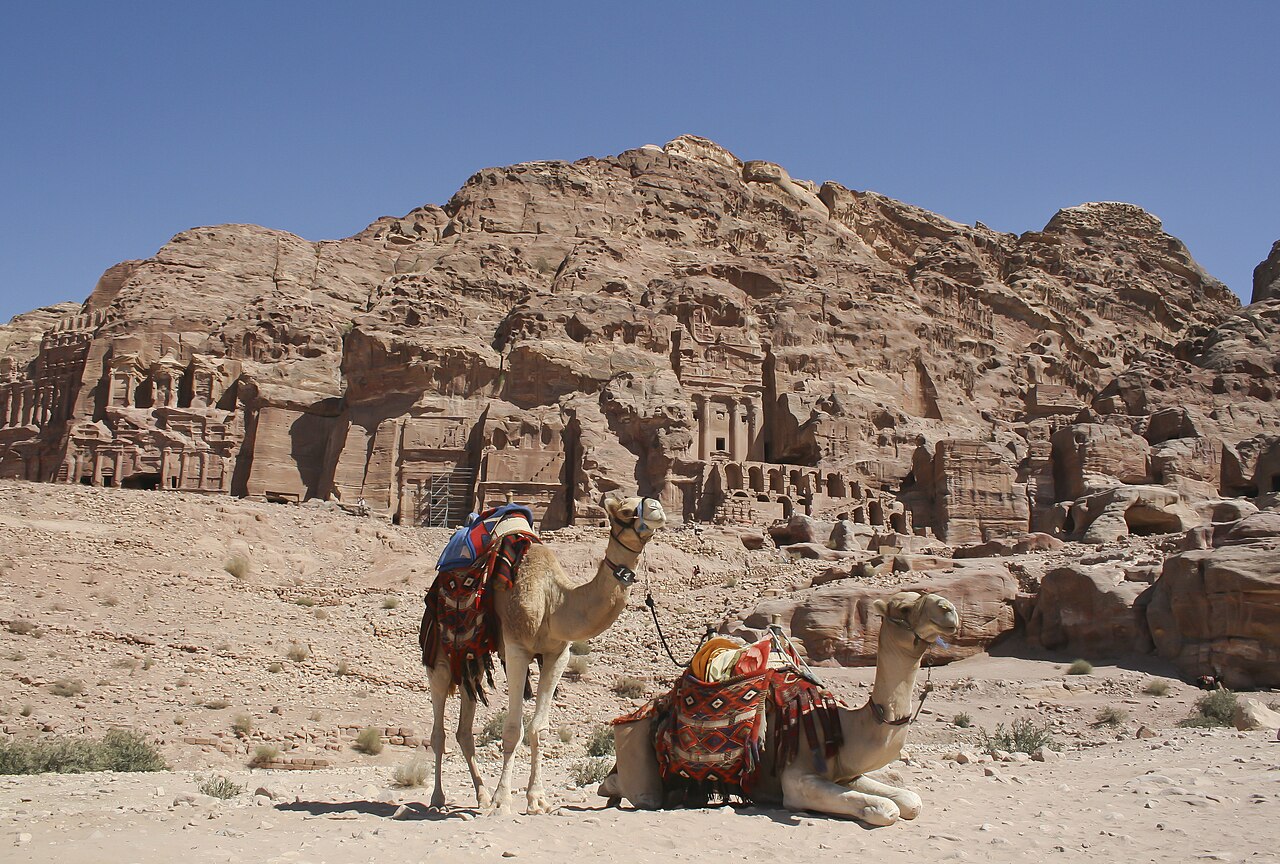
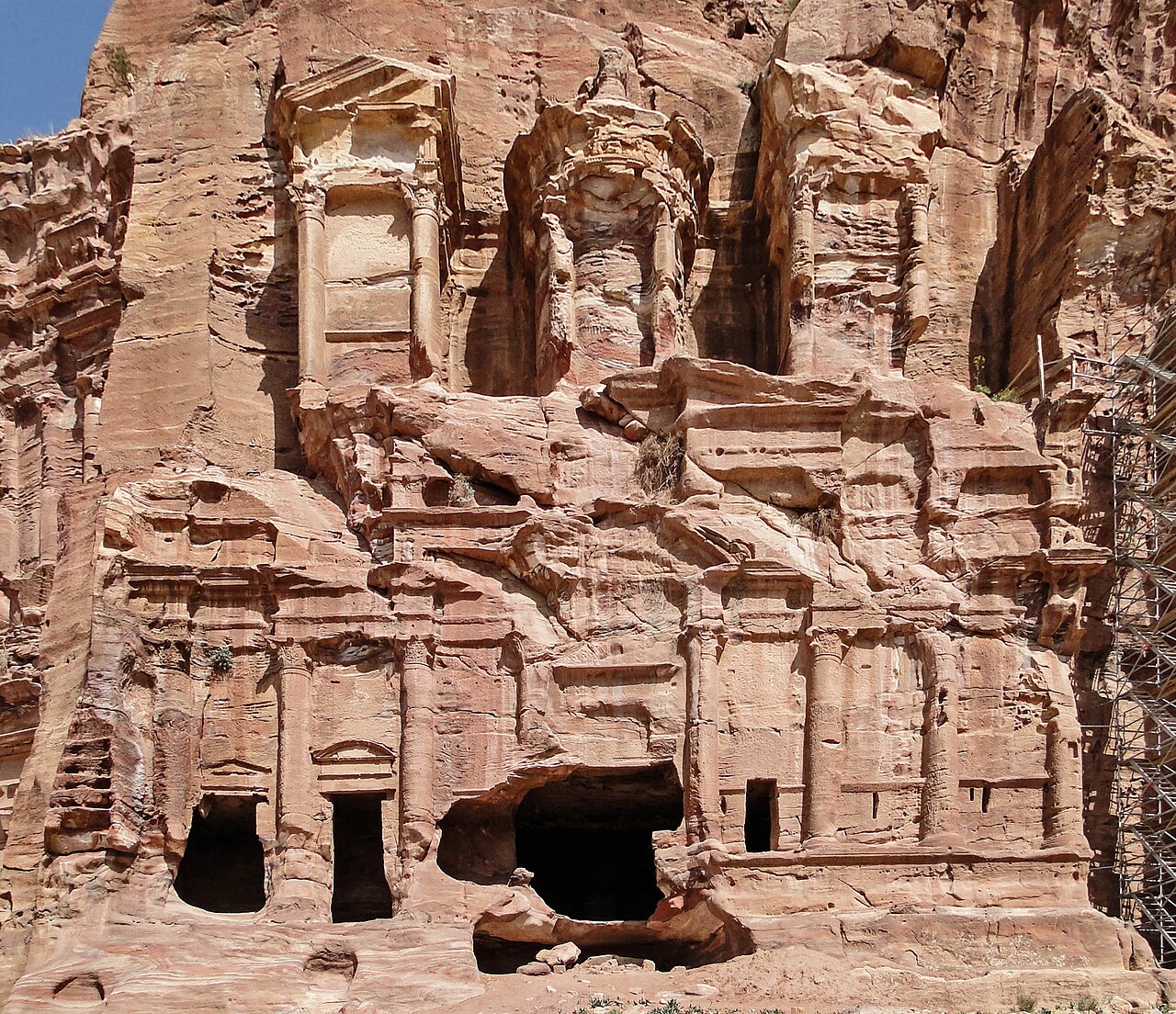
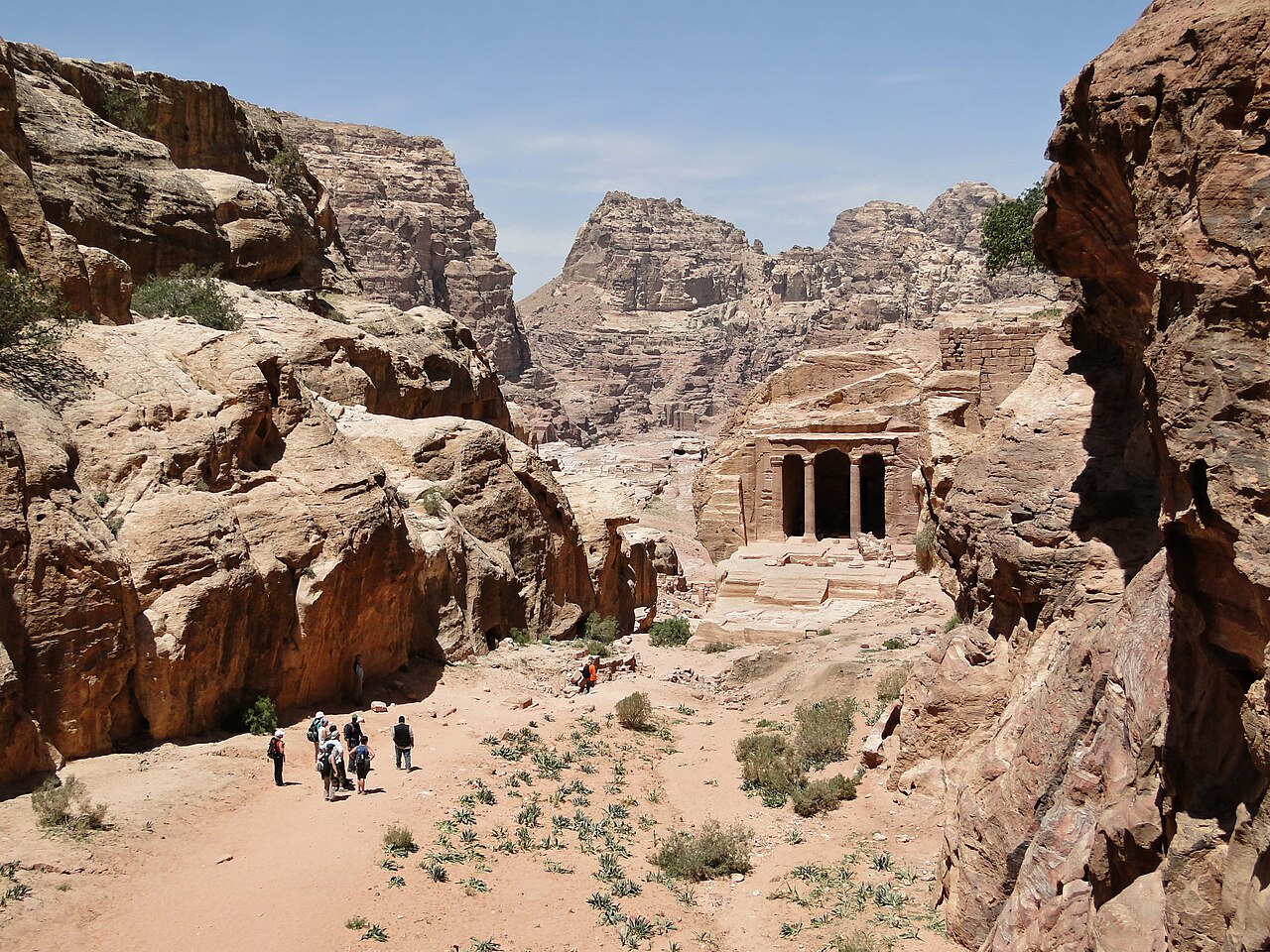
Petra, called Raqmu by its original inhabitants, is an ancient city and archaeological site located in southern Jordan. It is renowned for its buildings carved directly into rock and its sophisticated system of water channels. The sandstone’s pinkish hue has earned it the nickname the “Rose City.” It is recognized as one of the New 7 Wonders of the World and is a UNESCO World Heritage Site.
People lived in the area as early as 7000 BC. In the 4th century BC, the Nabataeans, a nomadic Arab people, settled there, and by the 2nd century BC, Petra had become the capital of their kingdom. The Nabataeans turned the city into a major hub for the incense trade, bringing in significant wealth. They survived the desert environment by collecting rainwater and practicing desert farming.
Petra reached its peak in the 1st century AD, when the structure known as Al-Khazneh was built, likely as a tomb for King Aretas IV. The population then was about 20,000. In 106 AD, the Romans took over, renaming the region Arabia Petraea. Petra’s importance declined as sea trade routes developed, and an earthquake in 363 destroyed many buildings. During the Byzantine period, Christian churches were built, but the city kept fading and, by the early Islamic era, only a few nomads remained. It was unknown to the Western world until Swiss traveler Johann Ludwig Burckhardt rediscovered it in 1812.
UNESCO calls Petra “one of the most precious cultural properties of man’s cultural heritage.” It is a national symbol of Jordan and its most popular tourist attraction, drawing nearly a million visitors each year.
**History**
**Neolithic:** By 7000 BC, some of the earliest known farmers had established a settlement at Beidha, just north of Petra.
**Bronze Age:** Petra appears in Egyptian campaign records and the Amarna letters under the names Pel, Sela, or Seir.
**Iron Age Edom:** From 1200 to 600 BC, the Edomites occupied the Petra area. The surrounding mountains helped them store water, making Petra a convenient stop for traders dealing in wine, olive oil, and wood. Nomads initially lived alongside the Edomites but later left. A story claims 10,000 men were thrown off Mount Umm el-Biyara, though scholars debate this. An Edomite site excavated atop that mountain dates to no earlier than the 7th century BC.
**Emergence of Petra:** The Nabataeans were one of several Bedouin tribes roaming the Arabian Desert. Though they were once influenced by Aramaic culture, most modern scholars see them as a northern Arabian tribe based on archaeological, religious, and linguistic evidence. Their name for Petra was Raqēmō. The Hebrew Bible mentions the region as home to the Midianites, ruled by five kings, including Rekem. The historian Josephus wrote that the Greeks called the city Petra, but Arabs of his time still called it Rekeme after its founder. The word *raqama* in Arabic means “to mark” or “to decorate,” possibly referring to Petra’s carved rock faces. In 1964, workers clearing rubble found Nabataean funerary inscriptions, one mentioning a man named Petraios, born in Raqmu and buried in Jerash.
An old idea linked Petra to the biblical place Sela, but *sela* simply means “rock” in Hebrew, and the connection is uncertain. The city may have been part of Edom. The Greek writer Diodorus Siculus described the Nabataeans as nomads who believed owning possessions made them vulnerable—a view that later changed. He also wrote about military campaigns against them in 312 BC, but the “petra” (rock) he mentioned was a natural fortress, not a city, suggesting no town existed there at that time.
**Roman Period:** In 106 AD, under the Roman governor of Syria, the region of Petra was annexed as part of Arabia Petraea. The local dynasty ended, but the city thrived under Roman rule, and the Petra Roman Road was built. About a century later, during the reign of Severus Alexander, the city was at its most splendid, but minting of its own coins stopped, and no more lavish tombs were constructed.
- location
- Southern Jordan
- original_name
- Raqmu (Nabataean Aramaic)
- period_of_flourishing
- 1st century AD
- founded_by
- Nabataeans (4th century BC)
- known_for
- Rock-cut architecture and water conduit systems
Lore & Background
Petra became the capital city of the Nabataean Kingdom in the late 4th or early 3rd century BC. The Nabataeans invested in Petra's proximity to the incense trade routes by establishing it as a major regional trading hub, which gained them considerable revenue. They were able to survive the desert due to efficient rainwater collecting and desert farming. Petra flourished in the 1st century AD, when its Al-Khazneh structure, possibly the mausoleum of Nabataean king Aretas IV, was constructed. In the Byzantine era, several Christian churches were built, but the city continued to decline and, by the early Islamic era, it was abandoned except for a handful of nomads.
Reader's Guide
Petra is a symbol of Jordan and its most-visited tourist attraction, with visitor numbers reaching close to a million tourists every year. UNESCO has described Petra as 'one of the most precious cultural properties of man's cultural heritage.' The city's rock-cut architecture and advanced water management system demonstrate the ingenuity of the Nabataeans, who transformed a desert landscape into a thriving trade hub. Its rediscovery in the 19th century brought global attention to this ancient wonder, and its status as a New 7 Wonder of the World continues to draw visitors. The site's long history, from Neolithic settlement through Edomite, Nabataean, Roman, and Byzantine periods, makes it a key archaeological and historical resource for understanding the region's past.
Did You Know?
- Petra was originally known to its inhabitants as Raqmu.
- The city is called the 'Rose City' because of the color of the sandstone from which it is carved.
Ancient Roots and the Edomite Foundation
Petra's story stretches back further than most visitors realize. Centuries later, Egyptian campaign records and the Amarna letters reference the region under names like Pel, Sela, or Seir, hinting at its Bronze Age significance. This made the site a natural waypoint for merchants carrying wines, olive oil, and wood. Archaeological work at the mountain's summit has confirmed an Edomite presence dating no earlier than the seventh century BC, establishing a human foundation long before the Nabataeans arrived.
The Nabataean Trading Power
The nomadic Nabataeans, a northern Arabian tribe, settled in the Petra region during the fourth century BC and transformed it into the capital of their kingdom by the second century BC. Their genius lay in harnessing the desert's scarcity: efficient rainwater collection and arid-land farming allowed them to thrive where others could not. More critically, they positioned Petra along the incense trade routes, turning the city into a major regional commercial hub that generated enormous revenue. This monumental façade, possibly the mausoleum of King Aretas IV, remains the visual signature of the site.
Roman Annexation, Decline, and Rediscovery
The native dynasty ended, yet the city continued to prosper under Roman administration, even as the Petra Roman Road was constructed. However, the balance of commerce was shifting. By the early Islamic period, only a scattering of nomads remained.
Modern Identity and Global Recognition
Today Petra stands as both a national emblem and a global cultural treasure. Jordan's most-visited tourist attraction draws close to a million visitors annually, drawn by the rose-coloured sandstone that gives the city its popular nickname, the Rose City. Its rock-cut architecture and sophisticated water conduit systems have earned it a place among the New 7 Wonders of the World, and UNESCO has designated it a World Heritage Site, calling it one of humanity's most precious cultural properties. The site's layered history, from Neolithic farmers to Nabataean traders to Byzantine worshippers, makes it a rare open-air museum spanning millennia. For Jordan, Petra is more than a destination; it is a symbol of national identity, a source of economic vitality, and a testament to the ingenuity of peoples who carved a civilization out of living rock in the heart of the desert.
Common Misconceptions (Editorial)
Some people think Petra was always called Petra, but it was originally known to its inhabitants as Raqmu. Another common misconception is that Petra declined only after the Roman period; in fact, it continued into the Byzantine era, when Christian churches were built, and was not abandoned until the early Islamic era.
Why It Matters (Editorial)
Petra endures as a testament to human ingenuity in the face of a harsh desert environment, from its sophisticated water conduit systems to its stunning rock-cut architecture. Its designation as both a UNESCO World Heritage Site and one of the New 7 Wonders of the World reflects not only its historical importance as a Nabataean trading hub but also its lasting power to inspire awe in visitors from around the globe.
Gallery
Frequently Asked Questions
Why is Petra nicknamed the Rose City?
The name comes from the warm, reddish-pink tone of the sandstone from which every major structure was sculpted. That distinctive hue of the rock is what gives the entire site its signature rosy appearance.
What is Petra most famous for?
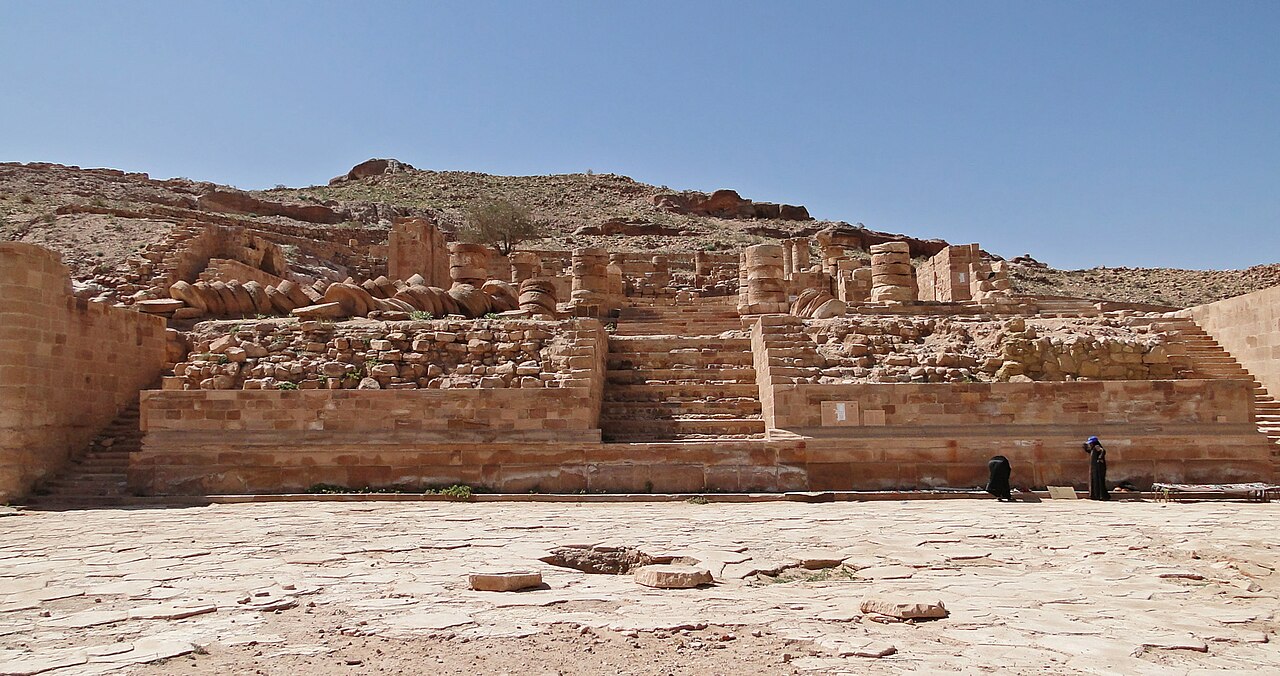
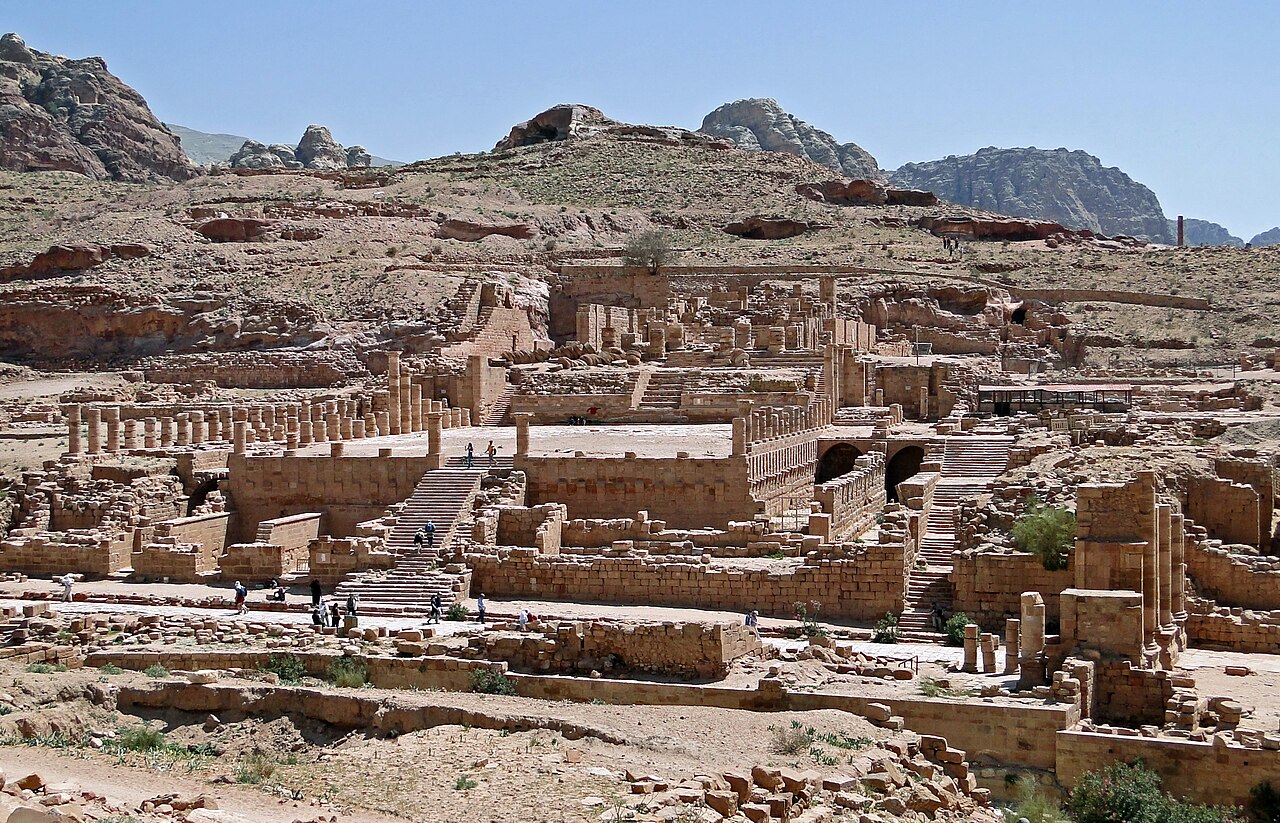
Its rock-cut architecture, in which entire temples and tombs were carved straight into the cliff face, is one of the most remarkable achievements of ancient engineering. The city is equally celebrated for its elaborate water conduit systems that distributed water across the arid landscape.
What official recognitions does Petra hold?
Petra is listed as one of the New 7 Wonders of the World and also carries UNESCO World Heritage Site status. It sits in southern Jordan and remains one of the most visited archaeological sites on the planet.
More in World Wonders 1-22
Spotted an error? Know more?
This is a living reference — every entry is fact-audited, and reader corrections feed straight into our audit queue. Suggest an edit · See this site's audit record