
Thomas Mapfumo
The Lion of Zimbabwe who created Chimurenga music and challenged both colonial and post-colonial rule.
Last updated

Anya Wassenberg · CC BY 3.0
Thomas Tafirenyika Mapfumo, born on July 3, 1945, is a Zimbabwean musician known as "The Lion of Zimbabwe" and "Mukanya"—a Shona clan praise name. He earned these titles through his widespread popularity and the political weight of his music, which often sharply criticized former president Robert Mugabe’s government.
Political overtones
Mapfumo invented and spread Chimurenga music, recognized for his unique voice and unhurried delivery. He was jailed without charges under Rhodesia’s white-minority rule and later harassed by Mugabe’s administration. After two decades in exile in the United States, he returned to Zimbabwe in April 2018 for a concert, his first visit since 2005.
Biography
Mapfumo was born in Marondera, Mashonaland East, southeast of what was then Salisbury, the capital of the British colony of Southern Rhodesia. He lived a traditional rural Shona life until age ten, when his family moved to the Mbare township in Harare. There, he absorbed the traditional Shona music that later shaped his work, incorporating the ngoma drum and the spiritually significant mbira.
Early career
At 16, he joined his first band—either the Zutu Brothers or the Cyclones—as a singer. He moved through groups like The Wagon Wheels, alongside Afro jazz musician Oliver Mtukudzi and guitarist James Chimombe. Nationalist and promoter Paul Tangi Mhova Mkondo funded the band and let them play at Club Mutanga, the only nightclub open to Black people under Rhodesian segregation. Mapfumo also raised chickens, which inspired his 1972 band name, the Hallelujah Chicken Run Band.
Initially, he performed covers of American rock and soul, but with that band he began blending traditional Shona music with modern rock instruments. He worked with guitarist Joshua Dube (or Jonah Sithole) to translate mbira sounds onto electric guitar, and started singing in Shona rather than English. Dube experimented with mbira-style guitar on the 1974 recording “Take One.”
Political undertones
Using native music and language was itself a political act under Rhodesia’s white-minority rule, which demeaned Black culture. Mapfumo’s lyrics grew openly political, supporting the rural revolution. He named his style Chimurenga, after the Shona term for the 1896 uprising and later liberation wars. Songs like “Mothers, send your sons to war” called for violent overthrow.
His track “Hokoyo!” (“Watch out!”) drew the Rhodesian government’s attention; they banned it from state radio and imprisoned him without charges in 1979. Protests and a lack of evidence forced his release after three months. His records still played in discos and on unregulated stations like the Voice of Mozambique.
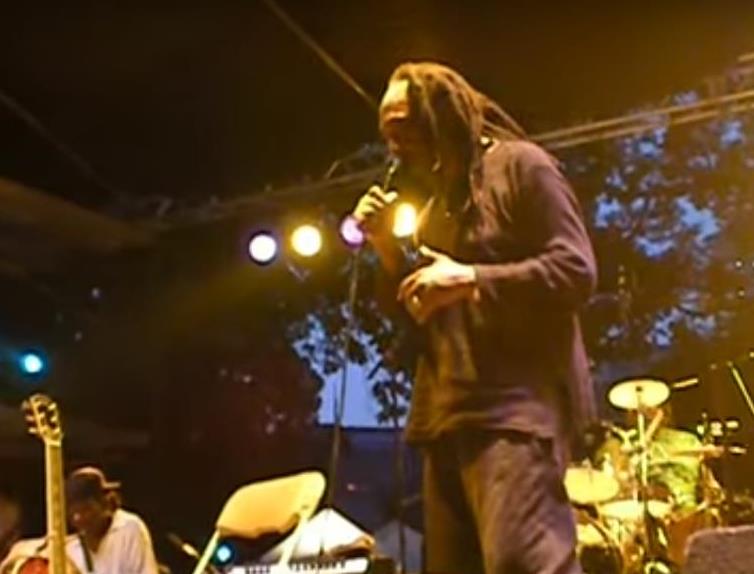
After free elections in 1980, Mapfumo performed at a celebratory concert with Bob Marley. He later turned on the government he helped install. In the late 1980s, Afropop Worldwide described him living in a low-density suburb with his wife, a law office worker, and two children, driving a blue Ford with fake leopard-skin seat covers.
His songs remained political, focusing on poverty. He rarely sang love songs, saying, “You’ve got a wife. You do it. You don’t have to sing a song about it.” At that time, he still supported Mugabe’s government, but that changed. In 1989, he released Corruption, recorded at Shed Studios with engineer Benny Miller, criticizing Mugabe.
The government harassed him, accusing him of involvement in a stolen-car ring. By the late 1990s, he moved to Eugene, Oregon. After Mugabe’s 2017 ouster, Mapfumo returned for a “Homecoming Bira” at Glamis Arena in Harare on April 28, 2018, signaling he was no longer in political danger.
Lore & Background
Mapfumo was born in 1945 in Marondera, Mashonaland East, a town southeast of Harare, the capital of Zimbabwe, though at the time the capital was called Salisbury and the country was a colony of Great Britain called Southern Rhodesia (becoming Rhodesia in ordinary usage after Northern Rhodesia gained independence as Zambia). He lived a traditional, rural Shona lifestyle until the age of ten, when his family moved to the Harare township of Mbare. It was during these early years that he was exposed to the traditional music of the Shona, the influence of which would drive his later music to incorporate and/or reflect the sounds of the ngoma drum and the mbira, a metal-pronged instrument with spiritual importance. He joined his first band, the Zutu Brothers (although, Encyclopædia Britannica says it was the Cyclones), as a singer at the age of 16.
From then he was always in one band or another, such as The Wagon Wheels with Afro jazz musician Oliver Mtukudzi and guitarist James Chimombe. They were given the rare opportunity by Paul Tangi Mhova Mkondo, an African nationalist and music promotor, who provided money and resources to the group. He allowed them to perform at Club Mutanga (Pungwe) which, at the time, was the only night club available for blacks under Rhodesia's policy of segregation. He played mostly covers of American rock and soul tunes, such as Otis Redding or Elvis Presley, until he was in the Hallelujah Chicken Run Band.
There he introduced the innovation of adapting traditional Shona music to modern rock instrumentation. He worked with guitarist Joshua Dube (Leopard Man's Africa Music Guide says Jonah Sithole) to transcribe the sounds of the chief instrument of traditional Shona music, the mbira to the electric guitar. He also started singing primarily in the Shona language, rather than in English. Joshua Dube started to experiment mbira on guitar on Take One recorded in 1974.
Simply drawing on the native musical tradition and singing in his native language was a political statement. Rhodesia was ruled by a minority of white individuals who derogated the native black population and culture. But more than that, his lyrics became overtly political, supporting the revolution that was developing in the rural areas, what the Rhodesian government called "the communal lands". He called his new style of music Chimurenga.
Reader's Guide
Mapfumo's discography includes: Shumba (1990, Earthworks); Hokoyo! (1978, Chimurenga Music) with the Acid Band; and with the Blacks Unlimited: Gwindingwi Rine Shumba (1981, Chimurenga Music), Mabasa (1983, Chimurenga Music, Gramma Records), Ndangariro (1983, Afro Soul), Chimurenga For Justice (1985, Rough Trade), Mr Music (Africa) (1985, Afro Soul), Zimbabwe Mozambique (1988, Chimurenga Music), Chamunorwa (1989, Chimurenga Music), Varombo Kuvarombo (1989, Chimurenga Music), Corruption (1989, Mango), Chimurenga Masterpiece (1990, Chimurenga Music), Hondo (1991, Chimurenga Music), Chimurenga International (1993, Chimurenga Music), Chimurenga Varieties (1994, Chimurenga Music), Roots Chimurenga (1996, Chimurenga Music), Sweet Chimurenga (1996, Chimurenga Music), Afro Chimurenga (1996, Chimurenga Music), Chimurenga '98 (1998, Anonymous Web Productions), Live at El Rey (1999, Anonymous Web Productions), Chimurenga Explosion (2000, Anonymous Web Productions), Chimurenga Unlimited Hits Vol 1 (2007, Chimurenga Music), Chimurenga Rebel (2002, Anonymous Web Productions), Zvichapera (2002), Chimurenga Unlimited Hits Vol 2, Chimurenga Unlimited Vol 3, Toi Toi (2003), Rise Up (2005, digital download; 2006, Real World Records), Exile (2010, Sheer Sound), Danger Zone (2015, Chimurenga Music Company), Live @ The Sanctuary for Independent Media (2016, Chimurenga Music), Ndikutambire (2023, Chimurenga Music Company). Compilation appearances: The Rough Guide to the Music of Zimbabwe (1996, World Music Network), Roots Rocking Zimbabwe: The Modern Sound of Harare' Townships 1975–1980 (2025, Analog Africa No.41).
Frequently Asked Questions
What is Chimurenga music and how did Mapfumo shape it?
Chimurenga fuses traditional Shona instrumentation with modern rock elements such as electric guitar and amplified drums. Mapfumo developed and popularized this hybrid style, turning it into a defining sound of Zimbabwean popular music.
Why is Thomas Mapfumo called 'The Lion of Zimbabwe'?
The nickname reflects his fearless, bold stance against political authority during both the white-minority Rhodesian government and later under President Robert Mugabe's rule. His music became a vehicle for dissent, earning him that powerful epithet among Zimbabweans.
How did Thomas Mapfumo use his music for political criticism?
Throughout his career he directed sharp lyrical criticism at both the Rhodesian regime and the post-independence government led by Mugabe. His songs became anthems of resistance, giving voice to ordinary citizens who felt silenced by political power.
More in World & Folk Traditions
Sources
Compiled from Wikipedia and the sources listed below. Text from Wikipedia is available under CC BY-SA 4.0; this entry is adapted from it.
- Wikipedia: Thomas Mapfumo (CC BY-SA 4.0).
Spotted an error? Know more?
Reader corrections go straight into our review queue. Suggest an edit · How this site is sourced