Medea hypothesis
Hypothesis that multicellular life may be self-destructive.
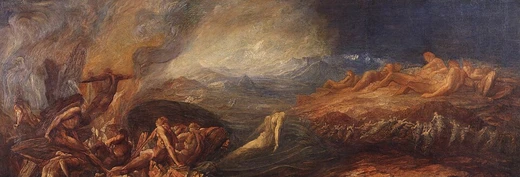
The Medea hypothesis is a term coined by paleontologist Peter Ward for a hypothesis that contests the Gaian hypothesis. It proposes that multicellular life, understood as a superorganism, may be self-destructive or suicidal. The metaphor refers to the mythological Medea, representing the Earth, who kills her own children, representing multicellular life.
Quick Facts
- Coined by
- Peter Ward
- Metaphor
- Medea (Earth) killing her own children (multicellular life)
Facts from the source article.
Examples
Possible examples of extinction events induced entirely or partially by biotic activities include the Great Oxidation Event, 2.45 billion years ago, believed responsible for mass poisoning of anaerobic microbes and the Huronian glaciation. The Sturtian and Marinoan Snowball Earth glaciations resulted from carbon dioxide sequestration during the Neoproterozoic Oxygenation Event. The Late Ordovician Mass Extinction may have been caused by glaciation from carbon dioxide depletion driven by land plant radiation. Euxinic events, such as during the Great Dying, were caused by sulfur-reducing bacteria producing hydrogen sulfide. The Cretaceous–Paleogene extinction event is excluded as it was at least partially externally induced by a meteor impact.
Current status and future extinctions
Peter Ward proposes that the current man-made climate change and mass extinction event may be considered the most recent Medean event. He postulates that Medean events are not necessarily caused by microbes, but by intelligent life as well. The final mass extinction of complex life, roughly 500–900 million years in the future, can also be considered a Medean event: plant life will adapt to a warming Sun, removing more carbon dioxide, ultimately accelerating complete extinction of complex life by making carbon dioxide levels drop to just 10 ppm. However, Ward simultaneously argues that intelligent life such as humans may not necessarily just trigger future Medean events, but may eventually prevent them.
More in Words and Phrases Derived from Greek Mythology
Spotted an error? Know more?
Reader corrections go straight into our review queue. Suggest an edit · How this site is sourced