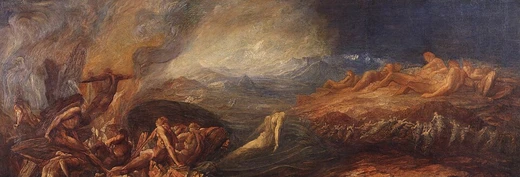
Augeas stable
The filthy stables cleaned by Heracles in his fifth Labour.
Their filthy condition became the basis for the fifth Labour of Heracles, and the term 'Augean' now describes any extremely difficult or neglected task.
Quick Facts
- King
- Augeas (also called Aegeus)
- Kingdom
- Elis
- Labour number
- fifth
- Rivers used
- Alpheus and Peneus
- Paid reward
- one tenth of the cattle
Facts from the source article.
Did You Know?
- Augeas's lineage varies: he was said to be the son of Helios, Eleios, Poseidon, or Phorbas and Hyrmine.
- His children included Epicaste, Phyleus, Agamede, Agasthenes, Eurytus and Ambracia.
- Some ancient authors say Augeas was one of the Argonauts.
Mythology
Eurystheus assigned the cleaning of the Augean stables as the fifth Labour of Heracles, intending it to be humiliating and impossible. The livestock were divinely healthy and immortal, producing enormous quantities of dung; three thousand cattle had lived there for over thirty years without any cleaning. Heracles succeeded by rerouting the rivers Alpheus and Peneus to wash out the filth. Augeas had promised Heracles one tenth of his cattle if the job was finished in one day, but he refused to honour the agreement, and Heracles killed him after completing the tasks. Heracles gave Augeas's kingdom to Phyleus, Augeas's son, who had been exiled for supporting Heracles. According to the odes of the poet Pindar, Heracles then founded the Olympic Games. Eurystheus discounted the success of this labour because the rushing waters had done the work and because Heracles was paid, and he sent Heracles to defeat the Stymphalian Birds.
More in Words and Phrases Derived from Greek Mythology
Spotted an error? Know more?
Reader corrections go straight into our review queue. Suggest an edit · How this site is sourced