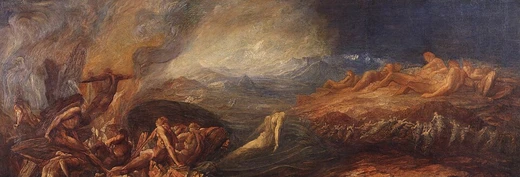
Laius complex
Paternal wish for filicide to prevent succession.
The Laius complex describes a father's unconscious desire to kill or eliminate his male heir, rooted in the fear of being supplanted. It is notable as a counterpart to the Oedipus complex, shifting focus from filial to paternal aggression.
Quick Facts
- Introduced by
- George Devereux
- Year introduced
- 1953
- Related figure
- Gershon Legman
- Related concept
- counter-oedipal (Laius) complex
Facts from the source article.
Did You Know?
- Indo-European mythology includes stories of foundlings like Cyrus the Great and Romulus and Remus, cast out after prophecies they would replace the dynasty.
- In Greek mythology, Cronus devoured his young from fear of being superseded.
- Laius cast out Oedipus as an infant because of a prophecy that the child would kill its father.
From myth to complex
George Devereux introduced the term 'Laius complex' in 1953 to describe the father's counterpart to the Oedipus complex, which he called the 'counter-oedipal (Laius) complex'. Later explorations of masculinity placed the aggressive aspects within broader mammalian aggression against young, with Gershon Legman referring to 'the killing of the male (i.e. sexually uninteresting) children by the father'. Two psychosexual aspects have been highlighted: magical thinking, where having no successors is unconsciously believed to grant immortality; and narcissism, where only one figure can exist in life, leading to destruction of either father or son. The degree to which the Laius neurosis has been downplayed in orthodox psychoanalysis may relate to what Julia Kristeva called Freud's 'paternal vision of childhood'. Bracha L. Ettinger introduced a Laius Complex 'per se', not as a counter-Oedipus but prior to it, within feminist psychoanalysis, describing the analyst's desire to destroy the patient and exploit their creativity and sexuality. This manifestation during treatment is close to psychosis and can produce psychotic folie-a-deux.
More in Words and Phrases Derived from Greek Mythology
Spotted an error? Know more?
Reader corrections go straight into our review queue. Suggest an edit · How this site is sourced