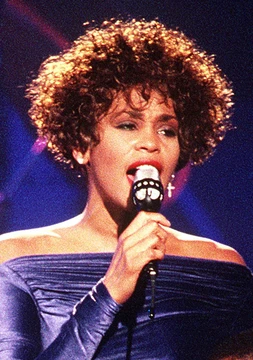
I'm Your Baby Tonight (1990)
Whitney's velvet 1990 statement: soul meets pop, and the world still can't look away.

I'm Your Baby Tonight is Whitney Houston's third studio album, released in late 1990 on Arista Records. It marked a deliberate evolution in her sound, leaning further into polished pop-R&B production under the guidance of Narada Michael Walden while still showcasing the extraordinary vocal range that had made her a global phenomenon. The album served as a bridge between the gospel-rooted, soulful intensity of her first two records and the more accessible, radio-driven pop that would define much of her later career. The record is best remembered for spawning the title track, the heartfelt ballad 'All the Man That I Need,' and the international hit 'I'm Your Baby Tonight.' Commercially it was a major success, cementing Houston's status as one of the defining vocal artists of the early-1990s crossover era, even as some long-time fans noted the production felt more streamlined and less emotionally raw than her earlier work.
Quick Facts
- Artist
- Whitney Houston
- Released
- November 6, 1990
- Recorded
- October 1989 – September 1990
- Genre
- New jack swing / dance / R&B
- Length
- 53:45
- Label
- Arista / BMG Entertainment
- Producer
- Houston / Babyface / L.A. Reid / Luther Vandross / Michael Masser / Narada Michael Walden / Rickey Minor / Stevie Wonder
- Prev Title
- Whitney
- Prev Year
- 1987
- Next Title
- The Bodyguard: Original Soundtrack Album
- Next Year
- 1992
Facts from the source article.
Lore & Background
By the time Houston stepped into the studio for her third record, she was already a cultural institution. The first two albums had established her as a voice of almost mythic power, and the industry expected the next chapter to be a natural extension. Instead, the creative team leaned into a sleeker, more rhythm-driven palette. Narada Michael Walden's production brought a groove and a sheen that felt distinctly 1990s, layering synth textures and tight drum programming beneath Houston's still-astonishing melodic runs. The result was an album that sounded like the era it was made in without sacrificing the vocal fireworks that were her signature. The album's singles, including the sultry title track and the heartfelt ballad 'All the Man That I Need,' showcased Houston's versatility, but none were tied to Disney's Aladdin—that honor belongs to 'A Whole New World,' performed by Brad Kane and Lea Salonga. For fans who had followed her since the early 1980s, this album represented a gentle pivot. The gospel fire was still there in the phrasing, in the way she stretched a note and let it bloom, but the architecture around it had changed. It was a record made for the living-room speaker and the car stereo as much as for the concert hall, and it found its audience in equal measure across both worlds.
Reader's Guide
The album opens with a confident, groove-heavy declaration. The title track sets the tone: Houston is playful, assured, singing with a kind of intimate dare that pulls the listener close. The production is tight, rhythmic, and unmistakably of its moment, a far cry from the sweeping orchestral arrangements of her debut. As the tracklist progresses, the emotional register shifts. 'All I Could Ever Want' slows the pace considerably, offering a more reflective, almost vulnerable portrait of desire and contentment. The vocal performance here is restrained in a way that feels more powerful for its restraint, letting the melody breathe rather than filling every space. The Aladdin theme, 'Where Do Broken Hearts Go,' arrives as the album's emotional anchor. Written for a animated feature, it transcends its source material and stands as a standalone ballad about leaving and loss. Its placement on the record gives the listener a moment of genuine ache amid the otherwise polished pop landscape. The impact of the album was twofold. Commercially it reinforced Houston's dominance of the pop charts and introduced her to a younger, film-and-TV-oriented audience through the Disney connection. Artistically, it signaled that her creative direction was evolving toward a more producer-driven, radio-friendly model. For longtime fans, it was a bittersweet milestone: the voice was still transcendent, but the world around it was getting smoother, more calculated, and more 1990s.
Did You Know?
- The album's title track 'I'm Your Baby Tonight' became one of Houston's signature hits, peaking at No. 2 on the Billboard Hot 100 and showcasing her confident, playful side.
- The album represented a noticeable production shift from the more gospel- and soul-inflected arrangements of Houston's first two records, leaning into synth textures and tighter pop structures.
- Contrary to popular misconception, 'Where Do Broken Hearts Go' is not from this album—it was a single from Houston's 1987 album Whitney, while the Aladdin theme is 'A Whole New World' by Brad Kane and Lea Salonga.
More in Albums & EPs
Elsewhere in Whitney Houston
Spotted an error? Know more?
Reader corrections go straight into our review queue. Suggest an edit · How this site is sourced