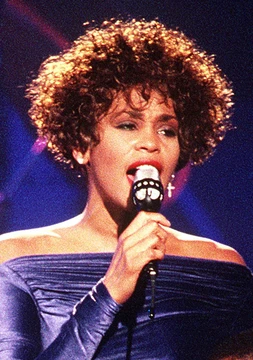
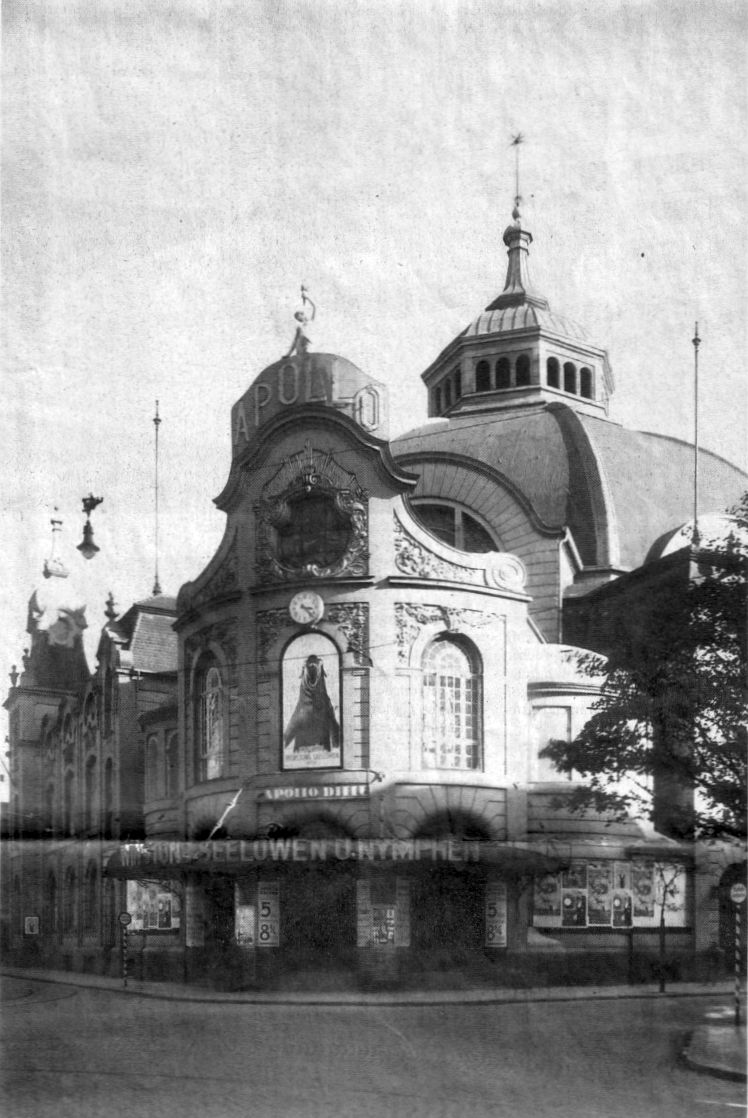
The Apollo Theater
Where a voice either owns the room or the room owns you back.

Unknown author · Public domain
The Apollo Theater is a legendary performing-arts venue in Harlem, New York City, and one of the most culturally significant stages in American music history. For fans of Whitney's career, the Apollo is more than a backdrop. It is the crucible where raw talent is tested, where a voice either commands the room or is sent home, and where the lineage of performers stretches back generations. Whitney Houston's connection to that world of live, in-your-face performance—where the audience is the judge and the stage is the arena—finds its purest expression in the spirit of the Apollo.
Quick Facts
- Location
- 253 West 125th Street / Manhattan, New York
- Renovated
- 1934, 1978, 1982–1988, 2002–2005
- Expanded
- 2024
- Public Transit
- Subway: 125th Street
- Operator
- Apollo Theater Foundation
- Seating Type
- fixed
- Capacity
- 1,500 (approximate)
Facts from the source article.
Lore & Background
The Apollo Theater has stood at the crossroads of Harlem for decades as a temple to Black musical excellence. Its walls have absorbed the echoes of gospel choirs, jazz ensembles, soul singers, and dancers whose names became household words. The venue's most enduring tradition—Amateur Night—turns every audience into a jury, every set into a trial, and every standing ovation into a coronation. Whitney's performances were defined by an almost physical relationship with the audience: she leaned in, she held a note until the singer's voice and the crowd's breath became one instrument. That instinct—to treat a live show as a communal act, to make the room feel like a church service or a family gathering—maps directly onto the ethos of the Apollo, where the performer and the crowd are locked in a pact of mutual vulnerability. Fans often note that Whitney's greatest live moments carried the energy of a Harlem stage: unfiltered, generous, and slightly dangerous. The Apollo also represents continuity. Generations of performers who walked its stage before Whitney—singers, dancers, comedians—created a lineage that she inherited without even knowing it. Every time she hit a high note and the audience gasped, she was echoing a tradition that had been tested and refined in that very neighborhood for decades. In fan discussions, the Apollo is often invoked as the 'real' Whitney: the one who performed for people, not for a camera.
Reader's Guide
The Apollo Theater is a historic live-performance venue located in the heart of Harlem, New York City. It functions as a cultural institution and a working theater, hosting concerts, dance performances, comedy shows, and its legendary Amateur Night competition. It embodies the live, communal, audience-driven performance culture that underpinned Whitney's artistry. While her career was built in studios and on international tours, the spirit of the Apollo—the idea that a voice must earn its audience in real time, in front of real people who can boo as easily as they can cheer—is the philosophical foundation of her best live work. What makes the Apollo matter to fans is its role as a living archive. It is a place where the past is not preserved behind glass but performed, tested, and reinterpreted every single night. For anyone trying to understand where Whitney's power came from—the physicality, the gospel cadence, the sense that singing was an act of communal worship rather than solo exhibition—the Apollo is the neighborhood, the church, the stage, and the audience all at once. It is the world that made her possible.
Did You Know?
- The Apollo's Amateur Night has been running for decades and is widely regarded as one of the most competitive and prestigious amateur performance competitions in the United States.
- The theater's location in Harlem places it at the center of one of the most historically significant African American cultural neighborhoods in the world.
- The Apollo has served as a launching pad for countless performers who went on to national and international fame, making it a de facto talent incubator for Black music and entertainment.
- Whitney Houston's live performances were frequently described by fans and critics as carrying the energy and intimacy of a small-venue gospel show, even when she was performing in arenas of tens of thousands.
Gallery
Frequently Asked Questions
What is The Apollo Theater and where is it located?
The Apollo Theater is a historic performing-arts venue in Harlem, New York City, that has anchored African American music and entertainment for generations. It is perhaps best known for its weekly Amateur Night competition and its reputation as a proving ground where a voice either commands the room or is sent home.
What makes Amateur Night at the Apollo so famous?
Amateur Night is the theater's open-mic showcase where aspiring performers get one shot in front of a live, unforgiving crowd, and the audience itself decides who advances. It became a cultural institution because it stripped away polish and tested whether raw talent could truly own the stage in real time.
How does The Apollo Theater connect to Whitney Houston's musical world?
The Apollo embodies the exact ecosystem of gospel, R&B, and live showmanship that shaped Whitney's artistry from New Jersey church basements all the way to global stadiums. In her story it functions less as a single headline stop and more as the living symbol of the Black musical tradition she carried forward.
Why do Whitney fans consider The Apollo an important part of her legacy?
For fans, the Apollo represents the crucible where unfiltered, audience-tested performance was the currency of success—the same standard that ran through Whitney's training and live sets. It reminds listeners that her power was rooted in a community tradition of singing to fill a room, not just a recording booth.
Is The Apollo Theater still open and hosting shows today?
Yes, the Apollo continues to operate as an active live-performance venue in Harlem, booking concerts, theatrical productions, and its long-running Amateur Night competitions. Its ongoing presence keeps the thread of Black musical storytelling alive for new generations of artists and audiences.
More in Places & Venues
Elsewhere in Whitney Houston
Spotted an error? Know more?
Reader corrections go straight into our review queue. Suggest an edit · How this site is sourced