
Tele-Fever
A budget second-generation console from a German coffee roaster.

Max Mustermann · CC BY-SA 2.0
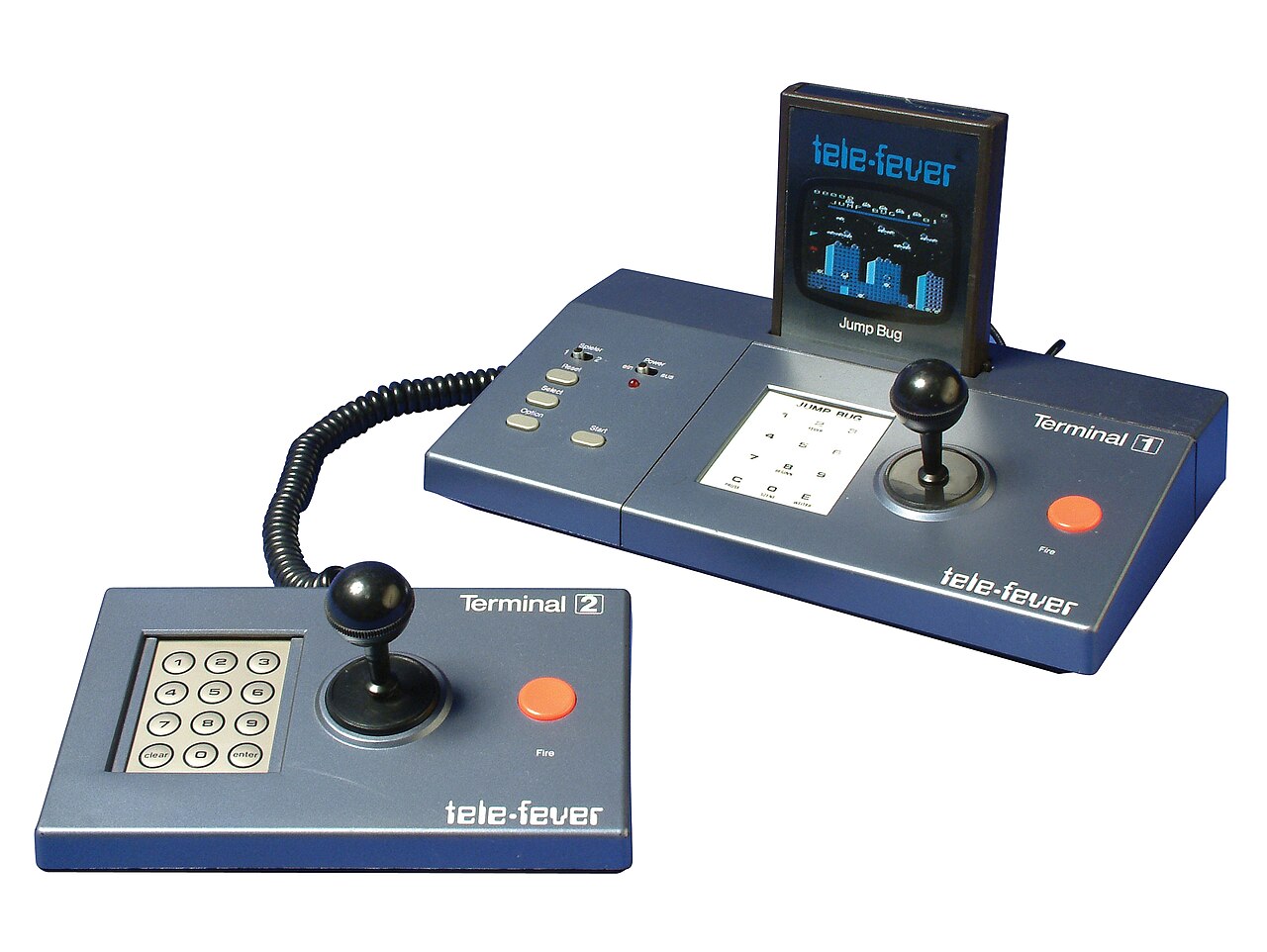
The Tele-Fever (stylized as tele-fever) is a second-generation home video game console released and marketed by German coffee roaster chain Tchibo in 1986 exclusively in Germany. It is one of the last variants of the Emerson Radio Arcadia 2001 and is compatible with all software from that platform. Manufactured in very small quantities, the console was produced for only a short time before discontinuation.
Quick Facts
- Graphics
- 9 colors
- Sound
- 1 channel
- Controllers
- 1 hardwired joystick-based game controller, 1 is built in the console
- Successor
- Retro-Mini-Spielekonsole
- Release Date
- Germany: 1986
- Developer
- Tchibo
- Family
- Arcadia 2001
- Generation
- Second generation
- Availability
- 1986-?
- Price
- 99 Deutsche Mark (DM)
- Media
- ROM cartridges
- Power
- 15 V DC, 600 mA
Facts from the source article.
Lore & Background
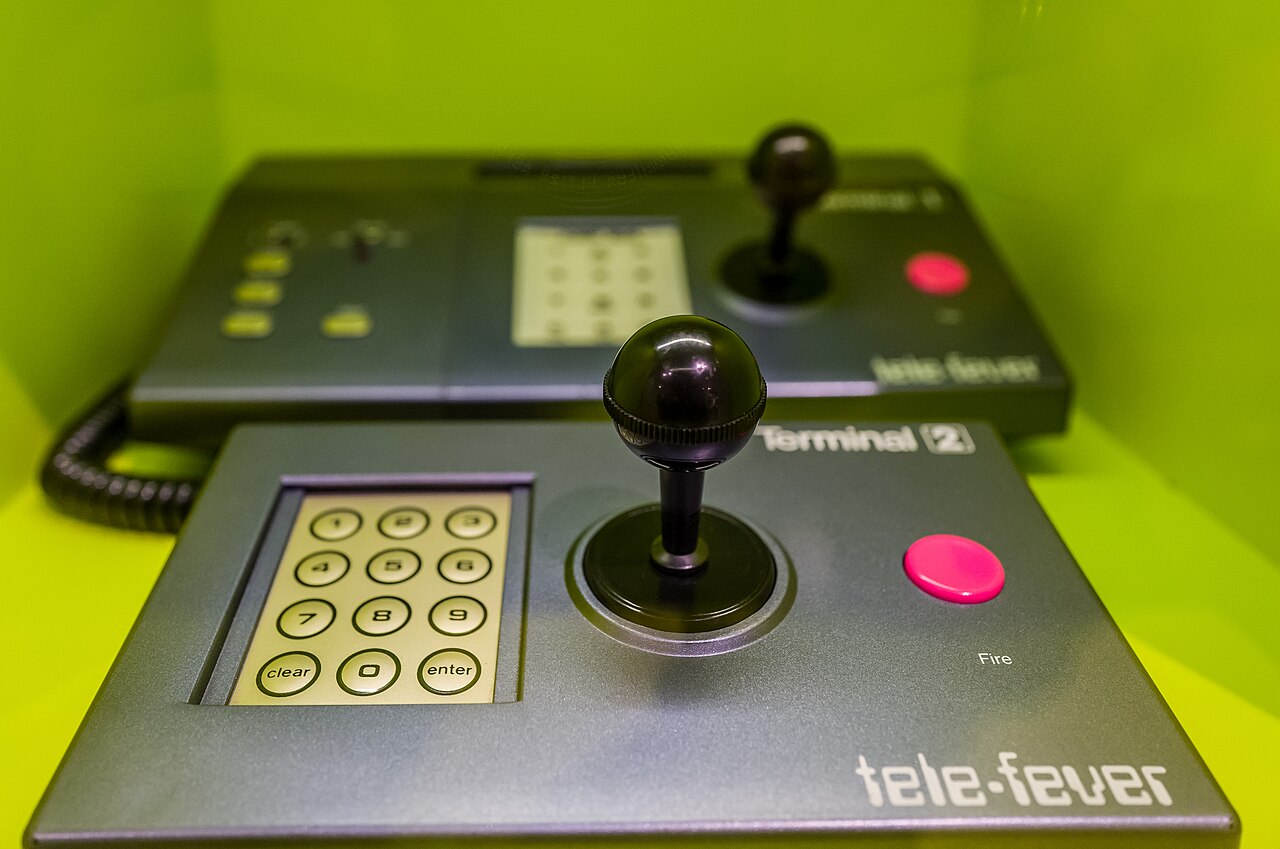
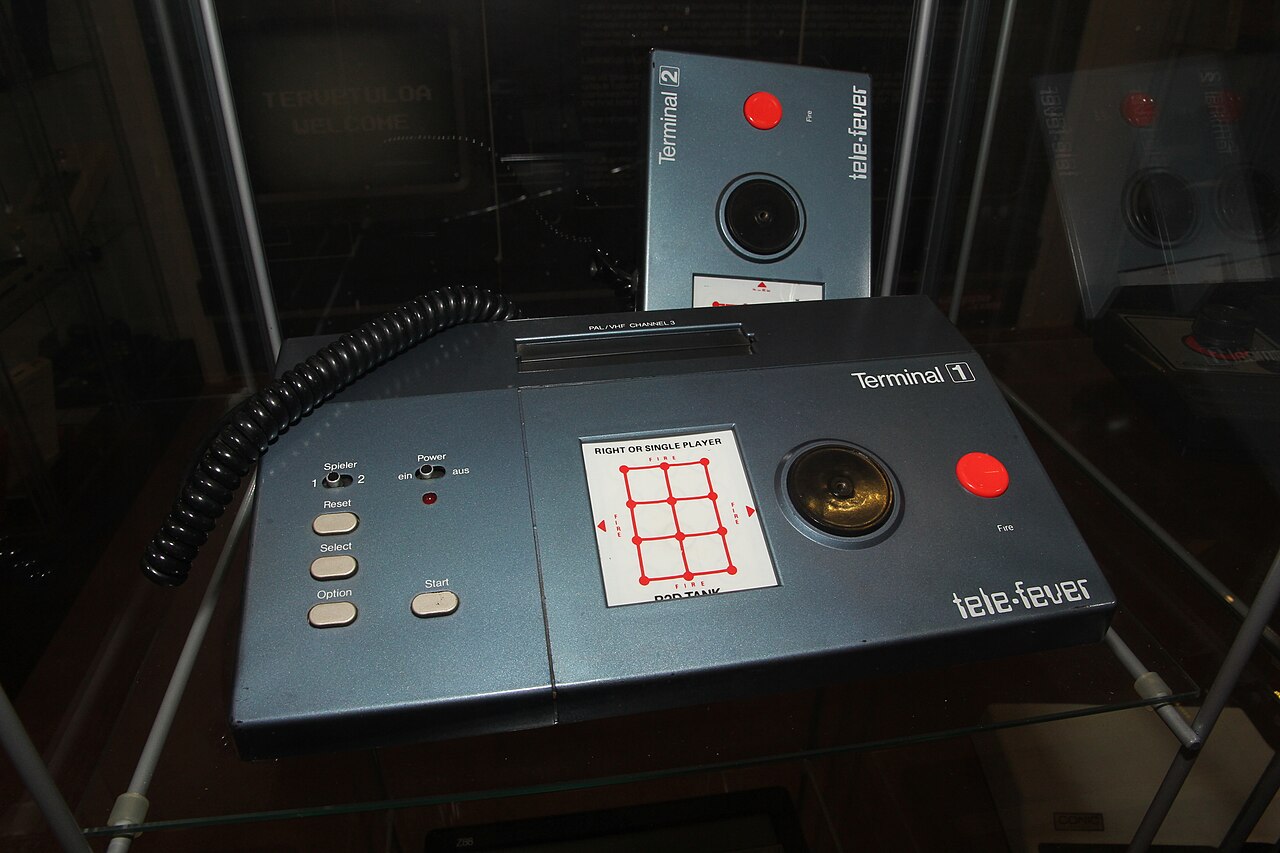
The Tele-Fever was released by Tchibo, a German coffee roaster chain, in 1986 at a list price of 99 DM. It is a variant of the Emerson Radio Arcadia 2001, making it compatible with all software from that system. The console was manufactured in very small quantities and only a few games were released for it; production ended after a short time. The system uses an 8-bit Signetics 2650 CPU clocked at 3.58 MHz, with 1 kB of RAM and no ROM. It displays 9 colors: 4 for characters, 4 for sprites, and 1 for the background. Sound is provided by a single channel. Input comes from one hardwired joystick-based game controller built into the console, with 12 buttons. Power is supplied by 15 V DC at 600 mA.
Reader's Guide
The Tele-Fever was a weak console compared to other available consoles around its release time, but its low price made it attractive. It was mostly sold as a budget item in Tchibo sections of discounters. Some people find the design of the Tele-Fever quite appealing. The console is rarely offered today due to its small production run. In 2019, Tchibo released another console, the Retro-Mini-Spielekonsole, an 8-bit dedicated handheld with 153 pre-installed retro games costing €14.99. That device is a clone of several similar handhelds, including Thumbs Up's Retro Arcade Games, Monsterzeug's Retro Arcade, Radbag's Retro Mini-Spielekonsole, ORB's spielesammlung Retro Pocket junior, and Karsten International's Arcade Game Portable Console, which was also released under the name Retro Pocket Spiele/Retro Pocket Games in Germany in cooperation with Woolworth.
Did You Know?
- The Tele-Fever was sold by German coffee roaster chain Tchibo.
- The console has one hardwired joystick-based controller built into the unit.
- In 2019, Tchibo released a handheld clone called the Retro-Mini-Spielekonsole.
From Playing Cards to Pixels – Nintendo's Pivot
By the late 1970s, Nintendo was a company known for toys and playing cards, but two forces pushed it toward a new frontier. The 1973 oil crisis made toy production prohibitively expensive, while Taito's arcade hit Space Invaders in 1978 demonstrated the explosive demand for electronic entertainment. Nintendo's first tentative step was the arcade cabinet Computer Othello in 1978, followed by titles like Sheriff, Space Fever, and EVR Race. Most of these arcade efforts underperformed, yet they convinced leadership that video games represented the company's next great market. The home console space was already heating up, especially after Atari's Pong system in 1972 triggered a flood of video-tennis clones across North America. Nintendo decided to bring that excitement to Japanese living rooms. Because the company had zero experience manufacturing electronics, it partnered with Mitsubishi Electronics, which had already handled production of EVR Race. For the first two home consoles, Nintendo licensed the Pong concept from Magnavox, the original creator of the game for its Odyssey system. President Hiroshi Yamauchi set a clear directive: build these machines fast, use cheap components, and keep the retail price low enough to give consumers a competitive edge.
Five Consoles, One Philosophy
Between June 1977 and December 1980, Nintendo released five dedicated home consoles in Japan, each built around a single built-in game with multiple variations. The Color TV-Game 6 (June 1, 1977, ¥9,800) offered six Pong-style modes and could run on batteries or a separately sold adapter. A week later, the Color TV-Game 15 (¥15,000) unlocked all fifteen of those same games and added detachable controllers stored in a built-in compartment. The Racing 112 (June 8, 1978) was a much larger unit featuring a detachable steering wheel and a top-down racing game with 112 possible combinations; its price was slashed from ¥18,000 to ¥12,000 and eventually ¥5,000 to stay competitive. Block Kuzushi (April 23, 1979, ¥13,500) brought six Breakout-style variations to the living room, with its casing designed by a young Shigeru Miyamoto in one of his earliest Nintendo projects. The final entry, the Computer TV-Game (December 12, 1980), housed an arcade-perfect version of Computer Othello using the original arcade system board, a rarity in the early 1980s. Miyamoto again handled the white casing and packaging design.
A Sales Record That Still Stands
The Color TV-Game series achieved something no other first-generation home console could match: it sold three million units across its first four models. The Color TV-Game 6 and Color TV-Game 15 each moved one million units, while the Racing 112 and Block Kuzushi each sold half a million. These figures make the series the best-selling line in the entire first generation of video game consoles. A major factor was Nintendo's aggressive pricing philosophy, championed by president Hiroshi Yamauchi, who insisted on cheap components and fast production cycles to keep retail prices well below competitors. The TV-Game 6's ¥9,800 tag was a deliberate marketing weapon, and the Racing 112's price was cut twice—first from ¥18,000 to ¥12,000, then all the way down to ¥5,000—to maintain that edge. Nintendo also leveraged promotional tie-ins, such as a limited-quantity TV-Game 6 bearing the House Shanmen instant-noodle logo for a food-company partnership, and Sharp Electronics bundled dark-orange TV-Game 6 units with its television sets.
The Bridge to the Family Computer
The Color TV-Game series was not merely a product line; it was the proving ground that carried Nintendo from a toy maker into the video-game industry. The partnership with Mitsubishi Electronics, the licensing of Magnavox's Pong concept, and the in-house design work of young employees like Shigeru Miyamoto and Takehiro Izushi all laid the groundwork for what would come next. Miyamoto's contributions to the Block Kuzushi and Computer TV-Game casings were among his first video-game projects after joining Nintendo in 1977, and the Computer TV-Game's use of a genuine arcade Othello board showed the company's ambition to deliver authentic experiences at home. As dedicated single-game consoles lost momentum by 1980, the Computer TV-Game was produced in only limited quantities, making it extremely rare today. Nintendo ultimately ceased production of the entire series when it launched the Family Computer on July 15, 1983, a multi-game successor that carried the company forward. The Color TV-Game era, though brief and Japan-only, remains the foundational chapter of Nintendo's console legacy.
Gallery
Frequently Asked Questions
What is the Tele-Fever?
The Tele-Fever is a budget second-generation home video game console that hit shelves in Germany in 1986. It is a rebranded variant of the Emerson Radio Arcadia 2001, so it shares the same underlying hardware architecture.
Who sold the Tele-Fever and why a coffee company?
Tchibo, a well-known German coffee roaster chain, handled the marketing and retail of the console rather than a dedicated electronics firm. It was a short-lived, low-volume product that was pulled from the market after only a brief production run.
What games can I play on the Tele-Fever?
Because it is a direct hardware variant of the Emerson Radio Arcadia 2001, the Tele-Fever accepts the full cartridge library of that platform. Any title released for the Arcadia 2001 will run on it without modification.
What are the Tele-Fever's key technical specs?
The system is powered by a Signetics 2650 CPU running at 3.58 MHz with just 1 kB of RAM. Its display supports nine colors total, divided into four for text characters, four for sprites, and one for the background.
Why is the Tele-Fever so rare to find today?
Tchibo manufactured the console in very small quantities and discontinued it after only a short window on the market. Its Germany-only availability and limited production run make surviving units a notable find for collectors.
More in Video Game Consoles by Generation, Part 6 1-24
Spotted an error? Know more?
Reader corrections go straight into our review queue. Suggest an edit · How this site is sourced