
Coleco Telstar Marksman
A dedicated Pong-based console with a light gun and six built-in games.

Sintegrity · CC BY-SA 4.0
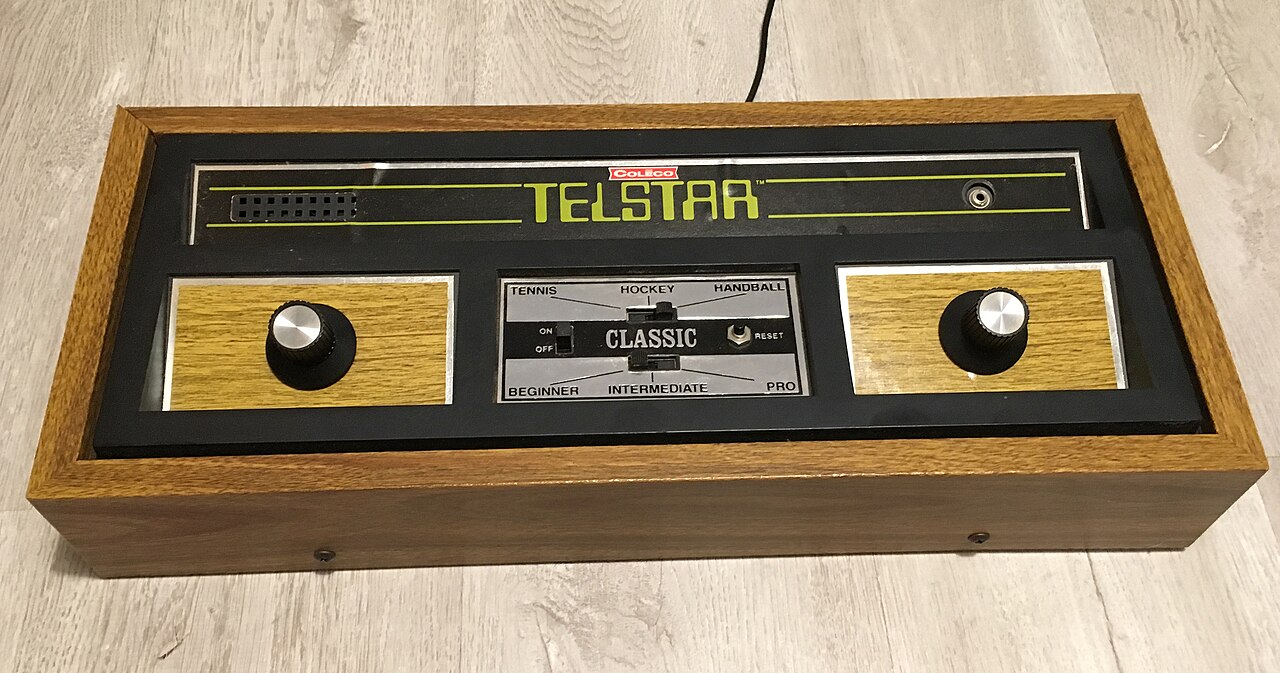
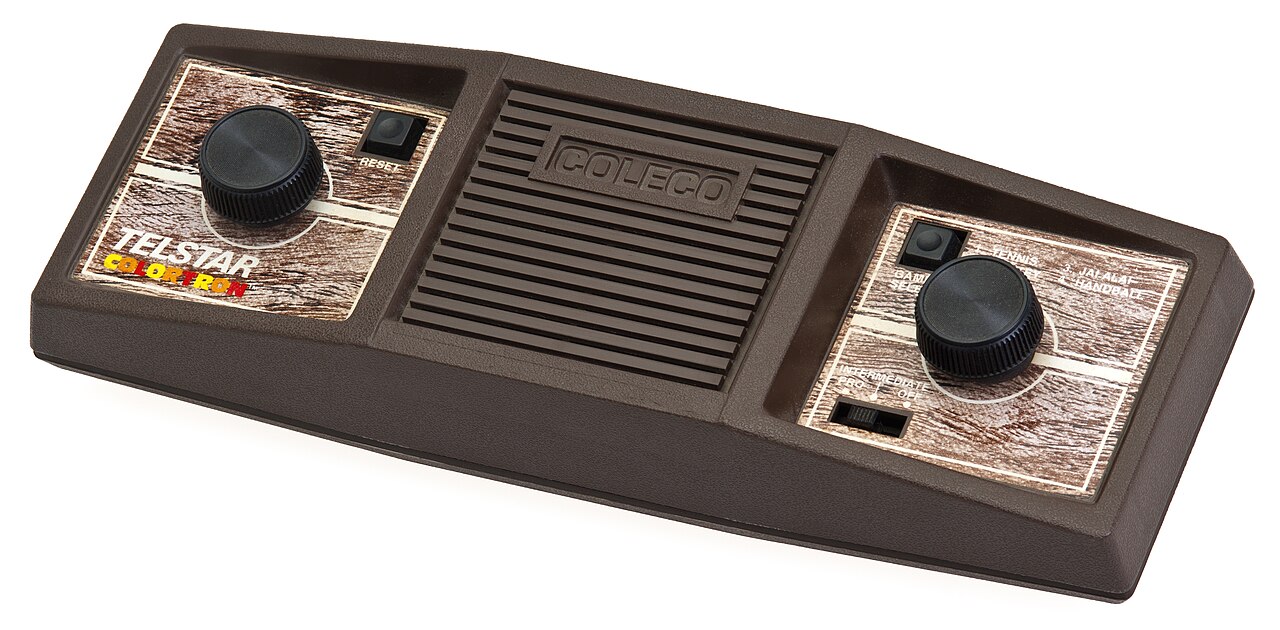
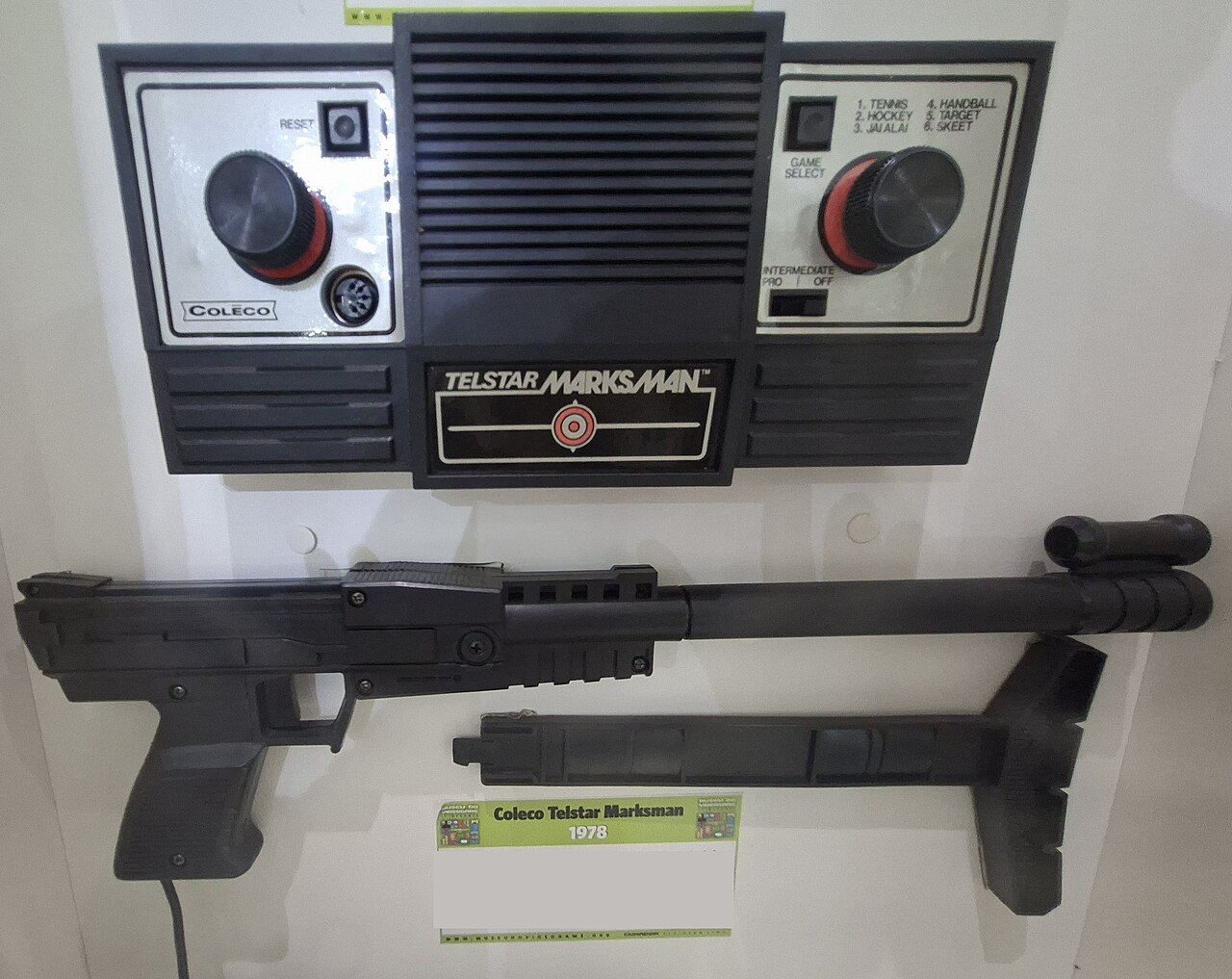
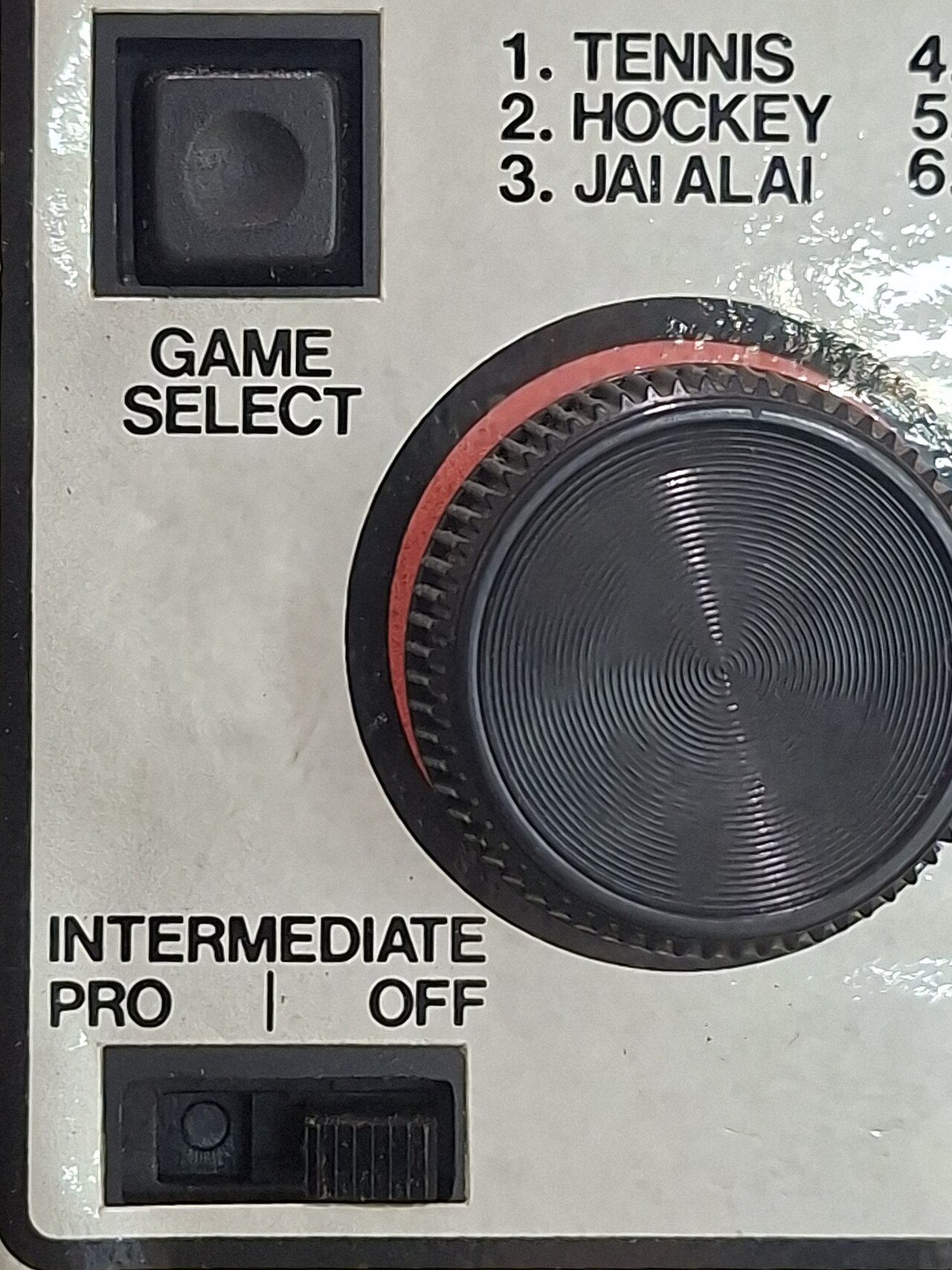
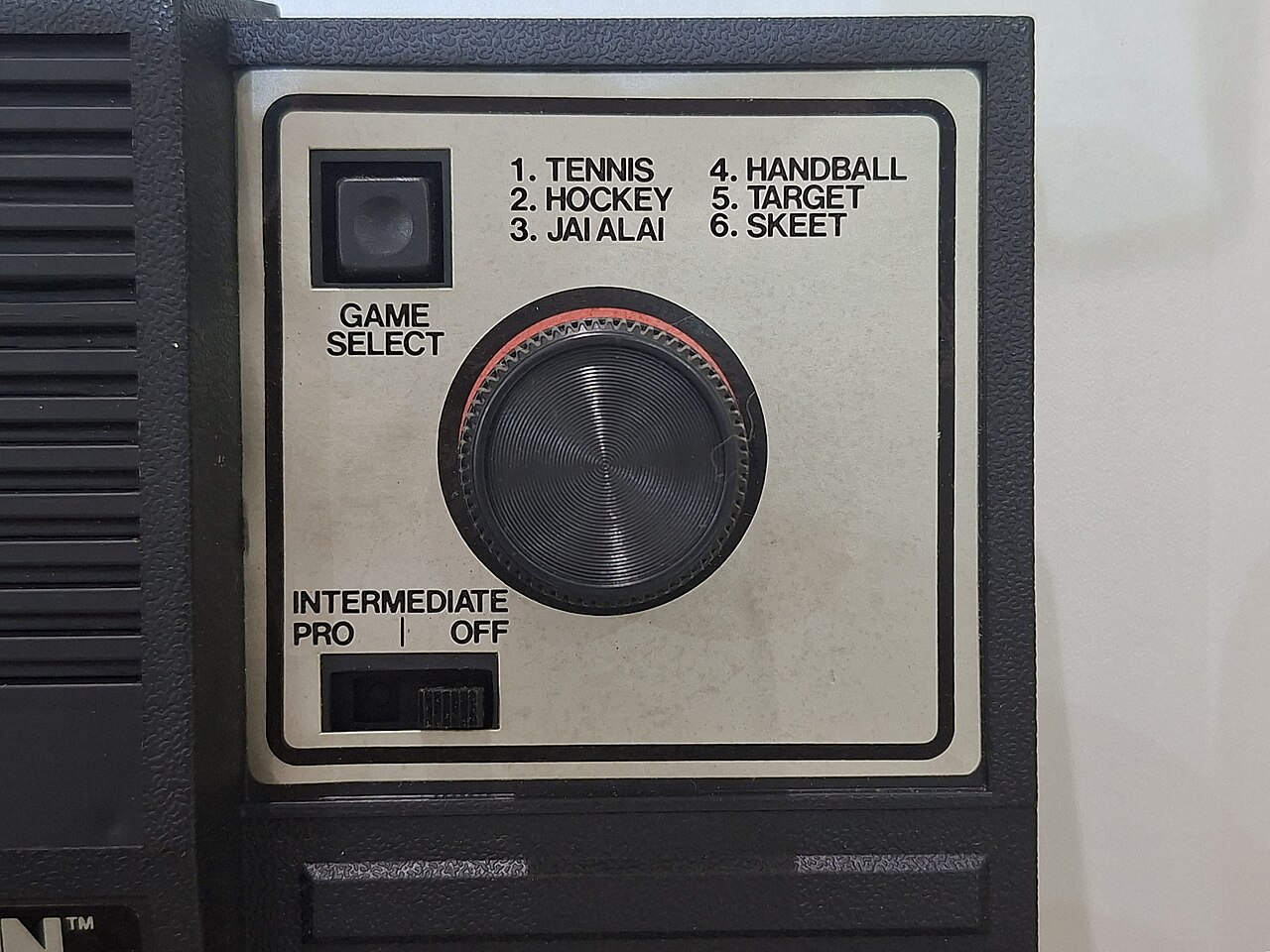
The Coleco Telstar Marksman, often called the Telstar Marksman, is a dedicated first-generation home console released by Coleco in 1978. It is built around a light gun and is essentially a Coleco Telstar Colortron paired with a "3 in 1" light gun and two shooting games. The console is part of the Telstar series of Pong-based systems, and its games are fixed by the manufacturer. The Marksman light gun is a pistol with an attachable stock and barrel, similar in design to the later Stack Light Rifle and Sega Menacer; the elongated barrel includes a simple aiming sight. Two paddle controllers are built directly into the console. Features include on-screen digital scoring and three difficulty settings: beginner, intermediate, and pro. The system runs on two nine-volt batteries or Coleco's Perma Power AC adaptor. A Sears-branded version, the Gunslinger II, has a beige plastic shell instead of black and an extra decal on the gun's stock. The console comes with six color games: Tennis, Hockey, Handball, Jai-Alai, Skeet, and Target. The first four are variations on Pong, differing in paddle count, number of players, and the playing surface. The last two are single-player shooting games using the light gun: Skeet has the player shoot a square moving diagonally across the screen in one direction, while Target makes the same square bounce around. All games are very simple compared to later titles.
Quick Facts
- Aka
- Telstar Marksman
- Developer
- Coleco
- Generation
- First generation
- Units Sold
- Unknown
- Power
- Two x nine-volt batteries, (Optional Coleco Perma Power AC adaptor)
- Cpu
- General Instrument AY-3-8512 chipset
- Display
- GX-10
- Graphics
- 4 simultaneously displayed colors
- Sound
- One channel beeper
- Input
- RF TV video output, Gun connector
- Controllers
- Two paddle controllers built-in, a light gun
- Dimensions
- 2 × 11.25 × 5 inch (height x wide x depth)
Facts from the source article.
Lore & Background
The Coleco Telstar Marksman is a dedicated home video game console released by Coleco in 1978. It is part of the Coleco Telstar series of Pong-based consoles and is essentially a Coleco Telstar Colortron bundled with a '3 in 1' light gun and two shooting games. The Marksman light gun is a pistol that features an attachable stock and barrel, similar in this regard to the later-released Stack Light Rifle and the Sega Menacer. The elongated barrel included a simple aiming sight. In addition to the light gun, the system featured two paddle controllers built directly into the console. Its reported features included 'on-screen digital scoring' and three different difficulty settings: beginner, intermediate, and pro. The console required two nine-volt batteries or Coleco's Perma Power AC adaptor to power the system. There was also a Sears-branded model called the Gunslinger II, which has a beige plastic shell instead of black, and an extra decal on the stock of the gun.
Reader's Guide
The Coleco Telstar Marksman represents an early attempt to incorporate a light gun into a home video game console, bundling it with a Pong-based system. The console came with six color games: Tennis, Hockey, Handball, Jai-Alai, Skeet, and Target. The first four games are variations on Pong, with differences in the number of paddles, players, and the main surface to bounce objects off of. The last two games are single-player shooting games that utilized the light gun. Skeet consisted of aiming and shooting at a square that moved diagonally across the screen in one direction, while Target was a variation that made the same square bounce around on the screen. All of the games are incredibly simple compared to the games of today or even the early 1980s. The console's significance lies in its role as a dedicated console that combined standard Pong-style play with a light gun accessory, a feature that would later appear in more advanced systems. The Sears-branded Gunslinger II model indicates the console was also sold through retail partnerships, broadening its distribution.
A Notable Name in the First Generation
The Coleco Telstar series occupies a distinguished position among the defining hardware of video gaming's inaugural era, spanning 1972 to 1983. Alongside the Magnavox Odyssey family, the Atari Home Pong, and Nintendo's Color TV-Game line, the Telstar consoles represent the small group of machines that collectively established what a home video game system could be. This first generation was a brief but formative window in which the very concept of interactive entertainment in the living room was being tested and refined. The Telstar line emerged during a period when the market was still young and fragile—many manufacturers would eventually withdraw as sales slumped in 1978, and the generation itself drew to a close with the discontinuation of the Computer TV-Game in 1983. For a console in the Telstar family, being part of this cohort meant participating in the foundational chapter of an industry that was still finding its footing, competing against the shadow of the Odyssey and the momentum of Atari's Pong franchise.
Built on Discrete Logic, Not Code
The Coleco Telstar consoles, like all first-generation systems, operated without a microprocessor. Instead of executing software instructions, these machines relied on custom codeless state machine architectures built from discrete logic components—specifically TTL transistor-transistor logic circuits. This meant that the behavior of every game was physically wired into the hardware rather than loaded from a program. The result was a fundamentally different engineering philosophy from later generations: what appeared on the screen was the direct output of a fixed electronic pathway, not the output of a general-purpose processor running instructions. This approach made the consoles simple and reliable but also rigid. There was no flexibility to load new software; the experience was whatever the circuitry allowed. For the Telstar series, this architectural choice placed it firmly in the technological lineage that began with Ralph Baer's Brown Box prototypes in the late 1960s, where the entire game logic was a matter of wiring and component arrangement rather than programming.
Simple Geometry and Altered Play
The visual and auditory experience offered by first-generation consoles like those in the Coleco Telstar family was deliberately modest. Graphical output consisted of basic geometric elements—dots, lines, and blocks—confined to a single screen. Color palettes were extremely restricted; most first-generation hardware could not render more than two colors simultaneously, and that capability only appeared later in the generation. Audio, where it existed at all, was minimal, and some consoles in this era produced no sound whatsoever. Gameplay variety was achieved not through complex programming but through physical accessories and game cards that, when plugged into the console, modified its underlying circuitry to produce a different experience. Because most titles were hard-wired into the machine, users could not simply swap in a new cartridge to play a different game the way later generations would allow. The Telstar series, like its contemporaries, relied on this accessory-and-modification model to give players a sense of choice and variety within the constraints of fixed hardware.
The Closing of a Pioneering Chapter
The Coleco Telstar series existed within a market that was both promising and precarious. The first generation of home consoles, running from 1972 to 1983, saw the industry's earliest attempts to bring interactive entertainment into the living room, but the commercial landscape was volatile. By 1978, a significant market decline had already driven many manufacturers out of the business entirely, well before the generation's official end. The final marker of this era came with the Computer TV-Game, whose discontinuation in 1983 signified the transition to the second generation of consoles. For the Telstar line, this meant operating in a window where the novelty of home gaming was still fresh but consumer confidence was fragile. The broader context included the founding of Atari in 1972, the release of the Odyssey that same year, and Nintendo's 1977 entry with the Color TV-Game series—all events that shaped the competitive and cultural environment in which a Coleco Telstar console was expected to attract and hold a player's attention.
Gallery
Frequently Asked Questions
What is the Coleco Telstar Marksman?
It is a dedicated first-generation home video game console that Coleco released in 1978. The system is built around a light gun and pairs a Pong-style display with six fixed, non-removable games, making it a step beyond the basic Telstar Colortron units.
What controllers does the Telstar Marksman include?
The console ships with a pistol-shaped light gun that has an attachable stock and barrel, plus two paddle controllers built directly into the console's body. The light gun's elongated barrel also features a simple aiming sight for targeting on-screen objects.
How do you power the Coleco Telstar Marksman?
You can run it on two nine-volt batteries or plug in Coleco's Perma Power AC adaptor. There is no internal rechargeable battery, so you must choose one of those two options each time you play.
How is the Telstar Marksman light gun similar to later light guns?
Its pistol-with-attachable-stock-and-barrel design closely resembles the Stack Light Rifle and the Sega Menacer that appeared in later generations. The simple sight on the barrel and the modular stock-and-barrel layout made it a recognizable precursor to those well-known accessories.
Why do retro-gaming fans consider the Telstar Marksman significant?
As a 1978 dedicated console, it sits at the very beginning of home video game history and represents one of the earliest consumer light-gun experiences outside of arcade cabinets. Its fixed six-game lineup and Pong-based gameplay also illustrate how limited first-generation console design was before cartridge systems arrived.
More in Video Game Consoles by Generation, Part 6 1-24
Spotted an error? Know more?
Reader corrections go straight into our review queue. Suggest an edit · How this site is sourced