
Atari Jaguar CD
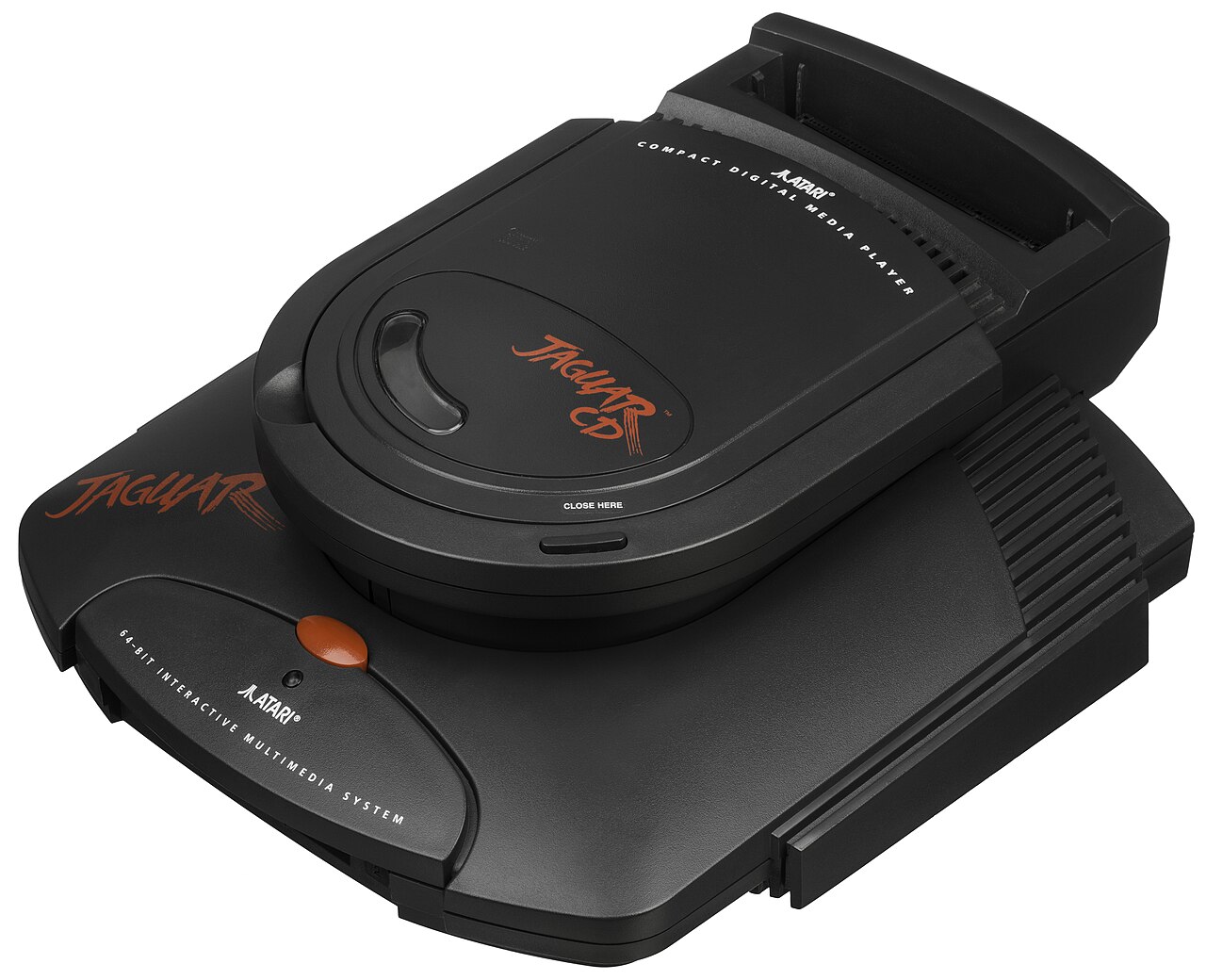
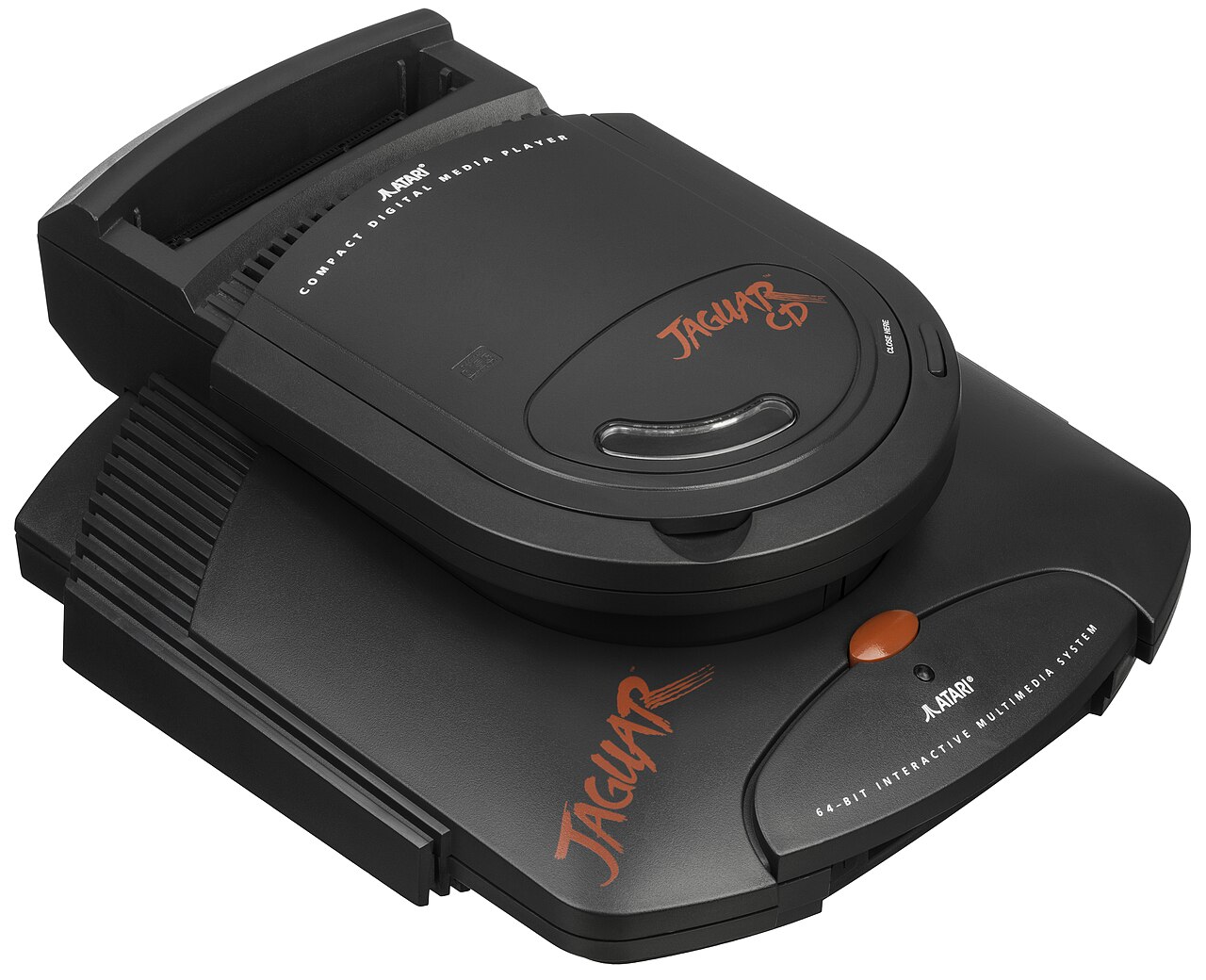
CD-ROM add-on for the Atari Jaguar with 13 commercial releases.

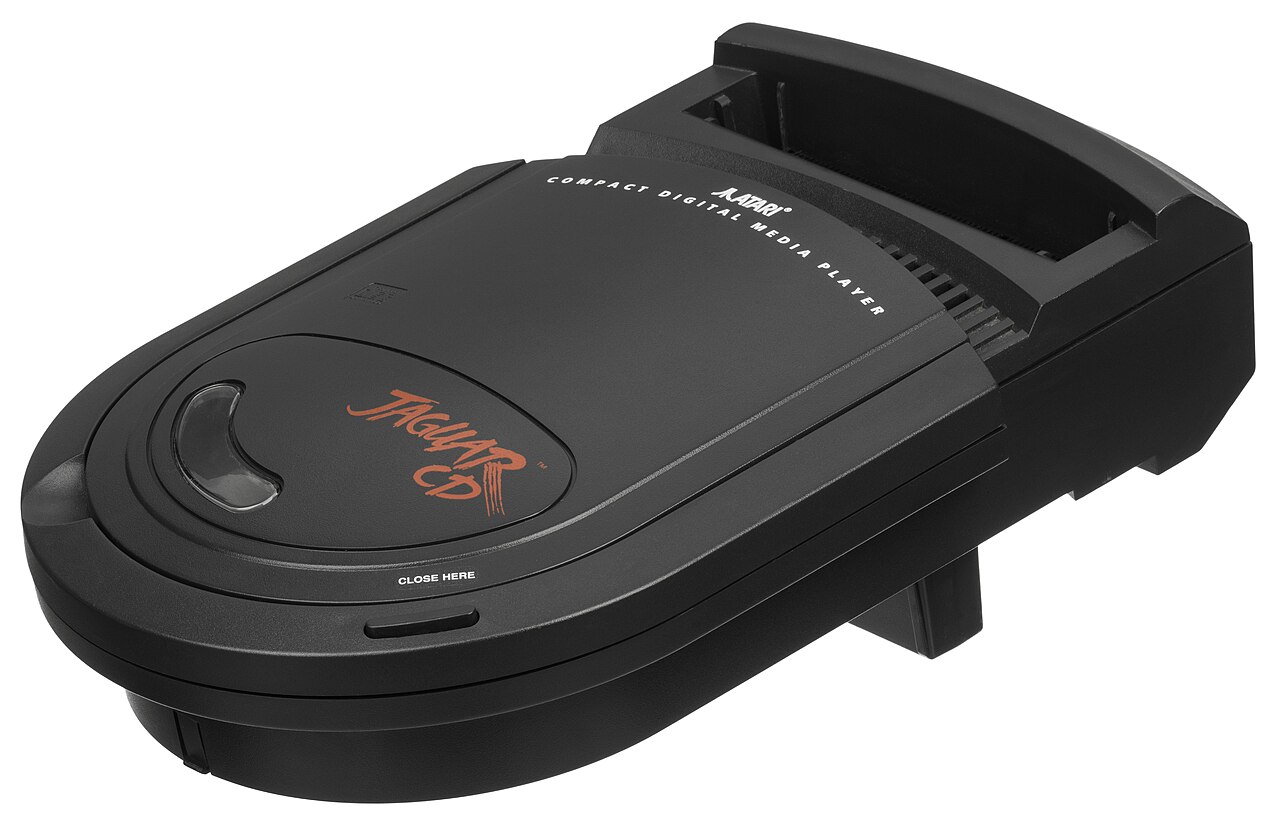
Evan-Amos · Public domain
The Atari Jaguar CD is an add-on that plays CD-ROMs through the Atari Jaguar console. Only thirteen commercial games were made for it, though later releases include unfinished titles and homebrew projects.
Atari announced a CD-ROM drive for the Jaguar before the system launched in November 1993. Originally called Jaguar II during development, it finally came out on September 21, 1995. It was supposed to arrive for the 1994 holiday season but faced several delays. In mid-1994, Atari partnered with Sigma Designs to create a PC expansion board that would let Jaguar CD games run on home computers, aiming for a late 1994 release, but that product never shipped.
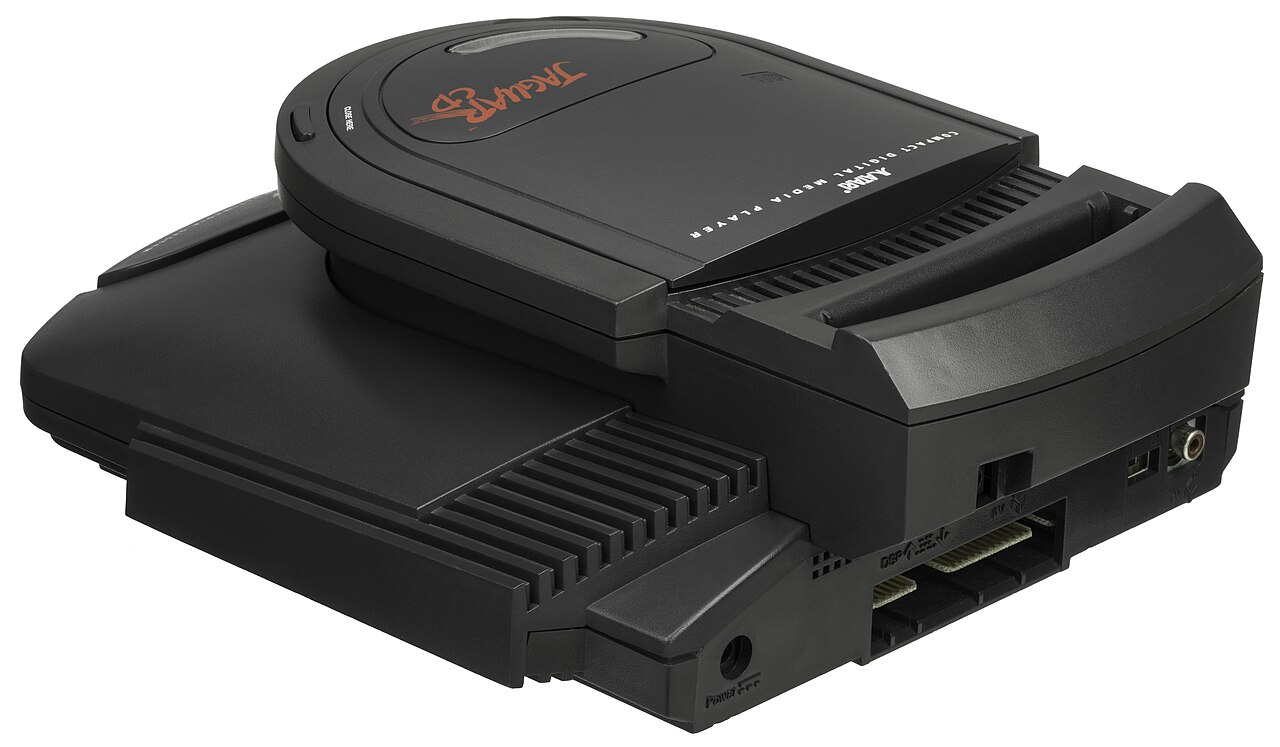
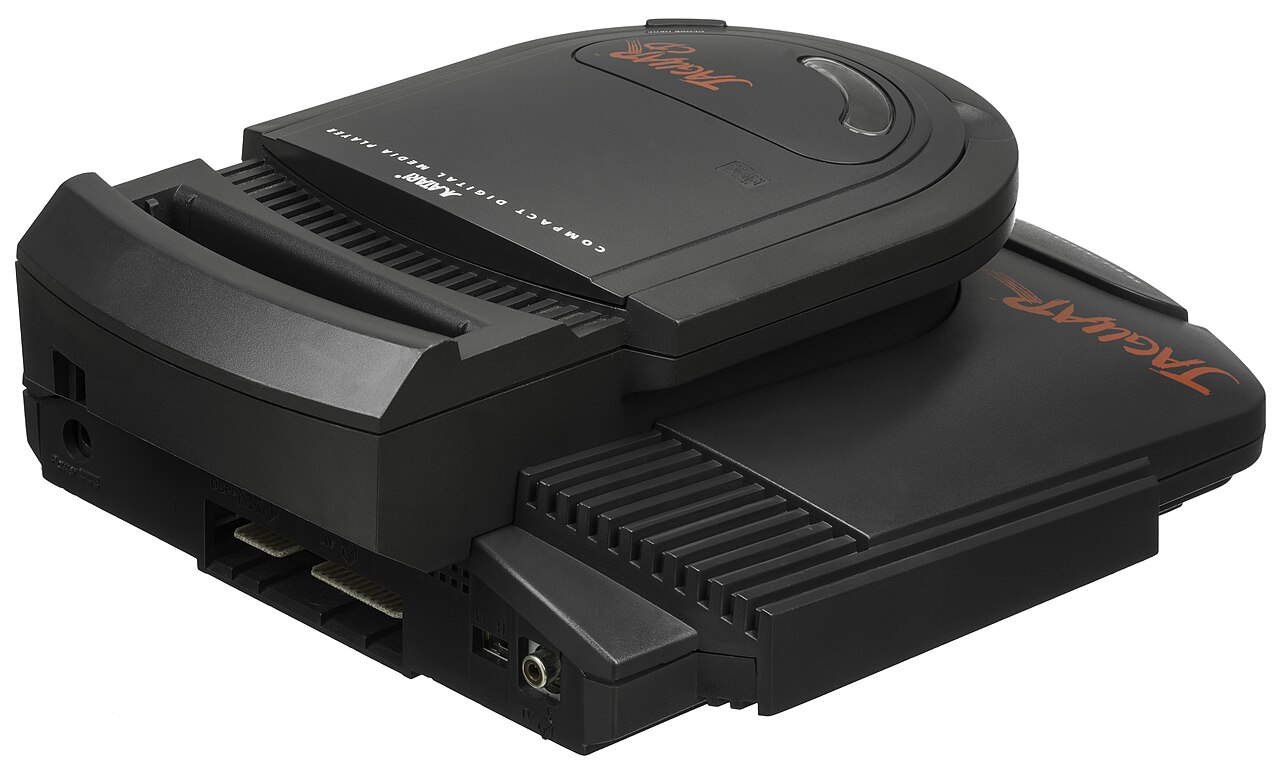
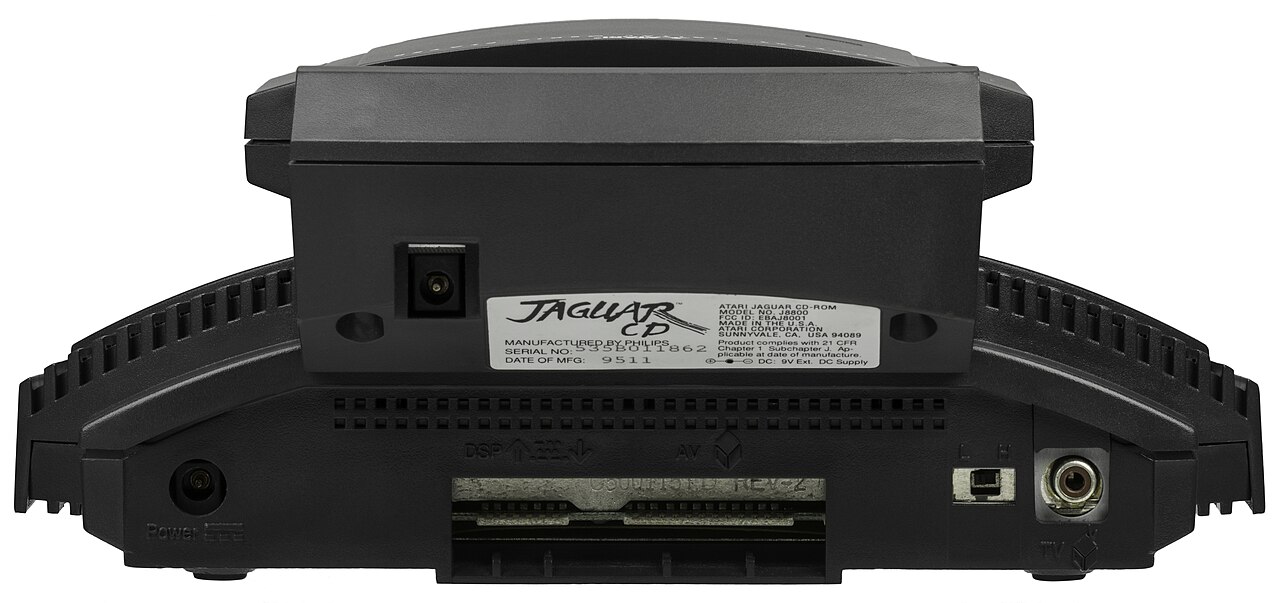
The drive plugs into the Jaguar’s cartridge slot and includes a pass-through slot so you can still use cartridges alone or together with a CD. A Memory Track cartridge saves game positions and high scores. Many reviewers criticized the Jaguar CD’s appearance, comparing it to a toilet.
The unit has a double-speed (2×) drive and built-in VLM (Virtual Light Machine) software by Jeff Minter, which uses a spectrum analyzer to generate video light shows for audio CDs. It came bundled with *Blue Lightning*, *Vid Grid*, the *Tempest 2000* soundtrack CD, and a demo disc for *Myst*. Each startup screen is different, using the VLM to create a random light show.
Jaguar CDs hold up to 790MB, more than standard CD-ROMs. The format is based on audio CDs rather than typical data CD formats, allowing extra storage and making casual piracy harder, but at the cost of weaker error correction.
Quick Facts
- Manufacturer
- Atari Corporation
- Generation
- Fifth
- Discontinued
- 1996
- Media
- CD-ROM
- Release Date
- September 21, 1995
Facts from the source article.
Lore & Background
Atari Corporation announced a CD-ROM drive for the Jaguar before the console's November 1993 launch. Codenamed Jaguar II during development, the Jaguar CD was released on September 21, 1995. It was originally scheduled for launch during the 1994 holiday shopping season, with multiple delays. In mid-1994, Atari and Sigma Designs signed an agreement to co-develop a PC board that would allow Jaguar CD games to be played on home computers, with a scheduled release by the end of 1994; however, it was never released.
The drive fits into the ROM cartridge slot atop the console, with its own pass-through cartridge slot to optionally run software that uses cartridge only or that uses cartridge and CD in tandem. The Memory Track cartridge stores saved game position and high scores. Several publications have criticized the Jaguar CD's design for resembling a toilet.
The Jaguar CD has a double-speed (2×) drive and built-in VLM (Virtual Light Machine) software by Jeff Minter, using a spectrum analyzer for a sophisticated video light show for audio CDs. It is bundled with Blue Lightning, Vid Grid, the Tempest 2000 soundtrack CD, and a Myst demo disc. Every startup screen is unique, using the VLM for a random light show. Jaguar CDs can store up to 790MB, more than conventional CD-ROMs. Its proprietary CD format is based on the audio CD format, instead of standard CD-ROM data formats. It allows for more storage, and its incompatibility foils casual piracy, at the expense of reduced error correction.
Reader's Guide
The Jaguar CD represents Atari's attempt to extend the Jaguar's lifespan with CD-ROM technology, though it arrived late and with limited commercial support. Only 13 games were released for the peripheral, making its library one of the smallest for any major add-on. Its proprietary CD format, based on audio CD standards rather than conventional CD-ROM formats, allowed greater storage capacity (up to 790 MB) and hindered casual piracy, but at the cost of reduced error correction. The inclusion of Jeff Minter's Virtual Light Machine software, which generated unique light shows on every startup and for audio CDs, was a distinctive feature. The peripheral's design drew criticism from several publications for resembling a toilet. Despite its commercial failure, previously unfinished and homebrew games have since been released for the Jaguar CD, keeping the platform alive among enthusiasts.
Did You Know?
- Only 13 games were released for the Jaguar CD commercially.
- The Jaguar CD was codenamed Jaguar II during development.
From Flare Technology to a Company's Last Stand
The Jaguar's story began not in Atari's own design labs but at Flare Technology, a company founded by Martin Brennan and John Mathieson. In the early 1990s, this team was simultaneously developing two console projects: the Panther, a 16- or 32-bit machine, and the Jaguar, a more ambitious design. The team had pitched both systems as capable of outperforming the Genesis and Super NES while remaining cost-effective. When the Jaguar's design progressed faster than anticipated, Atari made the difficult call in 1991 to cancel the Panther entirely and pour all resources into the Jaguar. This decision landed at a pivotal moment: the Atari ST line of computers had already been eclipsed in popularity by the Amiga, and the broader Wintel wave was swallowing legacy platforms. Atari dropped its 8-bit products in January 1992 and ultimately canceled the ST computers during the Jaguar's 1993 release window, making the console the company's primary consumer hardware focus. The Jaguar was first unveiled at CES in Chicago in August 1993, with further showcases at CES 1994 and 1995.
A Launch That Could Not Find Its Footing
The Jaguar hit North American shelves on November 23, 1993, priced at $249.95 under a manufacturing agreement with IBM. Rather than a full nationwide rollout, Atari initially limited availability to test markets in New York City and San Francisco, pairing the console with the pack-in title Cybermorph and the slogan "Get bit by Jaguar." All units sold in those test cities, and a broader release followed six months later. Yet the system faced an uphill battle from the start. It entered the fifth generation of consoles but had to contend with the still-dominant fourth-generation machines, the Genesis and Super NES, which held massive installed bases. The game library was thin, and early titles like Trevor McFur in the Crescent Galaxy, Raiden, and Evolution: Dino Dudes drew poor reviews for failing to exploit the hardware's capabilities. Even when the Jaguar produced well-received entries such as Tempest 2000, Doom, Wolfenstein 3D, and Alien vs. Predator, these isolated successes could not match the steady stream of acclaimed software flowing to rival platforms. By the end of 1994, Atari had shipped roughly 100,000 units, a figure that underscored how difficult it was to build a meaningful install base.
The CD Add-On and the Long Goodbye
As the Jaguar's commercial trajectory continued to disappoint, Atari sought to extend the platform's relevance through the Jaguar CD add-on, a peripheral that expanded the system's library with disc-based titles. The company also leaned heavily on price as a differentiator, emphasizing that the Jaguar cost more than $100 less than its fifth-generation rivals, the Sega Saturn and Sony PlayStation, both of which entered the market in 1995. In total, 63 licensed games shipped for the platform before discontinuation, split between 50 cartridge titles and 13 CD-ROM releases. Despite these efforts, the Jaguar never found a sustainable niche. The complex multi-chip architecture, persistent hardware bugs, and inadequate programming tools made development a fraught experience for third parties, and underwhelming sales further eroded external support. Atari internally abandoned the system by the close of 1995 and was liquidating remaining inventory by 1996. The commercial failure proved so consequential that it prompted Atari to exit the console market entirely and restructure as a third-party developer. In Japan, distribution had been handled by Mumin Corporation rather than Atari Japan, with the console sold at 25 Toys "R" Us locations starting in December 1994, bundled with Alien vs. Predator.
Open Source and the Homebrew Renaissance
The Jaguar's story did not end with its commercial failure. In 1999, Hasbro Interactive, which had acquired all of Atari Corporation's properties, took the remarkable step of releasing the Jaguar's patents into the public domain and formally declaring the platform open. This act of liberation transformed the Jaguar from a defunct commercial product into a freely accessible development target. Since its discontinuation, the console has cultivated a devoted cult following among enthusiasts who appreciate its unique hardware and the creative possibilities it offers. A large and active homebrew community has emerged, producing new games for the system decades after Atari's original lineup of 63 licensed titles ceased. The Jaguar's legacy is thus a fascinating blend of commercial disappointment and enduring creative vitality. What began as a console that struggled to shake the stigma of Atari's troubled past and could not compete with the software ecosystems of Sega, Sony, or Nintendo has been reclaimed by a community that sees in its complex multi-chip architecture not a liability but a canvas for independent expression. The open-platform designation ensures the Jaguar will continue to receive new software long after any corporate stewardship has ended.
Gallery
Frequently Asked Questions
What exactly is the Atari Jaguar CD?
It is a proprietary CD-ROM expansion drive that attaches to the Atari Jaguar console, enabling it to play CD-based games and multimedia content. The drive reads a custom disc format holding up to 790 MB of data at a double-speed (2×) rate.
Why was the Jaguar CD release so delayed?
Atari originally promised the drive for the 1994 holiday season, but it did not reach stores until September 21, 1995. During development it carried the codename Jaguar II, and the long wait significantly eroded consumer confidence in the platform.
How many games were made for the Jaguar CD?
Only thirteen commercial titles ever shipped for the format. A small number of unfinished or cancelled projects and a community of homebrew developers have since expanded the catalog, but the official library remained extremely thin.
What software came bundled in the Jaguar CD box?
The drive included Blue Lightning, Vid Grid, a Tempest 2000 soundtrack disc, and a demo of Myst. The firmware also shipped with Jeff Minter's Virtual Light Machine (VLM) programming environment built in.
What happened to the Jaguar CD's PC compatibility plan?
In mid-1994 Atari partnered with Sigma Designs to develop a PC expansion board that would let Jaguar CD titles run on home computers. The project never reached consumers, and the drive remained exclusive to the Jaguar console.
More in Video Game Consoles by Generation, Part 6 1-24
Spotted an error? Know more?
Reader corrections go straight into our review queue. Suggest an edit · How this site is sourced