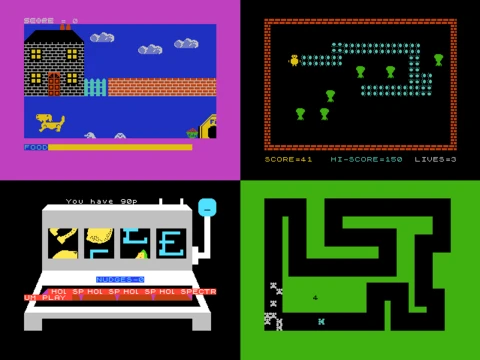
Multicart
A cartridge containing multiple full-version games for better value.

A multicart is a video game cartridge that contains more than one game, typically titles that were or are available for individual purchase. Collections, anthologies, and compilations are considered multicarts. They provide consumers with better value, greater convenience, and more portability, while allowing developers to sell smaller games together or repackage older games with little or no changes.
- Common systems
- NES, SNES, Atari 2600, Intellivision, Odyssey 2, Master System, Sega Genesis, Vectrex, Game Boy, Game Boy Advance, DS, Nintendo Switch
Lore & Background
Multicarts are most commonly associated with the NES and SNES, both authorized and unauthorized, but have appeared for many cartridge-based systems including the Atari 2600, Intellivision, Odyssey 2, Master System, Sega Genesis, Vectrex, and Game Boy. As storage capacity grew and became less expensive, multicarts saw a resurgence on the Game Boy Advance and DS in the mid-2000s, with many '2-in-1' and '3-in-1' re-releases of popular titles. Currently, the Nintendo Switch is the primary existing console that uses cartridges.
Pirate multicarts for the Famicom often advertise inflated numbers of games on their labels, such as '76-in-1' or '200-in-1,' but typically contain only five to one hundred unique games, padded with variations starting at different levels or with different power-ups. These games are usually first-generation Famicom titles, some never officially released outside Japan, with deliberately misspelled names or removed copyright notices. Game Boy pirate multicarts feature innovative designs, including game selection menus, power-switch toggling, or external soft reset buttons. Huge, oversized pirate carts were created to store larger games like Donkey Kong Land, though many lack battery backup for saving.
Unlicensed multicarts were published without the consent of the console maker and often without the consent of the game copyright owners. Examples include Action 52, which attempted 52 unique games but suffered from shoddy programming and code reuse; Caltron 6-in-1; MaxPlay Classic Games Volume 1; Maxivision 15-in-1; the Quattro series by Codemasters; and Wisdom Tree compilations such as Bible Adventures and King of Kings: The Early Years.
Reader's Guide
Multicarts hold significance as a practical and commercial bridge between individual game releases and the concept of game collections. They allowed developers to repackage older titles with minimal effort, extending the commercial life of games across multiple console generations. For consumers, multicarts offered a cost-effective way to acquire multiple games, especially on portable systems where carrying separate cartridges was inconvenient. The phenomenon also highlights the contrast between official and unlicensed markets: official multicarts were curated and licensed, while pirate multicarts often inflated game counts and used bootlegs or hacks. The legacy of multicarts persists in modern digital compilations and retro re-releases, though physical cartridge-based multicarts remain tied to the era of cartridge-based consoles. Their existence reflects both consumer demand for value and the industry's strategies for monetizing back catalogs.
Did You Know?
- Pirate Famicom multicarts sometimes advertise game counts as high as '9999999-in-1' but usually contain only five to one hundred unique games.
- Some Game Boy pirate multicarts require quick toggling of the power switch to select between games.
- The Action 52 multicart attempted to include 52 unique games but was criticized for shoddy programming and heavy code reuse.
- The Nintendo Switch is currently the primary existing console that uses cartridges.
Preservation Through Bundling
A video game compilation represents a specific form of product bundling in which multiple distinct titles are packaged together for purchase as a unified collection. Rather than selling each game individually, these products gather them onto a single piece of physical media or within one digital package, connected by a shared menu interface that lets the player choose which title to launch. This structural design—several games coexisting on one cartridge, disc, or download—gives the format a practical identity distinct from standalone releases. Beyond mere convenience, the compilation format serves a deeper cultural function: it acts as a vehicle for video game preservation. By keeping older or obscure titles accessible alongside more recognizable names, these bundles ensure that games which might otherwise vanish from the market remain playable for new generations. The format thus bridges commercial distribution and archival intent, making it one of the most practical ways to keep gaming history alive in a form players can actually interact with.
The Wild West of Early Compilations
The earliest multicart compilations emerged alongside the Nintendo Entertainment System, which received official bundles that re-released earlier titles in packages such as Super Mario Bros. / Duck Hunt / World Class Track Meet. However, the format quickly attracted less scrupulous operators. In the early 1990s, Codemasters—operating as an unlicensed publisher—exploited the multicart structure to distribute brand-new games through their Quattro line, bypassing Nintendo's official channels entirely. At the other end of the quality spectrum, Active Enterprises shipped Action 52, a compilation that became infamous for its abysmal production values. Meanwhile, the underground world of pirate Nintendo compilations introduced yet another twist: ROM hacks that swapped out character sprites, creating unauthorized remixes of existing games. These early decades established the compilation as a format that could be both a legitimate preservation tool and a vehicle for low-quality or unauthorized content, setting the stage for the industry to later formalize and commercialize the concept.
The 1990s Commercial Renaissance
A wave of renewed enthusiasm for retro gaming during the 1990s transformed the compilation from a niche or pirated format into a mainstream commercial product. Publishers began systematically re-releasing their back catalogs in curated bundles. Microsoft Arcade arrived in 1993 for Windows, while 1995 saw the launch of the Atari 2600 Action Pack series for home computers and the Namco Museum series for the PlayStation. The cross-platform flow was notable: consoles received compilations of older arcade titles such as Arcade's Greatest Hits and Williams Arcade's Greatest Hits, while Windows PCs got bundles of console games like the Sonic & Knuckles Collection. One particularly unusual entry was Three Wonders, a 1991 arcade cabinet that housed three separate games in a single machine—an oddity in a medium where each cabinet typically ran one title. This period cemented the compilation as a legitimate retail category and proved that players would pay for curated collections of their gaming past.
The Modern Retrogaming Revival
The 2010s and 2020s brought a powerful second wave of retrogaming interest, and the compilation format sat squarely at the center of that resurgence. Publishers responded by releasing large-scale bundles that gathered decades of back-catalog titles into single, accessible packages. The Teenage Mutant Ninja Turtles: The Cowabunga Collection stands as a prominent example, packaging a vast library of the franchise's history for modern audiences. Similarly, the Irem Collection series brought together the output of a developer whose individual titles had long been out of print. These modern compilations inherit the preservation mission of the format's earliest days but deliver it with contemporary convenience—digital distribution, updated presentation, and no need for original hardware. The trajectory from pirate ROM-hack cartridges to polished, multi-title digital collections illustrates how the multicart concept has evolved while retaining its core purpose: keeping gaming history reachable, playable, and alive for each new generation of players.
Frequently Asked Questions
What exactly is a multicart?
A multicart is a single physical cartridge that holds two or more complete games on one chip. It lets players own several titles they could otherwise buy separately, all in one slot.
Which consoles are known for multicarts?
Multicarts appear across a wide range of hardware, including the NES, SNES, Atari 2600, Intellivision, Odyssey 2, Master System, Sega Genesis, Vectrex, Game Boy, Game Boy Advance, DS, and Nintendo Switch.
How is a multicart different from a standard compilation or anthology?
In practice the terms overlap heavily; collections, anthologies, and compilations are all classified as multicarts. The key shared trait is that a single cartridge bundles multiple independently purchasable games together.
Why do developers and publishers release multicarts?
They give consumers a cheaper, more convenient, and more portable way to access several titles at once. Developers also use them to bundle smaller games or to repackage older releases with minimal changes, extending the shelf life of their catalog.
Do multicarts always contain full-version games?
Yes, the defining feature is that each included title is a complete, full-version game rather than a demo or a cut-down version. This is what distinguishes a multicart from a demo disc or a sampler pack.
More in Video game compilations 1-24
Spotted an error? Know more?
Reader corrections go straight into our review queue. Suggest an edit · How this site is sourced