Don't Buy This
A compilation of five intentionally poor ZX Spectrum games.

Don't Buy This is a ZX Spectrum game compilation that came out on 1 April 1985. It was put out by Telecomsoft under the Firebird label and gathers together five of the worst games ever sent to the publisher. Rather than turn them down, Firebird chose to make fun of the original creators by releasing the games as a set and openly calling them "unoriginal" and "awful". The company gave up all copyright to the compilation and told buyers they could copy and share it freely. Even though critics panned it across the board, the game sold well.
- Release date
- 1 April 1985
- Publisher
- Telecomsoft under the Firebird label
- Platform
- ZX Spectrum
- Price
- £1.99
- Label
- Firebird Silver Range
- Number of games
- 5
Lore & Background
Don't Buy This was published by Telecomsoft under the Firebird label. Firebird disowned the game upon release, with marketing manager James Leavey claiming that the game 'wasn't released — it just escaped!' The publisher encouraged copying the game, offering a chance to win a sticker or badge for people who wrote to the company about it. A sequel was in consideration, with working titles including Don't Buy This 2, Don't Buy This Again, or Don't Buy This Either.
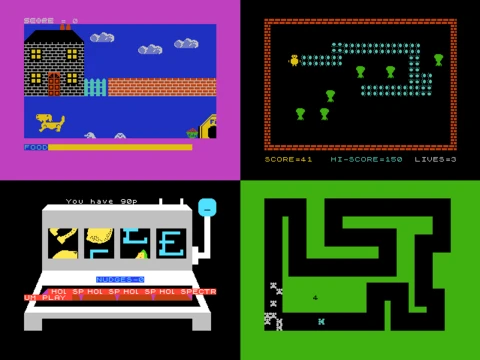
The compilation includes five games: Fido 1, Fido 2, Fruit Machine, Race Ace, and Weasel Willy. Fido 1 tasks the player with controlling a dog named Fido to defeat moles and birds while eating to stay alive. Fido 2 adds vertical movement and laser beams. Fruit Machine is a slow slot machine game with sarcastic instructions. Race Ace is a racing game that is impossible to win, with controls that freeze if another car invades the player's space; evidence suggests it was first published in 1983 by Rainbird Software, and Tony Rainbird was a co-founder of Telecomsoft. Weasel Willy features a weasel that looks like a humanoid figure, with trees that may block the player or even occupy the same space as the weasel at level start, causing immediate loss.
Reader's Guide
Don't Buy This is significant as a rare example of a publisher openly mocking its own product and the developers who submitted low-quality games. By releasing the compilation on April Fools' Day 1985 and disowning copyright, Firebird turned a commercial failure into a commercial success through novelty and self-deprecation. The game's legacy lies in its role as a precursor to later intentionally bad compilations such as Action 52 and Cassette 50, which also collected glitchy or unpolished titles. Critics struggled to evaluate the game because its publicity was based on its poor quality; reviews ranged from calling the games 'uninspired' to 'good for a laugh'. Retro Gamer in 2005 noted its commercial success despite negative reception. The inclusion of Race Ace, possibly developed by Firebird co-creator Tony Rainbird, adds an ironic layer to the collection's premise of mocking amateur submissions. Don't Buy This remains a curiosity in video game history, illustrating how a publisher can leverage negative branding for profit.
Did You Know?
- Firebird disowned all copyright to Don't Buy This and encouraged buyers to redistribute it at will.
- The game was released on 1 April 1985, April Fools' Day.
- Race Ace is erroneously titled 'Ace Racer' on one screen, and evidence suggests it was first published in 1983 by Rainbird Software; Tony Rainbird was a co-founder of Telecomsoft.
The Concept & Marketing Strategy
Firebird's decision to release Don't Buy This in April 1985 was less a publishing move than a public stunt. Rather than quietly rejecting the five weakest submissions that had landed on their desk, the label chose to bundle them together and slap a box that openly called the collection unoriginal and awful. The compilation shipped on 1 April under Firebird's Silver Range at a modest £2.50, published by Telecomsoft, and the timing on April Fools' Day only sharpened the joke. What made the marketing truly radical was Firebird's complete disavowal of ownership: the company disclaimed all copyright and actively encouraged buyers to copy and redistribute the tape. Marketing manager James Leavey famously quipped that the game "wasn't released — it just escaped!" To sweeten the deal, anyone who wrote in about the title could enter a draw for a sticker or badge. The result was a product that functioned as both a commercial item and a piece of self-deprecating theatre, a strategy that had no real precedent in the ZX Spectrum market.
The Five Games
The cassette holds five titles, each a showcase of poor design. Fido 1 tasks the player with guiding a dog through levels, swatting moles and birds while managing a hunger meter; later stages add a low-flying canary and a projectile-throwing cat, though both threats are easy to dodge. Its sequel, Fido 2: Puppy Power, adds vertical movement and lets Fido fire laser beams from its eyes to destroy foes and restore health. Fruit Machine presents an animated, low-resolution slot machine with slow spinning reels, accompanied by instructions that sarcastically praise the game as a mysterious original requiring skill and nerve, and suggest playing it while asleep. Race Ace puts you in a light blue car limited to 90- and 180-degree turns; the computer opponents accelerate every time you turn, making victory impossible, and the controls can freeze when another car clips your space. One screen mislabels the title as "Ace Racer." Evidence suggests it was developed by Tony Rainbird, a co-creator of Firebird, and may have first appeared as a standalone cassette in 1983. Weasel Willy sends a humanoid-looking weasel navigating randomly placed green trees and its own footprints, where a tree can spawn on the character, ending the level.
Reception & Critical Response
Reviews for Don't Buy This were uniformly scathing, yet the criticism itself became a meta-commentary. Your Spectrum acknowledged the games weren't terrible as do-it-yourself efforts but insisted they offered little fun. Sinclair User was blunter, calling the collection five of the most uninspired games ever to disgrace the Spectrum. A reviewer at Computer and Video Games highlighted the inherent paradox of scoring a product whose entire marketing pitch was that it was bad, ultimately settling on calling it good for a laugh. Decades later, John Szczepaniak of Hardcore Gaming 101 included the compilation in his "Your Weekly Kusoge" column, describing the titles as uninspired, dull, and lazy, though he stopped short of ranking them as the absolute worst on the platform. What made the reception particularly fascinating was the commercial reality: despite the universal panning, the game sold well. Retro Gamer confirmed in a 2005 retrospective that Don't Buy This was a genuine commercial success, a testament to the power of its irreverent packaging and the curiosity it generated among Spectrum owners who wanted to see just how bad Firebird could make a product look.
Legacy & Cultural Impact
Beyond its initial 1985 run, Don't Buy This carved out a lasting niche in gaming culture as a celebrated example of intentional badness. Firebird had a sequel in consideration, with working titles including Don't Buy This 2, Don't Buy This Again, and Don't Buy This Either. The compilation also sits alongside other notorious ZX Spectrum bundles such as Cassette 50, a collection of unintentionally low-quality titles, and Action 52, a pack of 52 games all riddled with major glitches, forming a small canon of games defined by their flaws. It has been included in lists of video games notable for negative reception, and its presence in Hardcore Gaming 101's recurring "Your Weekly Kusoge" feature kept it in the conversation for a new generation of retro gamers. The project's most enduring legacy, however, is its marketing philosophy: a publisher openly disavowing its own product, encouraging piracy, and turning commercial release into a joke. In an era before internet memes and viral stunts, Firebird found a way to make a bad game into a cultural moment, and the 2005 Retro Gamer confirmation of its sales success proved the gamble paid off.
Frequently Asked Questions
What is Don't Buy This?
Don't Buy This is a ZX Spectrum compilation released on 1 April 1985 by Telecomsoft under the Firebird Silver Range label. It bundles together five deliberately terrible games that Firebird had received as submissions.
Why did Firebird release Don't Buy This?
Rather than simply rejecting the poorest submissions they'd received, Firebird decided to mock the original developers by packaging the games together and publicly branding them as unoriginal and awful. The compilation was essentially a joke product meant to ridicule the creators.
Can I copy and share Don't Buy This freely?
Yes. Telecomsoft surrendered all copyright to the compilation and explicitly told purchasers they were free to duplicate and distribute the games to others.
How many games are included in Don't Buy This?
The compilation contains five ZX Spectrum titles, all chosen specifically because they were the worst games ever sent to the publisher.
Did Don't Buy This sell well despite bad reviews?
Despite being universally panned by critics, the compilation turned out to be a commercial success. It was priced at just £1.99, which likely helped drive sales.
More in Video game compilations 1-24
Spotted an error? Know more?
Reader corrections go straight into our review queue. Suggest an edit · How this site is sourced