
Mobile-Low, Slow, Small Unmanned Aircraft Integrated Defeat System
Mobile C-UAS for detecting and neutralizing small drones.

U.S. Navy photo by Petty Officer 2nd Class Iain Page · Public domain
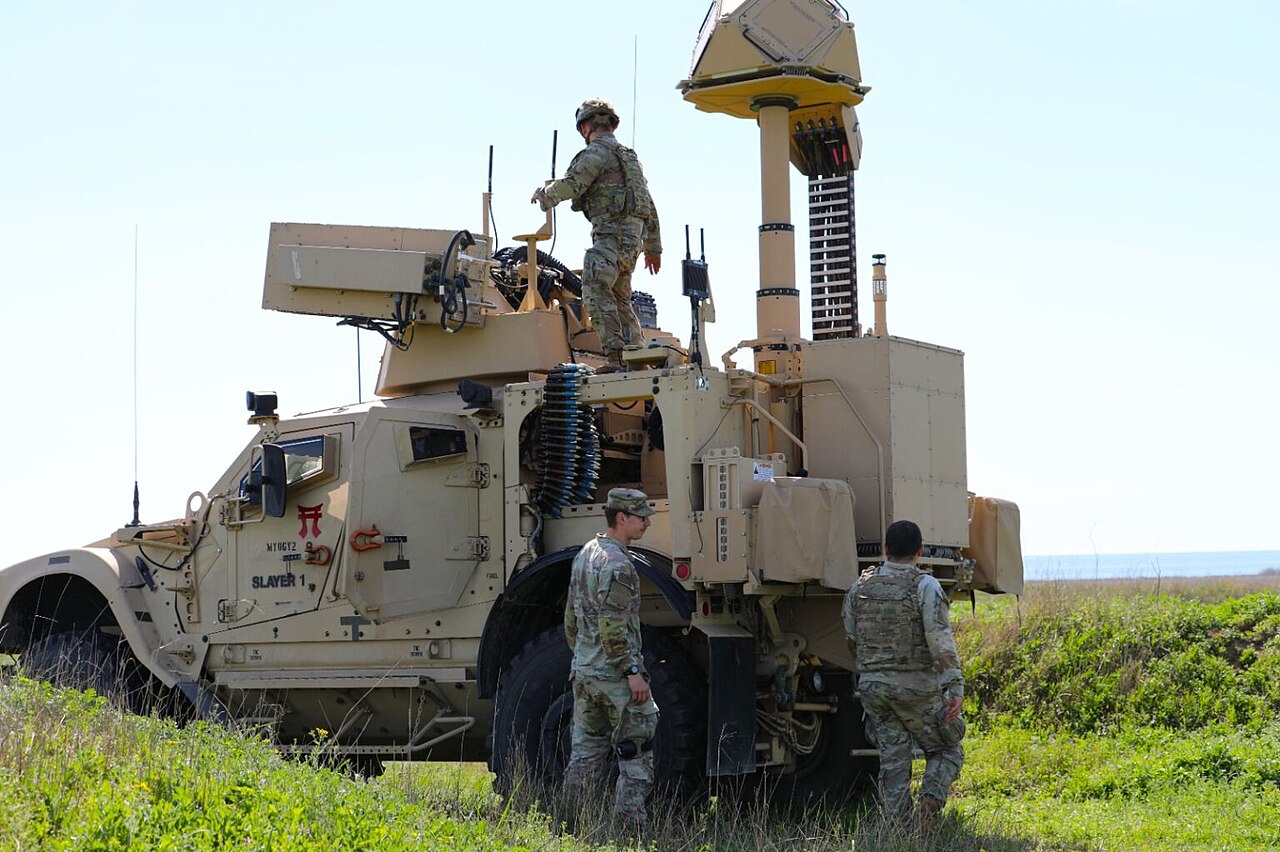
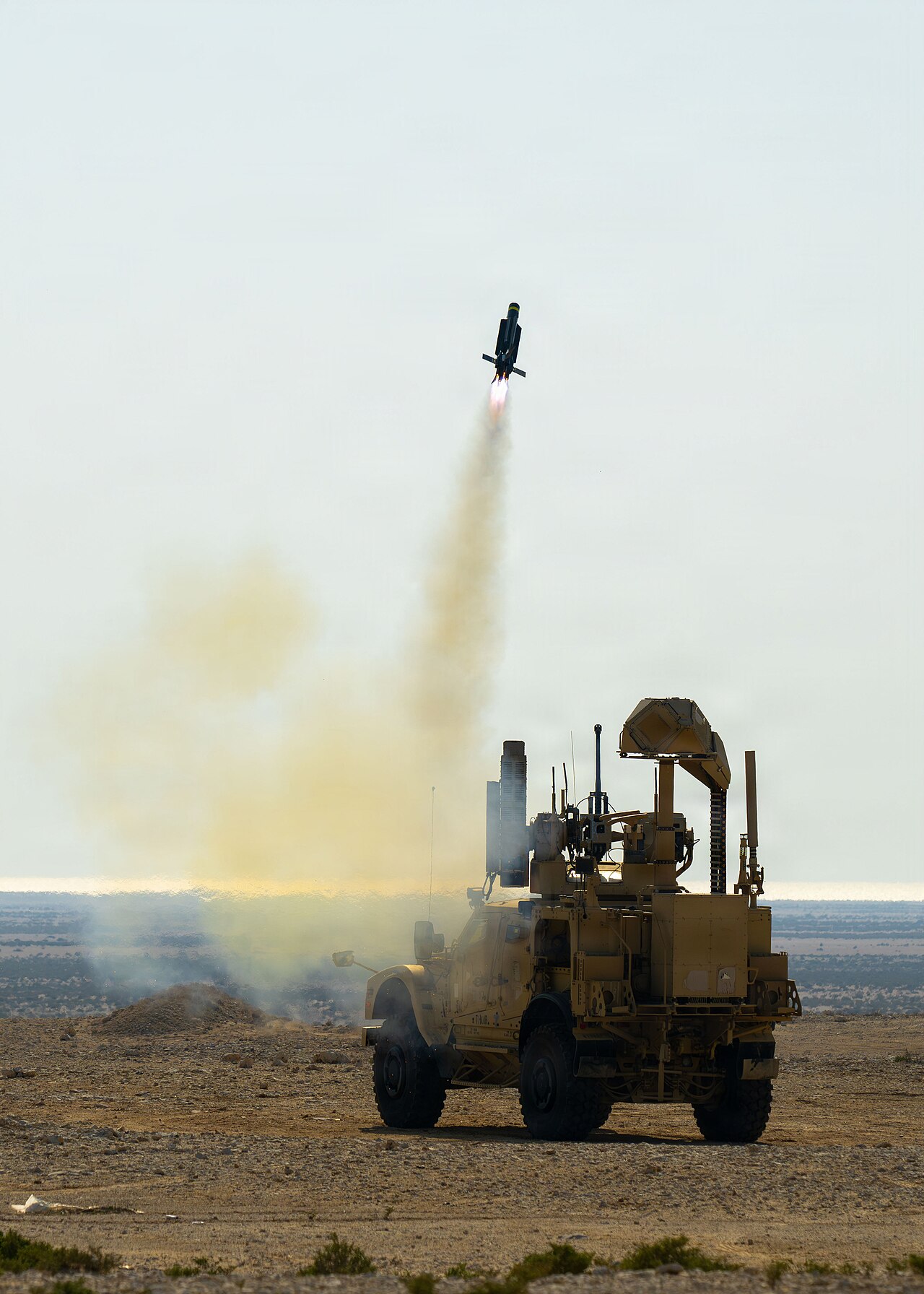
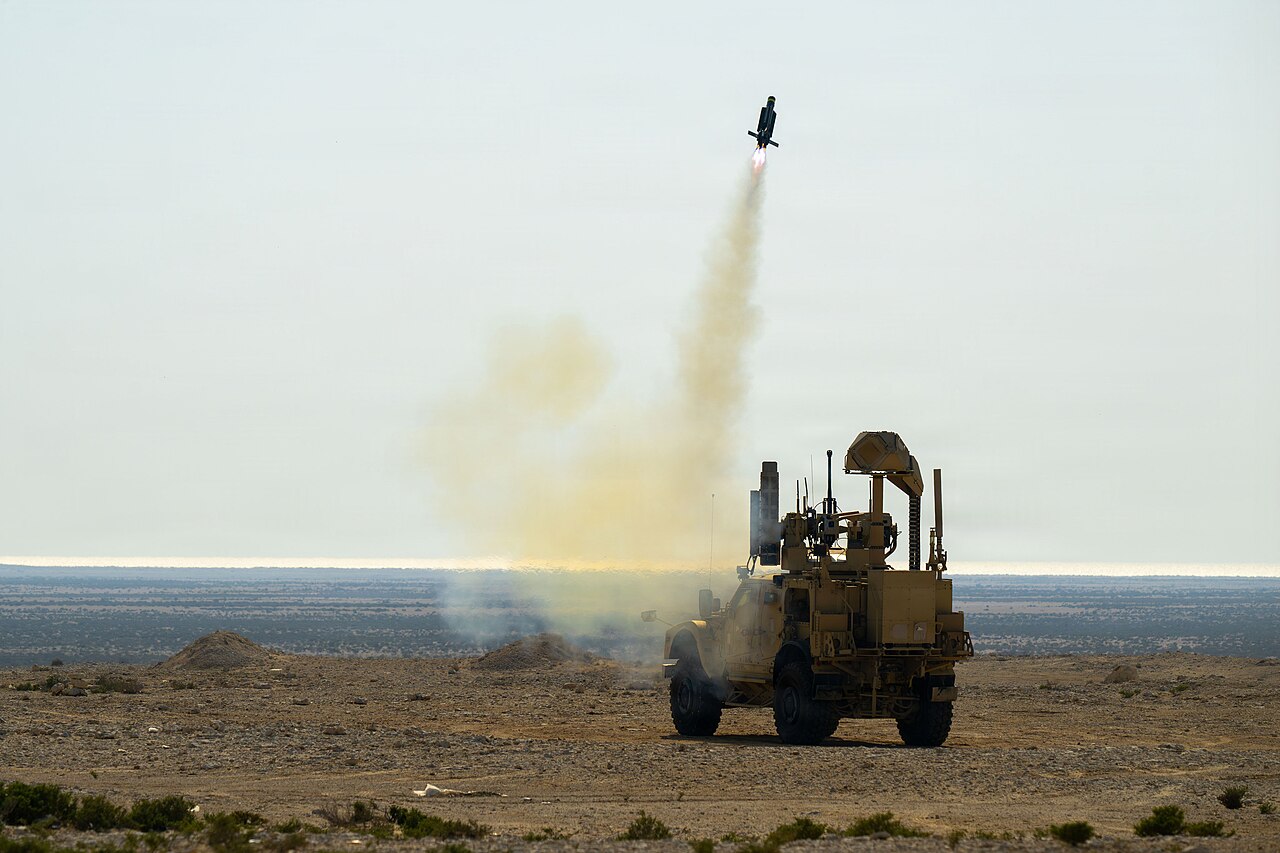
The M-LIDS is a mobile system built for the U.S. Army to counter small drones. It finds, follows, and stops low-flying, slow-moving unmanned aircraft often used for spying or attacks. The system uses advanced radar and electronic warfare to detect threats, then neutralizes them with a cannon, kinetic interceptors like the Coyote missile, or electronic jamming.
M-LIDS is frequently paired with the C-RAM system. While C-RAM handles rockets, artillery, and mortar rounds, M-LIDS focuses on drones, creating a layered defense.
The system saw its first known deployment in April 2024 with the U.S. 101st Airborne Division in Romania, where it conducted live-fire drills at the Capu Midia Training Range to strengthen air defenses near Ukraine. In May 2024, M-LIDS was deployed to protect humanitarian aid operations at the Gaza floating pier, again working alongside C-RAM.
- Developer
- United States Army
- Type
- Mobile counter-unmanned aerial system (C-UAS)
- Target
- Small, low-flying, slow-moving drones
- Detection methods
- Advanced radar and electronic warfare capabilities
- Neutralization methods
- Cannon, kinetic interceptors such as the Coyote missile, and electronic warfare measures
- Deployment locations
- Gaza Strip (21 May 2024), Romania (April 2024)
Lore & Background
M-LIDS is engineered to counter small, low-flying, and slow-moving drones that are often used for surveillance, reconnaissance, and attacks. The system comprises advanced detection systems, including sophisticated radar and electronic warfare capabilities. For neutralization, M-LIDS employs a cannon or kinetic interceptors such as the Coyote missile, as well as electronic warfare measures to disable or destroy drone threats. It is often deployed with the Counter-Rocket, Artillery, and Mortar (C-RAM) system; while C-RAM intercepts rockets, artillery, and mortar rounds, M-LIDS focuses on aerial threats from drones, providing comprehensive defense.
Operational history includes deployment on 21 May 2024 to protect humanitarian aid operations in the Gaza Strip, installed alongside C-RAM for layered defense. In April 2024, M-LIDS was deployed as part of the U.S. 101st Airborne Division to enhance air defenses near Ukraine, and conducted live fire exercises at the Capu Midia Training Range in Romania.
Reader's Guide
M-LIDS represents a specialized mobile solution for countering small unmanned aerial systems, a growing threat in modern conflict. Its significance lies in its integration with the C-RAM system, creating a layered defense that addresses both traditional artillery threats and emerging drone threats. The system's deployment in the Gaza Strip on 21 May 2024 to protect humanitarian aid operations highlights its role in non-combat missions, while its deployment in Romania in April 2024 as part of the U.S. 101st Airborne Division underscores its use in enhancing air defenses near active conflict zones. The live fire exercises at the Capu Midia Training Range demonstrate its operational readiness. By combining radar, electronic warfare, cannons, and kinetic interceptors like the Coyote missile, M-LIDS provides a versatile toolkit for neutralizing drones used for surveillance, reconnaissance, or attacks. Its legacy is tied to the evolving need for mobile, integrated counter-drone capabilities within the U.S. Army's broader air defense framework.
A Threat Landscape Defined by Proliferation
The catalog of small, low-altitude, slow-flying unmanned platforms spans an extraordinary breadth of nations, from Algeria's AL Fajer L-10 and Amel to Finland's MASS mini-UAV and Croatia's BL M-99 Bojnik. What unites these entries is scale: quadcopters such as Gyrofly's Gyro 200 ED and Gyro 500, soldier-portable systems like Flight Technologies' FT-100 Horus, and infantry-carryable drones such as Santos Lab's Carcara and Carcara II all operate in the low, slow, small envelope. Australia alone lists more than a dozen V-TOL variants, while Brazil fields mini-UAVs from multiple independent developers. This geographic and numerical spread means that any integrated defeat architecture must contend not with a single adversary's program but with dozens of concurrent national efforts, each producing variants that differ in airframe, propulsion, and mission profile. The sheer volume of entries across twenty or more countries underscores that the low-slow-small category is no longer a niche but a dominant tier of the global unmanned fleet.
Roles That Extend Far Beyond the Battlefield
While reconnaissance and target-drone duties dominate the listings, the functional diversity of these small platforms is striking. Australia's Aerosonde family was built primarily to collect weather data, and Chile's Sirol 221 paired reconnaissance with meteorological research. Agricultural and civilian surveillance appears in Argentina's AeroVision Arcangel, Brazil's AGPlane, and Canada's PrecisionHawk Lancaster. Aerial mapping and surveying drive Costa Rica's SA-SkyHunter and Belgium's Gatewing X-100, while Denmark's Sky-Watch RQ-35 Heidrun focuses on electro-optical and infrared imaging alongside cartography. France's Donecle drone performs autonomous aircraft inspection, and Brazil's Acauã serves as an experimental testbed for electronic systems intended for future unmanned airframes. This multiplicity of civilian, scientific, and support roles means that the low-slow-small category intersects with commercial aviation, environmental monitoring, and infrastructure maintenance, complicating any system designed to distinguish hostile from benign traffic in the same altitude and speed band.
A Developer Ecosystem Ranging from Majors to Micro-Startups
The entities behind these platforms reveal a deeply layered industrial base. At one end sit established defense primes: Boeing's MQ-28 Ghost Bat, BAE Systems' Brumby and Kingfisher, Dassault's nEUROn and AVE-D Petit Duc, and Canadair's CL-89 through CL-327 lineage. At the other end are small national workshops and startups, including Santos Lab in Brazil, Advector Unmanned Systems in Colombia, Gyrofly Innovations, and Sky-Watch in Denmark. Joint-venture structures add another layer: Brazil's Harpia combined Embraer Defense, AEL Systems, and Avibras before being halted in January 2016, while the SARVant surveillance UAV pooled OrbiSat's SAR radar, Aeroalcool's airframe, and AGX's flight controls. Canada's CL-89 was jointly funded by the United Kingdom and later West Germany. This patchwork of large corporations, government labs, and two-person firms means that the low-slow-small threat set is produced by an ecosystem with no single point of control, making intelligence and countermeasure planning inherently fragmented.
Six Decades of Incremental Evolution
The timeline embedded in the listings stretches from the mid-1960s to the late 2010s, tracing a continuous thread of development. Canada's CL-89 appeared in 1964 as a reconnaissance platform, followed by Belgium's MBLE Épervier in 1969 and Argentina's FMA IA X 59 Dronner in 1972. The 1990s and 2000s brought a wave of tactical and multirotor systems: Aeryon's Scout in 2009, Draganflyer's X4 and X6 in 2009, and France's Flying-Robots FR102 soft-wing design in 2008. By the 2010s, the focus shifted toward longer-endurance and more specialized roles, exemplified by Aeryon's SkyRaider R80D in 2017, Chile's Lascar in 2012, and Brazil's 14-X Mach 10 scramjet concept under development. Australia's V-TOL family expanded from quadrotors to octocopters, and Brazil's Flight Technologies line progressed from the FS-01 Watchdog through the FT-200 to the VT-15 in army testing. Each generation added autonomy, payload flexibility, or endurance, steadily raising the capability ceiling of what a small, slow, low-flying platform can accomplish.
Gallery



More in Unmanned Aerial Vehicles, Part 3 1-23
Spotted an error? Know more?
Reader corrections go straight into our review queue. Suggest an edit · How this site is sourced