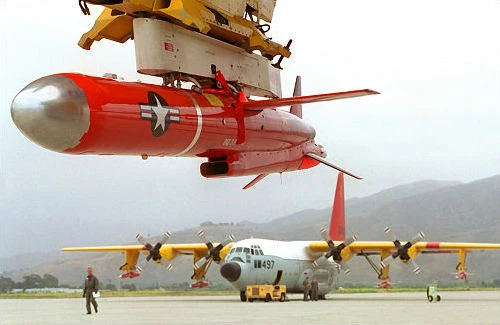
AAI RQ-7 Shadow
A tactical UAS launched by catapult and recovered with arresting gear.

The AAI RQ-7 Shadow is an American unmanned aerial vehicle (UAV) flown by the United States Army, Australian Army, Swedish Army, Turkish Air Force, and Italian Army. Its missions include reconnaissance, surveillance, target acquisition, and battle damage assessment. The aircraft launches from a trailer-mounted pneumatic catapult and lands using arresting gear, similar to the system used on aircraft carriers. A gimbal-mounted, digitally stabilized, liquid nitrogen-cooled electro-optical/infrared camera sends live video to the ground control station through a C-band line-of-sight data link.
The Shadow’s development followed the U.S. Army’s search for a battlefield UAV after the Alliant RQ-6 Outrider was canceled. AAI Corporation, which had built the RQ-2 Pioneer, created the Shadow 200 as a refined version. In late 1999, the Army chose the Shadow 200 for its tactical UAV requirement, renaming it the RQ-7. The Army wanted a UAV with an aviation gasoline engine, an electro-optic/infrared sensor turret, a maximum range of 31 miles, and four hours of on-station endurance. The Shadow 200 offered at least twice that range and could land on an athletic field.
The RQ-7 Shadow 200 system has a high-wing, constant-chord pusher design with twin tailbooms and an inverted v-tail. It is powered by a 38 bhp AR741-1101 Wankel engine from UAV Engines Ltd in the United Kingdom. Onboard electrical systems run on a 28-volt, 2 kW generator. The main payload is the Israeli Aircraft Industries POP300 Plug-in Optical Payload, which includes a forward-looking infrared camera, a daytime TV camera with a selectable near-infrared filter, and a laser pointer. The aircraft has fixed tricycle landing gear. A trailer-mounted pneumatic launcher accelerates the 170 kg aircraft to 70 knots in 40 feet.
Landings use a Tactical Automatic Landing System from Sierra Nevada Corporation, which relies on a ground-based micro-millimeter wavelength radar and an onboard transponder. A tailhook catches an arresting wire connected to two disk brake drums, stopping the aircraft in less than 170 feet. The system uses M1152-series Humvees for ground transport. A Shadow 200 system includes four aircraft: three carried in an Air Vehicle Transporter (AVT) and one spare in a storage container. The AVT also tows the launcher.
Quick Facts
- Aircraft Type
- Tactical reconnaissance UAS for ground maneuver forces / Unmanned combat aerial vehicle (optionally)
- Manufacturer
- AAI Corporation
- First Flight
- 1991
- Introduction
- 2002
- Primary User
- United States Army
- More Users
- 9 other users
- Number Built
- 500+
- Developed From
- AAI RQ-2 Pioneer
Facts from the source article.
Lore & Background
The RQ-7 Shadow resulted from the U.S. Army's search for an effective battlefield UAS after the cancellation of the Alliant RQ-6 Outrider. AAI Corporation followed their RQ-2 Pioneer with the Shadow 200, a similar, more refined system. In late 1999, the Army selected the Shadow 200 to fill the tactical UAS requirement, redesignating it the RQ-7. Army requirements specified a UAS that used an aviation gasoline engine, could carry an electro-optic/infrared imaging sensor turret, and had a maximum range of 31 miles (50 kilometers) with four-hour, on-station endurance; the Shadow 200 offered at least twice that range. The specifications also dictated that the UAS would be able to land in an athletic field.
The RQ-7 Shadow 200 is of a high-wing, constant chord pusher configuration with a twin-tailboom empennage and an inverted v-tail. It is powered by a 38 bhp AR741-1101 Wankel engine designed and manufactured by UAV Engines Ltd in the United Kingdom. The primary payload is the Israeli Aircraft Industries POP300 Plug-in Optical Payload, consisting of a forward-looking infrared camera, a daytime TV camera with a selectable near-infrared filter, and a laser pointer. The aircraft has fixed tricycle landing gear. Takeoffs are assisted by a trailer-mounted pneumatic launcher. Landings are guided by a Tactical Automatic Landing System developed by the Sierra Nevada Corporation, using a ground-based micro-millimeter wavelength radar and a transponder on the aircraft; a tailhook catches an arresting wire connected to two disk brake drums.
The Shadow system includes four aircraft, three transported in an Air Vehicle Transporter (AVT) and one spare. The AVT also tows the launcher. Two Humvee-mounted Ground Control Stations (GCS) control the aircraft, each with an associated Ground Data Terminal (GDT). A Portable Ground Control Station (PGCS) and Portable Ground Data Terminal (PGDT) serve as backups. A fielded system requires 22 soldiers to operate. The Shadow is restricted from operating in bad weather, not meant to fly through rain and with sensors that cannot see through clouds.
Reader's Guide
The RQ-7 Shadow became a cornerstone of U.S. Army brigade-level reconnaissance, accumulating over 900,000 flight hours by mid-2014 and flying more than 600,000 combat hours in Iraq and Afghanistan. It was adopted by the U.S. Marine Corps to replace the RQ-2 Pioneer, with four tactical UAS squadrons operating it from 2007 until its retirement from Marine service in 2018, when it was replaced by the RQ-21 Blackjack. The U.S. Army later reformed its aerial scout capabilities by scrapping OH-58 Kiowa helicopters and teaming AH-64 Apache attack helicopters with Shadow and MQ-1C Gray Eagle UAVs, moving Shadows from brigade level to battalion level to reduce lines of communication. In 2014, Shadows were sent to Baghdad to protect embassy personnel against Islamic State attacks, using manned-unmanned teaming with Apaches. By March 2019, the Army was evaluating candidates to replace the Shadow, seeking better acoustics and runway independence. The Shadow's operational history demonstrated the value of persistent, relocatable tactical UAS in modern conflict, though its weather restrictions and engine failures in harsh conditions highlighted ongoing limitations.
Did You Know?
- The RQ-7 Shadow is launched from a trailer-mounted pneumatic catapult and recovered using arresting gear similar to jets on an aircraft carrier.
- By the end of June 2014, Shadow UAVs had logged more than 900,000 flight hours.
- The U.S. Marine Corps retired the RQ-7B in 2018, replacing it with the RQ-21 Blackjack.
Origins and Design Philosophy
The RQ-7 Shadow emerged from the US Army's persistent search for a capable tactical unmanned aircraft after the RQ-6 Outrider program was cancelled. AAI Corporation, building on lessons learned from their earlier RQ-2 Pioneer, developed the Shadow 200 as a more refined successor. In late 1999, the Army selected this platform to satisfy its tactical UAS requirement, redesignating it the RQ-7. Service specifications called for an aviation-gasoline-powered aircraft carrying an electro-optic/infrared sensor turret, with a minimum range of 31 miles and four hours of on-station endurance. The Shadow 200 delivered at least twice that range and was also required to be able to land on an athletic field. The resulting airframe features a high-wing, constant-chord pusher layout with twin tailbooms and an inverted v-tail. Power comes from a 38 bhp Wankel rotary engine designed by UAV Engines Ltd in the United Kingdom, while onboard electrical systems are fed by a 28-volt direct-current generator rated at 2 kW.
Launch, Recovery, and Sensor Payload
The Shadow's operational cycle is defined by its distinctive launch and recovery methods. Takeoff is assisted by a trailer-mounted pneumatic catapult that accelerates the 170 kg aircraft to 70 knots within a mere 40 feet of track. Recovery is equally unconventional: a Tactical Automatic Landing System, developed by Sierra Nevada Corporation, employs a ground-based micro-millimeter wavelength radar paired with an onboard transponder to guide the aircraft onto the runway. Once the wheels touch down, a tailhook snags an arresting wire connected to two disk brake drums, halting the aircraft in under 170 feet. The primary sensor is the Israeli Aircraft Industries POP300 Plug-in Optical Payload, which combines a forward-looking infrared camera, a daytime television camera with a selectable near-infrared filter, and a laser pointer. This gimbal-mounted, digitally stabilized, liquid nitrogen-cooled EO/IR turret relays real-time video to the ground control station through a C-band line-of-sight data link.
Combat Service and Operational Milestones
The Shadow proved its operational value under the punishing conditions of the Middle East. Although it missed the initial 2001–2002 Afghanistan campaign, it flew combat missions during Operation Iraqi Freedom, where extreme heat and sand caused engine failures that demanded urgent fixes through technology changes and revised operating procedures. By July 2007, the platform had accumulated 200,000 flight hours, doubling its prior record of 100,000 in just 13 months. The pace accelerated rapidly: 300,000 hours by April 2008, over 500,000 by May 2010, and 750,000 hours across more than 173,000 missions by August 2012. By the end of June 2014, the fleet had logged over 900,000 flight hours. The Shadow supported more than 37,000 sorties in Iraq and Afghanistan, with over 600,000 of those being combat hours. The US Marine Corps began transitioning from the RQ-2 Pioneer to the Shadow in 2007, and VMU-1 became the first Marine squadron to see combat in Iraq that October.
System Architecture and Crew Demands
Operating a Shadow 200 system is a substantial logistical undertaking requiring 22 soldiers. The platform is transported and supported by M1152-series Humvees. A standard system includes four aircraft: three carried in an Air Vehicle Transporter that also tows the pneumatic launcher, and a fourth spare stored in a dedicated container. The AVT Support Vehicle and trailer house additional launch and recovery equipment, including the Tactical Automatic Landing System. Maintenance is handled through the Maintenance Section Multifunctional vehicle and trailer, plus the M1165 MSM Support Vehicle. Two Humvee-mounted Ground Control Stations manage flight operations, each paired with a Ground Data Terminal that modulates commands into radio waves for the aircraft and receives video and telemetry in return. A 10 kW Tactical Quiet Generator powers each GDT. Backup capabilities are provided by a Portable Ground Control Station and Portable Ground Data Terminal. Army modeling shows crew workload peaks at takeoff, followed by landing, and the system is restricted from operating in rain or through clouds.
Frequently Asked Questions
What is the AAI RQ-7 Shadow?
The AAI RQ-7 Shadow is a small tactical unmanned aerial vehicle built for battlefield surveillance and originally selected by the United States Army in the late 1990s. It is a lightweight, short-range platform designed to give ground forces real-time aerial imagery without requiring a full-size runway.
What missions does the AAI RQ-7 Shadow perform?
Its core duties span reconnaissance, surveillance, target acquisition, and battle damage assessment. A gimbal-mounted, liquid-nitrogen-cooled electro-optical/infrared camera feeds live video to the ground control station over a C-band line-of-sight data link.
How does the AAI RQ-7 Shadow launch and recover?
The aircraft takes off via a trailer-mounted pneumatic catapult and is brought back to the ground with an arresting-gear system, borrowing a technique familiar from carrier-based jet operations. This lets it operate from small, unprepared fields rather than a conventional airfield.
Which countries operate the AAI RQ-7 Shadow?
The RQ-7 is in service with the United States Army, Australian Army, Swedish Army, Turkish Air Force, and Italian Army. After its initial U.S. Army selection in the late 1990s, the platform was adopted by these allied forces for their own tactical intelligence needs.
What are the AAI RQ-7 Shadow's endurance and range figures?
The Shadow is rated for a four-hour on-station endurance and a maximum range exceeding 50 kilometers (about 31 miles). It is powered by a 38 bhp AR741-1101 Wankel rotary engine produced by UAV Engines in the United Kingdom, and it lifts off at a launch weight of roughly 170 kg.
More in Unmanned Aerial Vehicles by Country, Part 4 1-24
Spotted an error? Know more?
Reader corrections go straight into our review queue. Suggest an edit · How this site is sourced