Neon Gravestones
A hip hop piano ballad confronting the media's glorification of suicide.
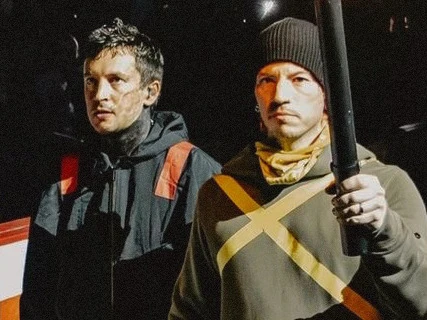
"Neon Gravestones" is the seventh track from Twenty One Pilots' fifth studio album, Trench (2018). Written by frontman Tyler Joseph and produced with Paul Meany, the song is a hip hop piano ballad that confronts the glorification of suicide by media. Upon release, it attracted some controversy for its take on suicide but received positive reviews from music critics. It was part of the set list for the Bandito Tour (2018–2019), and Joseph performed a piano version for BBC Radio 1's Live Lounge on November 2, 2018.
Quick Facts
- Released
- October 5, 2018
- Artist
- Twenty One Pilots
- Album
- Trench
- Studio
- Tyler Joseph's home studio (Columbus, Ohio)
- Genre
- Hip hop; spoken word
- Label
- Fueled by Ramen
- Writer
- Tyler Joseph
- Producer
- Tyler Joseph; Paul Meany
Lore & Background
The song was written and recorded by Tyler Joseph in his basement and produced alongside Paul Meany of Mutemath. No one other than Joseph, Meany, and drummer Josh Dun was allowed to be present during the songwriting process, to avoid influencing the song's direction. Billboard interpreted the "neon" as a fake light, like advertising, attracting someone towards death. Several music journalists described the ending as directly linked to Trench's penultimate track, "Legend," which pays homage to Joseph's late grandfather, Robert, who appeared on the cover of Vessel (2013).
In an October 2018 Kerrang! interview, Joseph said he was uneasy about the song's placement in the middle of Trench but kept it there, believing it to be "the heart of Trench." He and Dun were both worried about the sensitivity of the track but agreed to keep it on the album. Atlantic Records executives were "extremely concerned," calling it a "giant landmine in the middle of the record" and worrying that misinterpretation could be career-ending.
Some publications noted the song could have been written in response to celebrity suicides like those of Chester Bennington and Scott Hutchison, and the popularity of Netflix's 13 Reasons Why. Joseph explained it was "a reaction to what was happening in our culture" and that he "felt inclined to bring up a new perspective – a perspective that comes off a bit more aggressive and more of a challenge." He also feared answering a fan's question about whether one particular death caused him to write the song, as it might border on disrespect.
Reader's Guide
Musically, "Neon Gravestones" is a forlorn, slow-burning hip hop piano ballad running four minutes. According to sheet music at Musicnotes.com, it has a fast tempo of 150 beats per minute and is composed in B minor. The chord progression changes from Bm–F♯m7–A6–Esus2–Gmaj13–G6–Gmaj7 in the introduction to Bm–F♯5–Asus2–EG–G6–G–G6 in verses and chorus, and follows A–Bm–Em6/G–D at the bridge, interludes, and coda. The composition is built on swirling piano and jittery calibrated drums, with a somber piano riff running throughout atop electronic percussion, steadily picking up pace.
Joseph alternates between singing and spoken word rapping, pitching his voice to sound "especially fragile, hoarse, and tentative." The song received positive reviews from critics, though most noted it may attract controversy. Billboard's Paige Williams wrote it may redeem the band from those who saw them as glamorizing depression. Rolling Stone's Christopher R. Weingarten called it "the most intense look at fame... moody and reflective."
NME's Gary Ryan called it a highlight, an "elegiac, touching broadside against the fetishization of the 27 Club." Stereogum's Chris DeVille called it "an unusual message in modern pop music." PopMatters' Joshua Copperman deemed it "the most compelling track" off Trench but called its ending "too pat." Alternative Press's Jason Pettigrew placed it at number 29 on his ranking of all the band's songs as of September 2019, hailing it as "a brave statement in a troubling time."
Spencer Kornhaber of The Atlantic was more critical, arguing that to "deny" fans the right to pay homage to deceased artists may be too cruel. Chris Willman of Variety called it an "anti-suicide-glorifying anthem" that may be debated by mental health specialists. Martin Williams of The Herald predicted a "kneejerk response of insensitivity to victims" over lines like "I'm not disrespecting what was left behind / just pleading that it does not get glorified."
More in Trench & Dema
Elsewhere in Twenty One Pilots
Spotted an error? Know more?
Reader corrections go straight into our review queue. Suggest an edit · How this site is sourced