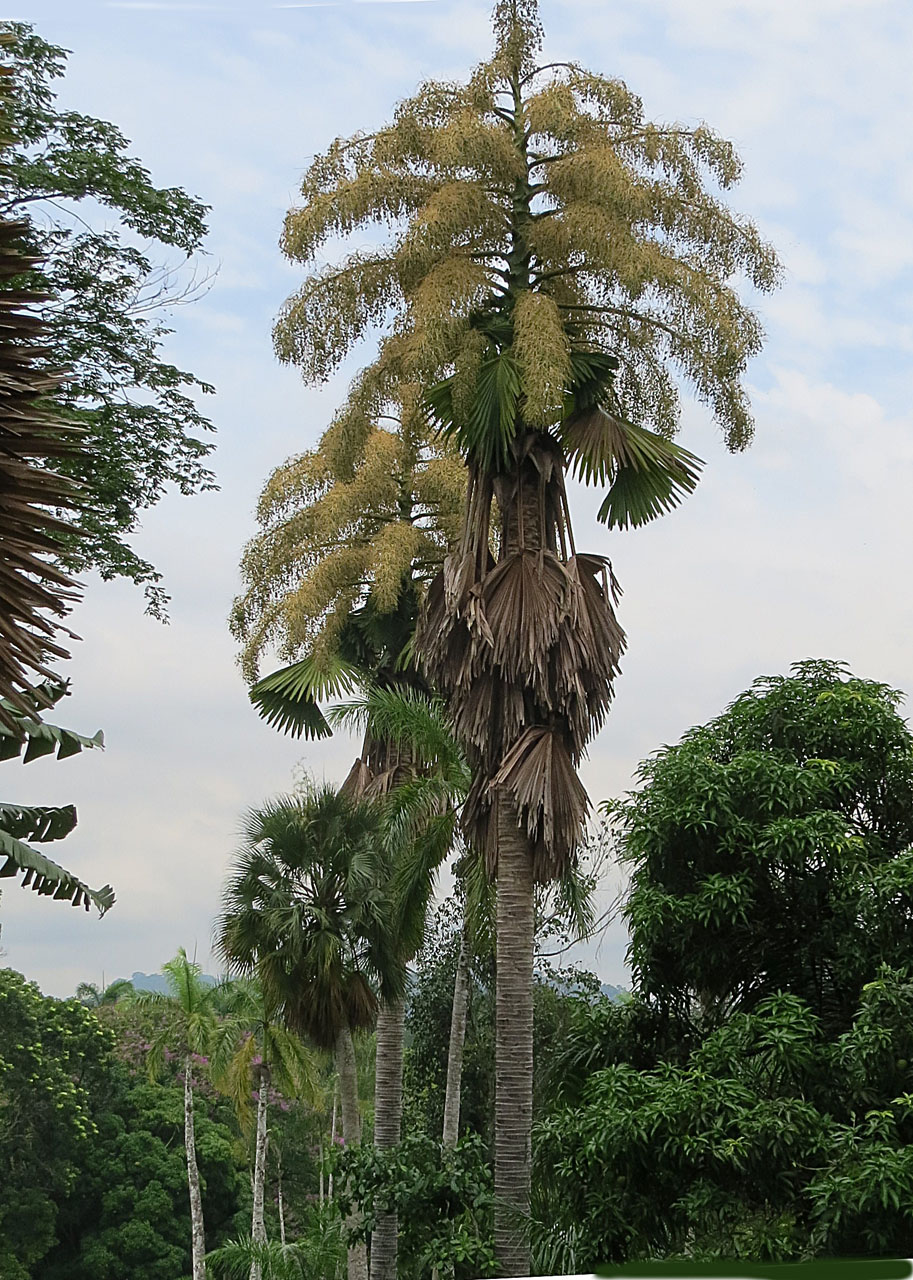
Corypha umbraculifera
Palm with the world's largest inflorescence; dies after fruiting.

Ji-Elle · CC BY-SA 3.0
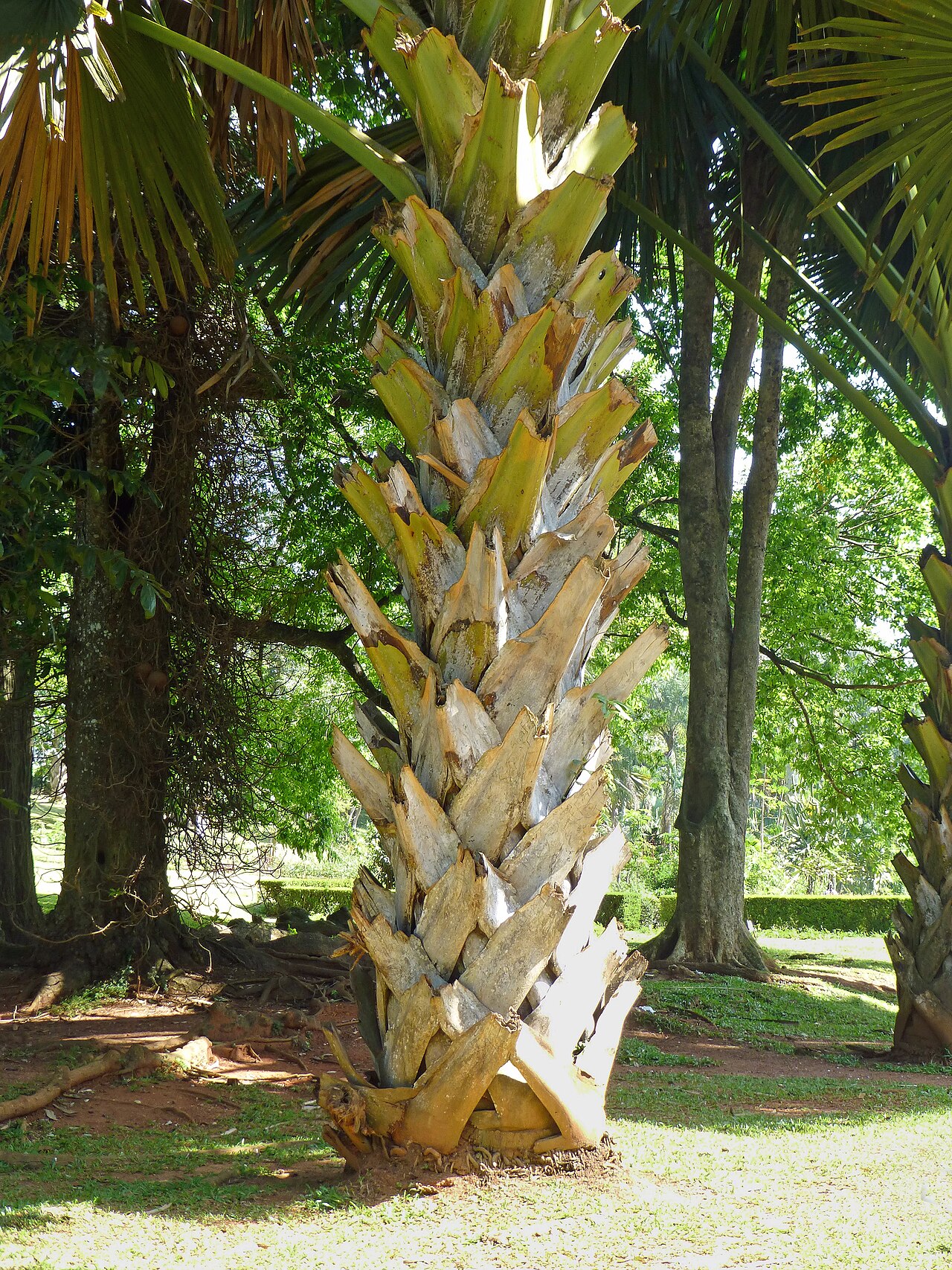
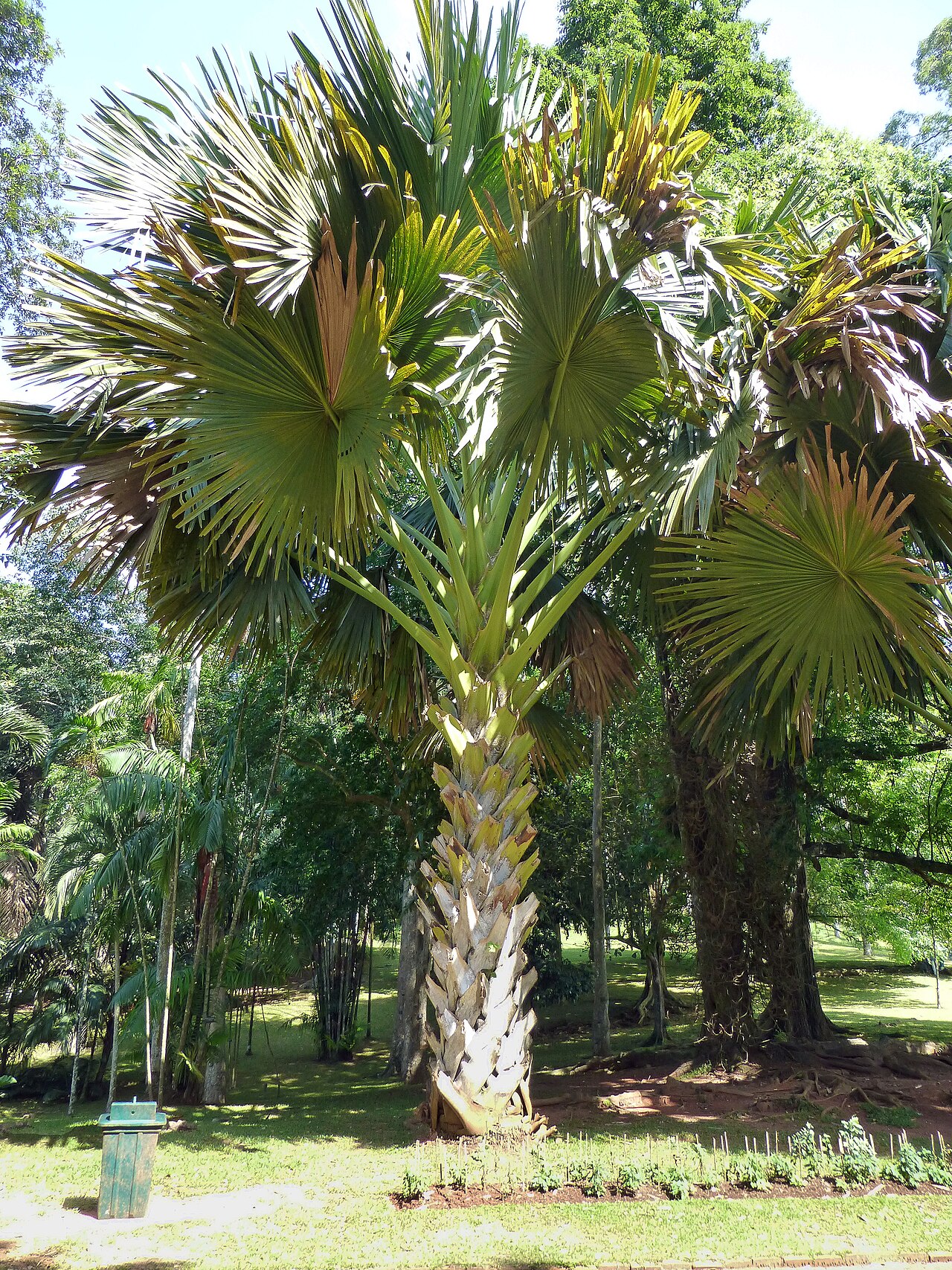
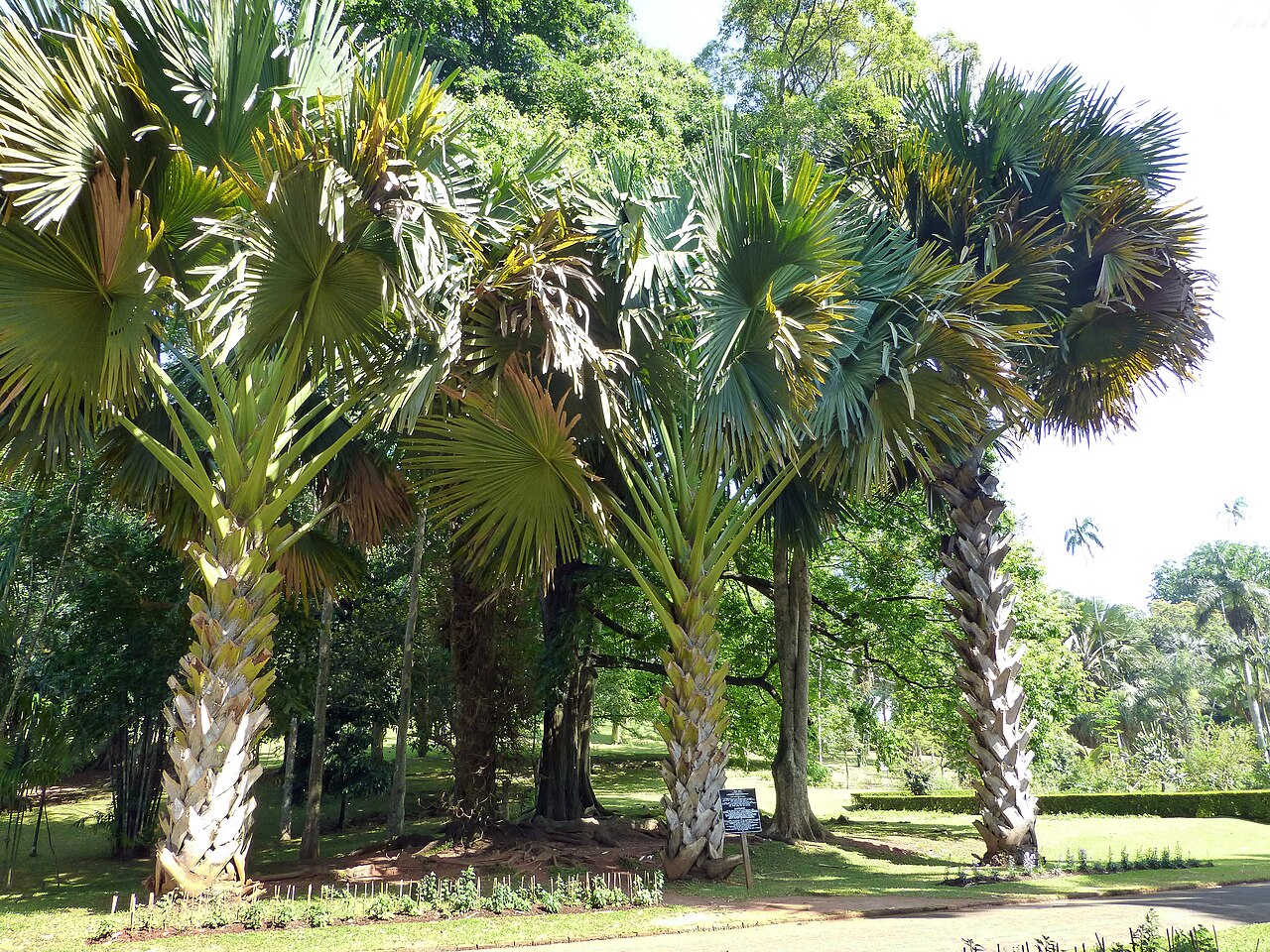
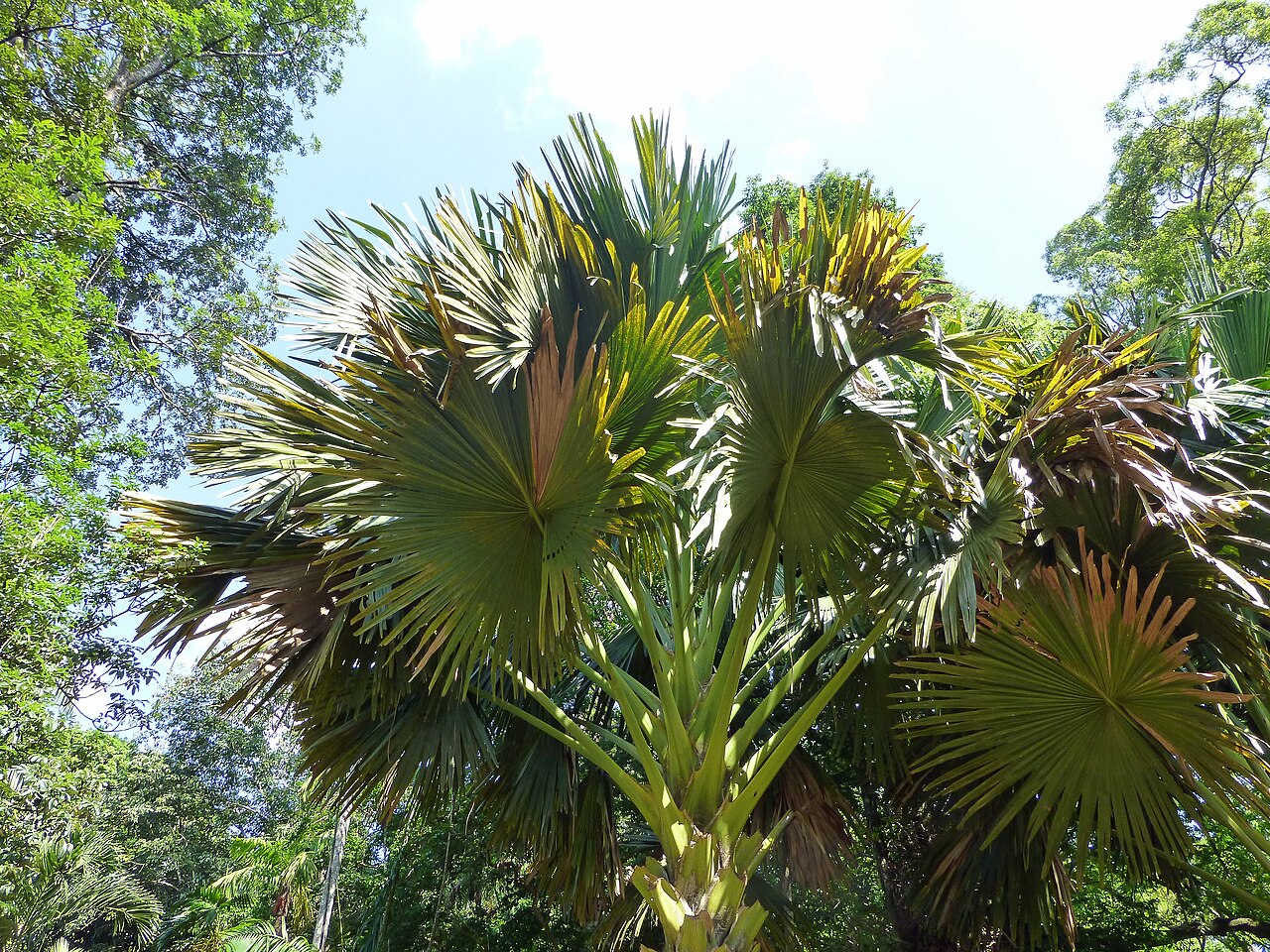
Corypha umbraculifera, commonly known as the talipot palm, is a species of palm native to eastern and southern India and Sri Lanka. It is one of the five accepted species in the genus Corypha and is notable for bearing the largest inflorescence of any plant. The palm is also cultivated in Cambodia, Myanmar, Thailand, Mauritius, the Andaman Islands, and sparsely in China.
Quick Facts
- Species
- umbraculifera
Facts from the source article.
Lore & Background
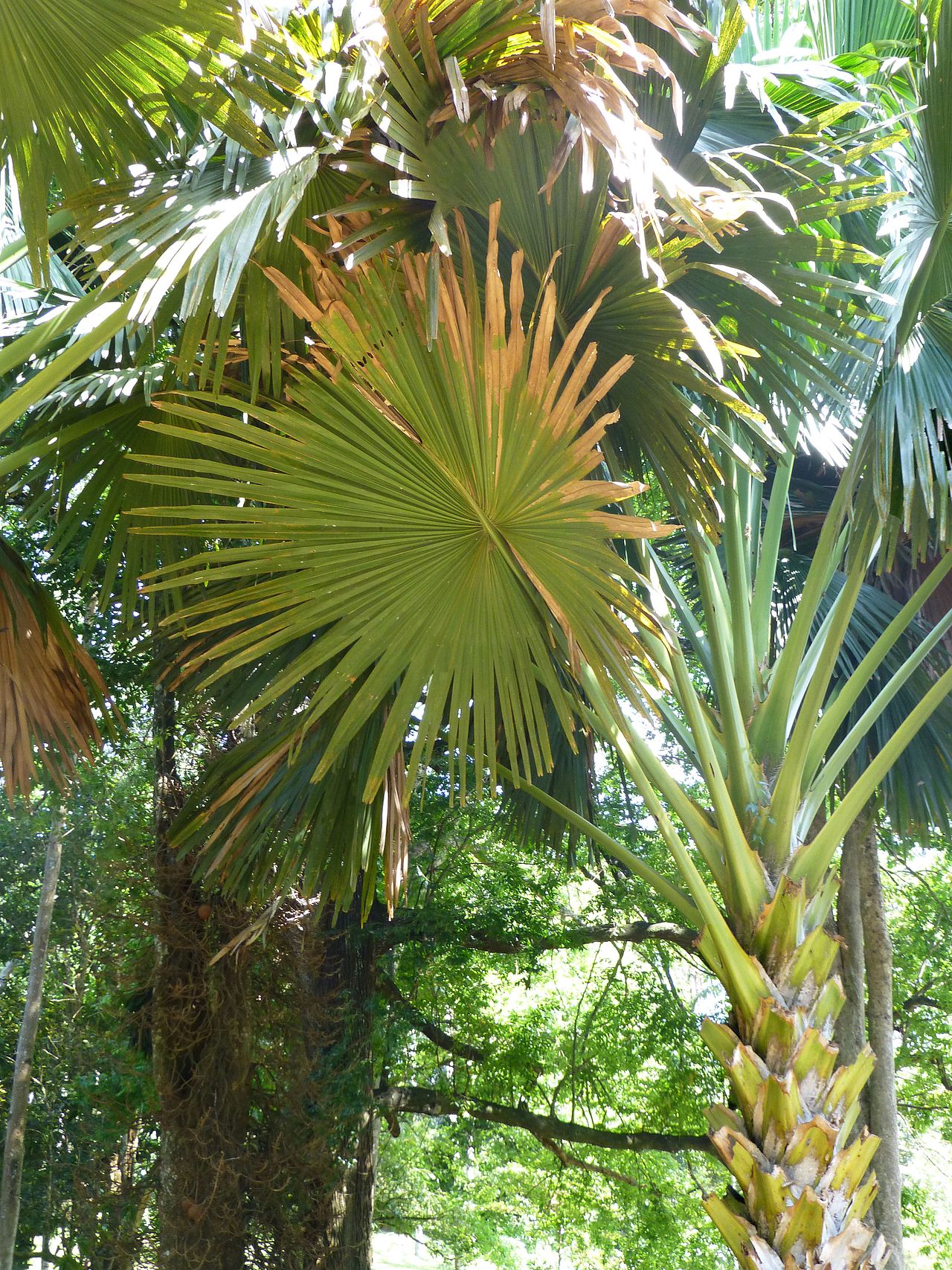
The talipot palm is a fan palm with large, palmate leaves up to 5 m in diameter and petioles up to 4 m long. It is monocarpic, flowering only once when it is 30 to 80 years old, and dies shortly after fruiting. The inflorescence, 6–8 m long, consists of one to several million small flowers. Fruit maturation takes about a year, producing thousands of round, yellow-green fruit 3–4 cm in diameter, each containing a single seed.
Historically, the leaves were written upon in various South Asian and Southeast Asian cultures using an iron stylus to create palm leaf manuscripts. In the Philippines, it is locally known as buri or buli. The leaves are also used for thatching, and the sap is tapped to make palm wine. In South India, the leaves are used to make umbrellas for agricultural workers. In Cambodia, the palm was extensively used to write religious manuscripts, and in recent times the leaf media has been used by traditional healers and soothsayers. Mature leaves are used to make thatches, mats, and hats; petioles are used for canes, arrows, and netting needles; and fishers use the fruit to stupefy fish at low tide.
Reader's Guide
The talipot palm holds significance as a botanical marvel due to its massive inflorescence, the largest of any plant, and its monocarpic life cycle. Its leaves have been historically crucial for recording texts in South Asian and Southeast Asian cultures, serving as a medium for palm leaf manuscripts. The plant's practical uses extend to thatching, umbrella making, and the production of palm wine, as well as traditional fishing practices. Its cultivation across India, Sri Lanka, and parts of Southeast Asia underscores its cultural and economic importance. The palm's unique life history—flowering once after decades and then dying—makes it a subject of botanical interest and a symbol of patience and culmination in the regions where it grows.
Gallery
More in Trees & Timber
Spotted an error? Know more?
Reader corrections go straight into our review queue. Suggest an edit · How this site is sourced