Stephenson's Rocket
The pioneering steam locomotive that won the Rainhill Trials and set the template for future steam engines.
Last updated

NASA · Public domain
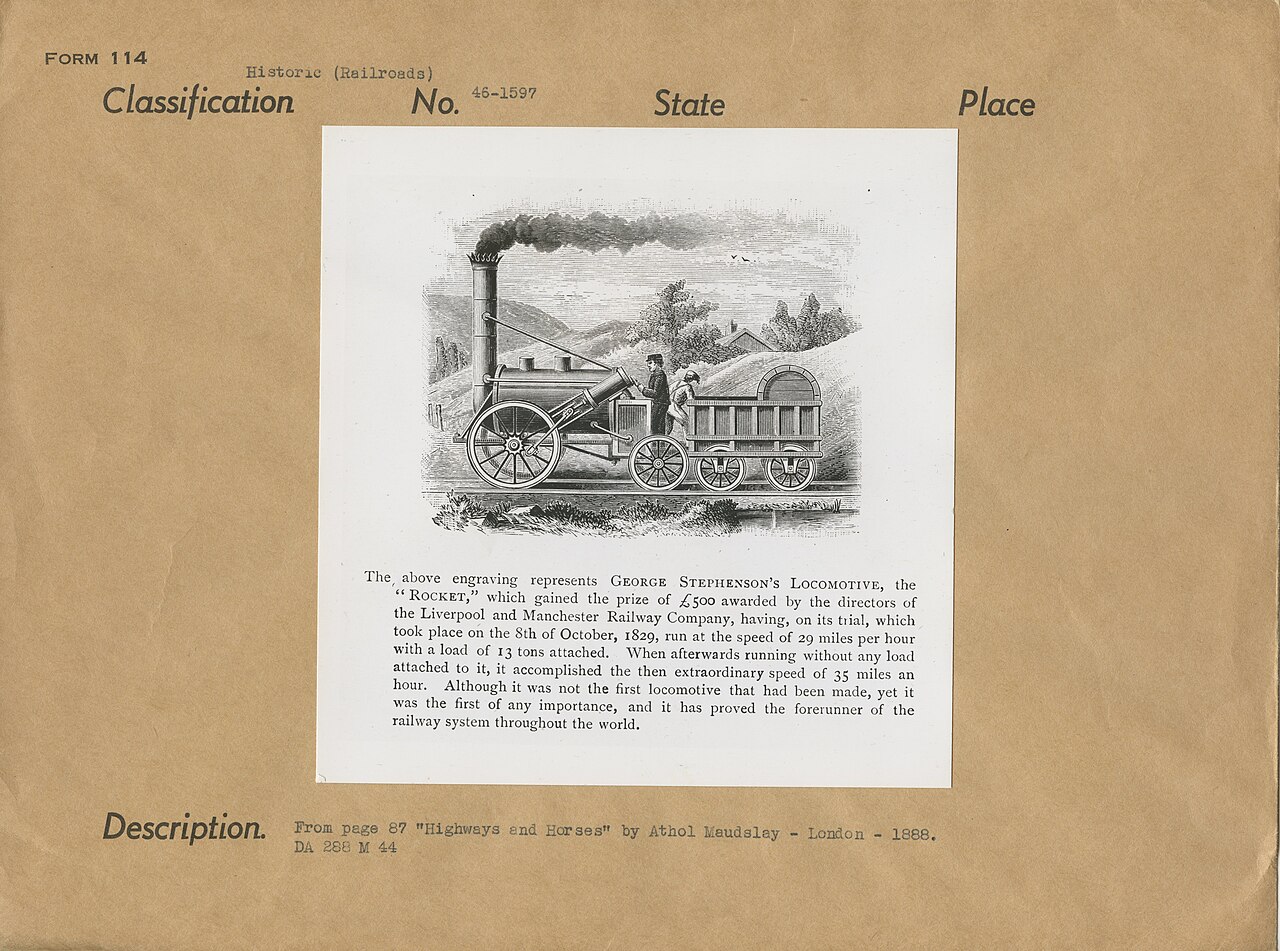
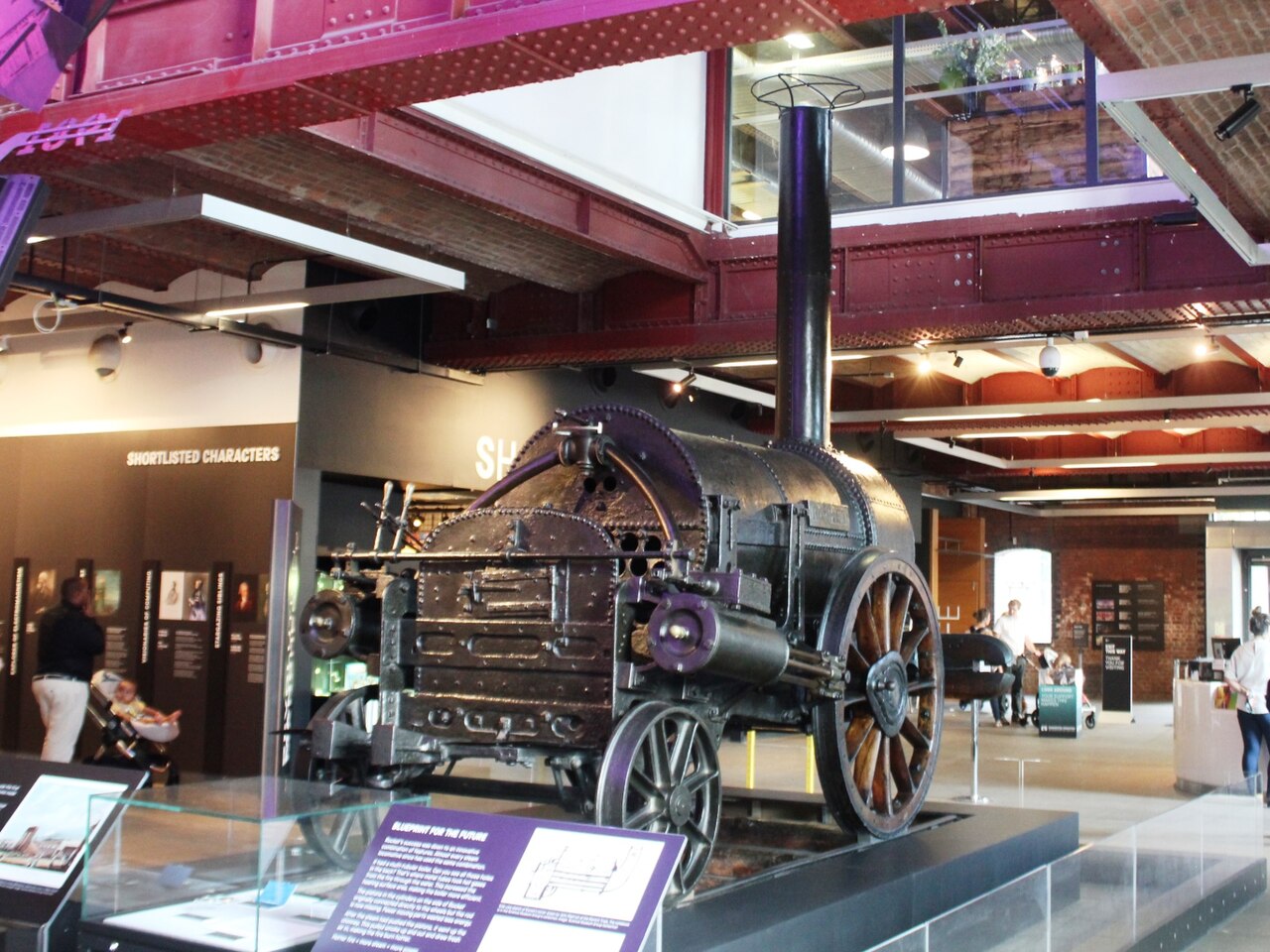
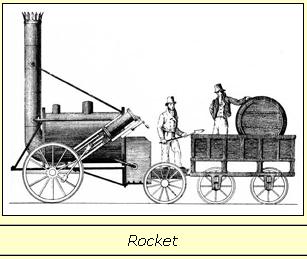
Stephenson's Rocket is a pioneering steam locomotive with a 0-2-2 wheel configuration. It was created specifically for the Rainhill Trials of the Liverpool and Manchester Railway (L&MR) in October 1829, which it won. The competition aimed to prove that advanced locomotives could outperform stationary steam engines. Designed and built by Robert Stephenson in 1829 at his company's Forth Street Works in Newcastle upon Tyne, Rocket was not the first steam locomotive, but it was the first to combine several key innovations, making it the most advanced of its era.
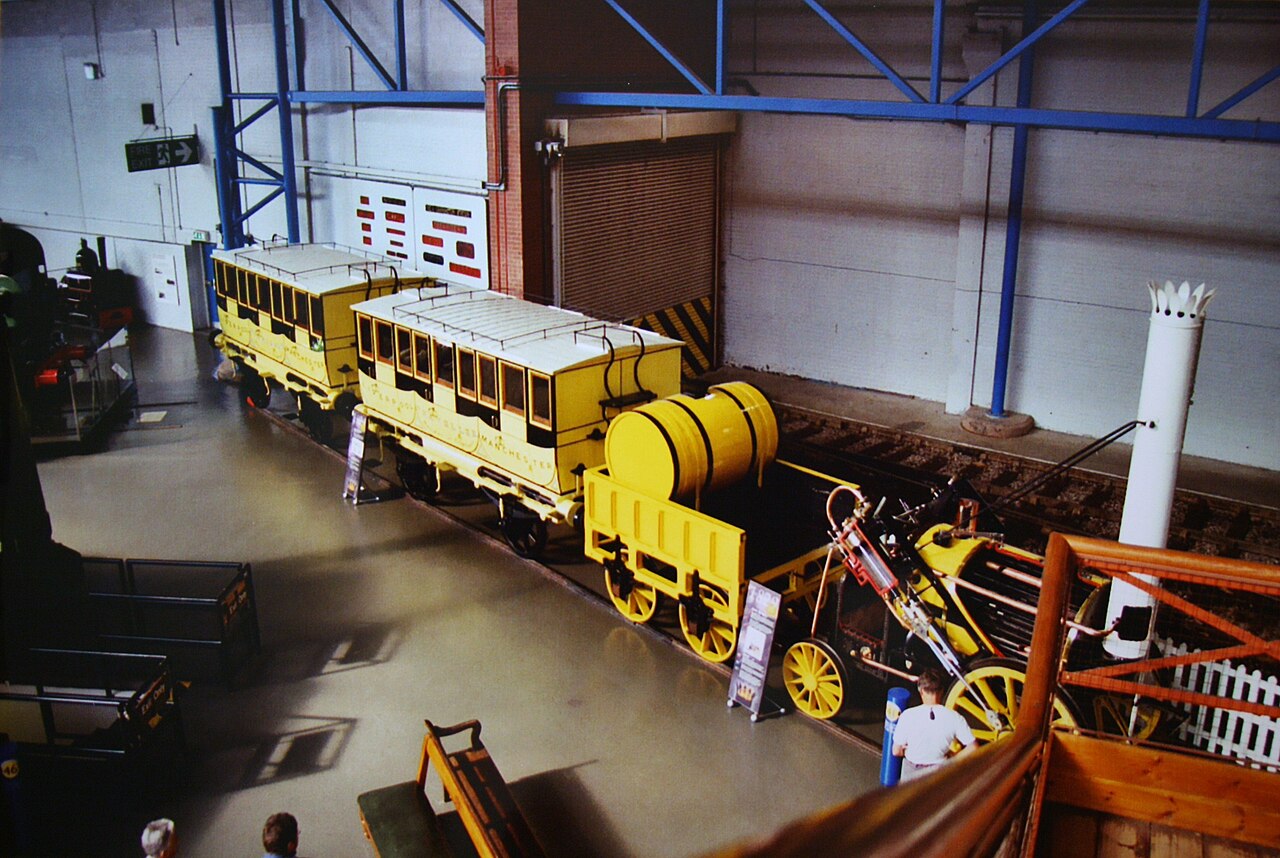
It remains the most famous example of the Stephenson family's evolving locomotive designs and set the standard for most steam engines over the next 150 years. The locomotive was housed at the Science Museum in London until 2018, then toured various UK sites before settling at the National Railway Museum in York. From 2023 to September 2025, it was located at the Locomotion Museum in Shildon, County Durham. Since May 2026, it has been based at the National Railway Museum in York.
Last updated 2026-09-28 from the source article.
Lore & Background
Rocket was built at a time of rapid development of steam engine technology. It was based on experience gained from earlier designs by George and Robert Stephenson, including the Killingworth locomotive Blücher (1814), Locomotion (1825), and Lancashire Witch (1828). There have been differences in opinion on who should be given the credit for designing Rocket. George Stephenson had designed several locomotives before but none as advanced as Rocket.
Conception
At the time that Rocket was being designed and built at the Forth Banks Works, he was living in Liverpool overseeing the building of the Liverpool and Manchester Railway. His son Robert had recently returned from a stint working in South America and resumed as managing director of Robert Stephenson and Company. He was in daily charge of designing and constructing the new locomotive. Although he was in frequent contact with his father in Liverpool and probably received advice from him, it is difficult not to give the majority of the credit for the design to Robert.
A third person who may deserve a significant amount of credit is Henry Booth, the treasurer of the Liverpool and Manchester Railway. He is believed to have suggested to Robert Stephenson that a multi-tube boiler should be used. Stephenson designed Rocket for the Rainhill trials, and the specific rules of that contest.
As the first railway intended for passengers more than freight, the rules emphasised speed and would require reliability, but the weight of the locomotive was also tightly restricted. Six-wheeled locomotives were limited to six tons, four-wheeled locomotives to four and a half tons. In particular, the weight of the train expected to be hauled was to be no more than three times the actual weight of the locomotive. Stephenson realised that whatever the size of previously successful locomotives, this new contest would favour a fast, light locomotive of only moderate hauling power.
Reader's Guide
On 20 April 1829, the board of the Liverpool and Manchester Railway project passed a resolution for a competition to be held to prove their railway could be reliably operated by steam locomotives, there being advice from eminent engineers of the age that stationary engines would be required. A prize of £500 was offered as an incentive to the winner, with strict conditions a locomotive would need to meet to enter the trial. Robert Stephenson was able to report to Henry Booth on 5 September 1829 that Rocket had performed initial manufacturer tests with flying colours at Killingworth.
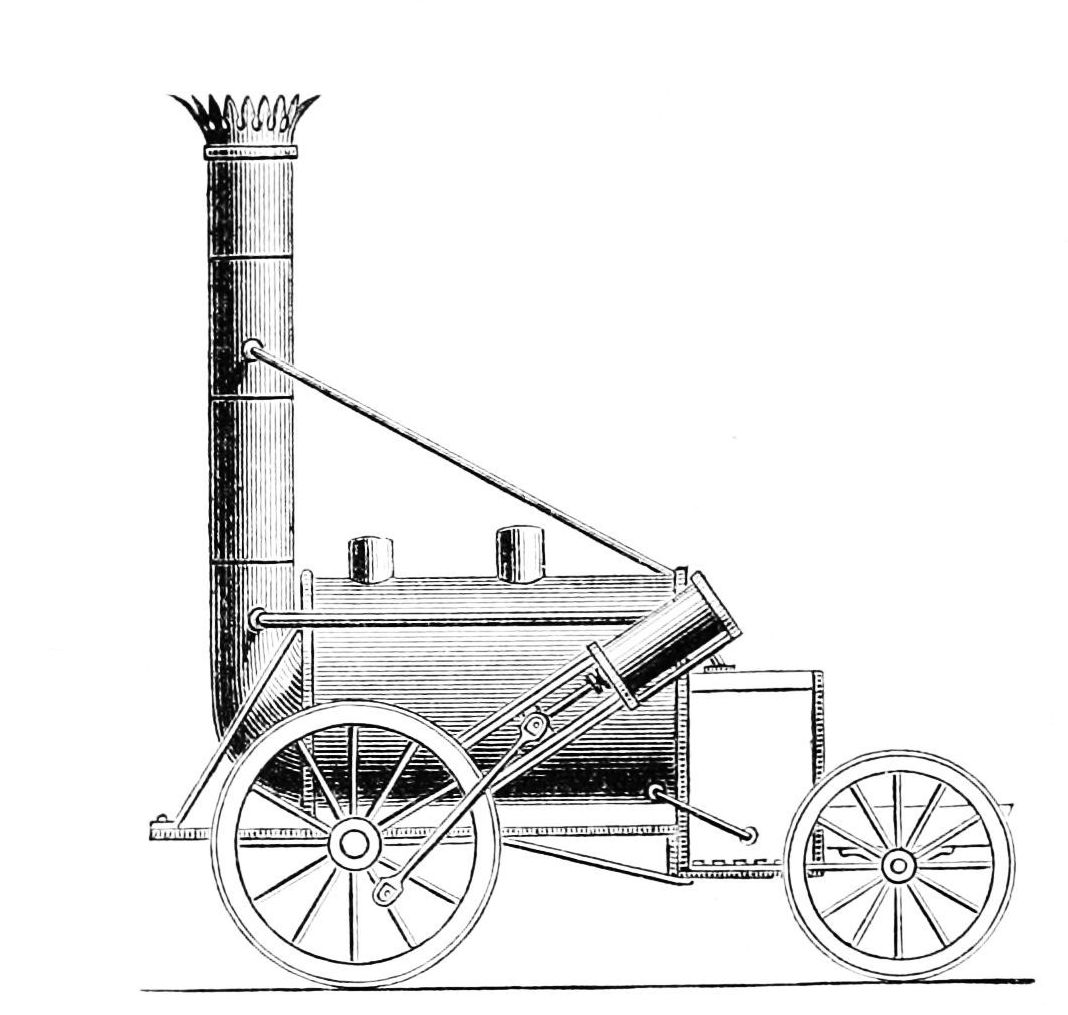
Rocket was dismantled at Newcastle and began the long trip to Rainhill: by horse wagon to Carlisle; lighter to Port Carlisle then by the Cumberland steamer to Liverpool for re-assembly on 18 September 1829. Rocket passed the trial requirement of achieving an average speed of 10 mph over 70 mi by over 40 percent. Demonstrations also saw Rocket consistently and easily haul a carriage with over 20 persons up the Whiston Incline at over 15 mph, and light engine running of around 30 mph.
No other locomotive at the trials could match anything like Rocket's performance reliably, with partners Booth and Stephensons sharing the £500 winnings and showing that stationary engines were unnecessary, with sceptics such as Rastrick being convinced. The opening ceremony of the L&MR on 15 September 1830 was a considerable event, drawing luminaries from the government and industry, including the Prime Minister, the Duke of Wellington. The day started with a procession of eight trains setting out from Liverpool for Manchester. The parade was led by Northumbrian driven by George Stephenson, and included Phoenix driven by his son Robert, North Star driven by his brother Robert Sr. and Rocket driven by assistant engineer Joseph Locke.
Operation
The day was marred by the death of William Huskisson, the Member of Parliament for Liverpool, who was struck and killed by Rocket at Parkside. Built as a prototype to win a speed trial, the engine was soon superseded by improved designs, such as Stephenson's Northumbrian and Planet designs, both of 1830. Within a few years, the Rocket itself had been much modified to be similar to the Northumbrian class.

Did You Know?
- The locomotive had a 16 ft smokestack chimney at the front.
- It was the first to bring together several innovations that produced the most advanced locomotive of its day.
Speed Records Beyond the Steel Wheel
The speed record landscape extends well beyond the steam era and the conventional steel-wheel-on-steel-rail paradigm. These entries demonstrate that the pursuit of rail speed has diversified across fundamentally different physical principles: magnetic levitation eliminating wheel-rail friction, aerodynamic lift replacing mechanical contact, and rotary blade propulsion supplementing wheel drive. For a steam locomotive like Stephenson's Rocket, which relied entirely on the mechanical interaction of driving wheels with a steel rail, these later achievements represent an entirely different engineering universe where the very definition of rail transport has been expanded to include vehicles that never truly touch the track in the conventional sense.
Common Misconceptions (Editorial)
Some people mistakenly believe that George Stephenson alone designed the Rocket, but the facts show that his son Robert was the builder and that Henry Booth likely suggested the multi-tube boiler. Others assume the Rocket was a heavy, powerful locomotive, but it was built specifically as a fast, light machine of moderate hauling power to meet the Rainhill Trials’ strict weight limits.
Why It Matters (Editorial)
The Rocket endures because it didn’t just win a race—it proved that steam locomotion could be fast, reliable, and practical for regular passenger service. Its design became the template for nearly all later steam locomotives, shaping railway travel and commerce across the world for over a century.
More in Legendary Trains
Sources
Compiled from Wikipedia and the sources listed below. Text from Wikipedia is available under CC BY-SA 4.0; this entry is adapted from it.
- Wikipedia: Stephenson's Rocket (CC BY-SA 4.0).
Spotted an error? Know more?
Reader corrections go straight into our review queue. Suggest an edit · How this site is sourced